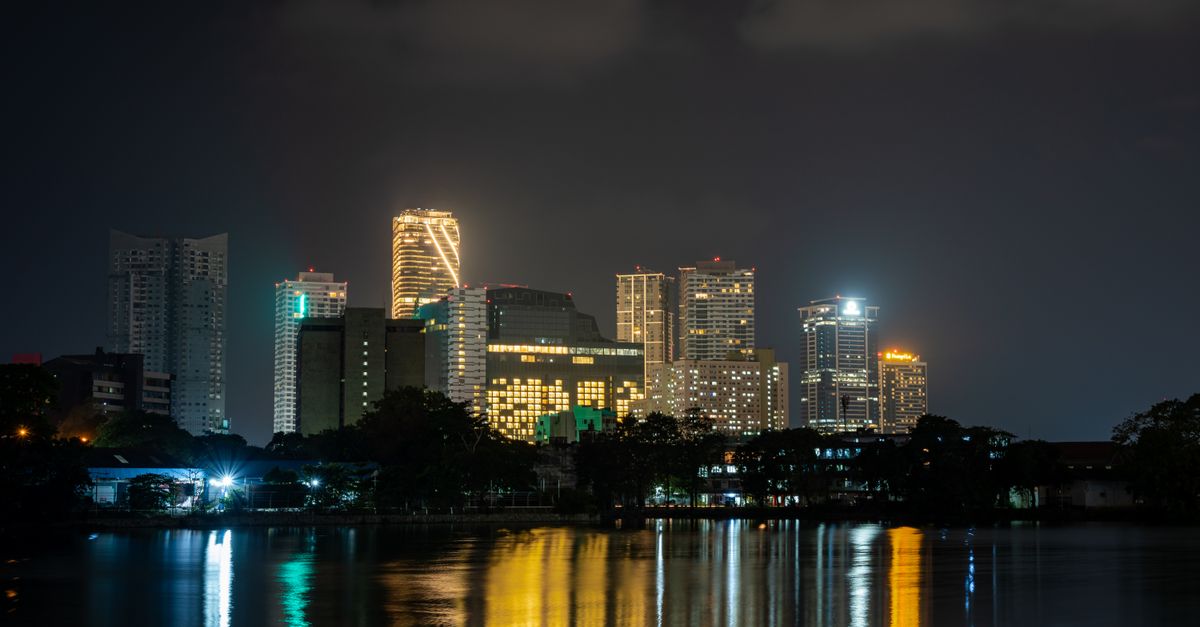
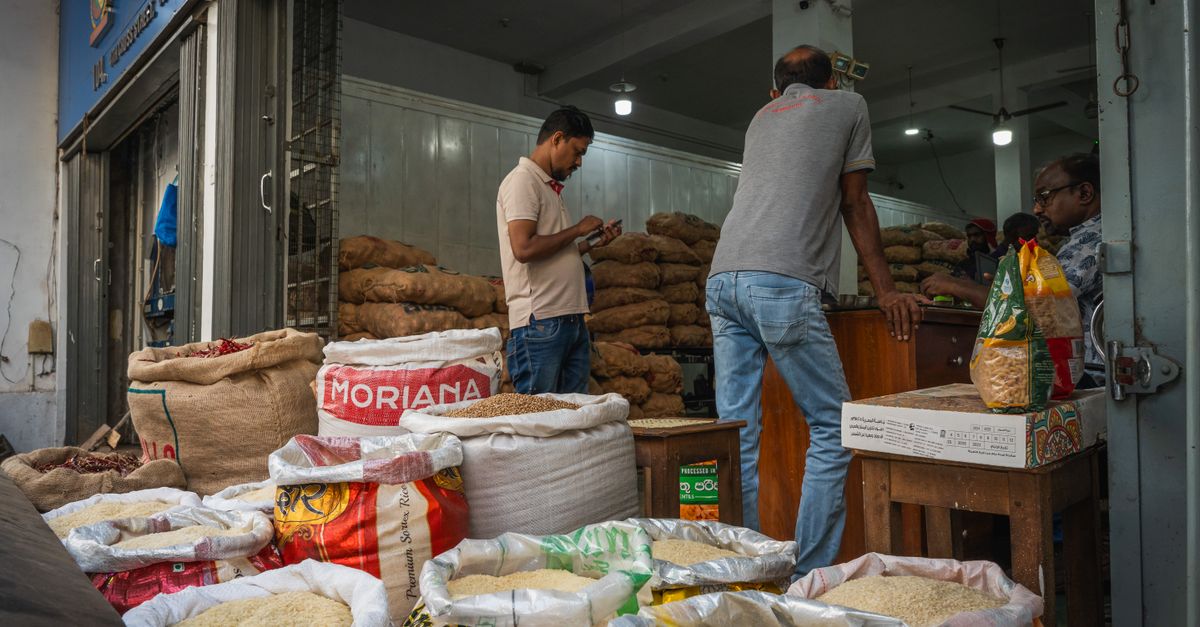
Sri Lankan food is one of South Asia's best-kept secrets — a cuisine built on rice and curry but elevated by the island's extraordinary spice production. Ceylon cinnamon, black pepper, cloves, and cardamom grow here, and they appear in every dish with an intensity that makes mainland Indian food seem restrained by comparison. Colombo adds its own multicultural layers: Tamil influences from the north, Malay flavors from colonial-era settlers, and Dutch-Portuguese fusion dishes that exist nowhere else.
Eating in Colombo is affordable. Street food runs LKR 80-200, local restaurants LKR 300-800 per meal, and mid-range restaurants LKR 1,000-3,000. Lunch packets (rice and curry wrapped in banana leaf) from roadside vendors cost LKR 250-400 and are the quintessential Colombo working lunch.

Must-Try Dishes in Colombo
1. Rice & Curry — LKR 300-800
The daily Sri Lankan meal: a mound of rice surrounded by 4-8 small curries — dhal, chicken or fish curry, pol sambol (coconut relish), papadums, pickled lime, and vegetable curries. Every restaurant's combination differs. The key is the pol sambol — freshly grated coconut, chili, lime, and Maldive fish flakes, pounded together.
2. Hoppers (Appa) — LKR 60-150 each
Bowl-shaped rice-flour pancakes with crispy edges and a soft, spongy center. Egg hoppers have an egg cracked into the bowl. String hoppers are steamed rice noodle nests. Both are served with curry and sambol. Best for breakfast or dinner. The Hopper Hut in Colombo 7 does excellent egg hoppers for LKR 120 each.
3. Kottu Roti — LKR 300-600
Sri Lanka's street food anthem — chopped roti bread stir-fried on a hot griddle with vegetables, egg, and meat. The rhythmic chopping sound of metal scrapers against the griddle is the soundtrack of every Sri Lankan evening. Hotel de Pilawoos on Galle Road serves Colombo's most famous kottu — order the chicken cheese kottu (LKR 500).
4. Isso Wade (Shrimp Fritters) — LKR 100-150
Deep-fried lentil patties topped with a whole shrimp, golden and crunchy. The signature snack at Galle Face Green's evening food stalls. Eat them hot from the oil with lime juice squeezed over the top. Three or four make a light meal.
5. Lagoon Crab — LKR 3,000-6,000
Sri Lanka's premium culinary experience. Massive mud crabs from lagoons around the island, cooked in garlic butter, black pepper, or chili sauce. Ministry of Crab made this world-famous, but Upali's in Colombo 3 serves excellent crab at lower prices (LKR 2,500-4,000).
6. Lamprais — LKR 400-600
A Dutch-Burgher dish: rice cooked in meat stock, wrapped in banana leaf with frikkadel (meatball), ash plantain curry, seeni sambol (caramelized onion), and blachan (shrimp paste), then baked. Found at specialist shops and ordered in advance at restaurants. A truly unique Sri Lankan fusion dish.
Where to Eat in Colombo
Galle Face Green — Street Food
The oceanfront promenade fills with food vendors at sunset. Isso wade (LKR 100-150), rolls (LKR 80-120), corn on the cob (LKR 100), and fruit juice (LKR 150). Eat standing at the seawall watching the sunset. Colombo's most atmospheric eating experience.
Pettah & Fort — Budget Local
Lunch packet shops sell banana-leaf-wrapped rice and curry for LKR 250-400. Hotel de Pilawoos (not actually a hotel) on Galle Road is the kottu institution — loud, crowded, and delicious. Open until 2 AM.
Colombo 7 — Mid-Range to Upscale
Barefoot Cafe serves excellent rice and curry in a garden courtyard (LKR 800-1,200). Ministry of Crab for the signature lagoon crab (LKR 3,000-6,000). Upali's for authentic Sri Lankan at moderate prices (LKR 600-1,500). All require reservations on weekends.

Dining Tips for Colombo
The best food in any city comes from specialists — restaurants and stalls that have perfected a single dish over years or decades. The cramped stall with the longest queue of locals invariably serves better food than the spacious restaurant with the bilingual menu and zero customers. Follow the crowds, eat what locals eat, and budget for multiple small meals rather than one large dinner.
Street food is safe when the vendor is busy — high customer turnover means food is cooked fresh and doesn't sit at dangerous temperatures. Avoid pre-cooked items that have been sitting under heat lamps for hours. Steaming, sizzling, and smoking are signs of freshly prepared food. Morning markets and evening food stalls typically offer the freshest options.
Local markets are the most affordable and authentic eating experience in any Asian city. Visit the main market early in the morning when vendors set up — the energy, the colors, and the breakfast food reveal the city's character more effectively than any museum or monument. Budget 60-90 minutes for a market visit including breakfast.
Dietary restrictions and allergies can be communicated with a few prepared phrases in the local language. Download Google Translate's offline language pack before your trip. Most Asian food cultures are accommodating of preferences when communicated clearly. Vegetarian options are available nearly everywhere, though the definition varies — fish sauce and shrimp paste appear in many 'vegetarian' Southeast Asian dishes.
Sweet Treats & Desserts
Sri Lankan sweets are built from a pantry that bears almost no resemblance to Western desserts — jaggery (unrefined palm sugar) replaces white sugar, coconut milk stands in for dairy cream, and rice flour forms the base of most preparations. The result is a dessert culture that is intensely perfumed, moderately sweet by global standards, and deeply tied to religious and seasonal calendars. Many traditional sweets are made at home for Sinhala New Year (April 14) and Vesak (May full moon) rather than sold commercially, which means finding the authentic versions requires knowing where to look.
Kavum is the essential festive sweet — deep-fried rice flour and jaggery discs that puff into golden rounds with a dense, slightly chewy interior. The version at Green Cabin on Galle Road (operating since 1964) costs LKR 60-80 each and is as close to the home-made version as any restaurant produces. Kokis, another New Year sweet, are crispy lace-like fritters pressed through a flower-shaped mould and fried in coconut oil — airy, fragrant, and impossible to eat just one (LKR 40-60 per piece). Both are available year-round at Colombo's traditional sweet shops, concentrated in Pettah along Olcott Mawatha.
Watalappam is Colombo's most distinctive dessert and one of the city's most direct culinary links to its Malay community — a steamed coconut milk custard made with jaggery, eggs, and whole spices (cardamom, cloves, nutmeg). The texture sits between crème brûlée and bread pudding, the flavour is complex and spiced. Serves at Upali's in Colombo 3 for LKR 350, or in smaller portions at Muslim restaurants in Bambalapitiya for LKR 150-200. The Bambalapitiya Pillawoos location serves a version that regulars travel across the city for.
For something lighter, Curd and Treacle is the street-level dessert that appears at virtually every roadside stall and market — thick buffalo-milk curd (similar to Greek yoghurt but tangier) drizzled with kithul treacle, a dark, smoky syrup made from the sap of the kithul palm tree. LKR 100-200 depending on portion size. The curd counter at Pettah's Manning Market serves it from large clay pots throughout the day. Pol Pani — coconut milk pancakes rolled around a sweet coconut and jaggery filling — are the tea-time street snack, available outside school gates and train stations for LKR 30-50 each and best eaten warm.
Planning Your Food Exploration
The most rewarding food experiences come from planning meals around the local eating schedule rather than forcing your own rhythm onto a foreign city. Most Asian cities eat early — breakfast stalls open at dawn and close by 9 AM, lunch service peaks at noon and ends by 2 PM, and dinner starts at 5-6 PM. Night markets and street food stalls offer the best evening options, typically running from 6 PM until 10 PM or later.
Budget allocation matters. Spend 30-40% of your food budget on one memorable meal — a signature local restaurant, a cooking class, or a fresh seafood dinner. Allocate the rest to street food, markets, and casual local restaurants where the authentic flavors live. This strategy ensures you taste both the refined and the everyday versions of the local cuisine without breaking the bank.
Photography etiquette at food stalls and small restaurants varies by culture. In most of Asia, photographing your food is completely normal and even expected. Photographing the cook or the stall itself — ask first with a smile and gesture. Most vendors are flattered; a few prefer not to be photographed. In sit-down restaurants, photograph freely but be discreet about photographing other diners.
Food allergies and dietary restrictions require preparation. Write your restrictions in the local language (Google Translate helps) and show the note at each restaurant. Common allergens like peanuts, shellfish, and gluten appear in unexpected places — soy sauce contains wheat, fish sauce is in many Thai and Vietnamese dishes, and peanuts appear in Indonesian, Malaysian, and Chinese cooking. Communicate clearly and ask about ingredients rather than assuming from the menu description.
The single best food investment in any Asian city is a cooking class. For 5-50, you'll visit a local market, learn 4-6 dishes hands-on, and gain techniques that let you recreate the flavors at home. The market tour alone — learning to identify local herbs, spices, and produce — transforms your understanding of the cuisine for every subsequent meal during your trip.
Where Locals Eat
Colombo's most dependable local restaurants operate on a logic entirely separate from tourist recommendations: the best ones have no English signage, no menu photos, and no staff positioned outside to wave you in. They survive entirely on neighbourhood loyalty and a standard of cooking high enough that workers, families, and students return daily. The clearest signal of a genuine local restaurant is the lunch packet queue — by 12:30 PM, office workers line up three-deep at the better spots to collect their banana-leaf-wrapped rice and curry packets (LKR 250-400). These are prepared fresh in the morning and gone by 1:30 PM. The area around Maradana Station and along Baseline Road in Colombo 8 has the highest concentration of these lunch packet institutions, untouched by tourist circuits.
Upali's by Nawaloka on Nawam Mawatha in Colombo 2 is the closest thing to a local institution that also welcomes visitors without making them feel out of place. The restaurant has occupied the same basement space since 1983 and serves Sinhala cuisine in the style of a home kitchen that happens to seat 80 people: string hoppers with dhal and pol sambol (LKR 350), lamprais (LKR 550, order ahead), curd and treacle to finish (LKR 200). Weekday lunchtimes bring Colombo office workers in suits eating with their hands while the waiters navigate a room so loud with conversation that orders are sometimes communicated by pointing. No reservations, no pretension, entirely excellent.
In Pettah, the commercial district east of Fort, the Muslim lunch restaurants along 2nd Cross Street serve biryani and mutton rolls to market traders who cannot afford either time or money to go elsewhere. A full biryani plate (lamb or chicken on fragrant basmati with raita and pickle) costs LKR 400-500 and arrives within five minutes of ordering. The Seeni Samanala on 2nd Cross Street has been operating since the 1970s and the biryani here is considered among the best in Colombo by people who have tried every version in the city. The dining room is a bare tiled space with ceiling fans and plastic chairs — the exact environment where the best Sri Lankan food consistently appears.
The Malay community's restaurants around Colombo 6 (Wellawatte) and Colombo 10 (Maradana) serve dishes that exist in almost no other context in South Asia: nasi goreng (LKR 350-500), mee goreng (fried noodles with shrimp and egg, LKR 400), and the extraordinary lunu miris sambol that accompanies everything — a paste of red onion, dried chilli, lime, and Maldive fish that functions as both condiment and dish. Malay Tea Shop near the Manning Market on Pettah's edge opens at 6 AM and serves breakfast to market workers from 6-10 AM only: string hoppers, roti canai with dhal, and thick sweet tea for LKR 150-250 total. It is the most authentic breakfast experience in the city and requires no effort beyond arriving early and pointing at what the person next to you is eating.