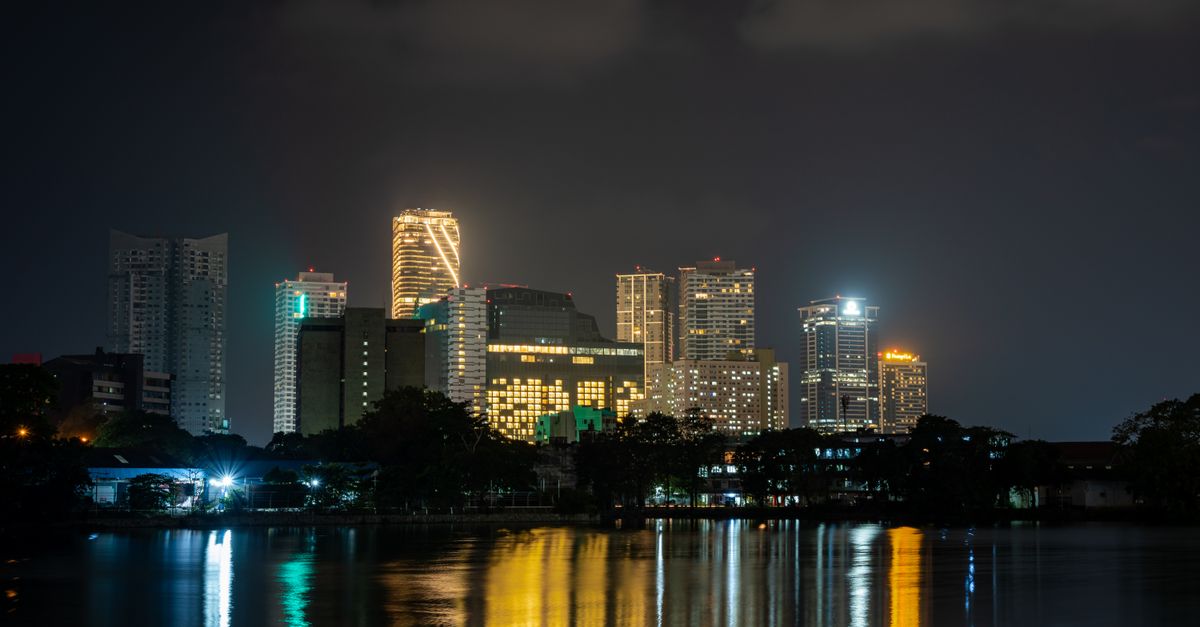
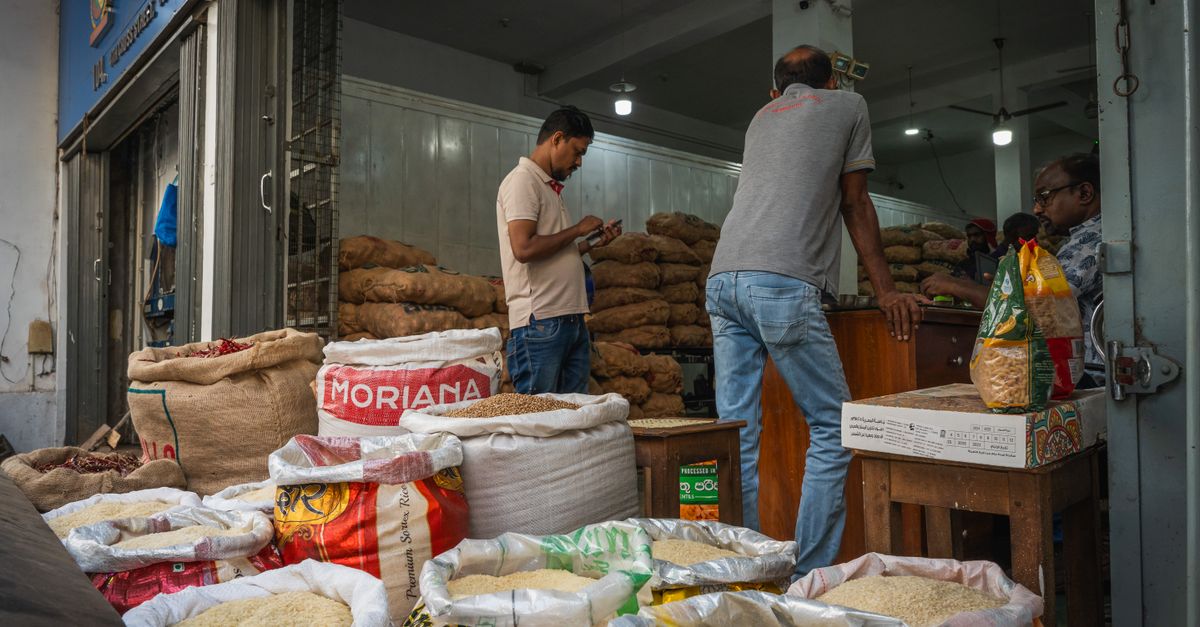
Colombo rewards first-time visitors who arrive with context. It is not a city that reveals itself through monuments alone — its character lives in the overlap of a dozen distinct communities, in the contrast between Dutch-era Fort buildings and glass-fronted towers, in the chaos and commerce of Pettah Market and the quiet of a Buddhist temple courtyard a kilometre away. The infrastructure is improving fast, English is widely spoken, and the Sri Lankan hospitality is genuine and unhurried. Get the logistics right — visa, currency, SIM card, transport from the airport — and Colombo gives you one of South Asia's most textured urban experiences without the intimidation factor of Mumbai or Delhi.
Before You Arrive
Most nationalities require an Electronic Travel Authorisation (ETA) to enter Sri Lanka. The process is entirely online at eta.gov.lk and takes 10–30 minutes to complete. The fee is USD 35 for most nationalities (USD 20 for South Asian countries). You receive email confirmation within 24 hours, though approval is typically instant. The ETA grants a 30-day single-entry stay extendable to 90 days at the Department of Immigration in Colombo. Apply a minimum of 48 hours before departure — last-minute applications occasionally delay approval.

Passport validity must extend at least six months beyond your planned departure date from Sri Lanka. Carry printed or digital copies of your ETA approval confirmation, return or onward travel, and proof of accommodation for at least the first night. Immigration at Bandaranaike International Airport is generally efficient, but having documents ready avoids delays at the desk.
The Sri Lankan rupee (LKR) is the only currency for daily transactions. As of 2025, USD 1 exchanges to approximately LKR 300–310. The best exchange rates in Colombo are at licensed private money changers in the Fort area (Chatham Street and surrounding lanes), consistently 2–4% better than bank rates and significantly better than airport counters. Bring USD 100–200 in cash as a buffer — the licensed changers in Colombo give better rates for USD than for EUR or GBP. ATMs from Commercial Bank and HNB (Hatton National Bank) accept foreign cards reliably. Notify your home bank of travel to Sri Lanka before departure to prevent card blocks.
Sri Lanka uses 230V / 50Hz electricity with Type D (three round pins) and Type G (three rectangular pins, UK-style) sockets. Pack a Type G adapter if your devices use European or US plugs. Most mid-range and above hotels have universal sockets in bathrooms — budget guesthouses may not.
Purchase a local SIM card at the airport immediately after clearing customs. Dialog and Mobitel both have staffed counters in the arrivals hall. A tourist SIM with 10GB of data costs LKR 500–800 and activates within minutes. 4G coverage in Colombo and along the main highways is reliable. Bring your passport — SIM registration requires photo ID by Sri Lankan law.
Getting from the Airport
Colombo Bandaranaike International Airport (CMB) is located in Katunayake, 30 kilometres north of the city centre. Journey time to central Colombo ranges from 40 minutes (off-peak, by train) to 90 minutes (peak hour, by road).

The Intercity Expressway Bus (Route 187) is the cheapest option at LKR 120 per person. Buses depart from the arrivals hall forecourt and terminate at Colombo Fort Railway Station. Journey time is 60–90 minutes. Buses run from approximately 5 AM to 11 PM. This is the option most Sri Lankan travellers use.
The Katunayake Expressway Train departs from Katunayake Station — a short tuk-tuk ride from the terminal (LKR 200–300, or ask your ground handler) — and reaches Colombo Fort in 40 minutes. Second-class tickets cost LKR 100. Trains run roughly every two hours and are the fastest option when road traffic is heavy.
The PickMe app taxi (LKR 2,000–2,800 to central Colombo) is the most convenient door-to-door option. Download the app before landing and connect to airport Wi-Fi to book. This costs roughly half of what the official metered airport taxis at the counter charge (LKR 3,500–5,000). The PickMe driver meets you outside arrivals in the designated pick-up lane.
Avoid unmarked vehicles and touts in the arrivals hall who approach you with offers of cheap rides — negotiate with one only as a last resort and agree the price firmly before loading luggage. The official prepaid taxi counter inside arrivals is legitimate but expensive.
Getting Around the City
Colombo is a long, narrow city running north–south along the coast, and understanding this geography makes navigation much simpler. The postal code system (Colombo 1 through Colombo 15) corresponds roughly to geographic zones from north to south, with Colombo 1 (Fort) at the commercial centre and Colombo 7 (Cinnamon Gardens) as the leafy residential and cultural hub.

Tuk-tuks (three-wheelers) are the default mode for short trips and the most flexible transport in the city. Within one neighbourhood, expect LKR 150–300. Cross-city trips run LKR 300–600. Always agree the fare before getting in when hailing off the street. Better yet, use the PickMe app for transparent, fixed pricing — the tuk-tuk option costs roughly the same as negotiating on the street but eliminates any dispute. PickMe also covers car hire and motorbike taxis.
Buses run every few minutes along Galle Road (the main coastal artery) with fares of LKR 30–80. They are crowded during rush hours but excellent for the north–south Galle Road corridor during off-peak times. Pay the conductor when he comes to you — exact change is appreciated but not essential.
Grab (the regional ride-hailing app) also operates in Colombo alongside PickMe. Both apps work on Android and iOS and accept international cards. PickMe has broader tuk-tuk coverage; Grab's car supply is sometimes stronger for airport runs.
The coastal commuter rail runs south from Fort Station to Mount Lavinia (LKR 30, 20 min) and north toward Negombo. For day trips in these directions, it's the fastest and cheapest option.
Where to Base Yourself
Colombo 7 — Cinnamon Gardens is the most pleasant neighbourhood for first-time visitors. Tree-lined boulevards, the National Museum, Viharamahadevi Park, Barefoot Cafe, and the Lionel Wendt Theatre are all here. The area is walkable, relatively quiet at night, and has the highest concentration of mid-range restaurants and cafes. Tuk-tuk and bus connections run along Bauddhaloka Mawatha and Duplication Road. Most guesthouses here cost LKR 3,000–6,000 per night for a clean private room. This is the neighbourhood that gives you the best first impression of Colombo.

Colombo 3 — Kollupitiya is the most central and well-connected base, sitting between Fort and Cinnamon Gardens on Galle Road. The neighbourhood has the highest density of restaurants, supermarkets, banks, and transport connections in the city. Galle Face Green is a 10-minute walk. The Crescat Boulevard shopping mall provides a reliable ATM cluster and air-conditioned retreat on hot afternoons. Accommodation ranges from LKR 3,500 budget guesthouses to international hotels. Noise and traffic from Galle Road can disturb light sleepers — ask for a room facing away from the main road.
Colombo 2 / Fort area suits travellers who prioritise colonial history, the harbour, and proximity to the train and bus stations. The architecture in Fort — including the Dutch-era VOC Gate, the Grand Oriental Hotel, and the Lighthouse — is concentrated here. It's noisier, more commercial, and less residential than Colombo 7, but the connectivity is unmatched. Budget hostels like Clock Inn are located here, making it the natural choice for backpackers who want to get moving early and return late.
Local Culture and Etiquette
Sri Lanka is a predominantly Buddhist country (70% Sinhalese Buddhist), with significant Hindu, Muslim, and Christian minorities. Colombo reflects this diversity more than anywhere else on the island — Buddhist temples, Hindu kovils, mosques, and colonial-era churches exist within walking distance of each other in the same neighbourhoods. The city's religious diversity is a point of genuine pride and the coexistence is largely harmonious.

When visiting Buddhist temples, remove shoes before entering the temple grounds (look for the shoe rack at the entrance). Dress modestly — shoulders and knees covered. Do not turn your back to a Buddha statue for photographs. White clothing is traditional but not required from visitors. The Gangaramaya Temple and Kelaniya Raja Maha Vihara are the most visited temples near Colombo — both welcome non-Buddhist visitors warmly, and having a small donation (LKR 100–200 in the donation box near the main Buddha image) is appreciated.
At Hindu kovils, remove shoes, dress modestly, and follow the direction of the priest if offered prasad (blessed food). Photography is generally permitted in the outer courtyards but not inside the inner sanctum during puja (worship). The Sri Kailawasanathan Swami Devasthanam Kovil on Galle Road in Colombo 4 is the most accessible Hindu temple in the city.
The Jami Ul Alfar Mosque in Pettah admits non-Muslim visitors outside the five daily prayer times (approximately 5 AM, 12:30 PM, 3:30 PM, 6:30 PM, 8 PM). Women should cover their hair with a scarf before entering the mosque courtyard — scarves are available at the entrance. Dress modestly.
Tipping is not universally expected in Sri Lanka but is appreciated. In local restaurants, rounding up the bill (adding LKR 50–100) is appropriate. In mid-range and upscale restaurants, 10% is the norm if service charge isn't already added. Tuk-tuk drivers don't expect tips but appreciate rounding up to the nearest LKR 50. Hotel bellboys expect LKR 100–200 per bag.
Sri Lankans are generally formal in initial interactions and warm once familiarity is established. Avoid discussing the civil war (which ended in 2009) in casual conversation — it remains a sensitive subject with divergent perspectives across ethnic communities. Cricket, food, and the natural beauty of the island are universally safe and enthusiastically received conversation topics.
Common Mistakes to Avoid
Booking the airport taxi counter inside arrivals. The prepaid taxis at the official counter are legitimate but charge LKR 3,500–5,000 to central Colombo. The PickMe app charges LKR 2,000–2,800 for the same trip. Download the app before you arrive and save the difference for a proper kottu roti dinner.
Applying for the ETA at the last minute. The system processes applications instantly most of the time — but technical outages happen, and some nationalities require manual review. Apply 72 hours before departure as a baseline. Airlines occasionally ask for proof at check-in even though the ETA is electronically linked to your passport.
Underestimating Colombo traffic. What looks like a 5-kilometre journey on Google Maps can take 70 minutes during peak hours. Always add 40–50% to estimated journey times between 7:30–9:30 AM and 5–7:30 PM. Plan airport departures by working backwards from this reality — missing a flight because of Galle Road gridlock is an avoidable catastrophe.
Eating only at tourist restaurants. The guesthouses, street food stalls, and local lunch-packet shops that cater to Sri Lankans produce dramatically better food at a fraction of the price of tourist-oriented restaurants. The queue of office workers outside a shop at 12:30 PM is the most reliable quality signal in the city.
Ignoring the tap water warning. Tap water in Colombo is not safe to drink without filtering. Buy bottled water (LKR 80–100 for 1.5L at supermarkets) or use your guesthouse's filtered water station. Ice in reputable restaurants is made from filtered water and is safe; ice from street vendors is less reliable — skip it if you're cautious.
Visiting Pettah with valuables and a large backpack. Pettah Market is one of the most stimulating experiences in the city but also the area with the highest petty theft risk. Leave your large bag at your guesthouse, bring only what you need for the day in a zipped front pocket or money belt, and keep your phone in your hand or a zipped pocket, not visible in a back pocket.
Assuming tuk-tuk drivers know all addresses. Colombo's addressing system is inconsistent and many drivers navigate by landmark rather than street address. Identify the nearest major landmark to your destination (a hotel, junction, or well-known building) and give that instead of the street address. Screenshots of Google Maps with your destination pinned work better than verbal address recitation.