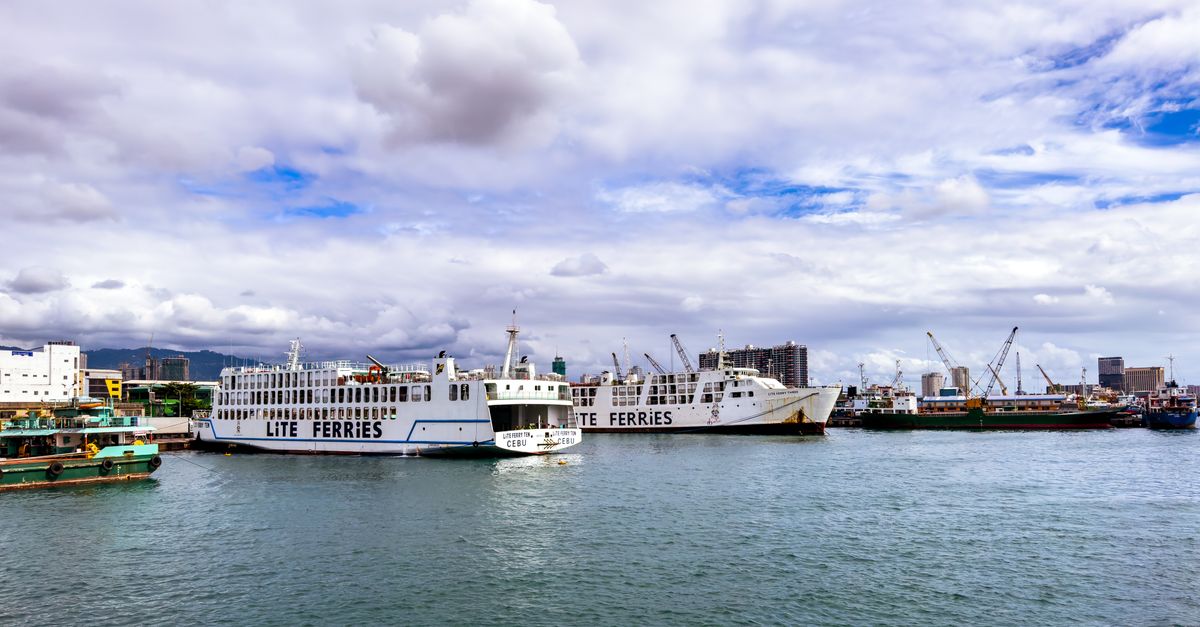
Cebu is the lechon capital of the Philippines — the roasted pig here is stuffed with lemongrass and herbs before being slow-roasted over charcoal, producing skin so crispy it shatters like glass. But Cebu's food scene extends well beyond pork — the island's position in the Visayas means exceptional seafood, a vibrant street food culture centered on Larsian BBQ, and a growing restaurant scene in the IT Park district.

Must-Try Dishes
1. Cebu Lechon — PHP 450-600/kg
The Philippines' finest roasted pig — Cebu lechon is stuffed with lemongrass, garlic, and chili before slow-roasting. The skin is unimaginably crispy, the meat tender and herb-infused. Zubuchon (Anthony Bourdain called it 'the best pig ever') serves by weight (PHP 600/kg). CnT Lechon is the budget alternative (PHP 450/kg). Ask for the belly — the fattiest, crispiest section.
2. Puso (Hanging Rice) — PHP 5-10
Rice wrapped in woven coconut leaves and boiled — portable, no utensils needed, and the perfect accompaniment to grilled meat. Available at every BBQ stall and market for PHP 5-10 each. Tear open the woven leaf and eat with your hands.
3. Ngohiong (Cebu Spring Rolls) — PHP 15-25
Five-spice-flavored spring rolls unique to Cebu — a Chinese-Filipino fusion filled with vegetables and ubod (coconut heart). Thicker and more aromatic than standard lumpia. Available at Carbon Market food stalls for PHP 15-25 each.
4. Sutukil — PHP 300-500/2 pax
Cebu's famous three-way seafood preparation: sugba (grilled), tuwa (soup), and kilaw (ceviche). Choose your fish — tanigue (mackerel), lapu-lapu (grouper), or prawns — and the kitchen prepares it three ways. Sutukil restaurants line the Mactan waterfront. Budget PHP 300-500 for two.
5. Dried Mango — PHP 80-120/pack
Cebu produces the Philippines' best dried mangoes — sweet, chewy, and tangy. 7D brand is the most famous. Buy at supermarkets (PHP 80-120/pack) or directly from the processing factory. The chocolate-coated version is dangerously addictive.
6. Tuslob Buwa — PHP 80-120
A Cebu-only dish — pork brain and liver simmered in soy sauce and oil until bubbly, served as a communal dip for puso rice. Sounds adventurous but tastes rich and savory. Azul on F. Ramos Street is the originator (PHP 80-120).
Where to Eat
Larsian BBQ — Street Food Essential
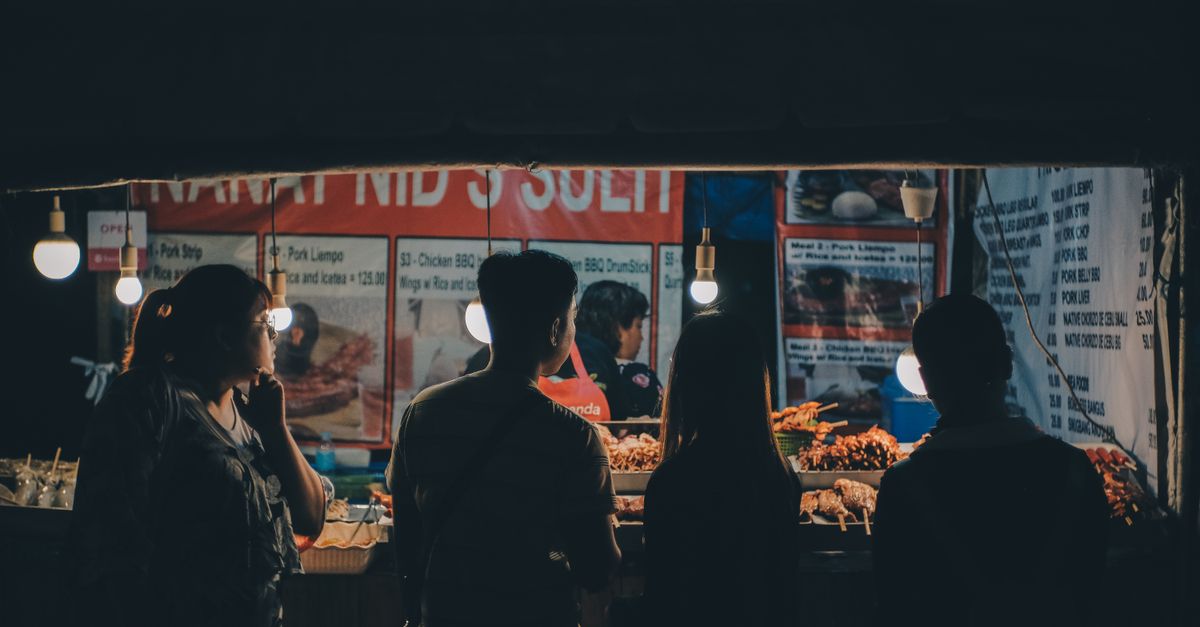
Cebu's legendary outdoor BBQ market on Fuente Osmena Circle. Dozens of grills cook chicken, pork, squid, and fish to order. Choose your meat from the display, they grill it, you eat at plastic tables with puso rice. PHP 150-300/person including drinks. Open nightly from 5 PM.
IT Park & Sugbo Mercado — Modern Eats
The IT Park district's Sugbo Mercado night market (Thu-Sun, 5 PM-midnight) has diverse food stalls — ramen, tacos, Filipino fusion, craft beer. Budget PHP 150-300/person. Surrounding restaurants include BFIC (Boneless Fried Chicken) and popular ramen shops.
Carbon Market — Budget Local
Cebu's oldest market has the cheapest food in the city. Pork belly with puso (PHP 50-80), grilled fish (PHP 60-100), and fresh fruit (PHP 20-30). The morning section has the best selection. No English needed — point and eat.
Dining Tips for Cebu
The best food in any city comes from specialists — restaurants and stalls that have perfected a single dish over years or decades. The cramped stall with the longest queue of locals invariably serves better food than the spacious restaurant with the bilingual menu and zero customers. Follow the crowds, eat what locals eat, and budget for multiple small meals rather than one large dinner.
Street food is safe when the vendor is busy — high customer turnover means food is cooked fresh and doesn't sit at dangerous temperatures. Avoid pre-cooked items that have been sitting under heat lamps for hours. Steaming, sizzling, and smoking are signs of freshly prepared food. Morning markets and evening food stalls typically offer the freshest options.
Local markets are the most affordable and authentic eating experience in any Asian city. Visit the main market early in the morning when vendors set up — the energy, the colors, and the breakfast food reveal the city's character more effectively than any museum or monument. Budget 60-90 minutes for a market visit including breakfast.
Dietary restrictions and allergies can be communicated with a few prepared phrases in the local language. Download Google Translate's offline language pack before your trip. Most Asian food cultures are accommodating of preferences when communicated clearly. Vegetarian options are available nearly everywhere, though the definition varies — fish sauce and shrimp paste appear in many 'vegetarian' Southeast Asian dishes.
Sweet Treats & Desserts
Cebu's dessert culture is its most underappreciated culinary dimension. Most visitors are so focused on lechon that they miss the extraordinary range of sweet foods that end meals, fill afternoon breaks, and anchor the island's festival traditions. Filipino desserts are rarely subtle — they tend toward bold sweetness, vivid colour, and generous portions — and Cebu's versions are among the most inventive in the archipelago.
Halo-halo is the Philippines' defining dessert and Cebu serves an exceptional version. The basic construction is a tall glass layered with shaved ice, evaporated milk, and a roster of colourful components: nata de coco (coconut gel), kaong (sugar palm fruit), sweetened red beans, jackfruit strips, purple ube (taro) jam, and a scoop of ube or cheese ice cream balanced on top. Choobi Choobi restaurant on F. Ramos Street serves the most lavishly constructed halo-halo in the city (PHP 185). SM City's food court offers a budget version for PHP 80 to 100. Both are correct.
Torta Mamon is a Cebu-specific sponge cake — a soft, eggy pound cake baked in individual paper-lined cups and sold in bakeries throughout the city. The texture is somewhere between chiffon and butter cake, lightly sweet and ideal for breakfast or merienda (afternoon snack). Mooon Cafe and Sunburst bakery carry them (PHP 20 to 40 each). Eaten warm with a cup of tabliya hot chocolate — made from cacao tablets grown in the southern Visayas — this is Cebu at its most quietly satisfying.
Masareal, a peanut candy unique to Mandaue City just north of Cebu, consists of ground roasted peanuts compressed into firm, dense blocks with raw sugar. The flavour is intensely nutty with a slight graininess from the sugar crystals. It is sold in wax paper wrapping at Carbon Market and Colon Street stalls for PHP 30 to 50 per pack and travels well as a pasalubong (food gift to bring home). Look for vendors who make it in small batches — the freshest versions have the most pronounced peanut flavour.
Bibingka and puto bumbong appear throughout Cebu during the Simbang Gabi (Christmas dawn masses) season from December 16 to 24, but can be found year-round at specialist stalls near the Basilica del Santo Niño. Bibingka is a warm rice cake baked in banana leaf-lined clay pots over charcoal, topped with butter, sugar, and salted egg (PHP 50 to 80). Puto bumbong is purple rice steamed in bamboo tubes and served with coconut flakes and muscovado sugar (PHP 30 to 50). Both are eaten immediately — they lose their magic quickly once cooled.
The dried mango deserves a second mention as a dessert category in its own right. Beyond the famous 7D brand, smaller producers around the Mandaue and Mactan area make artisanal versions in distinct styles: the Cebu Classic (intensely sweet, chewy), the Champagne Mango variety (more delicate, floral), and the dark-dried variant (aged longer for concentrated tartness). A guided dried mango tasting at SM City's 7D Experience Store (free) lets you compare varieties before committing to bulk purchases (PHP 80 to 250 per bag depending on grade).
Planning Your Food Exploration
The most rewarding food experiences come from planning meals around the local eating schedule rather than forcing your own rhythm onto a foreign city. Most Asian cities eat early — breakfast stalls open at dawn and close by 9 AM, lunch service peaks at noon and ends by 2 PM, and dinner starts at 5-6 PM. Night markets and street food stalls offer the best evening options, typically running from 6 PM until 10 PM or later.
Budget allocation matters. Spend 30-40% of your food budget on one memorable meal — a signature local restaurant, a cooking class, or a fresh seafood dinner. Allocate the rest to street food, markets, and casual local restaurants where the authentic flavors live. This strategy ensures you taste both the refined and the everyday versions of the local cuisine without breaking the bank.
Photography etiquette at food stalls and small restaurants varies by culture. In most of Asia, photographing your food is completely normal and even expected. Photographing the cook or the stall itself — ask first with a smile and gesture. Most vendors are flattered; a few prefer not to be photographed. In sit-down restaurants, photograph freely but be discreet about photographing other diners.
Food allergies and dietary restrictions require preparation. Write your restrictions in the local language (Google Translate helps) and show the note at each restaurant. Common allergens like peanuts, shellfish, and gluten appear in unexpected places — soy sauce contains wheat, fish sauce is in many Thai and Vietnamese dishes, and peanuts appear in Indonesian, Malaysian, and Chinese cooking. Communicate clearly and ask about ingredients rather than assuming from the menu description.
The single best food investment in any Asian city is a cooking class. For 5-50, you'll visit a local market, learn 4-6 dishes hands-on, and gain techniques that let you recreate the flavors at home. The market tour alone — learning to identify local herbs, spices, and produce — transforms your understanding of the cuisine for every subsequent meal during your trip.