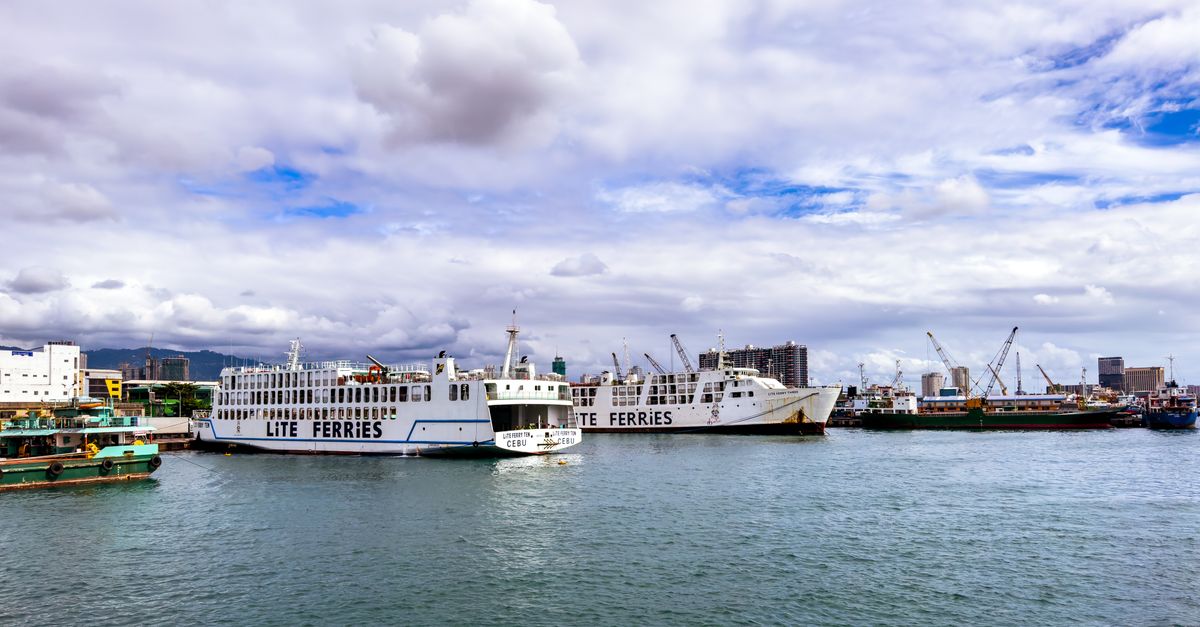
Cebu City is the capital of the Visayas and the oldest settlement in the Philippines — Ferdinand Magellan planted his cross here in 1521, making this the point of entry for both Catholicism and Western colonization into the Philippine archipelago. The city has been continuously inhabited and commercially active for 500 years, and its layered history — Spanish colonial, American period, Japanese occupation, post-war reconstruction — is visible in its streets, churches, and markets in ways that more touristic Filipino cities often obscure. Most visitors use Cebu as a transit point for the islands and beaches of Cebu Province. This is a reasonable choice that misses one of the more interesting mid-sized cities in Southeast Asia.
This guide is for the traveler who will spend at least two or three days in Cebu City proper, or who wants to understand the city's character before heading to the beaches. It's for those curious about the specifically Visayan (central Philippine) culture that is distinct from Manila's Tagalog culture in language, cuisine, and social character. The lechon in Cebu is acknowledged as the finest in the Philippines. The Santo Niño devotional tradition is one of the most intense expressions of Filipino folk Catholicism. The coral reefs on the province's smaller islands are among the finest in the country.
Ten Cebu experiences that go beyond the Magellan's Cross photo stop and the airport connection.

1. Basilica del Santo Niño at Dawn — The Nation's Most Intensely Visited Shrine
The Basilica Minore del Santo Niño in the heart of Cebu City is the oldest Roman Catholic church in the Philippines — the original building was founded 1565, though the current structure dates primarily from later centuries. It houses the Santo Niño de Cebu, the image of the Christ Child given by Magellan to the indigenous queen Juana in 1521 and rediscovered by Miguel López de Legazpi's expedition in 1565 — the survival of this small Catholic image through 44 years of non-Christian rule was interpreted as miraculous and has been the focus of Filipino devotion ever since. The Santo Niño cult is the most intensely popular religious practice in the Philippines, drawing millions of pilgrims to Cebu annually.
Attending the dawn Mass (5am, 6am, and 7am daily, with the 6am typically the most atmospheric) puts you in a church that is genuinely full of Filipino believers — not tourists, but people who have come from across the Visayas to pray to an image that has been at the center of their culture for 500 years. The devotional intensity, the smell of incense and candles, and the specific quality of Filipino Catholic prayer (communal, physical, emotionally open in ways that European Catholicism has largely moved away from) is one of the most powerful religious experiences in the region. The image itself, in its elaborate gilded case above the main altar, is small enough to seem intimate at this scale of veneration.
The Basilica is on Osmeña Boulevard in central Cebu City, walking distance from the city center. Free entry. Open daily 5am–9pm. The Sinulog Festival (third Sunday of January) transforms the entire city into one of Asia's most spectacular religious festivals — the Santo Niño procession with thousands of devotees in elaborate costumes dancing and chanting "Pit Senyor" fills the streets for a full day and evening. Book accommodation months in advance for Sinulog. The Basilica Museum adjacent to the church has an excellent collection of religious art and historical documentation of the image's history.
Magellan's Cross, 50 meters east of the Basilica in a small octagonal chapel on the former Plaza Independencia, is the other mandatory Cebu stop — the cross planted by Ferdinand Magellan in 1521 (now encased in a larger hollow wooden cross for protection) is the oldest physical evidence of Christianity in the Philippine archipelago. The chapel murals depicting the arrival of Magellan and the baptism of Queen Juana and her court have a folk-art quality that is more moving in its way than academic historical painting.
2. Carbon Market at 5am — The Visayas Supply Chain
Carbon Market, the main wholesale and retail market of Cebu City, is named for the charcoal (carbon) that was once its primary trade. Now it is the supply point for most of Cebu Province's food — produce from the island's farms and fishing communities, from the surrounding Visayas islands, and from Mindanao's agricultural zones arrives here before dawn for the wholesale trade. At 5am, the market is at its most extraordinary: the flower section (atis blossom garlands for Santo Niño offering, sampaguita and cadena de amor), the fresh seafood section (Cebu's specific isdaan fish varieties, the small dried fish for fermented bagoong), and the vegetable section (the particular Visayan vegetables — bitter melon, water spinach, banana flower) are all at maximum freshness.
The specific Cebu food items not to miss at Carbon: the danggit (dried rabbitfish) that is Cebu's most famous export and its most characteristic breakfast ingredient; the pusit (squid) dried in the sun on racks around the market's perimeter that is one of the finest flavors in Visayan cuisine; and the sweetly caramelized dried mangoes (dried from the Cebu native mango variety that has exceptional sugar content) that are sold in bulk here at a fraction of the souvenir shop price. Carbon is where the tourist economy that packages these products sources them.
Carbon Market is on F. Gonzales Avenue, central Cebu City, walking distance from the Basilica. Free to walk. Most active 4–9am. The food stalls around the market perimeter serve puso (hanging rice) and tinolang isda (fish ginger soup) from 5am at PHP 40–80 per serving. The market is dense enough to be disorienting — stay near the main corridors on the first visit and let the geography reveal itself. Female solo travelers should exercise the standard precautions (keep bags in front, avoid isolated sections early morning). A local guide (ask at any Cebu heritage organization) makes the market significantly more navigable.
The surrounding Parian district, historically Cebu's Chinese community area (established 1594), has several ancestral houses and the old Chinese cemetery that preserves the most elaborate funerary architecture in the Philippines — the large stone family mausoleums, several with air conditioning and kitchen facilities for the Chinese tradition of picnicking with the deceased, represent a fascinating cultural practice specific to Cebu's Filipino-Chinese community.
3. Fort San Pedro — The Oldest Fort in the Philippines
Fort San Pedro, the small Spanish military fortress built in 1565 on the Cebu waterfront, is the oldest Spanish-built structure in the Philippines and is consistently undervisited relative to its historical importance. The triangular bastion design, built with the labor of indigenous Cebuanos directed by Spanish engineers, was the administrative and military center of the Spanish East Indies for the first century of colonization. The fort subsequently served as a revolutionary headquarters in 1898, a Japanese military camp in 1942, and is now a small museum and park. The thick coral-and-stone walls, with the original cannon positions and the view over Cebu Harbor from the battlements, provide an encounter with colonial history that has more tactile reality than any interpretation center can provide.
The interior of Fort San Pedro houses a small collection of artifacts from the Spanish colonial period — ceramics, weapons, and documents — that is valuable for its focus on the specific Cebu context rather than the Manila-centric colonial history that most Philippine museums present. The garden within the walls, with its old trees and the occasional cat, has the contemplative quality of a small European garden rather than a Southeast Asian tourist site. The view from the walls in the late afternoon, with the harbor activity below and the mountains of Cebu Island visible inland, is one of the finest views in Cebu City.
Fort San Pedro is on A. Pigafetta Street in the waterfront district, 10 minutes walk south of the Basilica. Entry PHP 30. Open Tuesday–Sunday 8am–7pm. The surrounding waterfront area has been cleaned up in recent years as part of the Cebu City development program. The Paladar restaurant inside the fort (serving Filipino food with a view of the walls) is open for lunch and dinner. The Heritage of Cebu Monument, a large sculptural installation 100 meters north of the fort, depicts the key moments of Cebu's 500-year history in bronze relief panels — remarkable for its scope and quality of execution.
The Cebu Provincial Capitol nearby has a heritage museum (free, open weekdays) documenting Cebu's pre-colonial to modern history. The Capitol building itself (1937, American colonial style) is one of Cebu's finest buildings and the museum on its ground floor is consistently empty of visitors despite having excellent material on Cebuano culture including the traditional Visayan weaving traditions (hablon) and the guitar-making industry of Mactan.
4. Taoist Temple — Cebu's Chinese Heritage on a Hill
The Taoist Temple of Cebu, on Beverly Hills in the Lahug area, is one of the most dramatic and least-visited temples in the Philippines — a multi-level complex climbing a hillside, with glazed tile roofs, guardian dragon walls, and 81 steps (the number of verses in the Tao Te Ching) leading to the main shrine. The temple was built by the Filipino-Chinese community in 1972 and is actively used for Taoist religious practice, including the casting of divination sticks (kau cim) — a Taoist practice where you shake a cylinder of numbered bamboo sticks until one falls out, then consult a fortune paper matching the number. The entire ritual is explained (in Cebuano, English, and Chinese) at the temple entrance.
The views from the upper terraces of the Taoist Temple are the finest elevated views of Cebu City available without climbing a mountain — the city's coastline, the Mactan Bridge, and on clear days the other Visayan islands visible across the strait. The dragon and phoenix iconography throughout the temple has the specific quality of South Fujian Chinese religious art (most Cebu Filipino-Chinese trace their ancestry to Fujian Province) that is distinct from Cantonese or Beijing temple art. The temple is open to non-Taoist visitors and the monks are generally welcoming of respectful curiosity.
The Taoist Temple is in Beverly Hills village, Lahug, Cebu City — accessible by taxi (PHP 150–200 from the city center) or Grab. Free to enter. Open daily 8am–6pm. The kau cim divination service costs PHP 50–100 for the fortune paper interpretation. The surrounding Beverly Hills residential area has several of Cebu's finest traditional Filipino-Chinese houses — the large mid-century bungalows with their characteristic ornamental gates and mature garden trees represent the material culture of the Cebu Chinese merchant class at its most relaxed.
Combining the Taoist Temple with a drive through the Beverly Hills area (a quiet residential enclave above the urban heat) and a lunch at one of the hillside restaurants with city views makes an excellent half-day excursion from the historic center. The bakmi restaurants in this area serve Cebu's version of Chinese-Filipino noodles — the Cebu pansit bihon has a specific sweetness from the local soy sauce that distinguishes it from Manila versions.
5. Lechon in Carcar — The Original
Cebu lechon is universally acknowledged as the finest whole-roasted pig in the Philippines — the specific technique of stuffing the cavity with lemongrass, tanglad (lemongrass shoots), salt, and other aromatics, then slow-roasting over charcoal for 4–5 hours until the skin is lacquer-crisp and the meat falls from the bone, produces a result that no other Philippine lechon tradition approaches. The lechon capital of Cebu Province is Carcar City, 40km south of Cebu City, where the lechon preparation tradition is claimed to have originated and where the chicharon (deep-fried pork rind) made from lechon offcuts is considered the finest anywhere.
The Carcar City Public Market is where the lechon and chicharon trade happens — vendors selling whole pigs (PHP 6,000–10,000 for a whole animal, available by prior order) and by the kilo (PHP 350–500/kg for the best parts), with the skin arriving still crispy from the morning roasting. The chicharon at Carcar is sold in enormous pieces, hot from the oil, with vinegar dipping sauce — it costs PHP 200–400 per half-kilo bag and is wildly superior to any commercial version. Eating it fresh from the market, still warm, at a plastic table near the butchering station while watching the vendor slice another pig, is one of the finest food experiences in the Philippine archipelago.
Carcar is 40km south of Cebu City on the National Highway, accessible by Ceres Liner bus from South Bus Terminal (PHP 45, 1 hour) or by V-hire from the SM Mall area. The market is most active 6am–1pm. The lechon vendors are concentrated on the main market floor near the meat section. Carcar also has the most intact heritage house district in Cebu Province — the Carcar ancestral houses along the main street, built in the Spanish-Filipino style of the late 19th century, form the finest small-town heritage streetscape in the Visayas. The Carcar Lechon Festival (annual, typically October) is when the whole town celebrates with competitive lechon presentations and the specific street-food culture of Cebu lechon country.
The heritage church in Carcar (Sts. Catherine of Alexandria Parish) is one of the finest late Spanish colonial church structures in the Visayas — the coral-stone construction and the well-preserved baroque facade have survived two centuries and make the church itself, architecturally, worth the drive even without the lechon context. The combination of the two makes Carcar the finest half-day excursion from Cebu City for travelers interested in Filipino cultural heritage at its most specific and unpackaged.
6. Magellan Bay Whale Shark Interaction — The Responsible Version
The whale shark interaction in Oslob, 100km south of Cebu City, is the most controversial tourism experience in the Philippines — the whale sharks are fed by fishermen to guarantee their presence, a practice that interferes with their natural feeding patterns and is criticized by marine biologists. This criticism is valid. The alternative that this guide recommends: the whale shark interaction at Malapascua Island (accessible via ferry from Hagnaya Port north of Cebu City) and the southern Leyte sites, which involve wild encounters with non-provisioned sharks and represent ethical wildlife tourism. The southern Leyte whale shark encounters (near Padre Burgos, Sogod Bay) in particular involve genuinely wild animals that pass through seasonally and are not fed.
Malapascua Island itself, the northernmost island of Cebu Province, is one of the finest diving destinations in Southeast Asia — it has the only reliable year-round sightings of the thresher shark (Alopias vulpinus) anywhere in the world, diving from the Monad Shoal cleaning station at dawn where the sharks rise from depth to have parasites cleaned by smaller fish. This dive (conducted by licensed operators from Malapascua) is one of the five or six finest dive experiences in Asia and involves genuinely wild animals behaving naturally. The sunrise boat to Monad Shoal, departing from Malapascua's beach at 5am, is one of the finest experiences available in the entire Cebu Province.
Malapascua is accessible by V-hire from Cebu North Bus Terminal (PHP 80, 3 hours) then ferry from Maya Port (PHP 150, 30 minutes). Day trips are possible but overnight stays are substantially better for the thresher shark dive. Dive packages from Malapascua operators: PHP 1,200–2,000 per dive including equipment. The morning thresher shark dive at Monad Shoal is conducted at 5:30am; the boat leaves the beach at 5am. Accommodation on the island ranges from basic guesthouses (PHP 600–1,200/night) to mid-range resorts (PHP 2,500–5,000/night).
The beaches and coral reefs around Malapascua Island itself are excellent — Bounty Beach on the island's south side is the main beach, with good snorkeling from the beach on the reef to the east. The small Filipino community on the island (fishermen and resort workers) maintains the specific festival and food culture of northern Cebu Province, and the panguingue (a card game specific to the Philippines, of Spanish origin) tournaments that happen in the barangay hall on weekend evenings are excellent spectator events for the curious visitor.

7. Guitar Factory in Abuno — The Music Village
Cebu Province supplies 70–80% of all guitars made in the Philippines, and the guitars exported to markets in the US, Japan, and Europe are produced in home workshops and small factories in the municipality of Abuno near Mactan. The guitar-making tradition started here in the 1960s and has grown into a cottage industry of remarkable scale — the techniques used (handcrafting bodies from local tonewood, hand-fitting the binding and fretwork) are labor-intensive by any standard, and the quality at the middle and upper price points (PHP 3,000–15,000 for export-grade instruments) rivals guitars costing three to five times the price elsewhere.
Walking through the Abuno guitar-making district, where workshops operate in converted houses along the main road, is one of the most specific industrial craft experiences available in the Philippines. The workers will demonstrate the bending of the sides (over a heat form), the fitting of the bridge, and the specific rubbing and sanding processes that produce the final instrument. Buying a guitar directly from the workshop (bypassing the Cebu City music shops) saves PHP 500–2,000 and provides the direct artisan purchase experience that the workshop visit merits.
Abuno is in Lapu-Lapu City on Mactan Island, accessible by V-hire from the bridge area (PHP 10–15, 20 minutes from Mactan Bridge). The guitar workshops are concentrated along the main road in Abuno village — look for the shop signs and the sound of sanding and finishing. Open Monday–Saturday 8am–5pm. No formal tours; walk in and show genuine interest. Cameras are generally welcome. Best visited weekday mornings when production is active. A basic guitar costs PHP 800–2,500; quality instruments PHP 3,000–8,000 for a full acoustic.
Mactan Island, where Abuno is located, also has the site of the Battle of Mactan (1521) where Lapulapu killed Ferdinand Magellan — the small Lapulapu Shrine and the restored beach area mark the site of one of the earliest successful resistances to Western colonization in Asia. The Lapulapu Monument faces seaward and is most dramatically photographed at dawn when the sun rises behind the statue from the sea. The battle site is 2km from the guitar workshops — a morning that includes both guitar workshop and historical monument gives an excellent portrait of Mactan's dual heritage.
Where to Stay in Cebu
Top-rated hotels and stays — compare prices across booking platforms.


Things to Do in Cebu
Top-rated tours, tickets, and experiences booked by travelers.