Cebu is one of the best-value destinations in Southeast Asia, and most visitors who figure this out never want to leave. The island combines genuine historical depth (Magellan landed here in 1521), a year-round warm climate, some of the world's best diving and island-hopping at a fraction of Thai or Indonesian prices, and a food culture rooted in the lechon — whole roasted pig — that Anthony Bourdain once called the best pig he'd ever eaten. A budget traveler doing Cebu properly spends PHP 1,000–1,600 per day: decent accommodation, full meals, and one paid activity. This guide tells you exactly how.
Getting There on a Budget
Cebu's Mactan-Cebu International Airport (MCIA) is the second-busiest airport in the Philippines and one of the best-connected in Southeast Asia. From Manila, Cebu Pacific and AirAsia both operate multiple daily flights with base fares that routinely drop to PHP 599–1,299 during seat sales — sometimes lower. The flight takes exactly one hour. Book four to eight weeks ahead for the best fares; flying Tuesday through Thursday is consistently cheaper than weekend travel. Philippine Airlines (PAL) also serves the route with slightly higher base fares but often better reliability during typhoon season.

From international hubs, AirAsia connects Cebu directly to Kuala Lumpur (PHP 2,800–5,500 one-way on sale), Singapore, and Hong Kong. Cebu Pacific flies to Japan (Osaka, Tokyo, Nagoya) and South Korea (Seoul). These routes make Cebu a valid regional entry point that bypasses Manila entirely — a genuine time and cost saving for travelers coming from East or Southeast Asia.
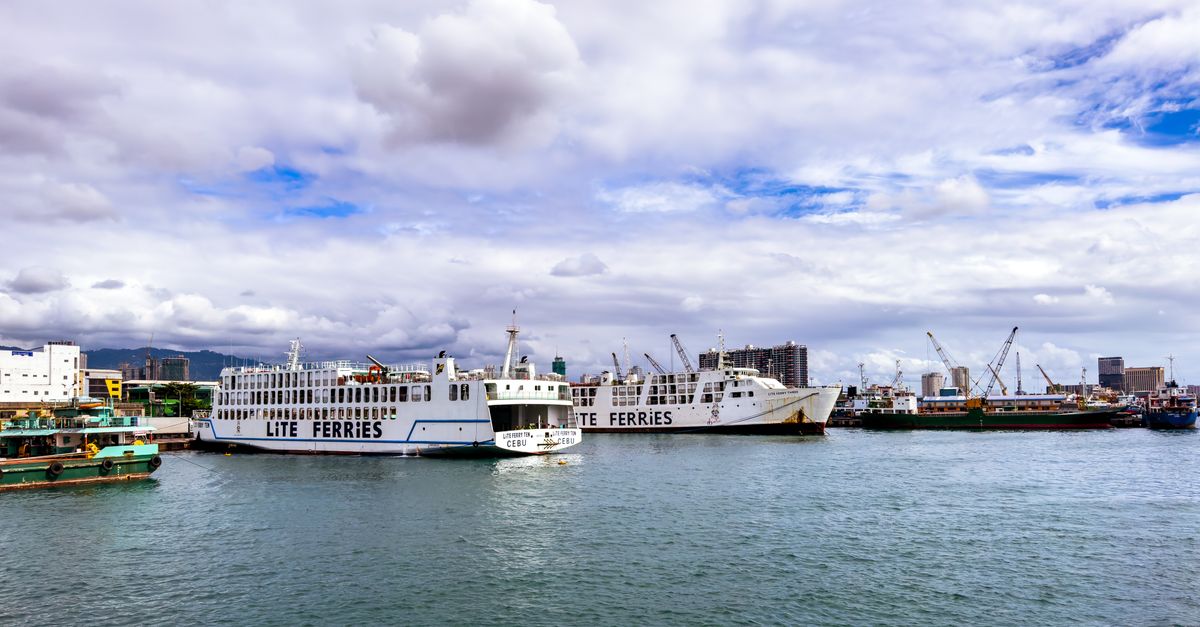
Within the Visayas, fast ferries are the budget alternative to flying. SuperCat and OceanJet operate high-speed catamaran services from Cebu's Pier 1 (near the Carbon Market) to Tagbilaran, Bohol (PHP 600–900, 2 hours), Dumaguete, Negros Oriental (PHP 700–1,000, 2.5 hours), and Cagayan de Oro, Mindanao (PHP 450–700, 4 hours on the overnight slow ferry). Island-hopping from Cebu by boat is dramatically cheaper than inter-island flights and connects to beaches and dive sites that have no airports. For longer routes, 2GO Ferry operates from Cebu's North Reclamation Area terminal.
The cheapest way to reach Cebu City from the airport is by taxi or Grab. Metered taxis from MCIA to Cebu City center (IT Park, Colon, or Fuente Osmeña) cost PHP 250–400. Grab typically runs PHP 200–350 for the same journey with upfront pricing. There is no direct public bus from MCIA to Cebu City — the jeepney network covers Lapu-Lapu City (the island the airport is on) but crossing the Marcelo Fernan Bridge to mainland Cebu requires a taxi or Grab. The journey takes 20–40 minutes depending on traffic; budget 45 minutes during morning peak hours.
Budget Accommodation
Cebu City's budget accommodation clusters in two main zones: the IT Park / Lahug area (modern, walkable, near restaurant streets) and the Colon / Carbon district (older, cheaper, less polished but central). For beach access without paying beach resort prices, Mactan Island accommodation near Maribago or Punta Engaño puts you 10 minutes from snorkeling while remaining close to the airport.

Cebu Backpackers Hostel on Manalili Street (Colon area) offers the city's most sociable dorm experience — 8-bed mixed dorms from PHP 380, private rooms from PHP 850. The staff arrange island-hopping day trips and diving packages at the lowest rates in town. The Colon location is noisy but central; everything in the heritage district is walkable.
Be Hostel (Cebu IT Park) is the best-located budget option for travelers who want the IT Park restaurant scene on their doorstep — dorm beds from PHP 450, private rooms from PHP 1,100. The air conditioning is reliable, lockers are solid, and the IT Park pedestrian zone outside means clean streets and food options open until midnight. Book via their Facebook page or Booking.com for the best rates.
The Henry Hotel (Jones Avenue, uptown) pitches itself as a design hotel but has budget-friendly rooms from PHP 1,500 — exceptional value for the quality, with a pool and free breakfast at this price point. It's worth checking during low season (June–October) when rates drop 20–30%. For genuine budget travelers, the private rooms at Verbena Guesthouse on Salinas Drive (Lahug) run PHP 750–950 for a clean, fan-cooled double — the surrounding area is quiet and restaurants are a 5-minute walk.
Eating Cheaply Like a Local
Cebu's food identity is built around three things: lechon (roast pig), puso (hanging rice, PHP 5–8 per piece wrapped in woven coconut leaves), and the extraordinary density of carinderia and turo-turo canteens that feed the city's working population on PHP 60–100 per meal. The Carbon Market area and the streets around the University of San Carlos and USC Medical Center are the highest-density cheap food zones in the city.

For lechon, the pilgrimage is non-negotiable: CNT Lechon (multiple locations, most reliable branch on General Maxilom Avenue) serves Cebuano-style lechon by the kilo (PHP 450–550/kg) or as a whole pig (PHP 4,500–6,000). For solo travelers, order a quarter kilo (PHP 115–140) — it comes with puso and a small bowl of dipping sauce. The skin shatters; the meat underneath stays impossibly moist. Zubuchon (also multiple Cebu branches) is the other famous option, slightly more expensive but favored by visitors staying in IT Park. Budget PHP 180–220 for a solo lechon lunch that will rearrange your definition of roast pork.
Ngohiong (Cebu's version of deep-fried spring rolls filled with jicama, pork, and five-spice) costs PHP 10–15 per piece at any Carbon Market stall or Colon Street vendor. Two ngohiong plus puso is a complete snack for PHP 30. Tuslob Buwa is Cebu's most idiosyncratic street food: a bubbling vat of pig brain and liver stock in which you dip puso directly. It sounds confronting; it tastes like the richest, most umami-dense dipping sauce imaginable. Vendors near the Parian District in Cebu City serve it for PHP 60–80 per person including puso.
The Sugbo Mercado Night Market at IT Park (open Thursday–Sunday, 5 PM–midnight) brings together 40+ food stalls in an organized night-market format. Prices are slightly higher than carinderia (PHP 100–200 per dish) but the range — grilled squid, crispy pata, mango float, craft beer — in a pleasant outdoor setting makes it the best evening food option for travelers who want variety. Arrive at 6 PM before queues form at the popular stalls.
Free and Low-Cost Attractions
Magellan's Cross — the bamboo-cased cross planted by Ferdinand Magellan upon his arrival in Cebu in April 1521 — sits in a small octagonal chapel beside the Basilica del Santo Niño, a three-minute walk from the Colon Street landmark. Both are free to enter. The Basilica houses the Santo Niño de Cebú, a statue of the Infant Jesus brought by Magellan and given to Rajah Humabon's wife — it's the oldest Christian relic in the Philippines and an object of enormous local veneration. Mass is held multiple times daily; the Saturday evening Mass draws hundreds of devotees.

Fort San Pedro (PHP 30 admission) is the smallest triangular fortress built by the Spanish in Asia, constructed beginning 1565 on the Cebu waterfront. The grounds include a small garden and display panels on the Spanish colonial history of Cebu. It's compact — plan 45 minutes — but the admission price is genuinely nominal for what is essentially the founding site of Philippine Christianity and Spanish colonialism in the archipelago.
The Carbon Market (Cebu's main public market, open from pre-dawn) is entirely free and one of the most sensory-rich experiences in any Philippine city: flower garland sellers, fish mongers, dried goods vendors, and snack stalls in a building that has operated continuously since 1917. No ticket, no tour, just walk through. The fresh-squeezed mango shake stalls on the market periphery charge PHP 40–60.
Taoist Temple (Beverly Hills Subdivision, Lahug) sits on a hill above the city and is free to enter. The incense-filled temple complex offers the best panoramic views of Cebu City and the strait toward Mactan Island. Jeepney or tricycle from Fuente Osmeña: PHP 20–40 one way. The surrounding Beverly Hills neighborhood provides an interesting contrast — upscale residential Cebu above the chaotic city below.
Tops Lookout (Busay Hills) charges PHP 100 admission for the summit viewpoint, reached by Grab (PHP 150–200 one way from IT Park) or motorbike rental. The view over the Cebu Strait at sunset is the best in the province. Combine it with the Taoist Temple on the same afternoon for two viewpoints in one trip.
Getting Around on a Budget
Cebu City's transport is dominated by jeepneys, habal-habal (motorcycle taxis), and tricycles for short distances, with Grab covering everything else. The city is more manageable than Manila — it's smaller, with a recognizable street grid in the downtown area — but traffic on the main corridors (General Maxilom, Osmeña Boulevard, Escario Street) is heavy from 7–9 AM and 5–8 PM.

Jeepneys in Cebu cost PHP 13 (minimum fare, covers first 4 km), with PHP 1.50 per additional kilometer. Key routes: Colon to IT Park via General Maxilom (PHP 13–16, 20 minutes off-peak); Colon to SM City Cebu (PHP 13); Fuente Osmeña to SM Seaside City (PHP 20–25). Routes are announced by the "barker" at jeepney stops and displayed on the windshield placard. Pay directly to the driver or pass your fare forward.
Habal-habal (single motorcycle, passenger riding pillion) is the fastest short-distance transport within the Colon-Carbon-Fuente triangle: PHP 20–40 for most inner-city hops. Negotiate the fare before boarding. They're not regulated in the same way as taxis, but they're ubiquitous and fast — ideal for the 5-minute gap that doesn't warrant a full Grab booking.
Grab operates throughout Cebu City and Mactan Island. GrabCar fares within the city center: PHP 70–150. From IT Park to Mactan Island beaches: PHP 150–250. From Cebu City to the South Bus Terminal (for buses to Oslob whale sharks and Moalboal): PHP 100–180. GrabBike (motorcycle ride-hailing) is available in some areas at PHP 40–80 per short trip.
For destinations outside Cebu City, the South Bus Terminal (near SM City Cebu, accessible by jeepney from downtown for PHP 15–20) serves Moalboal (PHP 65–80, 2 hours), Oslob (PHP 80–100, 3.5 hours), and Kawasan Falls (alight at Badian, PHP 90–110, 3 hours). The North Bus Terminal serves Danao and the northern tip of Cebu. Buses run from approximately 4 AM to 9 PM; no booking required, turn-up-and-go.
Money-Saving Tips
Buy snacks at Carbon Market, not 7-Eleven. The Carbon Market perimeter has dried mango vendors (PHP 50–80 per 100g versus PHP 120–180 at airport shops), banana cue stalls (PHP 10–15 per skewer), and fresh fruit at prices that beat every convenience store in the city. A bag of the freshest mangoes in the Philippines costs PHP 80–120 per kilo here. Stock up for the day before heading out.
Hire a habal-habal for Cebu's hills. Tops Lookout, the Taoist Temple, and the mountain barangays above the city are connected by steep narrow roads where jeepneys don't go. A habal-habal driver will wait for you at the top while you take photos — total round trip PHP 150–250 versus PHP 300–400 by Grab. Negotiate the fare and waiting time upfront.
Book Kawasan Falls as a direct bus trip, not a tour. Package tours from Cebu City to Kawasan Falls (Badian Municipality, southwestern Cebu) cost PHP 800–1,500 per person. The same experience costs PHP 350–500 done independently: bus fare PHP 90–110 each way, canyoneering guide fee PHP 800–1,200 (mandatory, covers safety equipment and guide), and a turo-turo lunch in Badian for PHP 80–100. You save PHP 300–700 and move at your own pace.
Dive at Moalboal instead of Boracay or Palawan. Moalboal (2 hours south of Cebu City by bus) hosts one of the Philippines' most spectacular diving sites: the sardine run at Panagsama Beach, where millions of sardines form a spinning tornado visible from 3 meters depth. A 2-dive package with equipment costs PHP 1,400–1,800 at any of the dozen dive shops on Panagsama Beach — roughly half the price of comparable diving in Boracay or Coron. The bus from Cebu's South Terminal costs PHP 65–80.
PHP 1,200-per-day sample budget: budget hostel dorm PHP 450, lechon lunch PHP 160, carinderia dinner PHP 90, breakfast puso and ngohiong PHP 50, jeepney and habal-habal transport PHP 80, Fort San Pedro entry PHP 30, bottled water and snacks PHP 80, miscellaneous PHP 80. Total: PHP 1,020 — leaving PHP 180 buffer for a beer at the Sugbo Mercado or a mango shake from Carbon Market.
Avoid island resort day passes during peak season. Mactan Island beachside hotels sell day-use passes (PHP 600–1,500) to non-guests for pool and beach access. This is expensive for what you get. Instead, use the public beach at Maribago (free) or book an island-hopping boat trip to Nalusuan or Olango Island — you get snorkeling, a real reef, and lunch included for PHP 500–800.