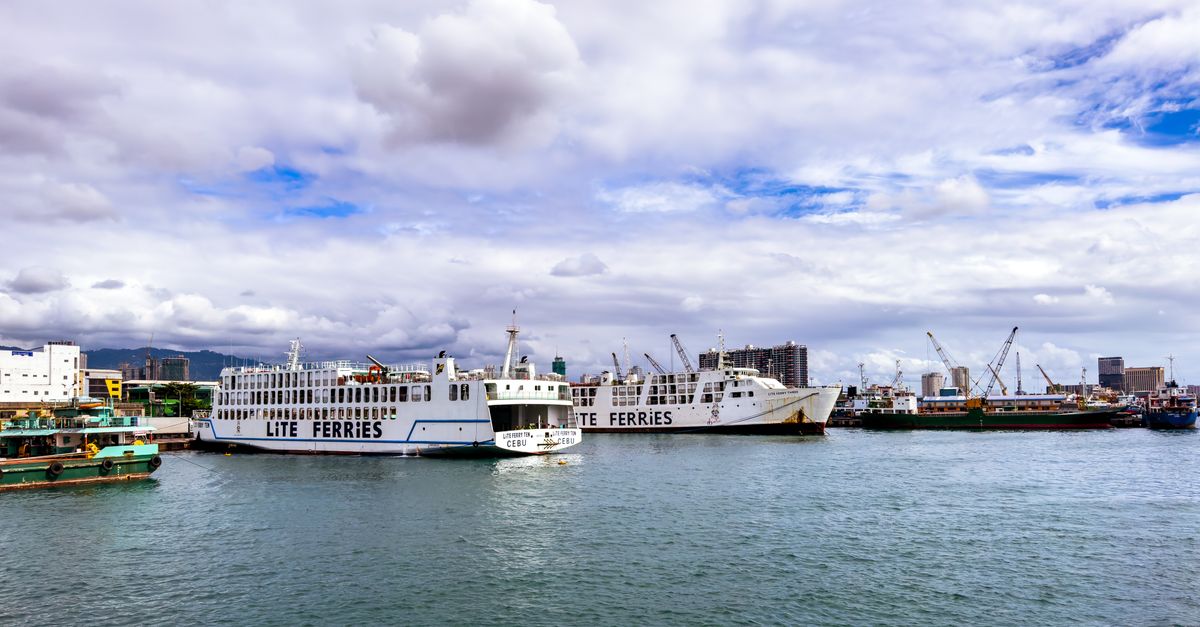
Cebu wins over first-time visitors quickly and completely. It's the Philippines at a manageable scale: a mid-sized city with genuine history on its doorstep, beaches and snorkeling within an hour's drive, world-class diving two hours south, and a food culture so specific to this island — lechon Cebuano, ngohiong, puso hanging rice — that you leave wanting to understand it better. The logistics are simpler than Manila, the traffic is half as bad, and the locals speak English with an accent that many visitors find the clearest and most comprehensible in the Philippines. This guide covers everything you need before, during, and after your first 48 hours in Cebu.
Before You Arrive
Citizens of most countries enter the Philippines visa-free for 30 days. This covers the US, UK, Australia, Canada, the EU, Japan, South Korea, most ASEAN nations, and around 150 other nationalities. The 30-day visa-free stay is extendable to 59 days at any Bureau of Immigration (BI) office — Cebu's BI office is on Osmena Boulevard — for PHP 3,030 in fees. Extensions beyond 59 days require additional applications and higher fees. Check the Philippine Bureau of Immigration website (immigration.gov.ph) before departure; the visa-free list has expanded significantly since 2022 and continues to grow.

Your passport must be valid for at least six months beyond your planned departure date. You may be asked at check-in (and again at immigration) for proof of onward travel — a return or outbound ticket for within the 30-day window. Immigration officers enforce this inconsistently, but having a real or flexible onward booking (Cebu Pacific's FlexiFly allows changes for a small fee) is advisable.
Currency is the Philippine Peso (PHP). At time of writing: 1 USD = approximately PHP 56–58; 1 GBP = approximately PHP 70–73. The economy runs heavily on cash in markets, carinderia restaurants, jeepneys, and most budget accommodation. Major hotels, SM malls, and chain restaurants accept Visa and Mastercard. Bring PHP 2,000–3,000 in local currency for your first day; ATMs in Cebu City (BDO, BPI, Metrobank) are reliable and widely distributed, with international card surcharges typically PHP 200–250 per withdrawal. Withdraw larger amounts to minimize fees.
Buy a local SIM on arrival. Globe and Smart are the two major networks — both have kiosks inside the Mactan-Cebu International Airport arrivals hall. Tourist SIMs cost PHP 99–199 including a starter data bundle (6–15 GB). A 30-day data renewal runs PHP 299–499. DITO Telecommunity offers cheaper plans (PHP 199 for 30 days, 25 GB) with strong Cebu City coverage. A functioning SIM gives you Grab (transport), Google Maps (navigation), and GCash (e-wallet payments) — the three apps that make Cebu straightforward rather than puzzling.
Getting from the Airport
Mactan-Cebu International Airport (MCIA) occupies Mactan Island, connected to Cebu City (the main island) by two bridges: the Marcelo Fernan Bridge and the older Mactan-Mandaue Bridge. The newer Terminal 2 (opened 2018, handling international flights and most Cebu Pacific services) is architecturally striking and efficiently organized. Terminal 1 handles some domestic carriers and overflow. Both terminals share the same road network.

The official metered taxi rank is outside the arrivals exit at both terminals. Metered fares from MCIA to key Cebu City destinations: IT Park (PHP 250–320), Fuente Osmeña / Colon (PHP 300–400), SM City Cebu (PHP 280–360). Journey time to Cebu City: 25–45 minutes depending on traffic — longer during weekday morning and evening peaks and on Sunday evenings. The taxis are metered, air-conditioned, and the drivers are generally honest. Confirm the meter is running at the start of the journey.
Grab operates from a designated app-based pick-up zone outside MCIA Terminal 2. Fares to Cebu City typically run PHP 200–350 with upfront pricing. Download the app and set your destination before clearing immigration so it's ready when you exit. GrabCar is slightly cheaper than the metered taxi to most central Cebu City destinations and provides a tracked record of your journey.
There is no direct public bus from the airport to Cebu City. Some travelers take a jeepney from just outside the airport perimeter to Mactan's main road, then another jeepney to the Marcelo Fernan Bridge area, then another to Cebu City — a PHP 40–60 adventure taking 60–90 minutes that makes sense only if you're carrying minimal luggage and have time to spare. For any first visit, the taxi or Grab is worth the extra cost.
Getting Around Cebu
Cebu City is more navigable than Manila. The downtown core (Colon, Carbon Market, Basilica, Fort San Pedro) is compact enough to walk in parts, and the IT Park area in Lahug operates as a genuine pedestrian-friendly zone in the evenings. That said, the city's hills and traffic still make transport understanding essential.

Grab is the most reliable all-purpose transport — book directly from your phone for upfront pricing, no negotiation required. GrabCar fares within the city: PHP 70–180 for most journeys. GrabBike (motorcycle) runs PHP 40–80 for short hops and beats both jeepneys and habal-habal for speed during peak hours, though it requires a helmet (usually provided). For journeys outside Cebu City — Moalboal, Oslob, Kawasan Falls — book a GrabCar for direct door-to-door transport or take the bus from South Terminal (far cheaper, see below).
Jeepneys are the cheapest way to move between major districts for PHP 13–20. Google Maps now integrates many Cebu jeepney routes — select transit and the app shows jeepney and bus options alongside walking. The key jeepney corridors for visitors are: Colon to Fuente Osmeña (PHP 13), Fuente Osmeña to SM City Cebu (PHP 15–20), and the Carbon Market to IT Park route along General Maxilom Avenue (PHP 13–18). Destinations further afield — SM Seaside City, Mactan Shrine — require a combination of jeepney and tricycle or a direct Grab.
Habal-habal (motorcycle taxis) fill the gap for steep hills and narrow streets that jeepneys can't navigate. Negotiate before boarding: PHP 25–50 for most inner-city trips, PHP 100–200 for hill destinations like the Taoist Temple or Tops Lookout. They're fast, flexible, and used without hesitation by Cebuanos of all ages. EDSA-equivalent traffic jams are a Cebu rarity — the city breathes better than Manila.
For out-of-city travel, the South Bus Terminal near SM City Cebu (PHP 15–20 by jeepney from downtown) serves Moalboal (PHP 65–80, 2 hours), Oslob (PHP 80–100, 3.5 hours), and the Kawasan Falls/Badian turnoff (PHP 90–110, 3 hours). Buses are air-conditioned or ordinary (slightly cheaper); no advance booking required. Arrive at 6–7 AM for the best seats and earliest arrival at whale shark and waterfall sites.
Where to Base Yourself
Cebu City's geography sorts neatly into three traveler zones, each with a distinct character and trade-off. Understanding the difference before booking accommodation prevents the frustration of being based in the wrong part of a city you can't navigate on foot.

IT Park (Lahug district) is the best base for most first-timers. Developed around a former Cebu International Airport site, it's now a clean, pedestrian-friendly business and lifestyle district with a night market (Sugbo Mercado, Thursday–Sunday), dozens of restaurants covering every cuisine and price point, and consistent 24/7 activity. Accommodation ranges from PHP 450 dorm beds (Be Hostel) to mid-range hotels at PHP 1,800–3,000. The downside: it's 25–30 minutes by jeepney from Colon and the heritage district, meaning a small daily transport cost to reach the historical sights.
Colon and the Carbon Market area form the heart of old Cebu — the heritage center within walking distance of Magellan's Cross, the Basilica del Santo Niño, Fort San Pedro, and the Colon Street commercial district (the oldest street in the Philippines, established 1565). Staying here puts you inside living history. Budget accommodation is cheaper than IT Park (PHP 350–900 for dorms and private rooms), but the neighborhood is dense, noisy, and requires more street awareness. Best for travelers who prioritize sights over social scene.
Mactan Island — specifically the Maribago and Punta Engaño areas near the airport — makes sense only if your trip revolves around beach and water activities. You're 5 minutes from the airport, 10 minutes from snorkeling sites, and immediately accessible to island-hopping operators. The trade-off: Cebu City's food scene, markets, and historical core are 30–45 minutes away. Mactan-based accommodation runs PHP 800–2,000 for budget options; the island hosts everything from backpacker guesthouses to five-star beach resorts.
Local Culture and Etiquette
Cebu is the Philippines' second city but carries its own distinct cultural identity separate from Manila. Cebuanos speak Cebuano (Bisaya) as their first language — not Tagalog — and take quiet pride in this distinction. The island's historical claim is extraordinary: Cebu City was the first Spanish settlement in the Philippines (1565), and the Cebuanos were the first Filipinos to be baptized as Christians (1521, under Rajah Humabon). This foundational history shapes the city's intense Catholic devotion and its sense of itself as a capital in its own right, not a provincial appendage to Manila.

The Sinulog Festival — held on the third Sunday of January each year — is one of the largest and most spectacular festivals in Asia. The nine-day celebration honors the Santo Niño (Infant Jesus) with street dancing, drum parades, and a massive grand parade that draws millions of devotees and spectators to Cebu City. Accommodation must be booked months in advance for Sinulog weekend, and prices triple. For visitors who can plan around it, Sinulog is a once-in-a-lifetime experience; for those who arrive during it unknowingly, the crowds and prices can be overwhelming.
Language opens doors here in particularly immediate ways. Learning even five words of Cebuano earns a response that transcends polite hospitality. "Maayong buntag" (good morning), "salamat" (thank you), "pila man?" (how much?), and "lami kaayo!" (very delicious!) will generate genuine delight in carinderia stalls, markets, and conversations throughout the island. Cebuanos often remark with amusement when visitors assume Tagalog is the local language — knowing the difference is itself a form of cultural respect.
Catholic church etiquette applies throughout Cebu as it does across the Philippines. Cover shoulders and knees when entering the Basilica del Santo Niño — this is an active place of worship, not a museum, and Mass is celebrated multiple times daily. Photography is generally permitted in the church exterior and courtyard; inside the basilica during Mass, be discreet and prioritize silence over photo opportunities. The Santo Niño relic is behind glass in a side altar; devotees queue to touch the glass — joining this queue is welcome if you approach it with genuine respect.
Cebuanos are forthcoming with food recommendations, directions, and general hospitality to a degree that surprises most first-time visitors. Asking a local for the best lechon restaurant or the fastest route to the Carbon Market almost invariably results in a 5-minute conversation, two or three follow-up recommendations, and occasionally an offer to walk you partway there. Accept this warmth — it's genuine, not a prelude to a sales pitch.
Common Mistakes to Avoid
Agreeing to a "fixed rate" taxi from the airport. The most common first-timer mistake in Cebu. Drivers who approach you before you reach the metered queue will quote PHP 600–1,000 for journeys that meter at PHP 250–350. Always proceed to the official taxi rank and insist on the meter ("i-on ang metro, please"), or book Grab from the designated app zone. The difference is PHP 300–600 per ride — significant on a budget trip.
Confusing Cebu City with Mactan Island. MCIA Airport is on Mactan Island, separated from Cebu City by the Cebu Strait and connected by two bridges. When locals refer to "Cebu City," they mean the mainland city — Colon, Fuente Osmeña, IT Park, Carbon Market. When they say "Mactan," they mean the island with the airport and most beach resorts. Booking a hotel labeled "Cebu City" that turns out to be on Mactan (or vice versa) changes your transport requirements entirely. Check the map on Booking.com or Google Maps before confirming.
Skipping the whale sharks at Oslob due to ethics concerns without understanding the context. Oslob's whale shark interaction draws legitimate debate. The sharks are fed to keep them in the area, which alters their natural behavior. This is worth knowing. However, the alternative for most travelers who don't dive Tubbataha — the protected open-ocean site where sharks are observed without feeding — is not seeing whale sharks at all. Make an informed choice: the Oslob interaction is tightly managed (no touching, minimum approach distances, limited boats), and the revenue directly supports the fishing community that previously hunted whale sharks. Boycotting on principle is valid; going in with full awareness is equally valid.
Underestimating the South Cebu day-trip timing. Oslob (whale sharks) and Kawasan Falls (canyoneering) are both in the southern part of Cebu island, 3–4 hours from Cebu City by bus. Combining both in a single day is physically possible — leave at 4 AM, whale sharks by 7 AM, drive to Kawasan by 10 AM, finish by 2 PM, bus home by 6–7 PM — but it's exhausting. Most visitors wish they'd stayed overnight in Moalboal (between the two sites) to spread the activities over two days. Budget accommodations in Moalboal cost PHP 500–900 per night.
Eating at the Colon Street food stalls without checking the "total." A handful of vendors on Colon Street — the main heritage walking street — have developed a practice of presenting food without discussing price, then naming a figure significantly above local rates when tourists go to pay. This is rare but not unheard of. The simple prevention: always ask "pila?" (how much?) before ordering, and confirm the price if something seems ambiguous. The vast majority of Cebu vendors are honest; this applies specifically to un-priced items in the highest-tourist-footfall areas.
Overlooking Moalboal as a dive and snorkel base. First-timers often plan a full week in Cebu City without building in an overnight trip to Moalboal. This is a genuine missed opportunity. The sardine run at Panagsama Beach — millions of sardines forming a swirling, shape-shifting mass in shallow water — is snorkeling-accessible (no scuba required) and one of the most surreal natural spectacles in the Philippines. The beach itself is a pebble beach (not sand), but the diving and snorkeling compensate entirely. Two-dive packages at any of Moalboal's dive shops cost PHP 1,400–1,800 including equipment.
Arriving without a basic Cebu itinerary skeleton. Cebu has more to offer than most visitors realise — and the activities range from historical walks (2 hours) to full-day diving expeditions to multi-day island-hopping. Without some advance planning, it's easy to spend three days in IT Park eating lechon and not leaving the city, missing the island's extraordinary natural attractions entirely. Build at least one day trip (Oslob, Kawasan, or Moalboal) into any stay of three days or more. The investment is minimal; the experience is disproportionately large.


