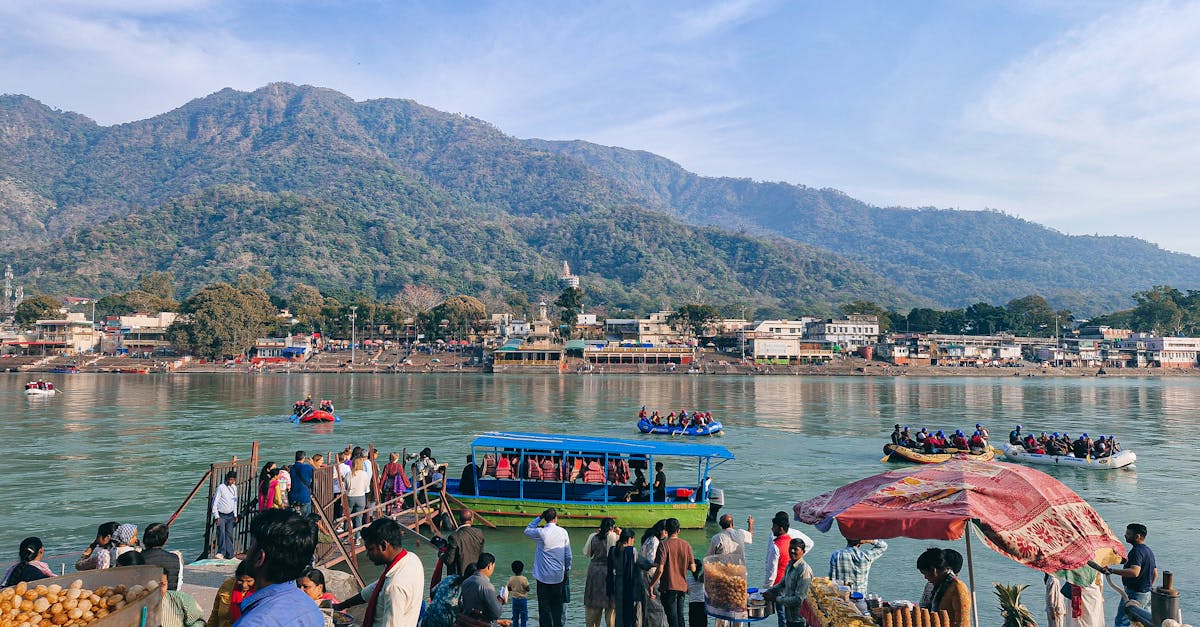
Rishikesh is India's yoga capital and the gateway to the Himalayas — a small city on the Ganges where ashrams, adventure sports, and spiritual seeking coexist in a surprisingly harmonious way. The Beatles came here in 1968 to study with Maharishi Mahesh Yogi, and the city has attracted seekers ever since. Three days gives you yoga, white-water rafting, and the unforgettable experience of the Ganga Aarti in a Himalayan setting.

Ram Jhula, Ashrams & Ganga Aarti
Morning — Ram Jhula & Laxman Jhula: Walk across the iconic suspension bridges spanning the Ganges. The surrounding ashrams, temples, and yoga centers create a spiritual atmosphere. Visit Parmarth Niketan ashram — India's largest, with free morning yoga sessions at 6 AM and evening aarti ceremonies.
Midday — Beatles Ashram: The abandoned Maharishi Mahesh Yogi ashram (₹600 for foreigners) where the Beatles stayed in 1968 is now covered in graffiti art and reclaimed by jungle. Atmospheric and photogenic. The meditation domes are haunting. Allow 1-2 hours.
Afternoon — Triveni Ghat Walking: Walk along the river ghats from Triveni Ghat downstream. Sadhus meditate on rocks, pilgrims bathe, and the green Himalayan foothills frame every view. Stop at a riverside cafe for chai (₹15-20) and watch the river flow.
Evening (6:00 PM) — Ganga Aarti at Triveni Ghat: The nightly fire ceremony is smaller but more intimate than Varanasi's. Priests perform aarti with flaming lamps as the sun sets behind the foothills. The mountain-river setting adds a dimension that Varanasi lacks. Free, arrive 30 minutes early for a seat.
Rafting, Yoga & Waterfalls
Morning (6:00 AM) — Yoga Class: Drop-in classes are available at dozens of ashrams and studios. Parmarth Niketan (free, 6-7:30 AM) and Sivananda Ashram (donation-based) offer traditional hatha yoga. Private studios like Tattvaa Yogashala charge ₹300-500/class for smaller groups. Bring your own mat or rent one.
Late Morning — White Water Rafting: The Ganges offers Grade III-IV rapids — thrilling but safe for beginners. Half-day trips (₹600-1,000) cover 16-26 kilometers of rapids with calm stretches for swimming. Full-day trips (₹1,500-2,500) include camping. Book through reputable operators — Red Chilli Adventure is reliable.
Afternoon — Neer Garh Waterfall: A 2-kilometer trek from Laxman Jhula reaches this multi-tier waterfall with natural pools. Entry ₹35. Swim in the cold mountain water — refreshing after rafting. The trail is easy but steep in sections. Bring water shoes.
Evening — Cafe Culture: Rishikesh's cafes along the river serve vegetarian food, fresh juice, and the traveler-community atmosphere that defines the city. Little Buddha Cafe has Ganges views and wood-fired pizza (₹200-350). Freedom Cafe serves Israeli food (₹150-250).
Bungee, Temples & Departure
Morning — Bungee Jumping (Optional): India's highest bungee jump (83 meters) at Jumpin Heights (₹3,550) is 15 kilometers from Rishikesh. Giant swing and flying fox also available. Book online — same-day availability is rare. The canyon setting adds drama to the already extreme experience.
Alternative Morning — Kunjapuri Temple Sunrise: Drive 25 kilometers (₹800-1,000 by taxi) to this hilltop temple for sunrise views over Himalayan snow peaks, the Ganges valley, and surrounding forests. Clear mornings (October-March) reveal Himalayan peaks from Banderpunch to Chaukhamba. Leave by 4:30 AM.
Afternoon — Swarg Ashram & Shopping: Browse the shops along Ram Jhula for yoga gear, meditation shawls, singing bowls, and Ayurvedic products. Swarg Ashram area has bookshops specializing in Hindu philosophy and yoga texts. Rudraksha bead malas make meaningful souvenirs (₹200-2,000).

Practical Tips
India is intense, overwhelming, and deeply rewarding — a country where every sense is engaged simultaneously. First-time visitors should prepare for crowds, noise, heat, and persistent touts while remaining open to the extraordinary warmth, spirituality, and beauty that define the Indian experience. The Indian rupee (₹) offers excellent value — budget ₹2,000-4,000/day for comfortable mid-range travel.
Food safety matters in India. Drink only bottled water (₹20-50), avoid raw salads at local restaurants, eat freshly cooked food (the hotter the better), and peel all fruits. Street food is generally safe if the stall is busy (high turnover = fresh food). If you do get sick, pharmacies sell Norfloxacin and electrolytes over the counter. India rewards a strong stomach — the food is worth the risk.
Indian transport varies by distance and budget. For cities, use Uber/Ola (₹50-200 for most trips). Between cities, trains are India's best experience — book on IRCTC website or app. Domestic flights connect major cities cheaply (IndiGo, SpiceJet). Auto-rickshaws are essential for last-mile transport — insist on the meter or agree on a fare before starting. Traffic is chaotic everywhere — cross streets assertively and don't make eye contact with drivers (it signals them to speed up).
Best Times to Visit & Budgeting
Timing your visit matters enormously for both weather and crowds. Peak tourist seasons bring higher prices, sold-out accommodations, and crowded attractions. Shoulder seasons (the weeks just before and after peak) often deliver the best balance — good weather, manageable crowds, and reasonable prices. Off-season travel is the cheapest but check for monsoon rains, extreme heat, or seasonal closures.
Budget planning for three days should account for accommodation (30-40% of total), food (20-25%), transport (15-20%), activities and entrance fees (15-20%), and a contingency buffer (10%). The biggest savings come from choosing accommodations wisely — a well-located mid-range hotel that eliminates taxi costs can be cheaper than a budget hotel in a remote area plus daily transport.
Travel insurance is non-negotiable. A single hospital visit in most Asian countries costs more than a year of comprehensive travel insurance (0-80 for a 2-week trip). Ensure your policy covers emergency medical evacuation — this is the expensive scenario that justifies the premium. Download your policy documents to your phone for offline access.
Currency exchange tips: ATMs generally offer better rates than airport exchange counters. Withdraw larger amounts less frequently to minimize per-transaction fees. Carry some US dollars (0-100) as universal backup — they're accepted in emergencies across most of Asia. Notify your bank of travel plans to prevent card blocks. Use a travel-specific card (Wise, Revolut) for the best exchange rates and lowest fees.
Download essential apps before arriving: Google Maps (with offline maps for your destination), Google Translate (with offline language packs), the local ride-hailing app (Grab for Southeast Asia, DiDi for China, Uber/Ola for India), and your accommodation booking confirmation. A portable battery pack (10,000-20,000 mAh) keeps your phone alive through a full day of navigation, photography, and ride-hailing.
Neighbourhoods to Know
Rishikesh divides naturally into distinct zones, each with a different atmosphere and purpose. Understanding this geography before you arrive saves confusion and helps you choose the right base for your interests. The city sits on the Ganges where it descends from the Himalayas, and the neighbourhoods are separated by the two famous suspension bridges — Ram Jhula (also called Shivananda Jhula) and Laxman Jhula — that cross the river about two kilometres apart.
Laxman Jhula is the traveller hub: the area around the bridge on the east bank is dense with ashrams, yoga studios, cafes, guesthouses, and shops selling yoga mats, rudraksha beads, and Ayurvedic products. This is where most backpackers and yoga retreat visitors base themselves. The streets are narrow, permanently busy, and full of both seeking and selling. Key spots include the 13-storey Kailashanand Mission Temple visible from across the river, and the string of rooftop cafes with Ganges views (masala chai ₹20-30, banana pancakes ₹80-120).
Ram Jhula sits two kilometres south and has a more traditionally devotional atmosphere, anchored by the Parmarth Niketan ashram — India's largest, with 1,000 rooms and a nightly Ganga aarti ceremony attended by thousands. The area around Swarg Ashram on the east bank is calmer and more meditation-focused. Triveni Ghat — 1.5 kilometres further south toward the main city — is the main bathing ghat where pilgrims, sadhus, and tourists share the riverbank. The contrast between the spiritually electric Triveni Ghat and the backpacker cafe culture of Laxman Jhula is one of Rishikesh's most interesting qualities.
The main city area (Rishikesh proper) near the bus stand and railway station is a working Indian town with markets, pharmacies, and transport connections — useful for logistics but not where you want to spend your days. Base yourself in the Laxman Jhula or Ram Jhula zones to stay within walking distance of the river, the ashrams, and the rafting departure points. Most visitors arrive by shared taxi from Haridwar (₹50-80, 45 minutes) or private cab from Dehradun airport (₹800-1,200, 1.5 hours).