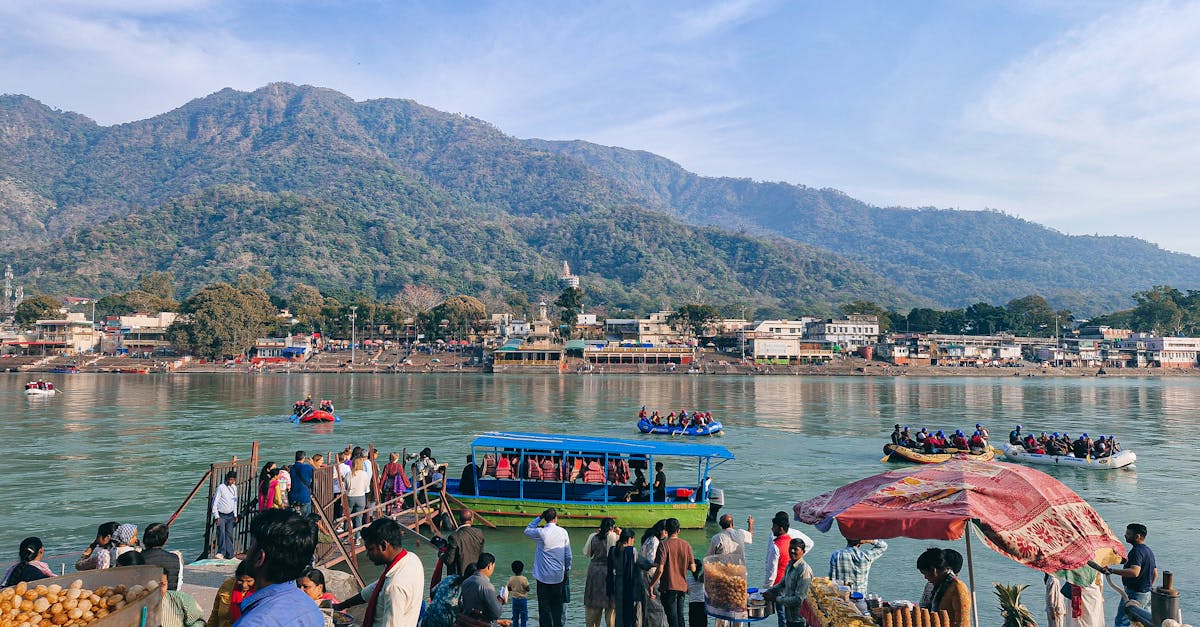
Rishikesh is unlike any other destination in India — a small city on the Ganges where the Himalayas begin, where global yoga culture and ancient Hindu pilgrimage coexist on the same narrow riverside lanes, and where the noise and chaos of most Indian cities gives way to something quieter, stranger, and more profound. It is a place where a visiting backpacker might sit two meters from a meditating sadhu, both watching the same river. First-timers need a specific kind of preparation: less about logistics and more about the orientation of mind that makes Rishikesh make sense. This guide covers everything you need before you arrive, and the specific mistakes that turn a potentially life-changing trip into an avoidable frustration.
Before You Arrive
Most visitors to Rishikesh require an Indian e-Tourist Visa, available online at indianvisaonline.gov.in to citizens of over 160 countries. The 30-day single-entry e-Visa costs USD 25; the one-year multiple-entry e-Visa costs USD 40 and is the better choice if you plan any re-entries or an extended India trip. Apply at least 4-5 days before travel, though 10 days is safer — approval typically takes 24-72 hours but can be longer during peak periods. Print your approval letter and carry it to the immigration desk on arrival.

Currency: the Indian rupee (INR) trades at approximately INR 83-85 per USD. Withdraw cash from ATMs on arrival — HDFC, ICICI, and SBI machines are reliable and dispensed in ₹500 and ₹200 notes. Carry smaller denominations (₹100, ₹50, ₹20) for chai, auto-rickshaws, and street food. In Rishikesh specifically, many ashrams, street stalls, and smaller guesthouses are cash-only. ATMs exist in the main town area and near the bus stand, but are scarce in the Laxman Jhula and Tapovan zones — withdraw cash before heading to those areas.
SIM card: buy a Jio or Airtel tourist SIM at Jolly Grant Airport (Dehradun) or at the Rishikesh bus stand. Jio prepaid plans (₹500-600) offer 1.5-2 GB/day for 28 days and are the most reliable in mountain areas. Bring your passport for registration — SIM activation takes 2-24 hours due to government verification requirements. Keep international roaming active as backup until the local SIM works.
What to pack: lightweight, modest clothing that covers shoulders and knees for ashram visits (tight yoga wear is fine inside studios but not appropriate for walking the ghats or entering temples). Bring at least one long scarf or shawl — it serves as a head covering, a sun protector, a light blanket on cold evenings, and a prayer shawl all in one. A pair of easy slip-on shoes or sandals is essential since you'll be removing footwear constantly at temples, ashrams, and ghat steps. Bring a yoga mat if you're serious about daily practice; otherwise rent one (₹30-50/day at most studios). Layers are necessary — Rishikesh mornings in October-March are cold (8-15°C) even when afternoons reach 22-28°C.
Getting from the Airport
Jolly Grant Airport (DED), located 18 kilometers east of Dehradun city and about 35-40 kilometers from Rishikesh, serves the region with daily IndiGo, Air India, and SpiceJet flights from Delhi (45-60 minutes, ₹1,500-4,000 depending on booking timing), Mumbai (2 hours, ₹3,000-6,000), and Bangalore. It is a small, functional airport with one terminal — baggage appears quickly and customs/immigration is straightforward.

From Jolly Grant Airport to Rishikesh, you have three options. The most straightforward for first-timers is a pre-paid taxi from the airport taxi counter: fixed rate of approximately ₹800-1,200 to Laxman Jhula or Ram Jhula areas, journey time 45-75 minutes depending on traffic. No negotiation required — pay at the counter and you're handed a slip with your car number.
The cheapest option requires more patience: take a local bus from the airport gate to Rishikesh via Dehradun's main ISBT bus terminal. Total time is 2-2.5 hours with the connection, total cost ₹80-120, but involves navigating two unfamiliar bus stations with luggage on your first day in India — not recommended unless you're a seasoned Indian traveler.
The middle-ground option: Ola or Uber cabs from the airport to Rishikesh run ₹500-800 app price and are trackable, with driver details confirmed before you board. Book as you exit the terminal — app service is reliable here, though surge pricing during flight arrival peaks can push fares toward ₹1,000.
If arriving from Delhi by train (to Haridwar), the connection to Rishikesh is by shared jeep (₹50-80, 45 minutes) or Ola/Uber (₹350-500). Shared jeeps depart from outside Haridwar Junction station and are the most used option by budget travelers — ask any local and you'll be pointed to the jeep stand within minutes.
Getting Around
The most important thing to understand about Rishikesh's geography is that it is not one place — it is a loose collection of neighborhoods strung along the Ganges for about 5 kilometers, connected by riverside ghats, one main road, and the two famous suspension bridges. The tourist areas (Laxman Jhula, Ram Jhula, Tapovan, Swarg Ashram) are all on the same strip, and most of what you want to do is within a 45-minute walk of anywhere in this zone.

Walking is the primary mode of transport and should be embraced rather than avoided. The riverside path from Triveni Ghat north through Ram Jhula to Laxman Jhula is one of the most scenic urban walks in India — temples, ghats, sadhus, chai wallahs, and the constant backdrop of a mountain river. Do this walk at least twice: once at sunrise and once at dusk. It costs nothing and reveals the city's character better than any guided tour.
Shared Vikram auto-rickshaws (large green 3-wheelers) serve fixed routes along the main road for ₹10-20 per person. Tell the driver your destination — if it's on his route, he'll gesture you aboard. For longer or more specific journeys, private auto-rickshaws cost ₹50-150 depending on distance. Always agree the fare before boarding. Refuse any driver who offers to take you to a shop or "a nice restaurant his cousin runs" — commission tours are a universal irritant here.
Shared jeeps from Laxman Jhula toward Shivpuri (for rafting) depart when full for ₹30-50 per seat. For Kunjapuri Temple (25km for sunrise views) or the Beatles Ashram (6km), you'll need a private vehicle — ₹600-1,000 for the whole taxi, best shared with 3-4 travelers from your hostel. Motorcycles and scooters can be rented at a few shops near Laxman Jhula for ₹500-800/day and are useful for exploring the hills, though the roads are narrow and the mountain driving requires experience.
Where to Base Yourself
Rishikesh divides into three distinct traveler zones, each with a different atmosphere and purpose. Choosing the right base determines what kind of Rishikesh experience you have.

Laxman Jhula is the backpacker hub: the east bank area around the bridge is the densest concentration of guesthouses, yoga studios, cafes, and shops selling yoga mats and Ayurvedic supplements in the city. Streets are narrow, permanently busy, and full of both genuine seeking and relentless commercial activity. If you want to be at the center of the traveler social scene, near shops, and within easy walking of good cafes and cheap food, base here. Expect more noise (street traffic, music from cafes) and slightly higher prices than further areas. Most guesthouses are ₹500-1,500 for a double room.
Ram Jhula, 2 kilometers south, is the devotional center. The Parmarth Niketan Ashram — India's largest, with 1,000 rooms — anchors this zone, and the atmosphere is quieter and more spiritually focused. Swarg Ashram on the east bank is a pedestrian-only area of temples, ashrams, and small shops selling rudraksha beads and religious items. Base here if your priority is yoga retreats, meditation, or immersing in ashram life. The nightly Ganga Aarti at Parmarth Niketan ghats is the most spectacular in Rishikesh.
Tapovan, 1-2 kilometers north of Laxman Jhula, is the long-term traveler and yoga-teacher-training zone. Quieter, slightly cheaper, and more community-oriented than either bridge area. Cafes here tend toward the health-conscious (Ayurvedic menus, organic juices) rather than the traveler-comfort food of Laxman Jhula. If you're staying more than 4-5 days and want a quieter, less commercialized experience, Tapovan is the best choice. Good hostel options here include the Byke Destination and several independent guesthouses from ₹600-1,000/double.
Local Culture and Etiquette
Rishikesh is a sacred city, and while it has accommodated a global traveler community for decades, certain cultural expectations remain non-negotiable. Understanding them before you arrive transforms every interaction from polite tolerance to genuine exchange.

Temples and ashrams require shoes off before entry — always, everywhere, without exception. Leave them at the shoe rack outside (usually attended, free of charge) or with a volunteer. Walking into a temple porch in flip-flops and pausing to remove them mid-step is fine; walking into the main prayer hall shod is deeply disrespectful. Develop the habit of checking for a shoe rack the moment you approach any religious site.
Dress modestly at all religious sites. Shoulders and knees should be covered in temples, at the ghats during aarti ceremonies, and inside ashrams. Yoga wear — leggings, sports bras, sleeveless tops — is entirely appropriate inside yoga studios and at beachside or poolside settings, but put a layer on before walking between sessions. This is not about conservative judgment; it's about the fact that the ghat is also where pilgrims bathe at dawn and priests perform rituals, and their space deserves the same respect you'd extend in a church or mosque.
Sadhus — Hindu holy men, often dressed in saffron robes or sometimes naked, their bodies covered in ash — are a constant presence on the ghats and near the bridges. Many are genuine renunciants living ascetic lives of spiritual practice. Some will invite you to sit with them and share their fire; this can be a profound exchange if approached with genuine curiosity and respect. Others are effectively professional tourists attractions charging ₹50-200 for a photograph. Read the situation — a sadhu who approaches you for money has already communicated his priorities. Don't photograph sadhus without asking first.
The Ganga is sacred to Hindus — not metaphorically but literally, as the physical manifestation of the goddess Ganga Mata. Swim and bathe with respect for what the river means to pilgrims bathing alongside you. Do not discard litter, plastic, or food packaging into the river. At the ghats, follow the flow of devotional activity rather than standing across it — position yourself to observe without blocking the natural movement of pilgrims.
Common Mistakes to Avoid
Booking only 2 nights. Rishikesh is one of those destinations that reveals itself slowly. The first day is orientation and acclimatization. The second day is where you start to feel the rhythm. Days three and four are when the place actually gets under your skin. Visitors who book two nights almost universally wish they'd booked four or five. Block at minimum three nights; five is better.
Rafting on the first day with a hotel tout. Every guesthouse reception in Rishikesh has a relationship with a rafting operator and will offer to book you in immediately upon check-in. The convenience costs you ₹200-500 in commission markup. Walk to the Shivpuri launch point yourself (or take a ₹30 shared jeep) and book directly with an operator there for ₹600-800. More importantly, do not raft on your first morning before you've got your bearings — you'll be rushed, jet-lagged, and unable to appreciate the experience properly.
Ignoring the early morning. The best of Rishikesh — the ghat walks, the yoga classes, the dawn light on the Ganges, the Triveni Ghat morning aarti — happens before 8 AM. Visitors who sleep until 9 AM are missing the city's most distinctive hours. Set an alarm for 5:30 AM at least twice during your stay.
Eating only at traveler cafes. The Israeli hummus and banana pancake cafes are comforting but entirely avoidable. The local thalis at small dhabas near the ghats are ₹80-120, more nutritious, and will introduce you to the actual food culture of North India rather than an international approximation of it.
Entering the Ganges without checking river conditions. The Ganges near Rishikesh has strong currents, especially in the post-monsoon period (September-October) when the river is running high. Check with locals or your guesthouse before swimming. Bathing in the shallows near the main ghats during calm conditions is fine; swimming in the main channel is dangerous and has killed experienced swimmers. The white-water rafting section is managed with professional guides — that's the safe way to be in the river at full flow.
Paying full price for yoga without first attending a free class. Parmarth Niketan's free 6 AM yoga is legitimately excellent. Sivananda Ashram's donation-based sessions are the real thing. Do these before paying ₹500-800 per session at a commercial studio — you may find free is better.
Expecting 4G data everywhere. Network coverage in the Tapovan and Swarg Ashram areas is patchy. Jio performs better than Airtel in most of the Laxman Jhula-Tapovan zone, but dead spots exist, particularly on the east bank south of Ram Jhula. Download offline Google Maps of Rishikesh before you lose signal. This also applies to the rafting stretch — you won't have a phone signal on the river.