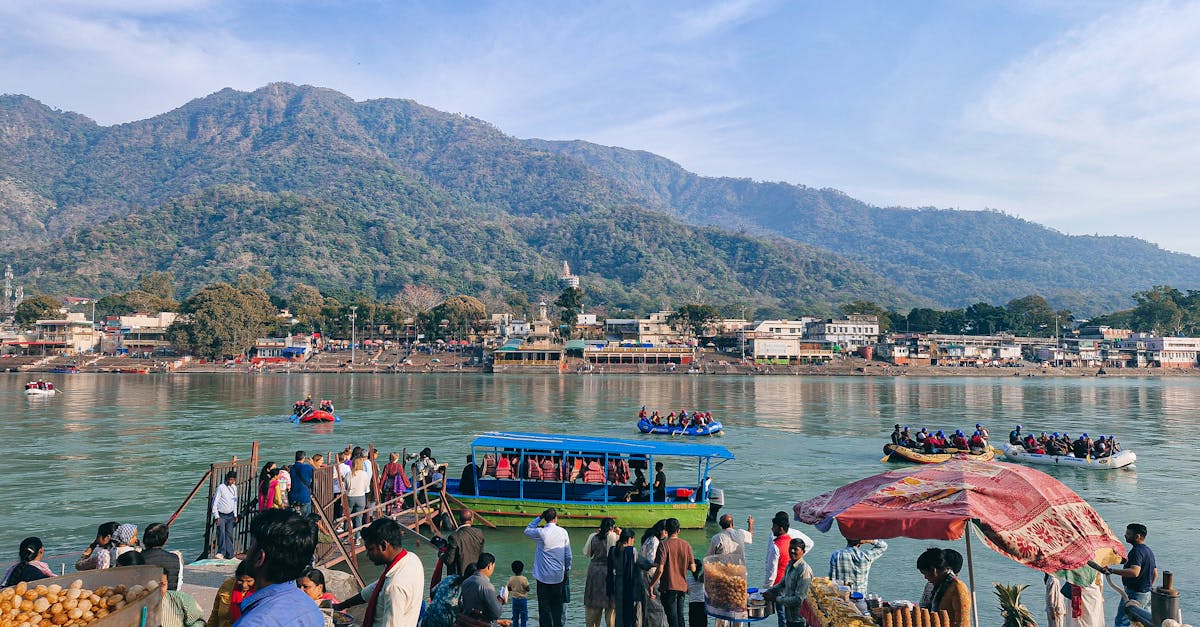
Rishikesh has been discovered, re-discovered, and packaged so thoroughly that the town sometimes feels like a spiritual theme park rather than a genuine pilgrimage site. The yoga ashrams of Tapovan, the bungee jump operators, the cafes selling banana pancakes — all of these have their place, but they've created a tourist experience that hovers on the surface of a city that's actually much stranger and more profound than what the backpacker trail shows. The real Rishikesh is in the early morning rituals at the lesser ghats, in the Himalayan villages accessible by foot above the town, and in the ashrams that accept serious seekers rather than retreat package customers.
The Ganga here is a different river from the one at Varanasi — narrower, faster, colder, and fed by snowmelt rather than plains runoff. The water color in October after the monsoon silt clears is an extraordinary turquoise-green. The current is strong enough to require respect and the ecology is rich enough to include golden mahseer in the pools below the rapids. Understanding the Rishikesh Ganga as a living river system, not just a ritual backdrop, changes how you see everything around it.
These ten hidden corners require leaving the Ram Jhula-Lakshman Jhula tourist axis and going further upriver, deeper into the surrounding forest, or earlier in the morning than the average spiritual tourist manages. That's where Rishikesh becomes genuinely extraordinary.

1. Vashishtha Guha (Cave Meditation Retreat)
Twenty-four kilometers north of Rishikesh, above the Ganga on the west bank in Chorpani village, is Vashishtha Guha — the cave where Swami Purushottamananda meditated for thirty years in the early 20th century and later where Swami Krishnananda continued the tradition. The cave is carved into a vertical rock face above the river, accessible by a steep path from the road, and the ashram that has grown around it maintains a meditation atmosphere that makes the Rishikesh tourist ashrams feel superficial by comparison. This is where people come to actually sit.
The cave itself is small — perhaps four metres deep and two metres wide, with a natural rock floor and a single oil lamp kept burning continuously. The current resident swami maintains the tradition of keeping the cave available to serious meditators. Extended visits (up to 10 days) are possible with prior arrangement through the ashram. Day visitors can sit in the cave for 30-60 minutes during open hours without booking.
Buses from Rishikesh toward Devprayag stop at Chorpani (₹35, 40 minutes). From the highway, a marked path climbs to the cave in 15 minutes. Open daily 6 AM to 12 PM and 3 PM to 6 PM. Entry free, donations welcome. Dress modestly, observe silence at all times in the cave area. This is not a photo opportunity — leave cameras in your bag.
The cliff path above the cave continues upward to a small plateau that has been used for outdoor meditation for generations. The view from this plateau over the Ganga gorge below, with the river visible as a silver ribbon through forest, is among the most serene landscapes accessible from Rishikesh. Combine with the Kaudiyala camp area further upriver for a full-day Ganga valley exploration.
2. Neer Garh Waterfall's Upper Pool
Neer Garh Waterfall is listed in guidebooks and not what this section is about. The upper pool — reached by continuing on the path beyond the main waterfall for another 45 minutes of forest hiking — is. The upper pool sits at 1,100 metres elevation in a natural granite bowl, fed by the same seasonal stream that produces the lower waterfall, and it is almost never visited because the path beyond the main waterfall is unmarked and occasionally steep. The pool itself is large enough to swim in (cold — mountain stream temperature, around 16°C even in October), and the surrounding forest is undisturbed sal and rhododendron.
The hike to the upper pool passes through a zone where the trail is maintained only by the occasional local shepherd. There are no railings, no signage, and no phone signal for most of the route. That combination deters the casual visitor effectively and makes the arrival at the upper pool genuinely satisfying. The surrounding forest is the transition zone between the Siwalik foothills and the lower Himalayan ecosystem, which means the bird diversity is extraordinary — look for forest wagtails, white-capped redstarts, and the Himalayan flameback woodpecker.
The main Neer Garh trail starts from the Laxman Jhula bridge eastern end, following the road toward Swargashram and then taking the marked turn. From the main waterfall, continue upstream on the left bank path. The upper pool is 45 minutes to 1 hour from the main fall on a rough path. Go with a local guide (₹400-600 for a 4-hour hike, available through any of the adventure sports operators in the Laxman Jhula area) if you're not comfortable with unmarked trails.
Carry water — the forest has no facilities above the Neer Garh base area. Best season is October to November when the post-monsoon forest is full and green and the stream is running well. During March-April, the rhododendrons on the upper slopes bloom into the trail. June-September monsoon makes the path dangerous. Entry to the Neer Garh waterfall area is ₹100; no separate charge for the upper trail.
3. Kunjapuri Temple at Pre-Sunrise
Kunjapuri Devi Temple sits at 1,645 metres elevation on a ridge 25 km north of Rishikesh in the Tehri Garhwal hills, and it's on the standard tour operator circuit for the sunrise Himalayan view — which means coach groups arrive at 5 AM on clear days. What tour operators don't tell you is that the most extraordinary condition at Kunjapuri is the winter inversion phenomenon that occurs in November-January, when the valley below the temple fills with cloud while the ridge remains clear above. From Kunjapuri temple at 6 AM in November, you stand in clear sunlight looking down at a sea of white cloud filling the Garhwal valleys with the Himalayan peaks (Chaukhamba, Kedarnath, Gangotri group) visible above it. This happens about 15 days per year and cannot be scheduled.
The temple itself is a Shakti peetha — one of the 108 sacred sites of the goddess Sati from the Puranic tradition. The goddess here is considered the ruler of the upper Garhwal mountain territory. The priests are from the local Brahmin community and the rituals are straightforward Garhwali Shaiva-Shakta practice, not oriented toward tourists.
Taxis from Rishikesh to Kunjapuri for the sunrise run ₹700-1,000 for the return journey, departing at 3:30 AM. The drive is steep and the road is paved. From the parking area, a 200-step flight of stairs reaches the temple in 15 minutes. Entry free. The best strategy is to book a taxi at Rishikesh in the evening and ask the driver to check the weather and sky condition — experienced drivers can predict cloud inversion likelihood from the valley conditions at dusk.
After sunrise, the descent to Rishikesh can be combined with a stop at Shivpuri for Ganga rafting (₹600-900 per person for the classic 16 km run from Shivpuri to NIM Beach). This combination of mountain sunrise and river activity makes a perfect single day in the Rishikesh region and costs under ₹2,000 total.
4. Beatles Ashram (Maharishi Mahesh Yogi's Complex)
The Beatles Ashram — officially the Chaurasi Kutia of Maharishi Mahesh Yogi — is well enough known that it appears in most Rishikesh guides now. What those guides don't convey is the experience of being inside it: 14 acres of Himalayan forest in which 84 stone meditation pods, lecture halls, and residential buildings have been slowly reclaimed by vegetation since the ashram closed in 1997. Ficus trees have cracked the domes. Moss covers the Beatles' meditation cells. The painted murals created by devotees during the 1960s are fading but legible.
The ashram reopened as a heritage site in 2015, managed by the Forest Department, and the quality of the experience depends entirely on when you visit. On a Tuesday morning in February with two other visitors, it's one of the most atmospheric abandoned spaces in India. On a Saturday in January with 400 people, it's an Instagram location. The murals in the lecture hall (including a long sequence depicting the Maharishi's life and teachings) are increasingly well-known but the individual meditation pods scattered through the jungle are not — finding them requires leaving the main path.
The ashram is on the east bank of the Ganga, accessible from Laxman Jhula bridge by walking south for 15 minutes or by taking an auto from Swargashram. Entry ₹600 for foreigners. Open daily 9 AM to 5 PM. Weekday mornings in the November-February shoulder season are the ideal time. Bring a headlamp — some of the interior spaces have no windows and are genuinely dark.
The best experience here is unhurried exploration off the main tour path. Most visitors stick to the central complex and the famous dome buildings. The eastern edge of the property, where the original meditation huts stand in deepest forest with Ganga views through the trees, sees perhaps one in twenty visitors. The forest here at midday in winter is full of langurs and birdsong and the sound of the river below — everything the Beatles came here for, essentially unchanged.
5. Brahmpuri Fishing Camp
The golden mahseer is the largest freshwater game fish in Asia — adults reach 2.5 metres and 50 kg, and they live in the cold, oxygenated pools of the upper Ganga and its tributaries. Rishikesh is one of the few places in India where catch-and-release mahseer fishing is legal, organized, and conducted with genuine conservation ethics. The Brahmpuri Fishing Camp, run by the Uttarakhand Forest Department 10 km upstream from Rishikesh, is the original licensed camp and has been operating since 1957.
A day at the Brahmpuri camp involves early morning fly-casting or spinning from the Ganga bank, guided by Forest Department-approved local fishing guides who know every pool and every seasonal behavior of the mahseer. The fish don't cooperate every day — mahseer are notoriously difficult and require patience. But the experience of standing waist-deep in the Ganga at 7 AM, casting into a clear green pool with the Himalayan foothills rising directly from the opposite bank, is the reason people return year after year regardless of the catch.
The camp is accessible by taxi from Rishikesh (₹300 one way to Brahmpuri junction). Book through the Forest Department office in Rishikesh or through licensed operators like Snow Leopard Adventures. Day fishing permits cost ₹1,500. Fishing season is October to March (closed April-June for breeding protection). Equipment is provided or bring your own medium-weight spinning or fly-fishing gear.
The camp also has overnight tents (₹3,500-5,500 per night with meals) that put you on the riverbank for early morning and evening sessions. The evening fishing, when the mahseer feed actively in the shallowing light, is the most productive period. No fishing experience is required — the guides teach technique patiently and can work with complete beginners. This is genuinely ecotourism, not a performance.

6. Neelkanth Mahadev Temple Trek
Neelkanth temple is 32 km from Rishikesh by road and the road is used by tourist jeeps and pilgrims constantly. The alternative — the foot trail through the jungle from Swargashram — is used by almost nobody. The trekking path starts from the ghats at Swargashram, climbs through dense forest, passes through the Rajaji National Park buffer zone, and arrives at the temple (altitude 1,330 m) after 7-8 km of walking. The trail is genuine Himalayan forest — thick bamboo, sal, and mixed deciduous canopy — with regular wildlife signs and occasional elephant corridors.
The temple at the end of the trek is the Shiva temple where the god is said to have absorbed the world-poison that emerged from the churning of the cosmic ocean. The deity here (Neelkanth — blue-throated) refers to the poison held in Shiva's throat. The temple is a major Garhwali pilgrimage site, particularly on Shivratri and during the monsoon, when hundreds of thousands of pilgrims walk from Rishikesh carrying Ganga water as an offering. Outside these peak periods, the temple is quieter and the forest trek is peaceful.
Start the trek from Swargashram ghats (east bank, 2 km from Laxman Jhula) by 7 AM. The trail is marked with orange paint blazes on trees and occasionally with small direction boards. No guide is necessary in the dry season but one is advisable during monsoon. The trail takes 3-4 hours ascending, 2.5 hours returning. Return by the road if your legs are tired — shared jeeps run from the temple back to Rishikesh for ₹100.
The Neelkanth temple area has a few basic dhabas serving pilgrims: dal, roti, rice, and a sweet rice pudding (kheer) for ₹60-80 for a full meal. Temple entry is free. The final 500 metres of the approach passes through a bazaar selling religious items and snacks for pilgrims. Don't buy the mass-produced items — the temple itself has genuine prasad (sweets prepared in the temple kitchen) available for ₹10-20 that's worth taking home.
7. Phool Chatti Ashram
Phool Chatti Ashram, 8 km north of Rishikesh on the Badrinath highway, is the best-functioning traditional yoga ashram accessible from the city — one that has managed to preserve a genuine practice environment while accepting outside visitors. The ashram runs on Sivananda-tradition hatha yoga: two sessions daily, at 6 AM and 4:30 PM, plus meditation, scriptural study, and karma yoga (work participation). The atmosphere is disciplined and serious in a way that distinguishes it immediately from the yoga studio experience offered elsewhere in Rishikesh.
Short-stay visitors (3-7 days) are accepted, as are day visitors who want to attend the morning yoga session and the evening aarti on the Ganga bank. The ashram's physical position is excellent — it sits directly on the Ganga with a private ghat where the river runs deep and calm (unusual for this stretch), and the surrounding forest provides the silence that urban Rishikesh has lost.
From Rishikesh, take a shared taxi or bus toward Devprayag/Badrinath — ₹25, 20 minutes. The ashram is visible from the road on the left bank side. Day visitors arriving for the morning session should reach by 5:45 AM. Overnight stays cost ₹400-700 per night including meals; book by phone at least a week ahead during October-November peak season.
The Phool Chatti evening aarti, conducted on their private ghat with the rapids audible just upstream, is more intimate than any ghat in town. About 15-30 people participate — the resident students and a handful of visiting practitioners. The priest chants in Sanskrit and the flames are held over the moving water. It's the version of Rishikesh spirituality that the yoga retreat industry packages and rarely delivers.
8. Lakshman Jhula Village Market (Early Morning)
The Lakshman Jhula village market, on the east bank road 500 metres north of the suspension bridge, operates as a vegetable and dry goods market for the surrounding ashram community every morning from 6 to 10 AM. It's entirely local: the vendors are farmers from Garhwali villages above the valley, the buyers are ashram cooks and neighborhood households, and the prices are what vegetables actually cost in this part of Uttarakhand. Compared to the tourist-facing fruit and nut shops on the main Laxman Jhula road, this market is 40% cheaper and considerably more interesting.
The product range reflects the Garhwali hill agricultural system: small, dense tomatoes grown at 1,200 metres, black lentils with a different texture from the plains varieties, mountain potatoes that cook firmer, and in season (October-November) the fresh walnut harvest from the forests above. The walnut vendor peels and sells fresh walnuts by the cup (₹50 per cup) that are milder and more buttery than the dried versions that reach the plains.
Walk north from the Laxman Jhula bridge on the east bank road, past the Hanuman temple, for about 400 metres. The market occupies both sides of the road at a point where it widens slightly. No entry fee. Go before 8 AM for the best selection. The tea stall at the market's edge serves strong ginger-cardamom chai for ₹10 — arguably the best chai in Rishikesh because it's made for people who need to wake up early, not for tourists who want a chai experience.
This market also carries the best selection of Himalayan herbs: fresh bhring raj (hair oil plant), dried ashwagandha root, and shilajit resin from the higher Himalayan collection points are all available from vendors who understand what they're selling. Prices here are honest — ₹100-300 for genuine dried herbs, ₹500-1,500 for shilajit depending on grade and quantity. Bring verification knowledge; genuine shilajit dissolves in warm water without residue.
9. Triveni Ghat's Daily Rituals (Before Sunrise)
Triveni Ghat in Rishikesh town (not to be confused with the Triveni Sangam at Prayagraj) is the principal pilgrimage ghat of the city proper — the spot where the Ganga, Yamuna, and Saraswati are said to converge in a metaphysical sense. The evening aarti here gets some visitors; the pre-dawn activity gets almost none. Between 4 and 6 AM, the ghat is used by sadhu residents of the surrounding small ashrams for their daily Ganga ritual: full immersion in the river regardless of temperature, followed by Vedic chanting at the ghat steps.
The sadhus at Triveni Ghat at 4 AM are not performing for visitors. They're doing what they do every morning, as they do every morning of their lives. The immersion in the cold Ganga in the dark, with only the ghat lamps and the river stars visible, is a practice so far from the spiritual tourism circuit that its presence 200 metres from the tourist restaurants feels improbable. This is the encounter with genuine religious practice that Rishikesh promises and rarely delivers.
Triveni Ghat is in central Rishikesh town (Ram Jhula area), accessible by auto from anywhere in the tourist zone for ₹30-50. Arrive at 4 AM for the pre-dawn activity. The ghat steps are uneven and unlighted — bring a small torch. Sit quietly on the upper steps and do not approach the practitioners. No photography at this hour; the flash would be intrusive and disrespectful.
By 5:30 AM the sky begins to lighten and the ghat becomes more animated — vendors setting up chai stalls, pilgrims arriving for the dawn bath, temple bells ringing in the Triveni Narayan temple at the ghat head. By 6 AM it's a normal active ghat with dozens of people. The window between 4 and 5:30 AM is what makes Triveni distinct from any other Rishikesh ghat experience, and it's freely and perpetually available to those willing to get up before the banana pancake cafes open.
10. Kaudiyala River Camp and Gorge
Kaudiyala is 40 km upstream from Rishikesh, where the Ganga enters a steep gorge between forested ridges and the river character changes from the relatively broad managed flow below to something genuinely wild. The camp sites here (operated by licensed adventure companies) sit on sand and boulder beaches inside the gorge, accessible by road on the highway but feeling completely remote. Spending a night here in October, when the river has cleared post-monsoon and the water is cold and fast and green, is one of the finest camping experiences in northern India.
The gorge section between Kaudiyala and Shivpuri is the serious whitewater section of the Ganga: grades III and IV rapids with names like Golf Course, Three Blind Mice, and the Double Trouble — named by the British and American military adventure teams that started running this river in the 1970s. The rapid character changes by season; October after the monsoon is the highest volume and most challenging. March-April is lower water and technically more manageable for beginners.
Book with any certified Rishikesh rafting operator for the Kaudiyala multiday package — ₹3,000-5,500 per person per night including all meals and equipment. Standard day raft trips from Kaudiyala are ₹1,800-2,500. Shared jeeps run from Rishikesh main bus stand to Kaudiyala (₹100, 1.5 hours). Independent camping on the gorge beaches is technically possible but requires Forest Department permission.
The wildlife in the Kaudiyala gorge section is the bonus. This is within the Rajaji National Park corridor, and elephants cross the river at specific points between the gorge beaches. Crocodiles (mugger species) bask on the boulder banks in the morning. Osprey and river terns fish the central channel. A dawn walk on the beach, with mist rising off the cold water and the ridgeline emerging above the gorge, is the Uttarakhand experience that no package tour delivers.