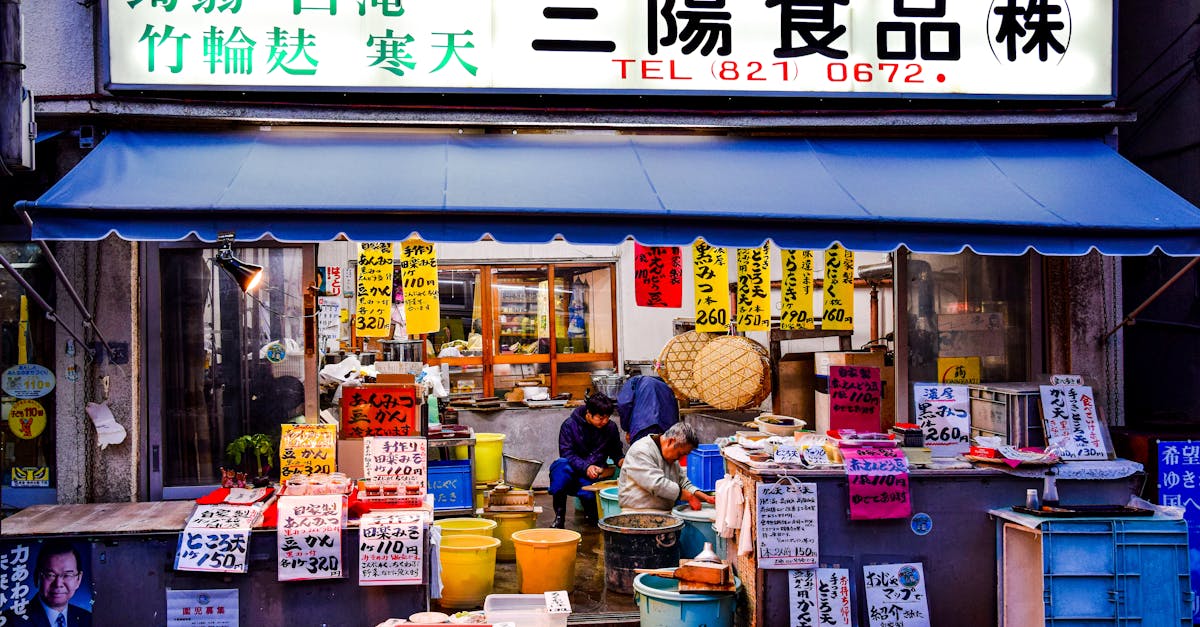
Fukuoka has quietly built a reputation as one of Asia's most liveable and least expensive cities for visitors, and the superlatives are justified. Japan's sixth-largest city sits at the northern tip of Kyushu, close enough to South Korea to receive ferry passengers for a weekend visit and compact enough to walk across its most interesting neighbourhoods in an afternoon. What makes Fukuoka exceptional for the budget traveller is not just cheap ramen — though the ramen is extraordinary and costs under JPY 1,000 — but the density of free public space, the generosity of the street food culture, and a transit system so affordable that even heavy sightseers rarely spend more than JPY 1,000 on transport in a day. Fukuoka rewards those who travel light and eat often.
Getting There on a Budget
Fukuoka Airport (FUK) is one of the world's most conveniently located airports: the subway runs directly from the terminal to Hakata Station in five minutes for JPY 260. From Tenjin, the city's main commercial hub, it's eleven minutes. This extraordinary proximity eliminates the airport transfer costs that inflate budgets in most Japanese cities. International arrivals clear customs and are on a city-centre subway platform within fifteen to twenty minutes of landing.

From Seoul, two surface options compete for the budget-conscious traveller. The Beetle hydrofoil ferry operated by JR Kyushu runs between Busan International Ferry Terminal and Hakata Port in approximately two hours and fifty-five minutes. Fares start from around JPY 10,000–14,000 one way in economy class, and booking through the JR Kyushu official website or direct at the Busan terminal generally yields the best pricing. The Camellia Line also runs an overnight ferry that takes seventeen hours but costs as little as JPY 6,000 in a dormitory berth — allowing you to save on a night's accommodation while crossing international waters.
From Tokyo, the Shinkansen Nozomi takes five hours and costs JPY 23,390 for a non-reserved seat — a figure that makes the flight comparison worth doing. Budget carriers Peach Aviation, Jetstar Japan, and Skymark all fly Tokyo–Fukuoka for JPY 4,000–12,000 when booked more than three weeks in advance. The Fukuoka–Osaka Shinkansen (JPY 14,400, 2 hours 15 minutes on the Nozomi) remains competitive with flying once airport transfer time is included. Highway buses from Osaka (JPY 3,000–5,000 on Willer Express or JR Bus Kanto) run overnight and are the cheapest option for those prioritising yen over hours.
From other Kyushu cities, Fukuoka is the regional hub: Nagasaki by bus (JPY 2,570, 2 hours), Kumamoto by Shinkansen (JPY 4,690, 40 minutes), and Beppu by highway bus (JPY 3,000, 2 hours). The bus network around Kyushu is comfortable and punctual, making day trips and multi-city itineraries viable on a genuine backpacker budget.
Budget Accommodation
Fukuoka's hostel market is well-developed, particularly around Hakata and Tenjin, where competition keeps prices low and quality reliably high. The city's business hotel sector also provides an abundance of single rooms at JPY 5,000–8,000 per night — a class of accommodation that is cleaner, quieter, and better located than most European hostels at twice the price.

Khaosan Fukuoka Guesthouse near Tenjin is one of the city's best-regarded backpacker bases, benefiting from its location within walking distance of Tenjin Bus Terminal, Nakasu entertainment district, and the city's best yatai stall concentration along the Naka River. Dormitory beds run JPY 2,200–2,800 per night depending on season. The common room has the quality of conversation that a good hostel always generates, and the staff speak English and are enthusiastic about pointing guests toward the city's less-visited corners.
Hana Hostel Fukuoka sits between Hakata Station and the Nakasu canal area, placing guests equidistant from the Shinkansen network and the late-night food scene. Dorm beds cost JPY 2,500–3,200, and the hostel's particular strength is a meticulously maintained private shower and locker setup that removes the minor anxieties of communal living. Female-only dorms are available and typically run JPY 200–300 more than mixed.
Guesthouse Hakatastation does what it says on the sign — it sits directly adjacent to Hakata Station, making early Shinkansen departures and late arrivals effortless. The rooms are compact by Western standards but spotlessly maintained. A private twin room costs JPY 5,500–7,000, which competes directly with the capsule hotel and budget business hotel market at the station. Breakfast is not included but the station's underground food concourse opens at 7 a.m. with coffee and onigiri from JPY 300.
For the full Japanese experience at a budget price, capsule hotels around Hakata Station offer private capsule-sized sleeping pods for JPY 2,800–4,500 per night, typically including access to a communal bath or sauna. The Capsule Inn Fukuoka and Fukuoka Capsule Hotel Plaza are both well-reviewed and within five minutes of Hakata Station on foot.
Eating Cheaply Like a Local
Fukuoka has the strongest claim of any Japanese city to being the country's food capital, and an extraordinary amount of that food is available for under JPY 1,200 a serving. The city's three signature dishes — Hakata ramen, motsunabe, and mentaiko (spicy pollock roe) — are all affordable, and the yatai street stall culture that Fukuoka has uniquely preserved into the twenty-first century turns evening eating into a form of social theatre that costs no more than a fast food meal elsewhere.

Hakata ramen — tonkotsu broth (long-simmered pork bones, milky white and intensely savoury) with thin straight noodles, chashu pork, nori, and soft-boiled egg — is available at every price point, but the benchmark experiences are all affordable. Shin-Shin in Tenjin is the locals' favourite for a reason: a basic bowl costs JPY 850, the broth is made fresh every day from scratch, and the queues are composed almost entirely of Fukuokans, not tourists. Ichiran, the national chain, has its origins in Fukuoka and remains excellent: a basic bowl with one topping is JPY 890, served in private individual booths that are designed for solitary concentration on the ramen itself — which is the correct way to eat it. Ippudo, now globally franchised, maintains two Fukuoka locations (Hakata and Tenjin) where the same bowl that costs JPY 1,500 in New York or London costs JPY 990.
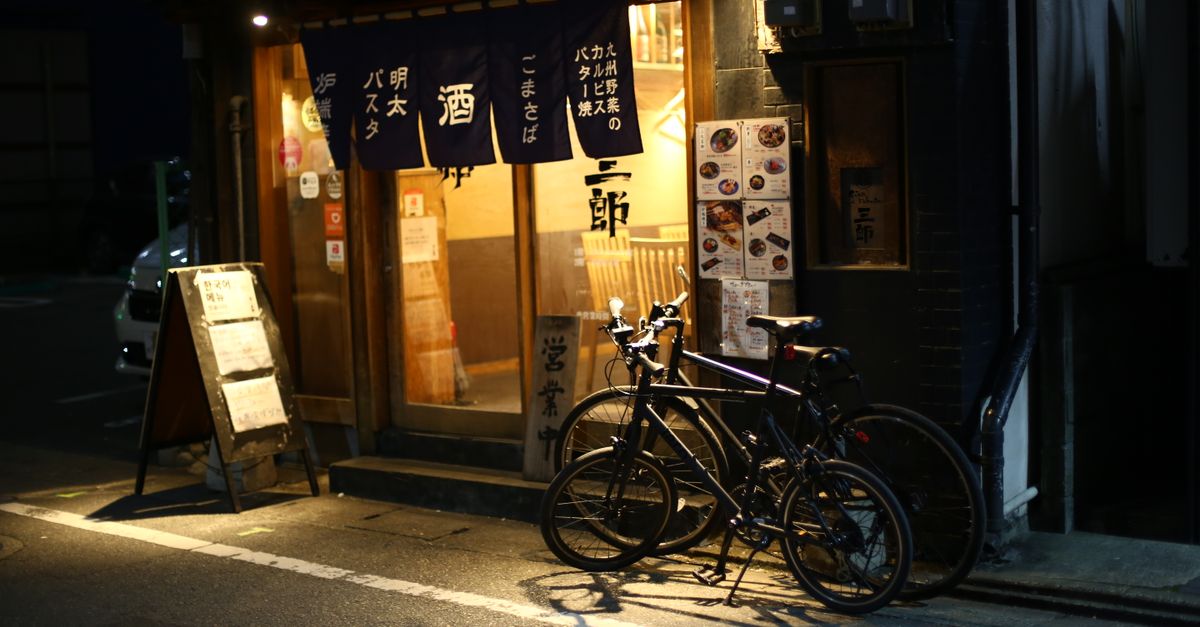
The yatai stalls along the Naka River in Nakasu and along Tenjin's back streets are Fukuoka's most distinctive culinary institution. Each stall is a wheeled, canvas-canopied cart with six to eight stools, typically run by a single owner-cook serving a short menu of yakitori, oden, gyoza, and ramen from dusk until 1 a.m. A full evening at a yatai — three rounds of skewers, a bowl of ramen, and two beers — costs JPY 1,500–2,500. The social intimacy of sitting elbow-to-elbow with Japanese salarymen and Korean ferry tourists is itself worth the price of admission. Nakasu has around twenty yatai concentrated near Tenjin Nishi-dori; Tenjin has a further cluster near Showa-dori.
Motsunabe — a collagen-rich hot pot of beef and pork offal, cabbage, garlic, and chives in a miso or soy-based broth — is Fukuoka's winter dish, though it's served year-round. Motsuya Hakata Honten near Nakasu offers sets from JPY 1,500 per person; bring two people minimum, as it's a shared pot dish. Yamanaka in Daimyo serves Fukuoka's most celebrated version for JPY 2,200 per person, a worthwhile splurge if your overall food budget is in control.
Free and Low-Cost Attractions
Fukuoka is unusually generous with free public space for a Japanese city, and its most significant historical and cultural sites charge either no entry or a nominal fee. A well-planned two-day itinerary of sightseeing can be completed for under JPY 500 in total admission fees.

Ohori Park is Fukuoka's centrepiece public space — a large artificial lake ringed by walking and cycling paths, with a reconstructed section of Fukuoka Castle and a Japanese garden on its northern shore. Entry to the park itself is free; the Japanese garden charges JPY 250. The walking circuit around the lake (about 2 kilometres) is a pleasant morning activity, and the park café at the central island serves coffee from JPY 400. Rent a rowboat or pedalo for JPY 500 per thirty minutes.
Fukuoka Castle ruins (Maizuru Park) occupy the hilltop above Ohori Park and are free to explore. The castle was largely demolished during the Meiji period, but the stone walls, gates, and elevated grounds remain, and the view from the main keep platform over the city is excellent. The 1,000 cherry trees on the grounds make this one of the finest cherry blossom viewing spots in Kyushu in late March and early April — admission still free.
Dazaifu Tenmangu, reached in 40 minutes from Tenjin by private Nishitetsu railway (JPY 400 each way), is one of Japan's most important Shinto shrines, dedicated to the scholar-deity Tenjin and visited by millions of students praying for academic success. Entry to the shrine precincts is free; the treasure museum costs JPY 500. The approach path (sando) is lined with shops selling umegae mochi — small warm rice cakes filled with sweet bean paste and grilled to order for JPY 130 each. The recently completed Starbucks designed by Kengo Kuma, a forest of interlocking cedar lattice, is architecturally worth seeing even if you don't buy anything.
Hakata Machiya Folk Museum in the Gion neighbourhood offers an excellent English-language introduction to Hakata's merchant culture and the Yamakasa festival for JPY 200. The museum occupies three preserved Meiji-era townhouses and includes a working textile loom demonstrating Hakata-ori fabric production, the pattern of which appears on the local trains and JR Kyushu branding.
Getting Around on a Budget
Fukuoka is the right size for a city: small enough to make walking viable between many key sights, large enough to have a subway that genuinely saves time. The budget case for transport spending in Fukuoka is one of the strongest in Japan — the airport proximity alone removes the JPY 1,000–3,000 transfer cost that eats budget in Tokyo and Osaka.

The Fukuoka City Subway operates three lines. The Kūkō (Airport) Line is the most useful, running from the airport through Hakata Station and Tenjin to Meinohama in the west. A single fare within the central zone (airport to Tenjin) costs JPY 260; cross-city fares cap out around JPY 360. The Hakozaki Line branches northeast from Nakasukawabata Station, useful for Higashi Ward. The Nanakuma Line runs south from Tenjin through the university district and is less relevant to most first-time visitors.
IC cards — Hayakaken (Fukuoka-issued), Suica, Nimoca, and PASMO — all work on Fukuoka's subway. Any IC card loaded with yen works; there is no advantage to purchasing a local Hayakaken unless you plan an extended Kyushu trip using the Nishitetsu bus network, where Nimoca offers point accumulation. Load JPY 2,000–3,000 for a typical two to three day visit.
The Nishitetsu bus network is extensive and covers areas the subway misses, including Canal City (shopping), Uminonakamichi Seaside Park, and many residential neighbourhoods. Flat-fare zones within central Fukuoka cost JPY 230 per ride. The 100-yen Tenjin area loop bus runs a circuit of Tenjin's major department stores and landmarks every ten minutes and is excellent value for shopping-heavy afternoons.
Taxis start at JPY 730 for the first 1.3 kilometres. S.RIDE and GO are the standard taxi apps in Fukuoka; both work in English with credit card payment. A taxi from Hakata Station to Tenjin costs approximately JPY 900–1,200 — rarely worth it during the day when the subway costs JPY 260, but reasonable for late-night returns from Nakasu when the last subway is gone.
Money-Saving Tips
Fukuoka is already among Japan's least expensive major cities, but the following strategies push the per-day budget lower still without sacrificing the experiences that make the city worth visiting in the first place.
Eat ramen at lunchtime, not dinner. Several of Fukuoka's best ramen shops offer a slightly cheaper daytime menu — Shin-Shin's lunch service ends at 2:30 p.m. and represents the best JPY 850 you can spend in the city. Evening queues at Ichiran and Ippudo run thirty to sixty minutes on weekends; lunchtime queues rarely exceed fifteen minutes.
Use 100-yen shops for snacks and supplies. Daiso stores near Tenjin and Hakata sell snacks, drinks, and travel essentials for JPY 110 each. Stock up on onigiri rice balls, canned coffee, and instant miso soup for early-morning transport days and you'll save JPY 500–1,000 against convenience store pricing over a multi-day trip.
Combine Ohori Park, Fukuoka Castle, and the Hakata Machiya Museum in one day. These three sights sit within a 3-kilometre radius, total JPY 450 in admission fees, and fill a full and satisfying day. The walk from Hakata Station to Ohori Park via the castle ruins is forty-five minutes and passes through the historic Gion neighbourhood — doing it on foot saves the subway fare entirely.
Time your yatai visit to a weeknight. Friday and Saturday nights at the Nakasu yatai stalls are festive but crowded, and some operators charge slightly higher prices knowing the clientele is predominantly tourists and celebratory groups. Tuesday and Wednesday evenings have more local regulars, smaller queues, and occasionally freer-flowing conversation with the stall owner — often the better experience for a fraction more attention from the cook.
Book Shinkansen with the EX-IC app. If your itinerary includes travel to Osaka or Hiroshima, the EX-IC express reservation app offers discounted Shinkansen fares (JPY 200–400 cheaper than counter price per segment) and allows last-minute changes without penalty. Requires a foreign credit card registration but takes ten minutes to set up and pays for itself on the first booking.
Visit Dazaifu on a weekday morning. The shrine complex is at its most peaceful and photogenic before the school group visits begin around 10 a.m. An 8 a.m. departure from Tenjin Station puts you at the shrine by 8:45 a.m. with an hour of near-solitude in the grounds before the crowds arrive. The umegae mochi shops open at 8:30 a.m. and the first batch of the day is invariably the best.
Carry cash from your home country's exchange. Airport currency exchange at Fukuoka gives reasonable rates (better than most Japanese airports), but 7-Eleven Bank ATMs inside the terminal and throughout the city give the most favourable rate for foreign card holders. Avoid exchange bureaux near tourist attractions — the spread on these is notably wider than the bank ATM rate.