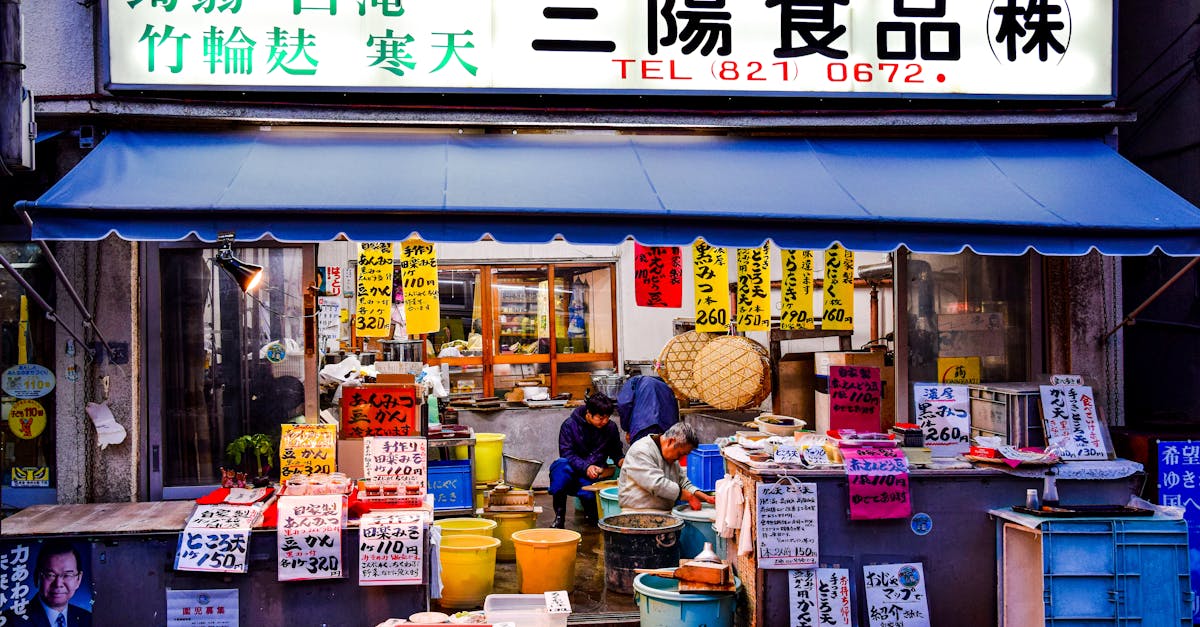
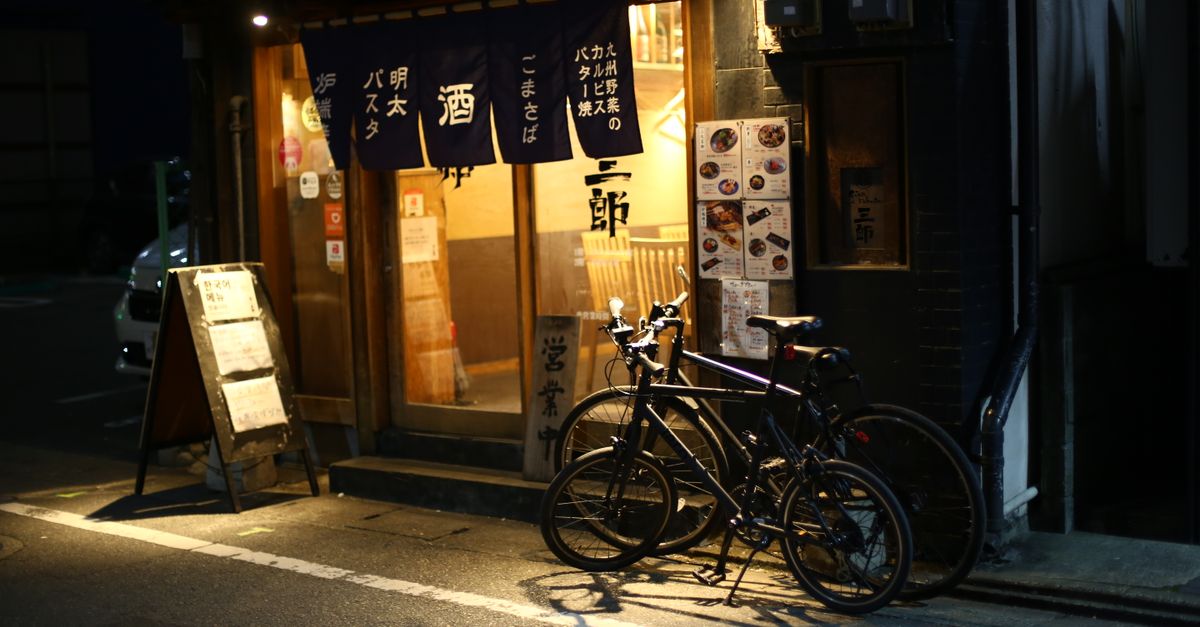
Fukuoka has a way of disarming the first-time visitor before they've even left the airport. The subway is right there — five minutes to Hakata Station, eleven to Tenjin, one of the shortest airport-to-city connections on earth — and before you've had time to feel the low-grade anxiety of arriving in a foreign city, you're on a platform watching a perfectly on-time train arrive to the second. This is Fukuoka's character in miniature: efficient, compact, unhurried, and unexpectedly approachable for a Japanese city. The food scene is world-class, the locals are among Japan's most welcoming, and the scale is human enough that the city never overwhelms. What follows is everything you need to arrive confidently, navigate intelligently, and make the most of this underappreciated gateway to Japan.
Before You Arrive
Citizens of 68 countries and territories can enter Japan visa-free for short-term stays of 15, 30, or 90 days depending on nationality. Citizens of the United States, United Kingdom, Canada, Australia, and New Zealand receive 90-day visa-free entry. EU nationals generally receive 90 days within any 180-day period under separate bilateral arrangements. Check the Ministry of Foreign Affairs of Japan website for the current full list and the specific stay allowance for your passport, as the periods differ by country.

Japan does not currently operate a pre-travel authorisation system for most nationalities (unlike Korea's K-ETA), so most visitors simply present a valid passport and a return ticket at immigration. Travellers arriving from certain countries must present proof of onward travel. Have your accommodation address for the first night ready — it is printed on the arrival card that cabin crew distribute on international flights, and immigration officers ask for it.
Japan's currency is the yen (JPY). Notes come in denominations of JPY 1,000, 5,000, 10,000, and the new JPY 10,000 note featuring Shibusawa Eiichi. Coins in JPY 1, 5, 10, 50, 100, and 500 denominations are all in active circulation. Japan remains significantly cash-dependent compared to most developed economies — many neighbourhood restaurants, temples, smaller shops, and all vending machines (of which there is approximately one per 23 Japanese people) operate cash-only. Arriving with some yen is strongly advisable.
An IC card — Suica (JR East), PASMO (Tokyo area), Nimoca (Fukuoka's Nishitetsu network), or Hayakaken (Fukuoka City Subway) — functions as a reloadable transit card for trains, buses, and subways throughout Japan, and increasingly as a contactless payment method at convenience stores, vending machines, and many fast-food chains. A Suica or PASMO issued to your iPhone or Android via the Wallet app works from the moment of landing without requiring a physical card. Add JPY 3,000–5,000 to start. The Hayakaken is Fukuoka's own IC card, available at subway station machines for JPY 500 (deposit), and it works within Fukuoka without any setup beyond loading credit.
Fukuoka sits in a temperate zone with four distinct seasons. Summers (June–August) are hot and humid, with the rainy season (tsuyu) typically lasting through most of June. Typhoon season runs from July through October, with the largest risk in August–September. Autumn (October–November) is Fukuoka's most comfortable season: clear skies, temperatures of 15–22°C, and the rice harvest in the surrounding Chikugo Plain. Spring (March–May) brings cherry blossoms to Ohori Park and Maizuru Park in late March and early April. Winters are mild by Japanese standards — Fukuoka rarely sees significant snowfall.
Getting from the Airport
Fukuoka Airport is, without meaningful competition, the most conveniently located airport in Japan and one of the most convenient in the world for urban access. The domestic terminal and the international terminal are connected by a free shuttle bus that runs every few minutes and takes around five to ten minutes. From the domestic terminal, the subway entrance is a short covered walkway — the international arrivals process includes a short bus ride, but the total time from clearing customs to boarding a subway train rarely exceeds fifteen minutes.

The Fukuoka City Subway Kūkō (Airport) Line runs directly from the airport to Hakata Station in five minutes for JPY 260, and to Tenjin Station in eleven minutes for JPY 260. These fares are identical because the central zone pricing covers the full airport-to-Tenjin corridor at the base rate. Trains run every 5–7 minutes during the day and every 10 minutes in the late evening. The last train from the airport departs around 11:30 p.m., and the first runs at 5:30 a.m. For the vast majority of arrivals, the subway is the obvious, correct, and cheapest choice.
The Nishitetsu airport bus runs to the Tenjin Bus Terminal and costs JPY 310, taking 25–35 minutes depending on traffic. There is essentially no advantage to taking the bus over the subway for most travellers — it costs slightly more and is significantly slower. The exception is if your hotel is in an area directly served by the bus route that is not adjacent to a subway station.
Taxis from the airport to Hakata Station cost approximately JPY 1,500–2,000 (5 minutes); to Tenjin approximately JPY 2,000–2,500 (10–15 minutes). The subway is so superior in both cost and speed that taxis from the airport make financial sense only for travellers with mobility limitations or excessive luggage, or those arriving after the last subway at 11:30 p.m.
If arriving by ferry from Busan, the Hakata Port International Terminal is a 10-minute taxi ride (JPY 1,000–1,200) or a 20-minute bus ride (JPY 230 via Route 90) from Hakata Station. The port is not directly connected to the subway but is well-served by Nishitetsu buses.
Getting Around the City
Fukuoka is well-sized for a major city. The distance from Hakata Station to Tenjin — the two main hubs — is about 2 kilometres, a comfortable 25-minute walk on flat ground. Most of the city's attractions are concentrated within a 4-kilometre radius of this central corridor, which means that walking, cycling, and the subway cover virtually everything without needing to understand the bus network in detail.

The Fukuoka City Subway has three lines. The Kūkō (Airport) Line is the backbone — running from Fukuoka Airport in the east through Hakata Station, Nakasukawabata (for Nakasu), and Tenjin to Meinohama in the west. This single line covers the airport, the main station, the entertainment district, and the city's primary shopping area. Single fares range from JPY 210 to JPY 360 depending on distance. The Hakozaki Line branches northeast from Nakasukawabata and is useful for reaching Higashi Park and Hakozaki Shrine. The Nanakuma Line runs south from Tenjin through Yakuin and the university district.
The subway operates from approximately 5:30 a.m. to midnight. Trains on the Airport Line run every 3–4 minutes during morning and evening peaks. All signage in stations is in Japanese, English, Korean, and Chinese. The Fukuoka City Subway app has an English interface and shows real-time train positions; alternatively, Google Maps gives accurate subway routing for the entire network.
The Nishitetsu bus network is the primary surface transport and covers extensive areas the subway doesn't reach, including Canal City shopping complex, Uminonakamichi Seaside Park, and many of the smaller neighbourhood streets between subway stations. Fares within the central zone are JPY 230 flat. The 100-yen Tenjin area loop bus (Route W1) circles Tenjin's main attractions every ten minutes between 10 a.m. and 8 p.m. — an excellent way to navigate the shopping district without a map.
Taxis are metered (JPY 730 base for 1.3 km) and available across the city, with concentrations outside Hakata Station, Tenjin, and Nakasu. The apps S.RIDE and GO both operate in Fukuoka with English interfaces and credit card payment.
Where to Base Yourself
Fukuoka's three main visitor areas each have a distinct personality, and the choice between them meaningfully shapes which city you experience. All three are within 20 minutes of each other by subway, so there is no wrong answer — but the differences are real.

Hakata is Fukuoka's historic commercial heart and the national entry point, containing the Shinkansen terminus, the JR bus terminal, the main entertainment cluster of shops, restaurants, and department stores that surround Hakata Station. The neighbourhood has the purposeful energy of a transit hub that is simultaneously a destination — Canal City Hakata (a curved canal-fronted shopping and cinema complex) is a five-minute walk from the station, and the Gion area with its temple and folk museum is another five minutes on foot. Hotels near Hakata Station range from JPY 6,000 budget business hotels to JPY 25,000 mid-range international brands. The area is excellent for Shinkansen travellers, solo visitors, and those prioritising convenience over neighbourhood character.
Tenjin is Fukuoka's modern commercial centre — the intersection of the subway, the Nishitetsu railway, and the city's primary bus terminal, surrounded by department stores, fashion streets, underground shopping arcades, and the most concentrated café culture in the city. Tenjin feels younger and more cosmopolitan than Hakata, with a mix of Japanese chains, independent boutiques, and the Daimyo neighbourhood to the west offering independent cafés, record shops, and some of the city's best izakaya. Hotel prices in Tenjin are similar to Hakata; the Daimyo area has a better selection of boutique and design-hotel options for JPY 10,000–18,000 per night. Tenjin is also the starting point for the yatai stall walk along the river, which places evening food firmly within the neighbourhood.
Nakasu is Fukuoka's entertainment and late-night district — a narrow island between the Naka and Hakata rivers, Japan's largest entertainment district outside Tokyo and Osaka, running the full spectrum from traditional izakaya to hostess clubs to ramen shops open until 5 a.m. Staying in Nakasu or its immediate surrounds (Nakasukawabata subway station) puts you at the centre of the yatai stall concentration and the late-night restaurant scene, but the neighbourhood is noisy and fully alive until 3–4 a.m., which is either an asset or a liability depending on your travel style. Budget to mid-range options in this area run JPY 7,000–15,000 per night.
Local Culture and Etiquette
Japan has a social fabric built on consideration for others, and Fukuoka — slightly more casual and outgoing than Tokyo — is still fundamentally Japanese in its expectations. The following customs will serve you well and are genuinely appreciated rather than merely tolerated.

There is no tipping in Japan. This is absolute, not a guideline. Attempting to tip a restaurant server, taxi driver, hotel porter, or guide creates confusion and occasionally offence. The service price is included in the listed price — Japanese service culture is built on the philosophy of omotenashi (wholehearted hospitality) as a professional standard, not as a performance supplemented by gratuity. Leave the tip reflex at the airport and enjoy receiving impeccable service without the social calculation that tipping cultures impose.
Shoes are removed at traditional restaurant floor-seating areas, temples, and some guesthouses. When you see raised platforms with a row of shoes at the step, remove yours before stepping up. Most traditional izakaya and ramen shops with tatami rooms follow this rule. Wear clean socks; it is genuinely embarrassing to remove a shoe and reveal a hole in front of a Japanese host.
Eat and drink while moving only in specific contexts. Eating while walking is generally considered rude in Japan. The exception is festival and market settings (Dazaifu's umegae mochi stalls, yatai eating at the stall itself) where it is expected. On the subway and most buses, eating and drinking from open containers is not practised except on long-distance Shinkansen journeys. Observe what the locals around you are doing.
At Shinto shrines (Dazaifu Tenmangu, Hakozaki Shrine), the approach follows a gentle protocol: rinse both hands and your mouth at the stone water basin (temizusha) before approaching the main hall; bow twice, clap twice, make your wish or prayer, then bow once more. You are not required to follow this ritual as a non-believer, but doing so is welcomed and respectful.
Loud phone conversations on the subway are considered rude. Trains in Fukuoka are genuinely quiet — people listen to audio through earphones and speak in low tones. Texting and scrolling are completely normal; phone calls are avoided or kept to a whispered minimum near the doors. The quiet is pleasant and worth maintaining.
Basic Japanese phrases create a warmth of reception that English alone cannot match: "Sumimasen" (excuse me/sorry), "Arigatou gozaimasu" (formal thank you), "Ikura desu ka?" (how much is this?), and "Kore kudasai" (I'd like this, please — while pointing) cover ninety percent of restaurant and market interactions. Fukuoka's locals are generally more inclined to attempt English conversation than in Tokyo; reciprocating the effort with any Japanese is noticed.
Common Mistakes to Avoid
Most errors made by first-time visitors to Fukuoka are small but cumulative — they don't ruin a trip, but they do subtract from it in ways that a little preparation entirely prevents. These are the recurring ones worth knowing about before you land.
Confusing Hakata Station with Nishitetsu Fukuoka (Tenjin) Station for Dazaifu. Dazaifu is reached by the Nishitetsu Omuta Line, which departs from Nishitetsu Fukuoka (Tenjin) Station, not from Hakata. Many visitors arrive at Hakata, look for the Dazaifu train on the JR or subway boards, find nothing, and waste thirty minutes before asking a station attendant. The Nishitetsu Tenjin Station is inside the Mitsukoshi building about 200 metres from the subway Tenjin exit. Allow 40 minutes each way from Tenjin for the Dazaifu journey.
Assuming most shops and restaurants accept cards. Japan is more cash-dependent than visitors from card-first economies expect. A significant proportion of yatai stalls, small ramen shops, traditional izakaya, convenience stores (when paying IC card top-up), vending machines, local buses, and coin-operated facilities require cash. Carry JPY 5,000–10,000 at all times. ATMs at 7-Eleven, Japan Post offices, and Lawson convenience stores accept international cards reliably; bank ATMs sometimes do not.
Visiting the Nakasu yatai stalls on a rainy night without checking if they're open. Yatai are canvas-covered outdoor stalls that do not operate in heavy rain. Arriving in Nakasu on a wet evening to find the river walk empty is a genuine disappointment after anticipating the experience. Check the weather the morning of, and have an indoor restaurant alternative identified in advance. Shin-Shin ramen is a worthy rain backup.
Eating ramen and leaving immediately. The correct approach at Fukuoka's ramen shops — and this applies especially at Ichiran's individual booth setup — is to eat slowly, taste the broth, and if you want more noodles, ask for kaedama (a portion of fresh noodles dropped into your remaining broth for JPY 150–200). Leaving immediately after finishing is perfectly acceptable, but lingering briefly and ordering kaedama is the local move that signals you understand what you're eating.
Taking a taxi from the airport when the subway exists. The JPY 1,500–2,000 taxi fare from Fukuoka Airport to Hakata Station is not a crisis, but paying it when a JPY 260 subway takes five minutes and runs every five minutes is simply leaving money on the table. There is no scenario in which a taxi from Fukuoka Airport to either Hakata or Tenjin is the better choice except late at night after the last subway.
Underestimating the heat and humidity in July and August. Fukuoka's summers are genuinely brutal — the combination of high humidity off Hakata Bay and the urban heat island effect pushes feels-like temperatures to 38–40°C on the hottest days. Carry a small towel (tenugui), drink cold tea from vending machines every forty-five minutes, and plan sightseeing activity before 11 a.m. and after 4 p.m. Museums and shopping arcades (Canal City, Tenjin underground) are air-conditioned and perfectly pleasant in the midday heat.
Missing Dazaifu Tenmangu in favour of staying in the city centre. Fukuoka is often visited as a gateway to other destinations, and visitors with tight schedules occasionally skip Dazaifu in favour of another meal or shopping hour in Tenjin. This is a mistake. The 40-minute journey by Nishitetsu train delivers you to a shrine complex of genuine historical and spiritual significance, surrounded by forest, with an approach street selling some of the best regional sweets in Kyushu, and a contemporary architectural landmark in the Starbucks designed by Kengo Kuma. It is the single day-trip from Fukuoka that most rewards the first-time visitor and costs less than JPY 1,000 all-in for transport and admission.