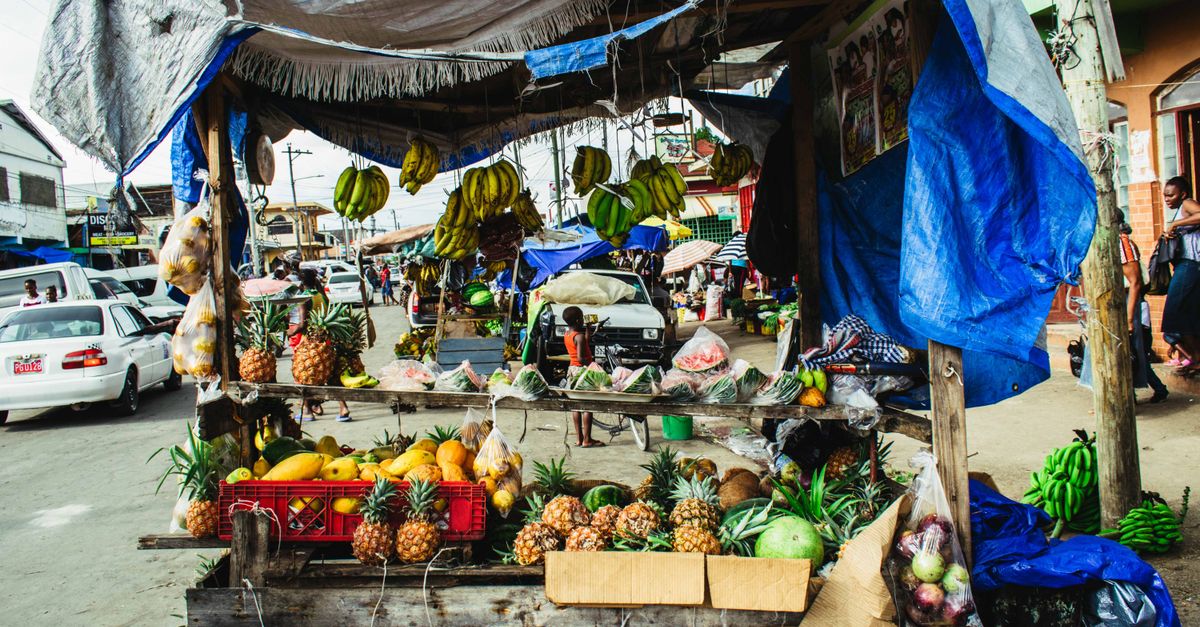
Dar es Salaam is the place most travellers don't intend to visit. The city functions as the gateway to Zanzibar, the entry point for southern safari circuits, and the staging ground for journeys to Mafia Island and the Selous, and most itineraries treat it as a 24-hour transit stop between flight and ferry. That underestimates the city. Dar is one of the great Indian Ocean ports, a swirling commercial centre of Swahili coast culture, German colonial-era architecture, Indian-diaspora cuisine, and the everyday business of running Tanzania. It's also a coastal city in the deep tropics, with humidity that punishes northern visitors and an urban geography organised around dhow harbours and minibus routes that takes a few days to read. This guide covers everything a first-time visitor actually needs before landing at Julius Nyerere International Airport, from visa requirements through the Zanzibar ferry timing that most travellers get wrong.
Before You Arrive
Tanzania requires a visa for almost all visitors, available either as an e-visa applied for in advance or as a visa-on-arrival at Julius Nyerere International Airport (DAR). The standard tourist e-visa costs USD 50 for most nationalities, with US passport holders paying the higher USD 100 multiple-entry fee due to reciprocity rules. Apply at visa.immigration.go.tz at least two weeks before travel; approval typically takes 5-10 working days, and the issued e-visa is emailed as a PDF to print and carry through immigration. Visa-on-arrival still works at Dar's airport for most nationalities at the same prices, but the queues can run 60-120 minutes during peak arrival times.

A yellow fever vaccination certificate is required for all travellers entering Tanzania from a country with risk of yellow fever transmission, including most of central, west, and east Africa. The requirement is enforced at Dar's airport, and even a stopover transit through a risk country in the prior six days triggers the requirement. Get the vaccination at least 10 days before travel for it to be valid. If you're flying directly from Europe, North America, or the Gulf without an African stopover, the certificate is generally not required.
Malaria prophylaxis is essential for all travellers to Dar es Salaam — the city sits at sea level on the coast, and malaria is present year-round across the entire region. Doxycycline (cheapest, must start two days before travel and continue four weeks after), atovaquone-proguanil (Malarone, premium option, lower side effects, must start two days before and continue one week after), and mefloquine (weekly dose but neuropsychiatric side effects in some users) are all standard options. Consult a travel doctor 4-6 weeks before departure. Always carry DEET-based repellent and use it consistently after dark.
Tanzania's currency is the shilling (TZS), and the country mostly runs on cash for everyday transactions. Credit cards work at international hotels, the larger Oyster Bay restaurants, the Zanzibar ferry counters, and major supermarkets, but cash is essential everywhere else. Carry crisp USD notes in mint condition for changing on arrival; banks and bureaus reject anything torn, marked, or older than series 2009. ATMs at the airport, downtown, and in Oyster Bay dispense TZS reliably; daily withdrawal limits are typically TZS 400,000-600,000 (USD 150-220) per transaction.
Pack lightweight, breathable clothing. Dar es Salaam's coastal heat and humidity are constant year-round (28-33°C in the day, often 24-28°C at night, humidity routinely 75-90%). Cotton and linen win; synthetics trap heat. Conservative dress matters in central Dar and during any visit to mosques or rural areas — covered shoulders and knees for women, long trousers in business contexts. The rains in March-May produce daily afternoon downpours; carry a light rain jacket.
Getting from the Airport
Julius Nyerere International Airport (DAR) sits 10 kilometres west of central Dar es Salaam, and the trip into the downtown core, Oyster Bay, or Masaki takes 25-60 minutes depending on traffic. Terminal 3 handles all international arrivals and is well-organised; immigration queues at peak times can run 30-90 minutes for visa-on-arrival passengers, considerably less for e-visa holders.

The cheapest official transport from the airport is the BRT Rapid Transit Bus combination via a short taxi to the BRT terminal at Ubungo or Mwenge (TZS 8,000-12,000 short taxi, then TZS 750-1,000 BRT to downtown). Total cost around TZS 15,000-20,000, total time 60-90 minutes. This is the budget option but awkward with luggage and not first-timer friendly.
The airport taxi rank charges TZS 25,000-40,000 to most central Dar destinations (downtown, Oyster Bay, Masaki) — significantly cheaper than Nairobi or Cape Town airport rates and entirely reasonable for first-time visitors. Always agree the price with the driver before getting in; meters are not used. The taxi rank is immediately outside the arrivals hall and clearly marked.
Ride-hailing apps (Bolt, Uber, In-Drive) work at the airport and typically quote TZS 18,000-30,000 for trips into central Dar. The pickup point is at the public taxi area, not inside the terminal. Download the app before flying out and register with a phone number that works on roaming; Bolt is currently the most reliable in Tanzania.
Pre-arranged hotel transfers from most downtown and Oyster Bay properties run TZS 35,000-60,000 and include a driver waiting in arrivals with a sign. This is the recommended option for first-time visitors arriving at night or with significant luggage.
Getting Around the City
Dar es Salaam is geographically spread out — over 30 kilometres from the airport in the west to the Msasani Peninsula in the north — and the city's traffic congestion ranks among the worst in East Africa. Rush hour (7-10am, 4:30-7:30pm) routinely produces stationary jams on Bagamoyo Road and Morogoro Road, and a 5-kilometre trip can take 75 minutes.
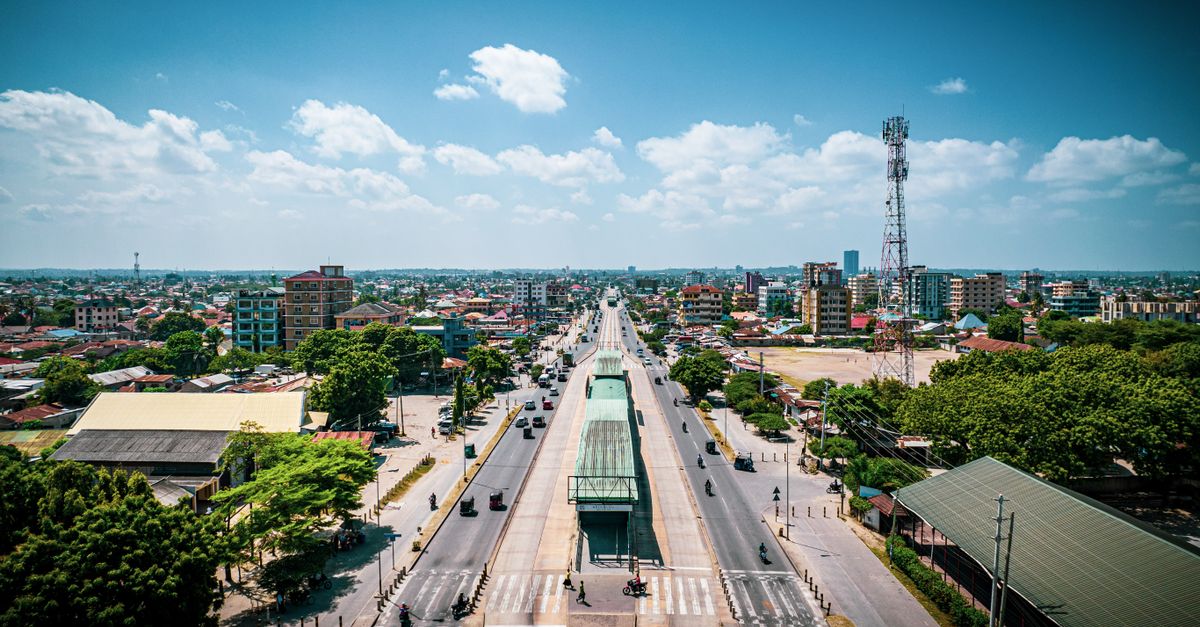
The BRT (Bus Rapid Transit) on dedicated red-bus lanes is the easiest public transport for first-time visitors, charging TZS 750-1,000 per ride. The Phase 1 line runs Morogoro Road from Kimara in the west through Ubungo to Kivukoni at the seafront; Phase 2 (Kilwa Road) extends the network southward. Buses every 5-10 minutes, station signs in English, and the Kivukoni terminal puts you within walking distance of the ferry port. For first-timers, the BRT is the default for east-west travel.
Bolt and Uber are the recommended option for most cross-city trips off the BRT corridor. Typical fares run TZS 5,000-15,000 within central Dar and TZS 15,000-30,000 for longer trips to the airport or Msasani Peninsula. Cash payment is reliable; card payment in-app is unreliable in Tanzania. Drivers occasionally cancel after accepting; if the driver doesn't move toward your location within two minutes, cancel and re-book.
The dala-dala minibus network (TZS 500-700 per ride) is genuinely useful but hard for first-time visitors — the destinations are shouted in Swahili, the routes are unmarked, and the buses are heavily overcrowded during peak hours. Stick to BRT and ride-hailing for the first few days.
Where to Base Yourself
Dar es Salaam's neighbourhoods feel like different cities, and the choice of base shapes the trip enormously. Three areas matter for first-time visitors: downtown (cheapest, most atmospheric, ferry-adjacent), Oyster Bay (middle-class residential, safer, mid-range hotels), and Masaki on the Msasani Peninsula (upscale, expat-heavy, expensive).

Downtown centres on the area between the Askari Monument, the Lutheran Cathedral, and the Zanzibar ferry port. Budget guesthouses (Safari Inn, Jambo Inn, YWCA) cluster on Band Street and Libya Street with rates of TZS 35,000-90,000 per night. Mid-range options (Holiday Inn, Best Western Coral Beach) run TZS 200,000-350,000. The advantage is walking access to the ferry, the National Museum, and the colonial-era core; the disadvantage is the area can feel rough at night and lacks the polished cafe scene of Oyster Bay.
Oyster Bay stretches north from the downtown along the seafront, anchored by the Coco Beach public beachfront and the residential streets behind it. Mid-range hotels (Sea Cliff Hotel garden rooms, Ramada Resort, Slipway Hotel) charge TZS 250,000-450,000 per night. The neighbourhood is safer at night, has the city's best cafe scene, and feels distinctly mellower than downtown. The disadvantage is distance from the ferry — plan on a TZS 8,000-15,000 Bolt ride to the port on departure morning.
Masaki on the Msasani Peninsula is the upscale enclave: restaurants, marinas, embassies, and the city's most expensive hotels (Sea Cliff main building TZS 600,000-900,000, Hyatt Regency The Kilimanjaro TZS 700,000-1,200,000). It's the most polished neighbourhood, also the least authentically Tanzanian. Useful for travellers prioritising comfort over local atmosphere; less interesting for first-time visitors who want to engage with the city.
Avoid basing yourself in Kariakoo (chaotic market district, not designed for visitors) or in the far suburbs beyond Mbezi (transport awkward, no tourist infrastructure).
Local Culture & Etiquette
Tanzania is a Swahili-speaking country, and even basic Swahili greetings open doors that English alone does not. The standard greeting is jambo (hello, very tourist-coded), but locals use mambo (informal, "what's up") and reply poa (cool) among themselves. The respectful greeting to elders is shikamoo (literally "I touch your feet"), to which the response is marahaba (a blessing). Saying asante (thank you), asante sana (thank you very much), karibu (welcome), and habari (how is it?) consistently produces visible warmth from Tanzanians and is the single most useful cultural investment a first-time visitor can make.

Tanzania is religiously diverse — roughly 60% Christian, 35% Muslim, 5% other, with the coastal regions (including Dar es Salaam itself and Zanzibar) heavily Muslim. Friday is the main prayer day; many local businesses close or reduce hours from 12-2pm on Fridays for the noon prayer. Ramadan changes the rhythm of the city dramatically — daytime restaurants in central Dar reduce hours, evening iftar markets appear, and respectful visitors avoid eating or drinking openly in Muslim-majority areas during daylight hours of the holy month.
Greetings are formal and important. A handshake on meeting and parting is standard; with elders or in business contexts, a slight bow with the right hand on the heart is the respectful form. Use the right hand for eating, passing money, and shaking hands; the left hand alone is mildly impolite, particularly with food. Eating with the hands is standard for ugali, chapati, and most traditional dishes — tear pieces with the right hand and use them to scoop stews.
Conservative dress matters in central Dar and especially when visiting mosques or rural areas: covered shoulders and knees for women, long trousers in business contexts. Beachwear is fine at Coco Beach and the Msasani Peninsula but inappropriate when walking through downtown or Kariakoo. Photography of mosques requires asking permission of the imam first; never photograph at prayer times.
Common Mistakes to Avoid
1. Missing the Zanzibar ferry timing. Azam Marine ferries to Zanzibar run only during daylight (typically 7am, 9:30am, 12:30pm, 4pm, 4:15pm), and the last ferry leaves Dar by 4:15pm. Travellers landing at the airport in the late afternoon often expect a same-day connection to Zanzibar that simply isn't possible — there is no overnight ferry. Either land before 1pm and rush to the 4pm ferry, or budget an unavoidable overnight in Dar.
2. Going to Coco Beach after dark. The beachfront is genuinely pleasant by daylight on weekends but unsafe after sunset, when robberies and assaults of tourists are not uncommon. The same applies to the seafront stretches around Posta and the area south of the ferry port. Stick to lit, busy streets after dark and use Bolt for any cross-city evening travel.
3. Drinking the tap water. Tap water in Dar is not safe for visitors despite being treated to municipal standards; bottled or filtered is non-negotiable. Ice in restaurants is a similar risk on day one — request bottled-water ice or skip ice entirely until your stomach adapts. Brushing teeth with bottled water for the first few days is sensible caution.
4. Carrying valuables to Kariakoo or Kivukoni. Both markets are essential to the Dar experience, but petty theft is opportunistic and pickpocketing is common in the densest crowds. Leave passports, expensive cameras, and large amounts of cash at the guesthouse; carry only what you'll spend that morning. The same caution applies on dala-dala minibuses during peak hours.
5. Underestimating heat and humidity. Dar's coastal climate is genuinely punishing for visitors arriving from temperate countries — 30°C plus 80% humidity dehydrates fast. Drink double the water you would at home (carry a 1-litre bottle constantly), wear breathable cotton or linen, plan museum and indoor activities for the heat of midday, and reserve walking for the cooler morning and late-afternoon hours.
6. Negotiating taxi fares badly. Street taxis without app verification routinely quote 2-3x the local rate to obvious foreigners. Use Bolt or Uber for fare anchors — once you know that a downtown-to-Oyster Bay trip should run TZS 8,000-12,000, the negotiation framework becomes obvious. Always agree the price before getting in; never pay more on arrival than the price agreed at the start.
7. Over-scheduling Dar es Salaam itself. The city is best approached as a 2-3 day cultural transit between flights and ferries, not as a destination requiring a full week. The genuine attractions — National Museum, Village Museum, Kivukoni Fish Market, Mwenge Wood Carvers, Kariakoo, the colonial downtown loop, a Coco Beach Sunday afternoon — fit comfortably into 2-3 days. Beyond that, the trip's diminishing returns flag clearly: budget the extra time for Zanzibar, the southern circuit, or a Bagamoyo day trip instead.