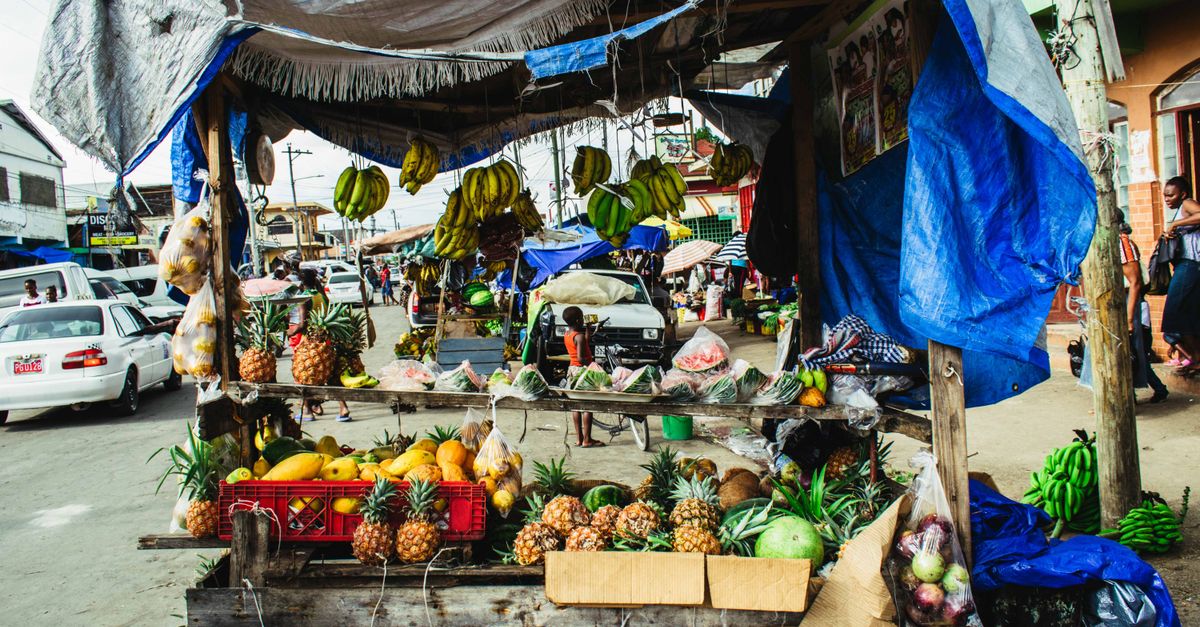
Dar es Salaam — "Haven of Peace" in Arabic — is Tanzania's largest city and commercial capital, a port city of 7 million people on the Indian Ocean coast where Swahili, Arab, Indian, and African cultures have been trading and intermarrying for a thousand years. The resulting cultural blend is unlike anything on the continent's interior: the food is spiced with cardamom and cloves, the architecture ranges from Omani-influenced coral-rag buildings to colonial German Wilhelmine structures to Soviet-era institutions to gleaming new glass towers, and the city's cosmopolitan ease reflects centuries of maritime commerce rather than any single cultural dominance.
Most visitors to Tanzania use Dar purely as a transit point to Zanzibar, Kilimanjaro, or the northern safari circuit. This does the city a significant disservice — Dar has extraordinary local markets, a vibrant arts and music scene centred on Bongo Flava (Tanzanian hip-hop) and taarab (the Indian Ocean coast's distinctive Arabic-influenced music), excellent seafood, and access to the pristine beaches and historical sites of the Dar es Salaam Marine Reserve islands without the premium prices of Zanzibar.
Tanzania uses the Tanzanian shilling (TZS). Exchange rates make Dar affordable: a dala-dala (minibus) ride costs TZS 600–1,000 ($0.25–0.40 USD); a full fish meal at a waterfront restaurant costs TZS 8,000–20,000 ($3–8 USD); the ferry to Zanzibar costs $25–35 USD. Keeping local cash in smaller denominations is important — exact change is expected in most local transactions.

1. Kivukoni Fish Market at Dawn
At 5 a.m. on the Kivukoni waterfront — the historic fisherman's quarter on the southern side of Dar es Salaam harbour — the morning's catch begins arriving by wooden dhow from the overnight grounds in the Indian Ocean. The fish market that assembles here every morning is simultaneously a commercial transaction, a social gathering, and one of the most vivid sensory experiences in East Africa: enormous red snapper and tuna laid on wet concrete, women in bright kanga fabrics negotiating prices with weathered fishermen, wheelbarrow boys running deliveries to the nearby restaurants and hotels, and the smell of salt water, fish, and tropical early morning air.
The Kivukoni fish market is the source for virtually all the fresh seafood served in Dar es Salaam's restaurants. Chefs from the city's most prestigious hotels shop here in person; their selection process — pressing gills, checking eye clarity, smelling the belly — is a practical education in fish quality assessment. Non-buying visitors are tolerated but should stay out of the way of the commercial activity and not obstruct the wheelbarrow traffic.
The fish market is on Kivukoni Front, accessible by foot from the city centre (15 minutes) or dala-dala for TZS 600. The market is most active from 5–8 a.m.; by 10 a.m. most of the quality fish is gone. Several informal grill stalls adjacent to the market open from 7 a.m. and will grill a fish you select from the market for a nominal cooking fee (TZS 2,000–3,000) — the freshest breakfast in Tanzania.
The Kivukoni waterfront more broadly contains several of Dar's most historically significant buildings: the Old Boma (the German colonial administrative building from 1891, now the Dar es Salaam City Council headquarters), the ferry terminal for Zanzibar (the largest in East Africa), and the old harbour master's building. Walking the Kivukoni waterfront from the fish market to the ferry terminal is a compressed tour of Dar's colonial and commercial history in 45 minutes.
2. Kariakoo Market's Textile and Spice Sections
Kariakoo is Dar es Salaam's main commercial market and the most important distribution centre for goods in mainland Tanzania. The market's name derives from "Carrier Corps" — the British wartime logistics force that was stationed here during World War I and gave the neighbourhood its identity as a hub of commerce and movement. Today the market is a two-storey building housing hundreds of permanent stalls, surrounded by an equal number of pavement traders, creating a commercial ecosystem of extraordinary density.
The kanga and kitenge fabric section is the most rewarding for visitors: kangas (the double-panel cotton garments, printed with Swahili proverbs, worn by women across East Africa) are sold here at wholesale prices by Tanzanian and Indian traders who import the fabrics from the Netherlands, the DRC, and China. A quality kanga pair costs TZS 6,000–15,000 ($2.40–6 USD) depending on fabric quality and print complexity. The Swahili proverbs on each kanga — from the romantic ("your love is my medicine") to the pointed ("don't dig for others what you won't fall into") — are part of the garment's meaning and can be translated by any Kariakoo textile seller.
The spice section of Kariakoo reflects Dar's position in the historical spice trade: cloves (from the Zanzibar archipelago), cardamom (from India via Zanzibar), cinnamon, black pepper, and the complex Swahili spice blend pilau masala are all available at wholesale prices 50–70% below what tourist shops charge. A packet of genuine Zanzibar cloves costs TZS 2,000–3,000 ($0.80–1.20 USD); pilau masala ready-blended for the Tanzanian rice dish is TZS 1,500 per packet. Kariakoo is a 15-minute walk from the city centre or TZS 600 by dala-dala.
The market is open Monday to Saturday from 7 a.m. to 6 p.m. The inner market building has the best fabric stalls; the outer pavement has produce and everyday goods. Hire a guide from the Dar es Salaam Tourism Board office (ask in advance) for TZS 20,000–30,000 ($8–12 USD) for 2 hours — the guide ensures fair pricing for fabric negotiations and prevents the markup that unaccompanied foreign visitors typically face in the first-offer pricing.
3. Mbudya Island Marine Reserve
Twenty minutes by boat from the Kunduchi Beach Hotel pier north of Dar es Salaam, Mbudya Island is a 6-hectare uninhabited coral island surrounded by some of the finest reef snorkelling accessible from any major East African city. The Dar es Salaam Marine Reserve protects the offshore reef system from fishing pressure, and the resulting fish biomass — parrotfish, angelfish, moorish idol, and the occasional green sea turtle — is significantly higher than on unprotected reefs further up the coast.
The island's beach — white coral sand, coconut palms, clear turquoise water — is genuinely beautiful and virtually unknown to international visitors who typically head directly to Zanzibar for their beach fix. The snorkelling is comparable to mid-range Zanzibar reef sites at a fraction of the cost and without the resort infrastructure. Mbudya is best visited as a day trip: bring a picnic (no food available on the island), snorkelling gear (or rent from the boat operator), and enough water for the day.
Boat transfers to Mbudya are arranged from the Kunduchi jetty north of Dar, accessible by dala-dala from Kariakoo for TZS 1,000 and then boda-boda (motorcycle taxi) to the jetty for TZS 2,000. Return boat cost is approximately $10–15 USD per person on a shared boat, or $50–80 USD for a private charter. Marine Reserve entry fee is $10 USD. The island is accessible daily from 7 a.m. to 5 p.m. in daylight hours only.
Mbudya is the most accessible of the four main Dar es Salaam Marine Reserve islands; Pangavini and Mwana Mwana are wilder and further out but require full-day charters. Bongoyo Island (30 minutes from the Slipway pier in Msasani Bay) is the most popular reserve island and has a small beach bar — more developed than Mbudya but equally beautiful. A day trip combining Bongoyo in the morning and Mbudya in the afternoon (return via the Kunduchi boat) makes a perfect full-day Indian Ocean island experience from Dar for under $40 USD total.
4. Msasani Peninsula Craft Market
The Msasani Peninsula — Dar es Salaam's affluent northern residential suburb — hosts the best craft market in Tanzania at the Slipway Shopping Centre complex, where the Tingatinga Arts Cooperative operates a gallery and studio selling paintings in the distinctive Tingatinga style. Tingatinga painting was developed in the 1960s by Edward Saidi Tingatinga, a Tanzanian artist who began producing brightly coloured enamel paintings of East African wildlife on masonite boards for the tourist market near the Oyster Bay Hotel.
The Tingatinga style — characterised by a dark background with animals and birds rendered in flat, bright enamel colours with a folk-art simplicity that belies considerable technical skill — has evolved in the decades since Tingatinga's death in 1972 (shot accidentally by police during a car chase) into a thriving school of over 3,000 artists across Tanzania, Kenya, and the broader East African region. The cooperative at Msasani employs over 40 artists who work in open studios and sell directly to visitors.
Tingatinga paintings at the cooperative cost TZS 20,000–500,000 ($8–200 USD) depending on size and the complexity of the composition. Small pieces (20x20 cm) make excellent affordable souvenirs; large canvases by senior artists are genuine investments. The cooperative also makes frames on-site and can ship internationally. The Tingatinga tradition has diversified significantly beyond the original wildlife subjects — contemporary works address urban Dar es Salaam, Swahili coastal culture, and political commentary.
The Slipway complex also has Tanzania's most sophisticated independent craft shops: Memories of Africa sells curated East African crafts at fair-trade prices; the Zanzibar-based furniture and antique dealer on the upper level stocks coral-rag architectural salvage and Zanzibari carved-door panels of genuinely high quality. The fish restaurant on the complex's waterfront terrace serves Dar es Salaam's best fresh seafood at moderate prices: grilled kingfish with coconut rice and kachumbari salad costs TZS 25,000–35,000 ($10–14 USD).
5. National Museum and House of Culture
Tanzania's National Museum on Shaaban Robert Street is an underappreciated institution containing one of the most important palaeontological and archaeological collections in East Africa. The Olduvai Gorge display — featuring casts of Homo habilis fossils discovered by Louis and Mary Leakey in Tanzania's Rift Valley from 1959 onward — represents some of the foundational evidence of human evolution and is presented with excellent scientific clarity. The original Olduvai Gorge sites are 5 hours away near the Serengeti; the museum provides the essential context before or after any visit.
The cultural history section documents Tanzania's extraordinary ethnic diversity — over 120 languages are spoken in the country — with traditional objects, clothing, musical instruments, and photographs from different periods of Tanzanian history. The colonial period is covered with appropriate frankness: the German colonial Maji Maji rebellion (1905–1907, in which up to 300,000 Tanzanians died) is documented with the gravity it deserves, as is the subsequent British period and the path to independence under Julius Nyerere in 1961.
The museum is on Shaaban Robert Street, a 10-minute walk from the city centre. Entry costs TZS 10,000 ($4 USD) for foreign visitors. Open daily from 9:30 a.m. to 6 p.m. The adjacent Nyumba ya Sanaa (House of Art) on Ohio Street is Dar's best craft gallery, with works by Tanzanian contemporary artists in painting, sculpture, and textile. Entry is free; works sell from TZS 50,000 upward. The gallery's café serves decent coffee and snacks in a garden setting.
The museum's botanical garden — the oldest in Tanzania, established by the German colonial administration in 1893 — surrounds the museum building with a collection of tropical trees and plants of considerable age and botanical interest. Several enormous baobab trees in the garden are estimated to be over 500 years old. The garden is freely accessible and provides one of the most peaceful retreats from central Dar's traffic and noise. Birding in the garden in the early morning yields 20–30 species in an hour's quiet observation.
6. Kariakoo's Evening Street Food Scene
As the sun goes down over Kariakoo, the neighbourhood's commercial character transforms from wholesale trading to street food festival. The evening food market that develops around the main market building and along the surrounding streets is the most comprehensive introduction to Tanzanian coastal cuisine available in a single location: mishkaki (marinated beef skewers grilled over charcoal), chipsi mayai (chips omelette — a Tanzanian street food invention that is exactly what it sounds like), ndizi na nyama (plantain and meat stew), and the Swahili coast speciality urojo (a complex tamarind-and-coconut soup served with a variety of accompaniments).
The urojo soup — also known as Zanzibar Mix — deserves specific attention: it is a sweet-sour broth of tamarind and coconut milk into which a selection of accompaniments is added: bhajias (gram flour fritters), boiled cassava, a spiced potato cake, a hard-boiled egg, a beef skewer, and mango pickle. The result is a bowl of extraordinary complexity — sweet, sour, spicy, starchy, and deeply satisfying. It costs TZS 3,000–5,000 ($1.20–2 USD) and is available from specialist stalls in the Kariakoo evening market from 5 p.m.
The evening food market is most active from 6 to 9 p.m. The stalls are semi-permanent — the same vendors in the same locations every evening — and the atmosphere is social and welcoming. Finding the urojo stall requires asking; say "urojo wapi?" (where is the urojo?) to any passerby and you will be directed immediately. Cash only; prices are fixed and displayed, removing the negotiation dynamic of the daytime market.
The surrounding Kariakoo streets on Friday evenings host informal music events — sound systems mounted on pickup trucks, DJs playing Bongo Flava (Tanzanian hip-hop) and Singeli (a hyperspeed Dar es Salaam musical genre unique in Africa for its tempo of 180–300 BPM), and spontaneous dancing on the pavement. This is entirely local entertainment with no tourist infrastructure and no admission charge. The energy is extraordinary and the welcome to outsiders who participate rather than observe is genuine.
7. Tanga Town and Pangani River Day Trip
Three hours north of Dar es Salaam by bus, the town of Tanga is one of Tanzania's most historically significant but least-visited coastal settlements — a former Omani and German colonial port city with a beautiful and barely-maintained old town of coral-rag buildings, a magnificent harbour, and access to some of the finest unvisited reef diving in East Africa at Mnemba-equivalent depths without the Zanzibar premium prices.
The Tanga old town preserves substantial colonial-era architecture — German administrative buildings from the 1900s alongside Omani-influenced Indian Ocean merchant houses — in a state of photogenic decline. The town's population of 300,000 is predominantly Swahili Muslim; the architecture of the mosque quarter reflects the same Omani-Indian Ocean aesthetic as Stone Town's less-visited neighbourhoods. The contrast between Tanga's genuine working-town character and Zanzibar's tourist-managed heritage is striking.
The Pangani River, 60 km south of Tanga, is the most beautiful river estuary on the Tanzanian coast — wide, mangrove-fringed, and rich with bird and crocodile life. The dhow crossing of the Pangani River estuary is one of East Africa's most atmospheric short water crossings. The village of Pangani on the southern bank is a Swahili coastal settlement of small hotels, excellent seafood, and minimal tourist infrastructure. Day trips from Dar to Tanga and Pangani cost approximately TZS 30,000–40,000 ($12–16 USD) by bus and local transport.
The dive sites off Tanga — particularly the Mwamba wa Pemba (Pemba Channel) sites 15 km offshore — are ranked by dive specialists among the top 20 in East Africa for visibility, fish biomass, and shark diversity. The local dive operator Tanga Dive, based at the Mkonge Hotel on the Tanga harbour, charges $75–95 USD for a two-tank boat dive — significantly less than equivalent Zanzibar rates. Certification dives and PADI courses are also available at competitive prices.
8. Bongo Flava Live Music
Bongo Flava is Tanzania's homegrown hip-hop — a genre that developed in Dar es Salaam in the late 1990s by blending American hip-hop production with Swahili lyricism, taarab (the Indian Ocean coast's Arabic-influenced music), and traditional Tanzanian rhythmic patterns. It is simultaneously one of the fastest-growing music genres in Africa (the Tanzanian music market now exports to Uganda, Rwanda, Kenya, and the Swahili-speaking diaspora globally) and almost entirely invisible to international tourism.
Live Bongo Flava events happen throughout the week in Dar's Sinza, Magomeni, and Mbagala neighbourhoods — areas of the city with minimal tourist infrastructure that are entirely oriented toward the Tanzanian audience. The Artists Corporation Club on Samora Avenue in the city centre is the most accessible venue for visitors: a large outdoor club with a covered stage, weekly live performances by established and upcoming Bongo Flava artists, and an entrance fee of TZS 5,000–15,000 ($2–6 USD).
The weekly Dar es Salaam Jazz Festival (held annually in November at various outdoor venues across the city) attracts major African jazz and contemporary music artists from across the continent and is one of East Africa's most significant music events. Tickets for day sessions range from TZS 20,000–50,000 ($8–20 USD); the evening headline shows are TZS 80,000–150,000 ($32–60 USD). The festival programme combines global jazz with African contemporary music in ways that make it genuinely distinctive as an African music event.
For taarab — the traditional musical form of the Swahili coast, developed in Zanzibar in the 19th century under the patronage of the Omani sultanate, mixing Arabic maqam scales with East African rhythms and Swahili poetry — the Culture Musical Club in Zanzibar Stone Town is the primary venue. But Dar's Indian Ocean cultural quarter (Kariakoo and Kisutu) has several taarab ensembles that perform at weddings and private events accessible through local fixers. Taarab at a Swahili wedding — the music accompanying the bride's henna ceremony — is one of the coast's most beautiful private cultural experiences.

9. Lutheran Church and German Colonial Architecture
Dar es Salaam was the capital of German East Africa from 1891 to 1919, and the German colonial administration left behind a coherent collection of Wilhelmine-era architecture — a style that combined German early 20th-century building technology with vaguely Moorish ornament deemed appropriate for a tropical colonial capital. The surviving buildings — the Old Boma (1891), the Lutheran Church (1898), the State House (1922, expanded by the British), and the former German post office — are concentrated in the harbour area and constitute the most intact German colonial architectural ensemble in East Africa.
The Lutheran Church of Azania Front (now the Evangelical Lutheran Church in Tanzania) is the finest of these buildings — a whitewashed church with a distinctive turret clock tower visible from the harbour, containing German-made stained glass and woodwork. Services are held in Swahili on Sunday mornings; visitors are welcome to attend. The church's position on the harbour front gives it a visual prominence that serves as an introduction to the German colonial streetscape of the adjacent Kivukoni waterfront.
The Old Post Office (currently occupied by the Tanzania Posts Corporation) on Mkwepu Street is a more modest but architecturally interesting German building with Moorish arches and Wilhelmine ornament that reflects the colonial cultural confusion of attempting European modernism in a tropical Islamic context. The State House gardens — open to the public on the first Sunday of each month for a guided tour — contain some of the oldest trees in Dar es Salaam and provide views over the harbour from the city's most historically significant colonial site.
A guided architectural walk of Dar's German colonial buildings is available through the Dar es Salaam City Council heritage office on Samora Avenue for TZS 20,000 ($8 USD) per person. The 2-hour walk connects 12 significant buildings and provides the historical context — the establishment of the Dar es Salaam colony after the German-Omani agreement of 1890, the World War I campaign in East Africa, and the handover to British administration — that transforms the surviving buildings from interesting facades to comprehensible historical documents.
10. Kigamboni's Quiet Beach Neighbourhood
Across the harbour from central Dar es Salaam, the Kigamboni Peninsula offers a completely different character from the mainland city: quieter, greener, more residential, and with a 15-km stretch of Indian Ocean beach that is among the finest in the Dar es Salaam vicinity. The Kigamboni Bridge (opened 2016) now connects the peninsula to the mainland, but the traditional approach — 5 minutes by ferry from Kivukoni Front for TZS 200 — remains the most atmospheric way to arrive.
Kigamboni's beach restaurants and resorts — Silver Sands, Mikadi Beach, and the unassuming Kipepeo Beach Club — serve fresh seafood and provide beach facilities at prices 40–60% lower than their counterparts on the Msasani Peninsula or Oyster Bay. A fresh grilled lobster with coconut rice at the Silver Sands beach restaurant costs TZS 35,000–50,000 ($14–20 USD); the same lobster at an equivalent Msasani restaurant would be TZS 65,000–85,000. The beach itself is largely coral sand with clear water, and the swimming is better than at Dar's more northerly beaches.
The Kigamboni neighbourhood has several historic features: the TAZARA (Tanzania-Zambia Railway Authority) terminus, the Chinese-built railway that connected Dar to landlocked Zambia in 1975 — a Cold War infrastructure project funded by China that was one of the largest foreign aid projects in history. The TAZARA station on the Kigamboni road is a Soviet Bloc-influenced building of considerable architectural interest, and the overnight trains to Zambia (departing Tuesdays and Fridays, journey time 36–48 hours) are one of Africa's great railway experiences. Book through the TAZARA office; the journey costs approximately $30–80 USD in second class.
The fishing village of Kigamboni's original community on the southern tip of the peninsula maintains the most traditional Swahili coastal fishing culture accessible from Dar es Salaam. The women here process the daily fish catch using traditional salt-drying and smoking techniques; the dried dagaa (sardines) and prawns produced here supply the entire Dar market. Respectful visits to the processing area — accompanied by a local guide (ask at the Silver Sands resort) — provide a direct encounter with the Indian Ocean fishing economy that has sustained this coast for a millennium.