Dar es Salaam is Tanzania's largest city, the country's commercial capital, and the gateway port for travellers heading east to Zanzibar or south to the Selous and Mafia Island. The city itself rarely makes the marketing brochures — most visitors transit through on the way to somewhere else — and that is precisely what makes Dar a genuinely affordable place to spend a few days. Prices here are quoted in Tanzanian shillings (TZS), at recent exchange rates of roughly TZS 2,500-2,700 to the US dollar, and the cost of living is significantly below regional capitals like Nairobi or Kampala. The coastal heat is constant year-round (28-33°C in the day, humidity routinely above 75%), the dala-dala minibuses cost TZS 500 a ride, and the seafood at Kariakoo or Kivukoni Fish Market is among the best value in East Africa. This guide breaks down the realistic budget for travellers spending two to four days in Dar before catching the Zanzibar ferry, with named venues, current prices, and the local logic of the city.
Getting There on a Budget
Dar es Salaam's Julius Nyerere International Airport (DAR) is the cheapest entry point to Tanzania for most travellers, with regular international flights from Nairobi (Kenya Airways, Precision Air, USD 90-180), Addis Ababa (Ethiopian Airlines, USD 180-280), Dubai (Emirates, flydubai, USD 280-450), Doha (Qatar Airways, USD 320-500), and Istanbul (Turkish Airlines, USD 400-600). Booking 2-3 months in advance for shoulder-season travel typically returns the lowest prices; the heavy rains in March-May depress demand and produce the cheapest long-haul fares of the year if you can tolerate occasional weather disruption.

The cheapest regional approach is by bus from Nairobi: Modern Coast and Dar Express run direct overnight services from Nairobi to Dar es Salaam for TZS 80,000-120,000 (USD 30-45) depending on seat class. The journey takes 16-22 hours via the Namanga or Holili border crossings, and the visa-on-arrival process at the Tanzanian border adds 30-90 minutes. Bus standards have improved dramatically since 2020 — air-conditioned coaches with reclining seats are now the norm — but it remains a long, hard journey.
From Mwanza or anywhere on the Tanzanian Lake Victoria coast, the train option is genuinely worth considering: the new SGR (Standard Gauge Railway) connection from Dodoma to Dar runs in 4-5 hours for TZS 25,000-45,000 economy class, while the older central line via Tabora-Dodoma-Dar is slower and cheaper. From the south, regular buses link Dar with Mtwara, Lindi, and the Mozambique border at Mtambaswala.
From Julius Nyerere International Airport, the cheapest official transport into the city centre is the BRT Rapid Transit Bus from Mwenge or Ubungo terminals (TZS 3,000-5,000 with metered transfer from the airport), accessed via a TZS 8,000-12,000 short taxi from the terminal to the BRT station. The total airport-to-city cost via BRT is around TZS 15,000-20,000 — significantly cheaper than the airport taxi rank, where rates start at TZS 25,000-40,000 to the city centre. Ride-hailing apps (Bolt, Uber, In-Drive) work at the airport and typically quote TZS 18,000-30,000 to most central neighbourhoods.
Budget Accommodation
Dar es Salaam's budget accommodation clusters in three areas: downtown near the ferry port and the colonial-era buildings (cheapest, most atmospheric, sometimes rough at night), Oyster Bay and Masaki peninsula north of downtown (mid-range, safer, more expensive), and Kariakoo west of downtown (chaotic market district, cheapest hotels, not first-timer friendly). Almost everything genuinely affordable for backpackers sits downtown or in the cheaper streets bordering Oyster Bay.

Safari Inn (Band Street, downtown, TZS 35,000-55,000 single, TZS 50,000-80,000 double) is the long-running backpacker default in Dar, two blocks from the Zanzibar ferry terminal and within walking distance of the National Museum, the Askari Monument, and the seafront. Rooms are basic but clean, hot water works, and the rooftop terrace is the social hub most evenings. The location is loud during the day from mosque calls and street trading but reliably safe in the immediate area.
Jambo Inn (Libya Street, downtown, TZS 40,000-60,000 single, TZS 60,000-90,000 double) is Safari Inn's slightly upmarket sibling on the same block, with air-conditioning standard, hot water reliable, and a rooftop restaurant that serves decent Indian and Tanzanian dishes for TZS 8,000-15,000. The proximity to the ferry port makes it the practical choice for travellers heading to Zanzibar the next morning.
YWCA Hostel (Ghana Avenue, TZS 25,000-40,000 single, TZS 40,000-60,000 double) is the cheapest accommodation that's still genuinely safe for first-time visitors. Shared bathrooms, a basic continental breakfast, and a women-friendly dormitory option that solo female travellers regularly recommend. The downside is the slightly awkward location — a 15-minute walk from the seafront and the ferry — and the strict no-male-visitors policy in dorms.
Econo Lodge (Band Street, downtown, TZS 50,000-75,000 double) and Holiday Inn Express alternatives in the Upanga district (TZS 90,000-140,000 double) sit just above the backpacker price band and offer air-con, private bathrooms, and reliable WiFi for travellers who want a slightly more comfortable base without the resort-zone prices of Oyster Bay or Masaki. Slipway Hotel guesthouse rooms (TZS 110,000-180,000 double) on the Msasani Peninsula give you a marina view and the only walkable seafront strip in Dar at the upper edge of the budget bracket.
Eating Cheaply Like a Local
Tanzanian street food is among the cheapest and most underrated in East Africa, and Dar es Salaam — as the country's commercial and cultural melting pot — serves the widest range of it anywhere on the mainland. The local staple is ugali, a stiff maize porridge served with virtually anything: stewed beans, sukuma wiki (collard greens), grilled fish, or nyama choma (grilled meat). A standard ugali-and-stew plate at any local mama lishe (street food vendor) costs TZS 3,000-6,000 and feeds an adult comfortably.

Nyama choma — grilled goat or beef served with kachumbari salad and sometimes ugali — is the social meal of the Tanzanian evening, and the cheapest places serve excellent versions at TZS 8,000-15,000 per plate. Mamboz Corner (Morogoro Road, downtown) is the legendary nyama choma destination of central Dar, an open-air grill that has been serving the same recipe for decades and runs at full capacity from 6pm onwards. The mishikaki (grilled meat skewers) at Mamboz are TZS 3,000-5,000 each and can substitute for a full meal at TZS 12,000-20,000 for a generous order.
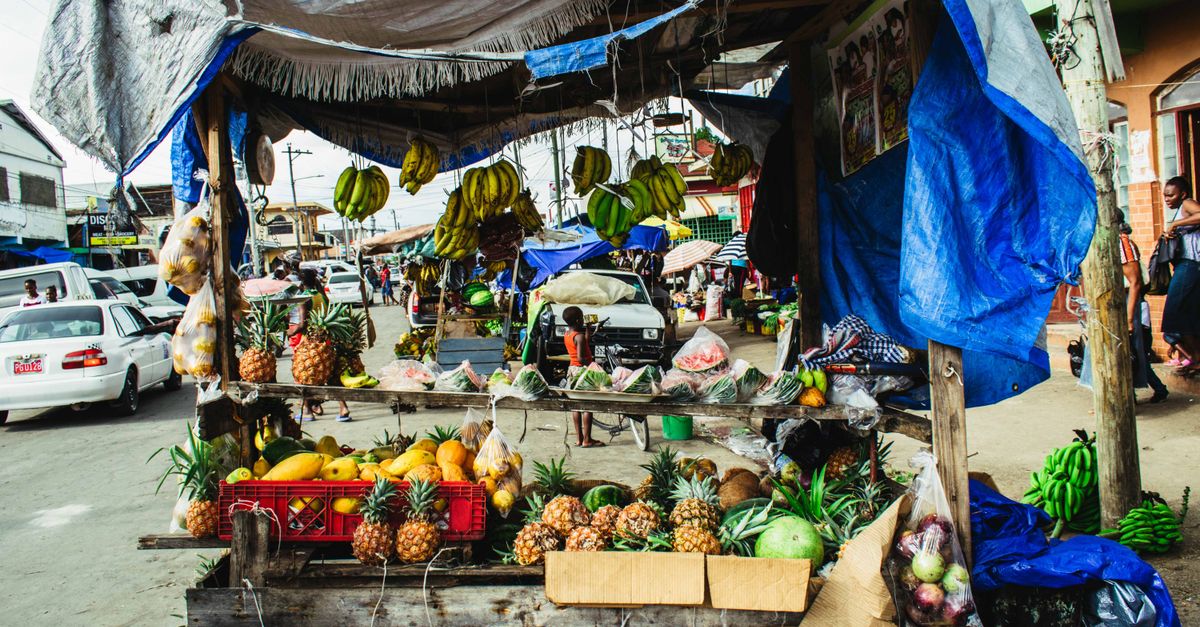
The Kariakoo market district is the cheapest food zone in Dar, where TZS 2,000-4,000 buys breakfast and TZS 4,000-7,000 buys a full lunch. Look for chapati na maharage (chapati with bean stew, TZS 2,500-4,000), mandazi (East African doughnuts, TZS 500-1,000 each), chips mayai (chip omelette, TZS 3,000-5,000), and the seafood-based dishes that arrive at the market from Kivukoni Fish Market each morning. Kariakoo is not designed for tourists and feels chaotic; go in the morning, leave valuables at your guesthouse, and stick to vendors that have visible queues of locals.
Kivukoni Fish Market (Kivukoni Front, downtown) is the cheapest seafood meal in the city. Fish auctions run from 5am, and the market's adjacent food stalls grill fresh-caught fish, prawns, and octopus from 10am onwards for TZS 6,000-15,000 per plate served with chips or ugali. Pick the fish from the auction, agree a price, and it goes straight to the grill — total cost typically TZS 8,000-18,000 for a meal that would cost TZS 40,000+ at any tourist-facing seafront restaurant.
Indian food is exceptional in Dar es Salaam thanks to the long-established Gujarati and Goan communities. The vegetarian thalis at Chef's Pride (Chagga Street, TZS 8,000-15,000) and the snack counters along Indira Gandhi Street serve thalis, samosas (TZS 500-1,000 each), and dosas (TZS 5,000-9,000) at prices a fraction of comparable Indian-diaspora cuisine in Nairobi or Kampala.
Free & Low-Cost Attractions
Dar es Salaam is not a museum-heavy city, and the best free attractions are the markets, the seafront, and the slow daily theatre of the port. The Kivukoni Fish Market (Kivukoni Front, free entry) is the most photogenic free attraction, with the morning fish auction starting around 5am and continuing through midday — the chaos of dhows unloading, the auction shouts, the grilling that follows is genuinely worth the early start. Don't bring expensive camera gear; phones and small mirrorless setups are fine.

Coco Beach (Oyster Bay, free entry) is the city's main public beach, a Sunday-evening gathering point for Dar's middle class, families, food vendors, and an informal festival of grilled meat, music, and football. The atmosphere is best from late afternoon onwards on weekends; weekday mornings are quiet but the beach is not a swimming destination — pollution and currents make it a place to walk and watch rather than swim. Avoid Coco Beach after dark; the area is unsafe for visitors at night.
The National Museum and House of Culture (Shaaban Robert Street, entry TZS 10,000-15,000 for foreigners) holds the country's most important collection — including original casts of Olduvai hominid remains, ethnographic exhibits on Tanzania's 120+ ethnic groups, and a colonial-history wing covering the German East Africa and British Tanganyika periods. Allow two hours; the museum is genuinely good despite the modest size.
Mwenge Wood Carvers Market (Sam Nujoma Road, free entry) is the largest crafts market in Dar, where Makonde sculptors carve in front of buyers and prices for finished pieces are 30-60% lower than at the airport or hotel gift shops. Free to walk through; bring small denominations for tipping if you photograph the carvers at work. Slipway Marina (Msasani Peninsula, free entry) is a small upscale waterfront with cafes, weekend markets, and dhow charter operators — useful for an afternoon stroll and an upmarket coffee at the marina cafes (TZS 5,000-9,000).
The Botanical Gardens (Garden Avenue, free entry) and Askari Monument (City Centre, free) anchor the colonial-era downtown, and the State House exterior (no entry, photography restricted) marks the seafront stretch. A self-guided downtown walking loop covering the Askari, the State House, the Lutheran Cathedral, and the Old Boma takes 2-3 hours and costs nothing.
Getting Around on a Budget
Dar es Salaam's public transport runs on three layers: the BRT (Bus Rapid Transit) dedicated bus lanes, the dala-dala minibuses, and the bajaj three-wheel auto-rickshaws. All three are cheap, all three require some local knowledge to use efficiently, and combined they cover the entire city for less than TZS 5,000 a day.

The BRT is the easiest for first-time visitors: dedicated red buses on Morogoro Road from Kimara terminal in the west through Ubungo to Kivukoni in the east. Tickets are TZS 750-1,000 cash at the station kiosks, or TZS 650-800 with a rechargeable smart card available at the larger stations. Buses run every 5-10 minutes from 5am to 10pm, and the Kivukoni terminal puts you within walking distance of the ferry port and the downtown sights.
Dala-dala minibuses cover the routes BRT does not, charging TZS 500-700 per ride with the destination shouted by the conductor at each stop. The system is chaotic, the routes are not published, and the buses are routinely overcrowded — but for cross-city trips off the BRT corridor, dala-dalas are the cheapest option. Tell another passenger or the conductor your destination clearly; Tanzanians are reliably helpful in directing visitors to the right vehicle.
Bajaj auto-rickshaws charge TZS 2,000-8,000 for trips within a single neighbourhood and are the easiest local transport for short hops where dala-dalas don't quite work. Always agree the price before getting in. Ride-hailing apps (Bolt, Uber, In-Drive) typically quote TZS 5,000-15,000 for cross-city trips and remove all the haggling friction; they're more expensive than public transport but cheaper than negotiated taxis at TZS 12,000-25,000.
Money-Saving Tips
Change money at downtown bureaus, not at the airport. The exchange rates at Julius Nyerere airport are 5-8% below the downtown bureau rates on Samora Avenue and around the Posta area. Change USD 50-100 at the airport for immediate transport and food, then change the rest at downtown bureaus once you've settled in.
Eat lunch as the main meal at street vendors. Local mama lishe stalls serve full ugali-and-stew plates for TZS 3,000-6,000 at lunchtime; the same dish at a sit-down restaurant in Oyster Bay costs TZS 12,000-20,000. Eating the heavy meal at lunch and a lighter dinner of street snacks is the standard local rhythm and the cheapest way to eat well.
Buy water in 5-litre bottles. Single 500ml bottles cost TZS 1,500-2,500 each at convenience stores; the 5-litre at any supermarket runs TZS 3,500-5,500 and lasts most travellers two to three days. Tap water in Dar is not safe; bottled is non-negotiable.
Walk the downtown core during the day. The seafront, the Askari Monument, the National Museum, the ferry port, and the Lutheran Cathedral are all within a 1.5-kilometre radius. A half-day self-guided walking loop costs nothing and covers the entire colonial-era downtown.
Use Bolt or In-Drive instead of street taxis after dark. Negotiated taxi fares at night routinely double the daytime rates; ride-hailing apps quote consistent prices regardless of time. The safety advantage (tracked driver, recorded trip) matters more in Dar at night than in many other African capitals.
Buy the Zanzibar ferry ticket online or at the terminal, not from touts. Azam Marine and Zan Fast Ferries sell tickets at TZS 60,000-95,000 for foreigners (one-way, depending on seat class) at the official terminal counters; touts on the surrounding streets routinely overcharge by 20-40%. Walk into the terminal building, queue at the official counter, and pay the published price.
Avoid the airport restaurants and souvenir shops. Coffee at the airport costs TZS 8,000-12,000; the same coffee at a downtown cafe is TZS 3,000-5,000. Souvenirs at Mwenge Wood Carvers Market and the Kariakoo crafts stalls run 50-70% cheaper than the airport equivalents. Eat before flying.


