Bangalore's food scene is India's most diverse — South Indian breakfast traditions collide with north Indian kebabs, global cuisines from the tech workforce, and a craft beer revolution that's entirely Bangalore's own. The city invented the masala dosa as we know it, pioneered India's craft brewing movement, and hosts a street food culture that runs from dawn (steaming idli-vada carts) to midnight (late-night biryanis in Shivajinagar).
Must-Try Dishes
1. Masala Dosa — ₹65-120
The crispy rice-and-lentil crepe stuffed with spiced potato that Bangalore perfected. MTR (Mavalli Tiffin Room), operating since 1924, serves the definitive version — paper-thin, golden, with three chutneys and sambar. ₹85-120. Arrive before 9 AM on weekends or face 30-minute waits. Vidyarthi Bhavan in Basavanagudi is the other legendary spot (₹65).
2. Bisi Bele Bath — ₹50-80
Karnataka's signature dish — a one-pot rice-lentil-vegetable dish flavored with a unique spice mix including cinnamon, cloves, and curry leaves, topped with crunchy boondi (fried gram balls) and ghee. Rich, warming, and deeply savory. Available at every darshini (standing restaurant) for ₹50-80.
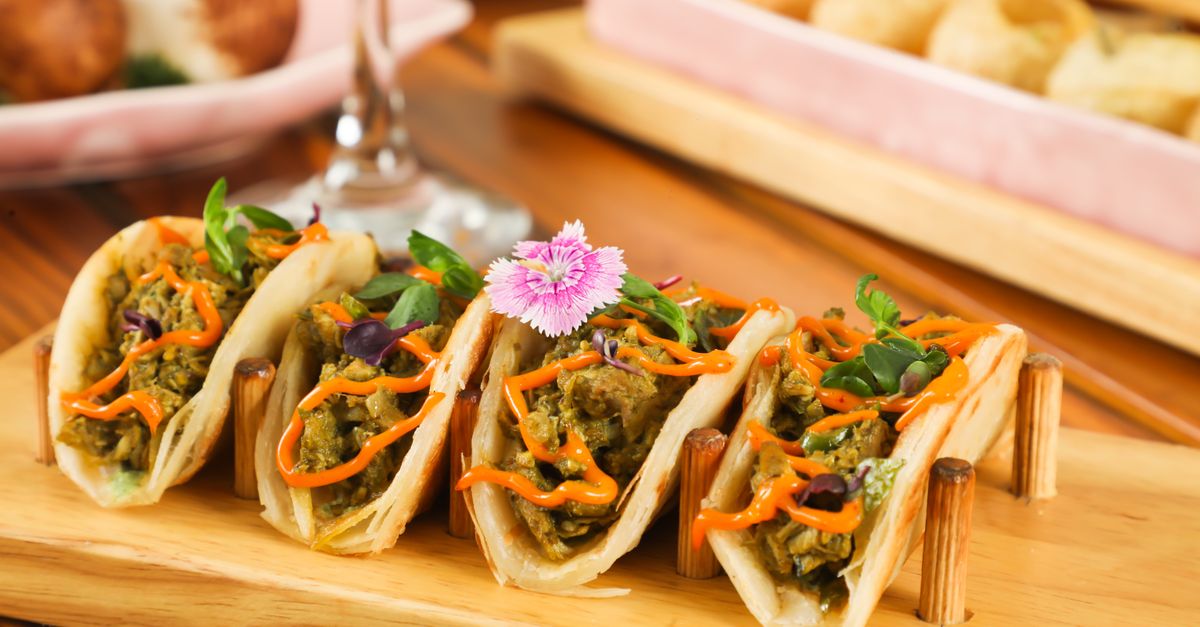
3. Mangalorean Chicken Ghee Roast — ₹250-350
Originally from coastal Karnataka — chicken pieces cooked in an intensely spiced red sauce of Byadgi chilies, then finished with generous ghee. The color is deep red, the flavor is smoky and rich but not overwhelmingly hot. Mangalore Pearl and Machali in Koramangala serve excellent versions (₹250-350).
4. Ragi Mudde — ₹40-60
Balls of finger millet (ragi) dough — a traditional Karnataka staple eaten by tearing off pieces and dipping in mutton or vegetable curry. Earthy, nutritious, and deeply rural Karnataka. Available at Naati-style restaurants in Jayanagar and Basavanagudi for ₹40-60.
5. Filter Coffee — ₹20-150
South Indian filter coffee — strong coffee brewed through a brass filter, mixed with hot frothed milk, and served in a steel tumbler-davara set. The ritual of pouring between tumbler and saucer to cool and froth is part of the experience. ₹20-40 at darshinis, ₹80-150 at specialty cafes.
6. Gobi Manchurian — ₹80-150
Indo-Chinese street food — cauliflower florets battered and deep-fried, then tossed in a spicy-sweet soy-chili-garlic sauce. India's obsession with Chinese-inspired food produces dishes that exist in neither Chinese nor Indian tradition — and they're addictive. ₹80-150 at street stalls and restaurants.
Where to Eat
Basavanagudi & Jayanagar — Traditional South Indian
The old residential neighborhoods have Bangalore's most authentic eateries. Vidyarthi Bhavan for legendary dosa (₹65), MTR for the full South Indian breakfast (₹100-200), and countless darshinis serving idli, vada, and filter coffee for under ₹50.
Koramangala & Indiranagar — Modern Diversity
The tech-worker neighborhoods have every cuisine. Toit for craft beer and bar food (₹300-500), Truffles for burgers (₹250-400), and Meghana Foods for Andhra biryani (₹200-300). The density of restaurants is extraordinary — dozens within walking distance on 12th Main.
Shivajinagar — Night Food
The Muslim-majority neighborhood has Bangalore's best non-vegetarian street food after dark. Biryani from Shivaji Military Hotel (₹150-200), seekh kebabs from roadside grills (₹100-150), and late-night haleem during Ramadan (₹80-120).

Eating Etiquette in Bangalore
Indian food is traditionally eaten with the right hand — the left hand is considered impure. Tear roti or naan into small pieces, use them to scoop curries and rice, and push food toward your mouth with your thumb. This technique takes practice but enhances the eating experience. Restaurants always provide cutlery if you prefer, and no one will judge either approach.
Indian restaurants serve water in two forms — regular (filtered tap water, sometimes marked 'aqua' or 'mineral') and bottled (sealed brands like Bisleri or Kinley). At budget restaurants, ask specifically for 'sealed bottle water' to avoid filtered water that might not agree with foreign stomachs. At mid-range and upscale restaurants, filtered water is generally safe.
Vegetarian food in India is identified by a green dot on packaging and menus; non-vegetarian by a red dot. Many Indian restaurants are 'pure veg' — meaning no meat, fish, or eggs are served or allowed on the premises. This is not a limitation — Indian vegetarian cuisine is the world's most sophisticated, with thousands of dishes that make meat unnecessary.
The concept of 'thali' — a complete meal on a metal platter with small bowls (katoris) of different dishes — is India's greatest culinary invention. Thalis provide variety, balance, and value. Most thali restaurants offer unlimited refills of dal, rice, and sabzi (vegetables). A ₹100-200 thali provides more food than most people can finish.
Planning Your Food Exploration
The most rewarding food experiences come from planning meals around the local eating schedule rather than forcing your own rhythm onto a foreign city. Most Asian cities eat early — breakfast stalls open at dawn and close by 9 AM, lunch service peaks at noon and ends by 2 PM, and dinner starts at 5-6 PM. Night markets and street food stalls offer the best evening options, typically running from 6 PM until 10 PM or later.
Budget allocation matters. Spend 30-40% of your food budget on one memorable meal — a signature local restaurant, a cooking class, or a fresh seafood dinner. Allocate the rest to street food, markets, and casual local restaurants where the authentic flavors live. This strategy ensures you taste both the refined and the everyday versions of the local cuisine without breaking the bank.
Photography etiquette at food stalls and small restaurants varies by culture. In most of Asia, photographing your food is completely normal and even expected. Photographing the cook or the stall itself — ask first with a smile and gesture. Most vendors are flattered; a few prefer not to be photographed. In sit-down restaurants, photograph freely but be discreet about photographing other diners.
Food allergies and dietary restrictions require preparation. Write your restrictions in the local language (Google Translate helps) and show the note at each restaurant. Common allergens like peanuts, shellfish, and gluten appear in unexpected places — soy sauce contains wheat, fish sauce is in many Thai and Vietnamese dishes, and peanuts appear in Indonesian, Malaysian, and Chinese cooking. Communicate clearly and ask about ingredients rather than assuming from the menu description.
The single best food investment in any Asian city is a cooking class. For 5-50, you'll visit a local market, learn 4-6 dishes hands-on, and gain techniques that let you recreate the flavors at home. The market tour alone — learning to identify local herbs, spices, and produce — transforms your understanding of the cuisine for every subsequent meal during your trip.
Drinks & Nightlife in Bangalore
Bangalore is India's undisputed drinks capital — a city that built the country's craft beer movement from scratch, exports specialty coffee beans to Tokyo and Stockholm, and sustains a bar culture sophisticated enough to rival cities ten times its global profile. The nightlife is concentrated in Indiranagar (particularly 100 Feet Road and 12th Main), Koramangala (around Forum Mall and the Jyoti Nivas stretch), and the newer pockets of Whitefield and HSR Layout that serve the tech park workforce.
Toit Brewpub (298, 100 Feet Road, Indiranagar) is the origin point of Bangalore's craft beer revolution — opened in 2010, when India had almost no craft brewing culture, and still one of the city's best. Their Kremlin Red (₹390/pint) and Basmati Blonde (₹360/pint) are perennial favorites; the food menu — nachos, sliders, and thin-crust pizzas (₹280–550) — is made for sharing between rounds. The rooftop terrace fills by 7:30 PM on weekends; arrive before then or book ahead.
Arbor Brewing Company (24, Castle Street, Ashoknagar) and Windmills Craftworks (near International Airport Road, Hebbal) have expanded Bangalore's brewing geography — Windmills has live music most Friday and Saturday evenings with no cover charge, and the crowd skews local and relaxed rather than expat-heavy. A flight of four 150ml tasters costs ₹320–380 at most craft breweries, which is the sensible way to navigate a taplist of 8–12 rotating beers.
The specialty coffee scene rivals the beer culture for seriousness. Third Wave Coffee Roasters has multiple locations across the city (Koramangala, Indiranagar, HSR Layout), using single-origin beans from Coorg and Chikmagalur roasted in-house. A filter pour-over using Monsoon Malabar beans costs ₹180–220 — an extraordinary value for a coffee that would cost £6 in London. Blue Tokai (on Church Street and Church Street Social) is equally accomplished. Both chains publish origin notes and harvest dates on their menu boards; the baristas are genuinely knowledgeable.
For cocktails, The Permit Room (No. 13, Wood Street, Ashok Nagar) serves South Indian-inspired cocktails — the Madras Mojito with curry leaf and fresh lime (₹450), the Filter Coffee Old Fashioned with cold-brew demerara (₹480) — in an atmosphere referencing a colonial-era permit room, where alcohol was once legally dispensed. The food menu is equally inventive: kothu parotta tacos and chettinad chicken sliders (₹280–420). SodaBottleOpenerWala on Church Street does excellent Irani café-style cocktails in a retro Bombay setting (₹380–450).
Bangaloreans typically dine late by Indian standards — dinner service at mid-range and upscale restaurants runs 7:30 PM to midnight. The darshinis close early (most by 10 PM), but the late-night food corridors of Shivajinagar and the kebab-and-biryani carts along Brigade Road run until 1–2 AM, serving the city's enormous population of night-shift tech workers and partygoers simultaneously.