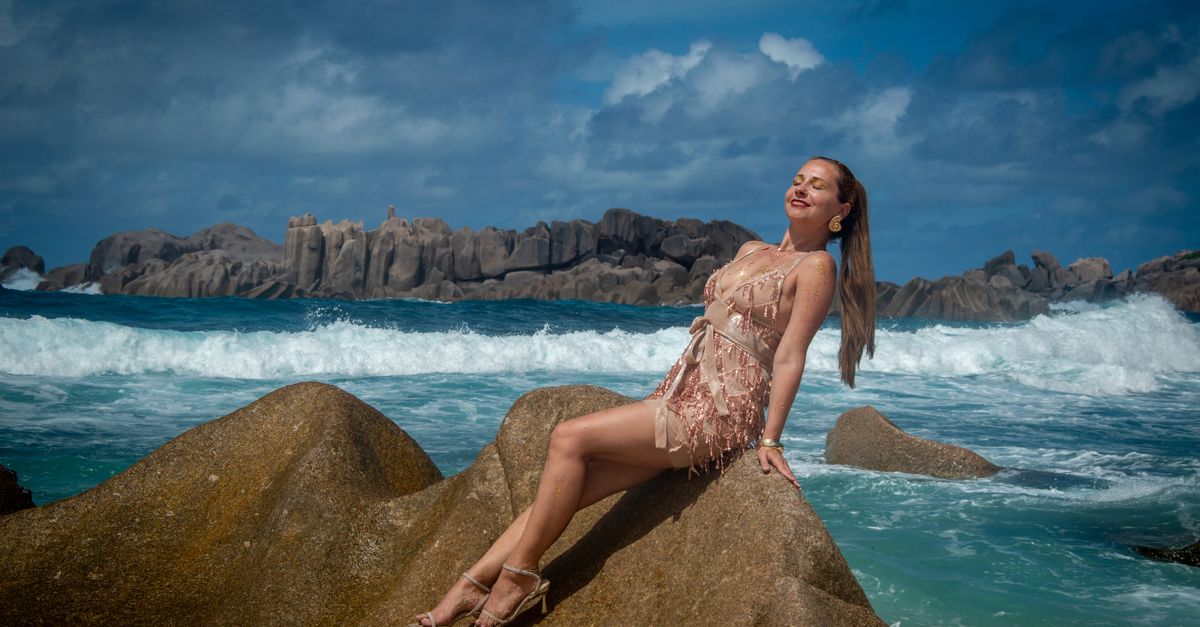
Let us be honest from the first paragraph: Seychelles is not a budget destination. The 115-island archipelago is ranked among the five most expensive countries in Africa, prices are pegged to a wealthy European tourism market, and the cheapest sit-down restaurant meal on Mahé will still cost more than a mid-range dinner in Bangkok or Mumbai. A traveller who arrives expecting Bali prices will run out of money in three days.
That said, Seychelles can be done on a budget — a real one, around SCR 1,800-2,800 (USD 130-200) per person per day — if you accept the rules of the game. The rules are: stay in self-catering chalets, never in hotels; cook two of three meals in your apartment kitchen; use the SCR 12 public bus instead of the SCR 800 taxi; buy your fish at the Sir Selwyn Selwyn-Clarke Market in Victoria rather than ordering it grilled at a beach restaurant; and do not, under any circumstances, drink at the resort bars. If you accept those rules, the islands open up. The same Anse Lazio, the same La Digue ox-cart sunset, the same granite-boulder bays you see in the EUR 800-a-night luxury photographs are accessible to you, just from a different bed at night.
This guide is the practical version. Real prices in Seychelles Rupees, real venues, no marketing fluff.
Getting There on a Budget
Seychelles International Airport (SEZ) sits on the east coast of Mahé, 11 km from Victoria. The cheapest gateways are Addis Ababa, Nairobi, Doha, Dubai, Mumbai, and Johannesburg. Ethiopian Airlines, Kenya Airways, Qatar Airways, Emirates, Etihad, and Air Seychelles itself form the bulk of the route network. Direct European service comes from Air France (Paris), Edelweiss (Zurich), British Airways (seasonal Heathrow), and Lufthansa (Frankfurt) — these are the most expensive routes.

From India, the lowest published return fares are around INR 38,000-55,000 ex-Mumbai with Kenya Airways via Nairobi or Air Seychelles direct. From Europe, EUR 700-950 return is realistic in shoulder season; EUR 500-650 in genuine low season if you book 10-14 weeks ahead. From East Africa, Nairobi-Mahé return on Kenya Airways drops as low as USD 380 in low season. The single cheapest way for many travellers is to combine a low-cost Gulf-region flight (Mumbai-Doha or Mumbai-Dubai) with a separately booked Gulf-Mahé sector — total fare 30-40 percent below a single through-ticket.
Low season is May through September — the southeast monsoon, locally called "alizé" — when the eastern beaches get windy and seaweedy but the western beaches (Beau Vallon, Anse Royale, Grand Anse on Praslin) stay calm. October-November is the calmest cheap window. The genuine peak — and the most expensive flights — is December 20 to January 8, and again mid-July to mid-August.
Skip the flight-and-hotel package deals advertised on European travel agency sites. They lock you into half-board hotels at SCR 4,500+ per night when an independent self-catering chalet at SCR 1,200-1,800 sits just down the road. Independent booking — flight separately, self-catering on Booking.com or Airbnb, ferry tickets directly through Cat Cocos and Inter Island Ferry — saves 35-50 percent for the same level of comfort.
Budget Accommodation
The single most important budget decision in Seychelles is choosing self-catering chalets, not hotels. A self-catering apartment is a private room with a kitchenette, fridge, hotplates, and usually a small terrace, in a small family-run guesthouse complex. They are the standard accommodation for the Seychellois themselves and for budget-aware international travellers, and they cost a fraction of hotel rates.

On Mahé, the cheapest cluster is the Beau Vallon area in the northwest — a 20-minute bus ride from Victoria, a long flat swimmable beach, and dozens of self-catering chalets in the hills behind the beach road. Realistic prices: SCR 800-1,400 per night for a clean studio for two, SCR 1,400-1,800 for a one-bedroom apartment with sea view. Try Beau Vallon Bungalows, Le Tropique, Villa Charme De L'Ile, and the cluster of small properties around Mare Anglaise. South of Victoria, Anse Royale and Au Cap have similar self-catering options at SCR 900-1,500.
On La Digue, self-catering chalets cluster around La Passe (the ferry village) and Anse Réunion. Prices are slightly higher than Mahé because everything has to be shipped in: SCR 1,200-2,000 per night for a studio. Chez Marston, Pension Hibiscus, and the small properties on Avenue Source d'Argent are reliable lower-end options. The compensation is that La Digue is the most beautiful island in the archipelago and you do not need a car.
On Praslin, self-catering is concentrated at Anse Volbert (Côte d'Or) and Grand Anse. Studios run SCR 1,200-1,800. Try Britannia Apartments, Coco de Mer Apartments, and Indian Ocean Lodge's smaller annex rooms.
For absolute lowest prices, ask guesthouse owners directly through WhatsApp for stays of five nights or longer. Owners pay 15-20 percent commission to Booking.com and will often pass that saving back to you for a direct booking. Use Booking and Airbnb to find the property and read reviews; then message and re-book direct.
Eating Cheaply Like a Local
This is where self-catering pays for itself. Restaurant meals in Seychelles routinely run SCR 350-700 per person; the same plate cooked in your apartment kitchen costs SCR 80-150.

The Sir Selwyn Selwyn-Clarke Market (often just called "STC Market" or "Victoria Market") in central Victoria is the cheapest food source on the islands. The fish stalls open at 6:30 AM and clear out by 11:00 — fresh tuna, bourgeois (red snapper), job (emperor), and bonito at SCR 80-150 per kg, half what you would pay at a supermarket. Vegetables, breadfruit, mangoes, and bananas come from local growers and from the daily delivery off the Praslin and La Digue ferries. A full bag of dinner ingredients for two — fish, rice, vegetables, lime, chilli — costs SCR 200-300.
For ready-to-eat budget food, the takeaways at the STC Market upstairs serve full plates of fish curry with rice and salad for SCR 80-150. The "ladob" — banana, sweet potato, breadfruit, and cassava simmered in coconut milk — is a Seychellois Sunday-lunch staple and turns up at most takeaways for SCR 60-100. Octopus curry, lentil dhal, and grilled chicken with chips are all in the SCR 80-150 range. Eat upstairs at the small plastic tables or take it back to your chalet.
Outside Victoria, look for the small "takeaways" attached to shops in every village — Beau Vallon, Anse Royale, Anse Volbert on Praslin, La Passe on La Digue. The Beau Vallon takeaway behind the petrol station and the Anse Royale takeaway opposite the beach access road are both reliable for SCR 100-180 plates. Avoid the beach restaurants for everyday eating — the same fish that costs SCR 120 from a takeaway is SCR 450-650 grilled at the beach.
Supermarket essentials: STC Hypermarket in Victoria and the larger STC branches at Anse Royale and on Praslin have the best prices. A 1 kg bag of rice is SCR 35-45, a litre of milk SCR 28-35, a 6-pack of Seybrew (the local lager) SCR 240-300. Bread from a Seychellois boulangerie is SCR 8-12 a loaf.
If you want one sit-down restaurant meal a week, Marie-Antoinette in Victoria (SCR 350-450 set menu of seven Creole dishes), Maria's Rock at Anse Royale, and the small terrace restaurants at La Digue are the best value. Avoid the resort restaurants entirely.
Free & Low-Cost Attractions
Seychelles' best feature is that the beaches are public, and the beaches are the attraction.

On Mahé, every beach is free and accessible: Beau Vallon (the long flat northwest beach), Anse Royale, Anse Forbans, Anse Intendance, Anse Soleil, Petite Anse, Grand Anse Mahé, and the dramatic Anse Major (only reachable by a 1-hour coastal walk from Bel Ombre). All free. Bring lunch from the supermarket, take the bus or walk, spend the day. The single most photographed beach on Mahé — Anse Intendance, on the south coast — has no entry fee, no facilities, and is reached by a 30-minute walk from the road.
On La Digue, the famous Anse Source d'Argent (the granite-boulder beach in every Seychelles brochure) sits inside the Union Estate, a private property that charges SCR 150 entry. The fee is annoying but unavoidable; the entry also gives you access to the giant tortoise enclosure and the old vanilla plantation. Once inside, you can spend an entire day. La Digue's other beaches — Anse Patates, Anse Severe, Anse Cocos, Grand Anse, Petite Anse, Anse Marron — are all completely free and arguably more beautiful than Anse Source d'Argent itself. The walk over the ridge from Grand Anse to Anse Cocos to Anse Marron is one of the great free experiences in the Indian Ocean.
On Praslin, the famous Anse Lazio is free. Anse Georgette (often called the most beautiful beach in the world) is technically inside the Constance Lemuria Resort but the resort is required by Seychellois law to allow public access — call the day before and they will issue you a free permit. The Vallée de Mai, the UNESCO-listed palm forest where the coco-de-mer grows, charges SCR 450 entry — one of the few non-beach experiences worth the fee.
Mahé's hiking trails are all free. The Morne Seychellois National Park has a network of marked trails — Copolia (1.5 hours, SCR 200 small entry fee), Trois Frères (4 hours, free), Anse Major (3 hours return, free), Morne Blanc (2 hours, SCR 200). Trail maps are free at the National Parks Authority office in Victoria.
Victoria itself — the smallest capital in Africa — can be walked in 30 minutes. The Hindu temple, the Sir Selwyn Selwyn-Clarke Market, the Bicentennial Monument, and the Clock Tower (Lorloz, modelled on Vauxhall Clock Tower in London) are all free.
Getting Around on a Budget
The Seychelles Public Transport Corporation (SPTC) runs a flat-fare bus network on Mahé and Praslin. Every journey, no matter how long, costs SCR 12. Pay the driver in cash on board; smaller notes preferred. On Mahé, the central terminal is at the Victoria bus station next to the market, with services radiating to Beau Vallon, Anse Royale, Bel Ombre, Anse Boileau, the airport, and Takamaka. Buses run roughly every 20-40 minutes from 5:30 AM to 7:30 PM. On Praslin, buses connect Anse Volbert, Grand Anse, Anse Lazio, the Vallée de Mai, and the Baie Sainte Anne ferry terminal. The bus is genuinely the cheapest transport in Seychelles by an order of magnitude.

Taxis exist but are very expensive — SCR 25-35 per kilometre, no meters, all fares negotiated in advance. A taxi from the airport to Beau Vallon is SCR 350-450; the same trip on the bus is SCR 12. Use taxis only late at night or with heavy luggage.
Inter-island ferries are the second-largest transport expense after accommodation. The Cat Cocos high-speed ferry connects Mahé to Praslin in 1 hour and costs SCR 750-900 one way. The Inter Island Ferry connects Praslin to La Digue in 15 minutes for SCR 200-300. Book online at catcocos.com and innerislands.sc — same-day walk-up tickets are sometimes available but Saturday and Sunday services sell out 48 hours ahead.
On La Digue itself, the standard transport is a bicycle. Rental costs SCR 100-150 per day from the dozens of stalls clustered around the ferry pier. The whole island can be cycled in 3-4 hours.
Renting a small car on Mahé costs SCR 600-900 per day — only worth it for 2-3 days when you specifically want to reach south-coast beaches that buses serve poorly.
Money-Saving Tips
1. Self-catering is non-negotiable. A self-catered week in Beau Vallon at SCR 1,200/night plus SCR 200/day groceries totals SCR 9,800. The same week half-board at a hotel is SCR 4,000-5,000/night, totalling SCR 28,000-35,000. The saving funds three or four extra days in the country.
2. Cook your fish, do not order it grilled. A 1 kg yellowfin tuna at the STC market is SCR 100-130. A 250g grilled tuna steak at a beach restaurant is SCR 450-600. The ratio is roughly 12 to 1.
3. Take the SCR 12 bus everywhere. Treat the bus as the default and the taxi as the exception. The savings over a 7-day trip are typically SCR 4,000-6,000.
4. Book Cat Cocos ferries online, not at the pier. Walk-up rates are 10-15 percent higher and weekend departures sell out.
5. Visit La Digue as a day trip, not as an overnight. La Digue is the most beautiful island but accommodation is 30-40 percent more expensive than Mahé. A full-day round trip from Praslin (15-minute ferry, SCR 200 each way) gives you all the major beaches without the accommodation premium. Stay on Praslin or Mahé.
6. Travel May-September for low-season prices. The eastern beaches are windier, but you simply move to the western beaches (Beau Vallon, Grand Anse Praslin, Anse Lazio). Accommodation prices drop 25-35 percent and flights drop 20-30 percent.
7. Drink Seybrew and Takamaka, not imported. Local Seybrew lager is SCR 40-60 a bottle at the supermarket; imported Heineken is SCR 90-130. Takamaka rum (the national distillery, made on Mahé) is SCR 280-350 a bottle. A cocktail at a beach bar is SCR 250-400.