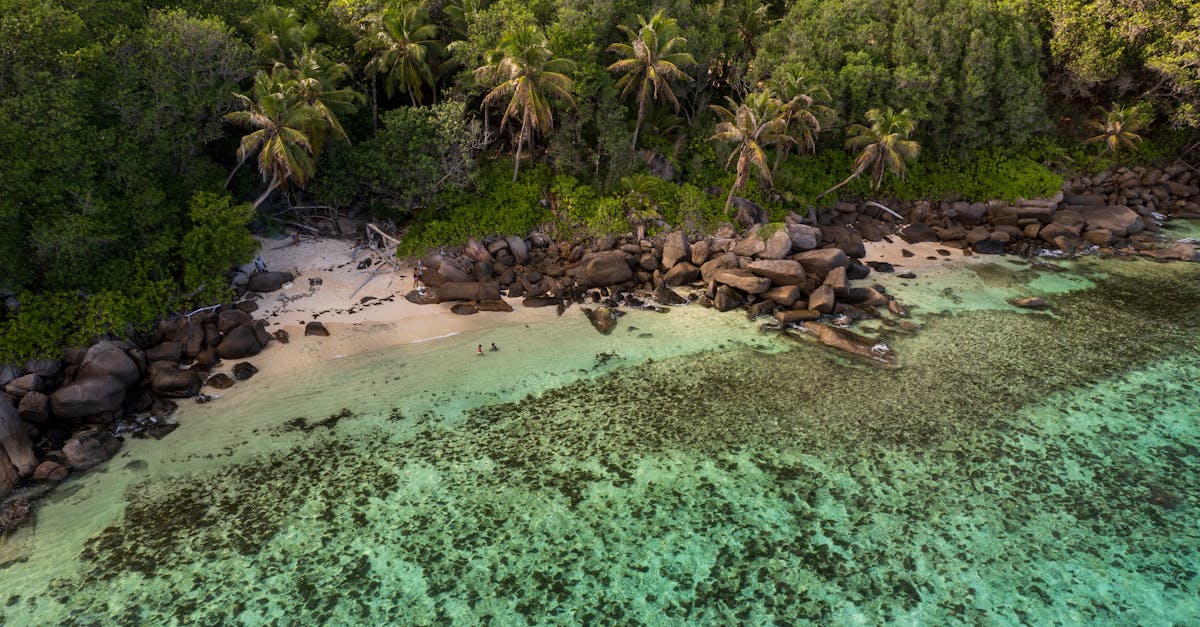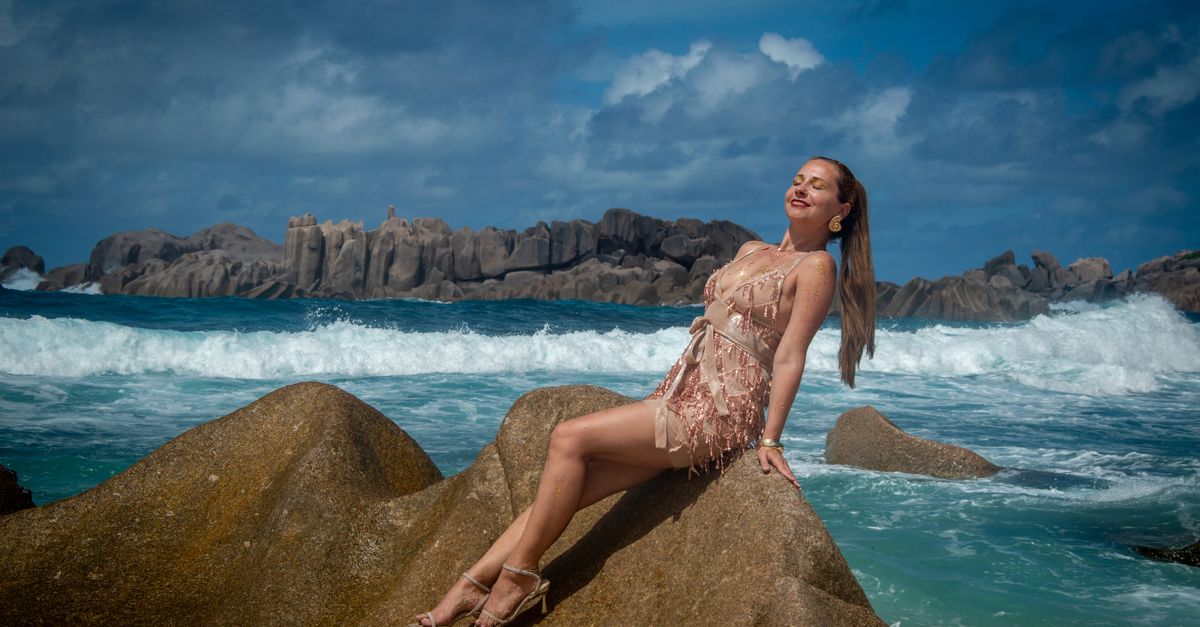
The Seychelles archipelago — 115 islands scattered across 1.4 million km² of Indian Ocean — is simultaneously one of the world's most extraordinary natural environments and one of its most successfully marketed luxury destinations. The granitic inner islands (Mahé, Praslin, La Digue) are genuinely unlike anywhere else on earth: ancient Precambrian granite rounded into sculptural boulders by 65 million years of erosion, draped in tropical forest, surrounded by coral reefs in water that cycles through shades of turquoise, jade, and indigo that seem computationally generated rather than natural.
The challenge for visitors is that the Seychelles's reputation for exclusive luxury has created a pricing structure that makes even budget travelling here expensive by African standards. A guesthouse room costs $100–200 per night; a restaurant meal $25–60 per person. But the islands' extraordinary natural heritage — two UNESCO World Heritage Sites, rare endemic birds, the world's largest land tortoise, and some of the planet's finest diving — is equally accessible to independent travellers willing to self-cater, use local buses, and stay in family guesthouses rather than five-star eco-lodges.
The Seychellois rupee (SCR) is used alongside USD and EUR, which are widely accepted. The ferry network between the main inner islands is affordable — Mahé to Praslin costs $35 SCR 475 return on Cat Cocos ferry. The island's public bus system on Mahé is excellent and costs SCR 5 ($0.35 USD) per trip. These local transport options make the Seychelles significantly more budget-accessible than the resort-only tourist perception suggests.

1. Vallée de Mai and the Coco de Mer
The Vallée de Mai on Praslin island is the world's most extraordinary palm forest — a UNESCO World Heritage Site where the endemic Coco de Mer palm (Lodoicea maldivica) grows in its original wild habitat. The Coco de Mer produces the world's largest seed — a double-lobed nut weighing up to 25 kg — that was for centuries the most mysterious object in the Indian Ocean trade, washing up on beaches from Arabia to India with no known source. Sailors called it the "sea coconut" and attributed magical and aphrodisiac properties to it; its origin in the Seychelles was unknown to the outside world until 1768.
The ancient palm forest in the Vallée de Mai is protected and managed to protect the endemic species it contains — beyond the Coco de Mer, the forest harbours four other endemic palm species, the black parrot (Coracopsis nigra barklyi, found only in Praslin's palms), and a dense understory of endemic plants. Walking the forest trails is simultaneously a botanical experience and something more primal: these palms have been here, in this form, for longer than humanity has existed in any recognisable modern form.
The Vallée de Mai is in the centre of Praslin island, accessible by bus from Grand Anse Praslin for SCR 5. Entry costs SCR 250 ($18 USD) — a significant fee that directly funds the conservation of the reserve. Open daily from 8 a.m. to 5:30 p.m. The forest is best in the early morning when the light filters green through the 30-metre palm canopy and the black parrot's harsh call is audible from the treetops. The guided forest walk (SCR 100 additional) is led by naturalists who know the black parrot's regular feeding trees and can locate them reliably.
The Coco de Mer nut itself — when encountered in the wild on the forest floor, its extraordinary double-lobed form complete — is one of the most remarkable natural objects on earth. Seeds can be purchased at the Vallée de Mai gift shop for $350–800 USD for a certified nut with export permit, or in smaller souvenir form (half nuts, polished sections) for $20–80 USD. The export permits are essential — exporting Coco de Mer without documentation is illegal and the penalties are serious.
2. Anse Source d'Argent at Dawn
Anse Source d'Argent on La Digue island is routinely described as the most beautiful beach in the world — a description that could be applied to 20 other beaches by 20 other writers, but which, in this case, happens to be defensible. The beach's combination of pink-tinged granite boulders sculpted into fantastical organic shapes, fine white sand, shallow turquoise water, and the constant presence of the endemic Black Paradise Flycatcher in the adjacent takamaka trees creates a landscape that appears to have been designed rather than evolved.
The beach is part of a managed nature reserve charged at SCR 100 ($7 USD). The key to experiencing it is timing: arriving at 7 a.m. when the reserve opens puts you on the beach before the day-trip crowds from Mahé arrive (typically around 10 a.m.) by about 3 hours. In that first-light window — the boulders glowing pink in the morning sun, the water absolutely flat behind the lagoon's coral reef barrier, perhaps one or two other visitors — the beach achieves the quality of a landscape painting rather than a tourist site.
La Digue island is reached from Mahé by Inter-Island Ferry Services via Praslin (total journey 2–3 hours, $45 USD return). The island has no cars except for a few utility vehicles; transport is by bicycle or ox cart. Bicycle rental costs SCR 100–150/day and is the perfect mode of transport for La Digue's flat coastal roads. The island is 5 km long and cyclable end-to-end in 30 minutes. Several other extraordinary beaches — Anse Cocos, Petite Anse, Grand Anse — are accessible only by bicycle or foot from the main settlement.
La Digue's Village is a settlement of perhaps 2,500 people who maintain the most traditional Seychellois Creole lifestyle of the inner islands. The fishing culture here — small boats, hand-lines, the daily catch sold directly from the boat landing — is unchanged from the island's pre-tourist era. The Veuve Nature Reserve at the centre of La Digue protects the last remaining wild population of the Seychelles Black Paradise Flycatcher (formerly known as the Veuve, from the French for "widow" — the female is a plain brown bird while the male has extraordinary long tail streamers). Entry to the reserve is SCR 100; resident naturalists can locate the flycatcher within 30 minutes for any patient visitor.
3. Victoria Market and the Capital
Victoria, on Mahé island, is the world's smallest capital city — a settlement of perhaps 25,000 people that manages to contain a functioning market, cathedral, museum, Hindu temples, mosques, and the full infrastructure of a national capital in an area that a fast walker can cross in 15 minutes. The Seychelles's cultural diversity — Creole, Indian, Chinese, French, and British — is most visible in Victoria's streets, food, and places of worship.
The Sir Selwyn Selwyn-Clarke Market (named after a British governor who extended its facilities in the 1950s) is the essential Victoria experience: a covered market selling fresh fish, tropical fruit, spices, and the ingredients of Creole cooking that make the Seychelles's food culture distinctive. The market's fish section displays species found only in Indian Ocean waters — the red snapper, bourgeois fish, parrotfish, and the extraordinary bat fish — alongside standard Atlantic and Pacific species. The spice section sells fresh turmeric root, vanilla beans (genuine Seychelles vanilla is among the world's finest), and lemongrass at prices set by the local shopping economy rather than the tourist trade.
Victoria's food stalls adjacent to the market serve Creole fish curry (cari de poisson) for SCR 50–80 ($3.50–5.70 USD) — the best casual lunch in the Seychelles. The curry's characteristic combination of fresh chilli, turmeric, coconut, lemongrass, and kaffir lime leaf produces a flavour profile that is the Indian Ocean distillation of the archipelago's geographic position between Africa, India, and Southeast Asia. Eat with steamed rice and dried jackfruit salad for a complete Creole meal for under SCR 100.
The Seychelles Natural History Museum on Independence Avenue (SCR 25 entry) is small but contains the finest display of Seychelles natural history outside of a specialist research library: endemic bird specimens (including several extinct species hunted out by early settlers), the famous giant tortoise specimens, and geological information about the granitic islands' extraordinary age (over 750 million years — the only mid-ocean granitic islands on earth, a remnant of the supercontinent Gondwana). The tortoise skeleton on the ground floor — Aldabra giant tortoises can live over 150 years — contextualises the age of these animals in a way that seeing living tortoises in a field cannot.
4. Aldabra Atoll (Remote Application)
Aldabra Atoll — 1,200 km southwest of Mahé, entirely uninhabited except for a rotating scientific research station — is the world's largest raised coral atoll, a UNESCO World Heritage Site, and arguably the most pristine coral ecosystem anywhere in the Indian Ocean. The atoll's 150,000 Aldabra giant tortoises constitute the world's largest population of this species — and since it was this population that was transplanted to other Indian Ocean islands (Mauritius's Rodrigues Island and Cousine Island in the Seychelles) after the species was wiped out elsewhere, they represent the genetic foundation of the entire Indian Ocean giant tortoise restoration effort.
Access to Aldabra is genuinely difficult — the Seychelles Islands Foundation controls all access and issues a very limited number of research and scientific tourism permits. Applications through the SIF website are processed individually; priority is given to researchers and then to conservation-supporting visitors who apply months in advance. A visit costs approximately $300–500 USD per day including accommodation at the basic research station. The experience is for the extremely motivated: 6 hours of flying time from Mahé on a chartered aircraft to an atoll where the isolation is complete and the wildlife encounter is unlike anywhere else on earth.
For the overwhelming majority of Seychelles visitors, Aldabra is known only through the tortoises that have been transplanted to several inner island conservation areas: Cousin Island Special Reserve (boat trips from Praslin, SCR 250 entry), Aride Island (strictly limited access), and several private island reserves (accessible through their respective lodges). The Aldabra giant tortoise encountered in these managed settings is the same species — same prehistoric walk, same timeless gaze — but without the context of the wild Aldabra landscape that is their natural home.
Cousine Island, near Praslin, operates as a strict conservation reserve that can be visited for day trips from Praslin for $250 USD per person including guided nature walk. The island's programme to eradicate introduced species and restore endemic Seychellois bird populations has produced the highest density of Seychelles Magpie-Robin (the rarest bird in the Seychelles) in the world, alongside Seychelles Warbler, Seychelles Fody, and the Hawksbill Turtle nesting programme that has made Cousine one of the most important turtle nesting sites in the Indian Ocean.
5. Morne Seychellois National Park Hike
The Morne Seychellois National Park covers 20% of Mahé island's total area — the cloud-forested interior above 500 metres elevation where the island's endemic vegetation and birds survive in the best-remaining form. The park's highest point, Morne Seychellois (905 metres), is accessible via a 4-hour return trail from the tea plantation at Beau Vallon that passes through successively more extraordinary vegetation zones: from secondary lowland growth through the endemic pitcher plant (Nepenthes pervillei) zone and into the mist-shrouded summit ridge where ancient trees festooned with lichen and orchids emerge from cloud.
The summit view — when the cloud briefly lifts — reveals the entire Mahé island spread below, surrounded by the coral reef lagoon and the deep indigo of the open Indian Ocean. The view north across the inner island chain (Praslin, La Digue, Silhouette) on clear days extends 50 km. The summit ridge itself is remarkable for its plant ecology: the ancient Seychellois pitcher plant, the endemic orchids, and the extraordinary variety of mosses and lichens that thrive in the permanent humidity make the ridge a botanical environment without parallel in the Indian Ocean.
The Morne Seychellois trail starts from the Beau Vallon road near the Anse Major junction. There is no entry fee for the national park. A guide (SCR 600–1,000 from tour operators in Victoria) is recommended for the summit trail, which requires scrambling in the upper section. The hike is not suitable after heavy rain when the trail becomes extremely slippery. Bring 2 litres of water per person and start before 7 a.m. to reach the summit before the afternoon cloud builds.
The Anse Major trail — a shorter and easier route within Morne Seychellois National Park — leads to a secluded beach at Anse Major accessible only on foot (45 minutes each way from the Beau Vallon road). The beach is unmaintained, rocky, and beautiful in a way that Anse Source d'Argent — perfected by granite boulders and shallow water — cannot match. Snorkelling around the granite boulders reveals a reef ecosystem of moderate quality with good fish diversity. The isolation of a beach accessible only by a 45-minute walk keeps the experience serene even in peak season.
6. Cousin Island Bird Sanctuary
Cousin Island Special Reserve — a 27-hectare island 2 km south of Praslin — has been managed as a nature reserve since 1968 when BirdLife International purchased it to protect the Seychelles Warbler. The warbler's population at the time was 29 birds; today Cousin's population is over 300, and the species has been successfully introduced to four other Seychellois islands. Cousin is simultaneously a conservation success story and a genuinely extraordinary island visit.
The boat landing on Cousin is on a beach shared with nesting sea turtles — Hawksbill and Green sea turtles nest on the island's beaches year-round (peak season July–October) and are visible from the landing jetty. The guided walk through the island's interior (all visits are guided; the reserve is too sensitive for unaccompanied wandering) passes through colonies of Sooty Tern, the breeding grounds of the Seychelles Fody and Magpie-Robin, and feeding areas for the Aldabra giant tortoises that have been reintroduced as ecological engineers (their grazing maintains the island's vegetation structure).
Day trips to Cousin depart from Grand Anse Praslin on Tuesday, Wednesday, Thursday, and Friday mornings at 10 a.m. Bookings through Nature Seychelles ($250 USD per person including boat transfer and guided visit). The visit duration is approximately 2 hours on the island. No food or drink is available on Cousin; bring everything you need. Photography is freely permitted throughout the visit — the birds are habituated to visitors and approach within extraordinary distances.
The underwater environment around Cousin Island is equally rich. The reserve's no-fishing status has allowed the reef to recover to a state of biological richness that makes it one of the better snorkelling sites in the inner islands. Hawksbill turtles are regularly encountered in the water. The tour operator providing day trips to Cousin can arrange snorkelling gear rental for the journey, and the skipper will anchor at the best reef site adjacent to the island for a 30-minute snorkel before the return to Praslin.
7. Silhouette Island Day Trip
Silhouette, 20 km northwest of Mahé, is the third-largest granitic Seychellois island — a dome of ancient granite rising 751 metres from the Indian Ocean, almost entirely covered in intact primary forest that shelters species found nowhere else. The Seychellois Sheath-tailed Bat (the world's rarest bat), the Silhouette Day Gecko, and several endemic skink species all occur only on Silhouette. The island has a resident population of approximately 150 people, a single luxury lodge (the Hilton Seychelles Northolme on the main island is a different property — the Silhouette Lodge is the island's only accommodation), and a level of biodiversity per square kilometre that makes it one of the most ecologically significant islands in the Indian Ocean.
Day trips from Mahé to Silhouette depart from Beau Vallon jetty on a boat that takes 45 minutes. The day-trip programme (organised through the Silhouette Lodge, $150 per person including boat transfer, guided nature walk, and lunch) is limited to 12 guests per day to manage the ecological impact. The guided walk into the interior passes through palm forest, granite boulder fields, and cloud forest at altitude with extraordinary bird diversity including all three of Silhouette's endemic reptile species routinely visible on the trail.
The underwater environment around Silhouette is the finest in the inner Seychelles — the island's distance from Mahé, its minimal development, and its strong current exposure combine to create a reef ecosystem of exceptional health and fish biomass. The Seychelles Fishing Authority maintains a marine conservation area around the southern coast where grouper, tuna, and several shark species are regularly encountered by divers. Dive trips from Mahé to the Silhouette sites are offered by several Mahé-based dive operators at $120–150 USD for a two-tank day trip.
Silhouette's forest contains a full suite of Seychellois endemic bird species in a single island setting — the Seychelles Warbler, the Seychelles Bulbul, the Seychelles Blue Pigeon, the Seychelles Kestrel, and the rare Seychelles Scops Owl (heard most commonly at dawn) are all present. A guided dawn bird walk at 5:30 a.m. from the lodge is the finest birding experience in the inner Seychelles, though currently available only to lodge guests. The day-trip programme's guided walk begins at 9 a.m. and finds most of the diurnal species within 2 hours.
8. Seychellois Creole Cooking Class
The Seychellois Creole food culture is the least-documented aspect of a destination that attracts visitors primarily for its beaches and wildlife. The cuisine represents a synthesis of French colonial cooking, Indian spice traditions (brought by the Tamil and Gujarati trading communities), East African ingredients (coconut, plantain, cassava), and Chinese techniques (brought by Chinese indentured labourers and their descendants) that has been evolving in isolation in the Indian Ocean for 250 years. It is entirely unique and not available in any form outside the Seychelles.
Several family guesthouses on Mahé and Praslin offer morning cooking classes — starting with a market visit to choose fresh fish and tropical vegetables, followed by 3 hours of cooking instruction in the guesthouse kitchen. The class typically covers cari de poisson (fish curry), ladob (a dessert of plantain or sweet potato cooked in coconut milk and vanilla), dhall (lentil soup with Seychellois spicing), and grilled fish with the essential blaff marinade of chilli, thyme, and lime juice. Cost is SCR 600–800 ($43–57 USD) per person including the market visit and lunch.
The guesthouse Lazare Picault in the Baie Lazare area of Mahé offers the most acclaimed home-cooking classes and can be booked through the Seychelles Tourism Board. The proprietor's knowledge of traditional Creole cooking techniques — particularly the preservation methods (rougail de tomates, smoked fish, dried tuna) that historically sustained the island population between supply ships — is exceptional and rarely available to visitors in any commercial context. The class ends with a full lunch that is, by any measure, among the finest meals available in the Seychelles regardless of the restaurant's star rating.
The vanilla industry of the Seychelles deserves special mention: Seychellois vanilla (Vanilla planifolia) grown in the island's humid highland conditions develops a complex flavour profile distinct from the more common Bourbon vanilla (from Réunion) and Tahitian vanilla. Several small vanilla producers on Mahé and Praslin welcome visits and sell directly to consumers at SCR 150–300 per dried vanilla pod — expensive by absolute terms but among the finest vanilla available anywhere. Vanilla ice cream made with freshly scraped Seychellois vanilla bean is available at the Coco Rouge restaurant in Victoria — a small but meaningful luxury.

9. Anse Lazio Beach Walk
Anse Lazio on Praslin's northwest coast is arguably the finest beach on Praslin — a generous crescent of white sand enclosed by granite headlands, with swimming conditions that are reliable year-round behind the fringing reef. The beach is accessible by bus from Grand Anse Praslin (SCR 5, 20 minutes) and has two beach restaurants at either end — Bonbon Plume (the simpler, more reasonably priced option) and the more upscale Chez Plume — but the beach itself between the two restaurants is entirely public and costs nothing to use.
The snorkelling at Anse Lazio's southern headland — where the granite boulders extend underwater to create a complex reef habitat — is exceptional. Hawksbill turtles are regularly encountered here, along with large schools of surgeonfish, parrotfish, and the occasional eagle ray passing through the deeper water channel. Bring snorkelling gear from your accommodation; rental at the beach is available but expensive (SCR 200+ per set). The best snorkelling is in the first 2 hours after sunrise when the water is clearest and the marine activity highest.
The walk from Anse Lazio south along the coastal trail to the next bay (Anse Boudin, 45 minutes each way) is one of Praslin's finest coastal walks — passing through secondary coastal forest, over granite headlands with ocean views, and descending to a smaller and entirely deserted beach. The trail is unmarked but clear; navigation by following the coast prevents significant disorientation. The contrast between Anse Lazio with its two restaurants and the absolute isolation of Anse Boudin (genuinely, completely empty on any but the busiest holiday days) captures the Seychelles's dual nature in miniature.
The Coco de Mer Lodge on the hill above Anse Lazio accepts non-guests at its infinity pool for SCR 400 per person (redeemable at the bar) — one of the finest views in the Seychelles, looking out over the Anse Lazio beach from 200 metres above in the shade of coco de mer palms. The early morning view from the pool terrace — the beach below still in shadow while the Indian Ocean catches the first light — is worth the access fee as a compliment to an Anse Lazio beach morning.
10. The Victoria Market Sunset
Victoria Market's back section on Friday afternoons transforms as the week's final trading intensifies and the vendors begin their slow closure ritual — packing unsold produce into bags for home, hosing down stalls, and settling into the conversations that have been interrupted by commerce all week. At 5 p.m. the market's covered section takes on a golden light as the sun descends toward the granite peaks of Mahé's interior and the stall-holders who have been selling since 5 a.m. enter the most relaxed hour of their working day.
The Friday afternoon market is the best time to negotiate for the week's last herbs and spices at reduced end-of-week prices: a week-old vanilla bean, still perfectly usable, for SCR 50 versus SCR 150 for a fresh one. Fresh coconut cream pressed to order from the market's coconut vendor for SCR 20 — the essential ingredient in Creole cooking and the most distinctive flavour of the Seychellois kitchen. Several fruit vendors sell fresh, locally grown cinnamon bark (from the invasive Cinnamomum verum that has colonised much of Mahé's secondary forest but produces perfectly good cinnamon for SCR 30 per stick).
The Victoria Clock Tower — the colonial miniature of London's Victoria Street clock — chimes the hour and marks the sunset in the shadow of the granitic mountains. From the market, a 5-minute walk to the waterfront delivers the full Victoria at-dusk experience: the fishing boats returning to the small boat harbour, the last ferry from Praslin arriving at the Victoria jetty, the lights of the inner islands beginning to reflect on the harbour water, and the smell of grillade (Creole grilled fish) wafting from the takeaway stalls that open at dusk along the waterfront road. This is the Seychelles that the brochures don't show — and it is equally extraordinary.