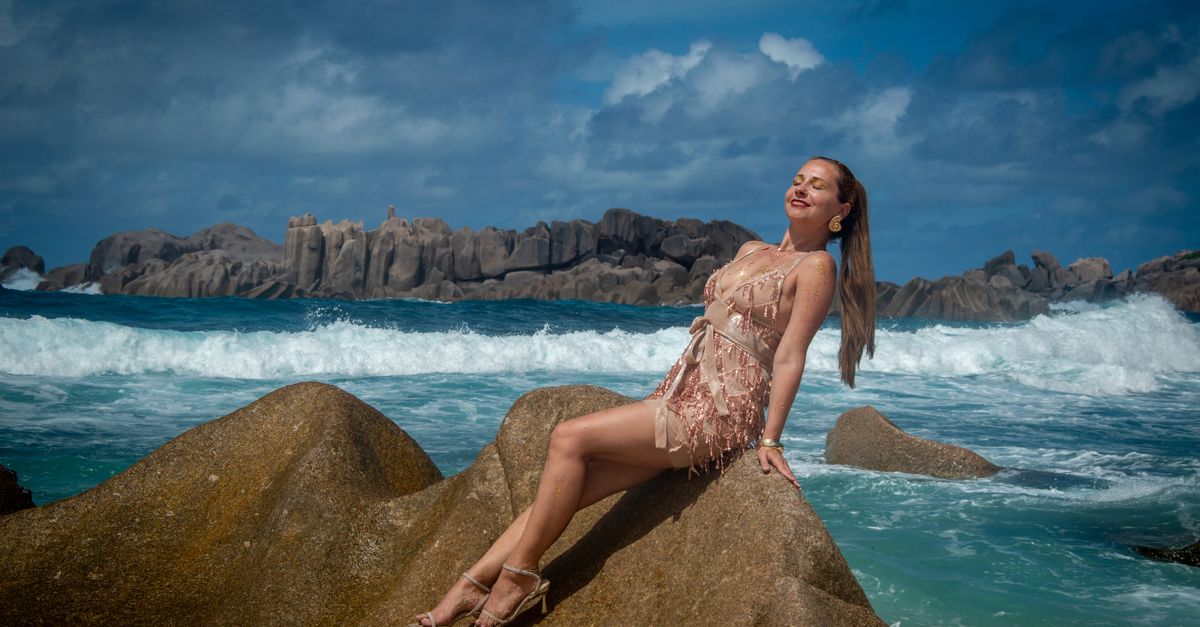
Seychelles is one of those destinations where the photographs are not exaggerated. The granite boulders at Anse Source d'Argent, the impossibly clear water at Anse Lazio, the green-skinned hills of the Morne Seychellois rising straight out of the Indian Ocean — they all look exactly like the brochure, and they are all real. What the brochures do not prepare you for is how small the country is (115 islands, 98,000 people, the smallest population of any African nation), how Creole-French the cultural mood is, how strict the visa-free welcome is in practice, and how staggeringly expensive it is to buy a beer at a hotel bar.
This guide is for first-time visitors landing at Seychelles International Airport on Mahé with a 7- to 14-day trip planned. It assumes you want to visit at least two of the three main inhabited islands (Mahé, Praslin, La Digue), that you are budget-aware but not necessarily backpacking, and that you would like to understand the country rather than just photograph it.
Before You Arrive
Seychelles offers visa-free entry of up to 90 days to virtually every nationality. There is no visa to apply for in advance. Instead, all visitors must complete the mandatory online Travel Authorization (the "Seychelles Travel Authorisation," seychelles.govtas.com) at least 72 hours before arrival. The fee is USD 10 per visitor, the form takes 10 minutes, and you must upload proof of return travel and pre-booked accommodation for the entire stay (or at least the first portion). Without an approved Travel Authorisation, the airline will not let you board. Print or screenshot the approval email — immigration officers ask to see it.

The currency is the Seychelles Rupee (SCR), pronounced "rupees" or just "roopees" by locals. Approximate rates: USD 1 ≈ SCR 14, EUR 1 ≈ SCR 15, GBP 1 ≈ SCR 18, INR 1 ≈ SCR 0.17. ATMs are plentiful in Victoria, at the airport, in Beau Vallon, on Praslin (Grand Anse and Baie Sainte Anne), and on La Digue (one ATM at the ferry terminal). MCB, Barclays, Nouvobanq, and Mauritius Commercial Bank all have networks accepting Visa and Mastercard. Daily withdrawal limits are typically SCR 10,000-15,000. Avoid airport bureau-de-change desks — their rates are noticeably worse than the ATM 30 metres away. Larger restaurants, supermarkets, and resorts accept cards (Visa and Mastercard widely, Amex less so), but self-catering chalets, ferry kiosks for walk-ups, takeaways, market stalls, and bus drivers are cash-only.
For SIM cards, the two operators are Cable & Wireless Seychelles (still locally called "C&W") and Airtel Seychelles. Both have desks in the airport arrivals hall. A tourist SIM with 10-15 GB data and 100 minutes of local calls costs SCR 250-450. You need your passport. Coverage is strong on Mahé, Praslin, and La Digue across all populated areas; outer islands are patchier.
Plug type is UK three-pin (Type G), 240V — the same as the UK. Bring a UK adaptor or pick one up for SCR 80-120 at any supermarket. Tap water on Mahé and Praslin is treated and considered safe by the WHO; many travellers and most guesthouses still use bottled or filtered water.
Getting from the Airport
Seychelles International Airport (airport code SEZ) is on the east coast of Mahé, 11 km south of Victoria. There is no rail link and no airport shuttle in the European sense.

The cheapest option is the SPTC public bus. The No. 25 service runs from a stop 200 metres outside the terminal exit (turn right out of arrivals, walk to the main road, the bus stop is on your left) directly to Victoria's central bus terminal. The journey takes 25 minutes and costs the flat SCR 12 fare. From Victoria you can connect to Beau Vallon (No. 21, 22, 23 — 20 minutes, SCR 12), to Anse Royale (No. 11 — 30 minutes, SCR 12), to Bel Ombre, or to almost any village on Mahé. Buses run roughly every 30 minutes from 5:30 AM to 7:30 PM.
The mid-priced option is a taxi. Airport taxis queue at a marked rank outside arrivals. Approximate fixed fares (always confirm before getting in): airport to Victoria SCR 250-350, to Beau Vallon SCR 350-450, to Anse Royale SCR 350-450, to the southern beaches (Anse Intendance, Takamaka) SCR 500-700. Taxis take 20-30 minutes to most Mahé destinations.
If you are flying onward to Praslin or La Digue the same day, time the connection carefully. The Cat Cocos high-speed ferry departs Mahé Inter-Island Quay (next to the New Port in Victoria) at fixed times — usually around 7:00 AM, 10:00 AM, and 4:30 PM. Pre-book at catcocos.com. Allow 60-90 minutes between flight landing and ferry departure for transfer to the quay.
Avoid renting a car at the airport on arrival night. The airport rental desks (Hertz, Avis) charge SCR 800-1,200 per day; local rental agencies in Victoria and Beau Vallon offer the same Hyundai i10-class cars for SCR 600-900. Drive on the left after a long flight is also a poor idea on Mahé's narrow, twisting hill roads.
Getting Around the City
Victoria, the Seychelles capital, is one of the smallest capitals in the world — you can walk across it in 25 minutes. Within Victoria, walking covers everything: the Sir Selwyn Selwyn-Clarke Market, the Hindu temple (Arul Mihu Navasakthi Vinayagar Temple), the Cathedral of the Immaculate Conception, the Clock Tower (Lorloz), the National Museum, the National Library, Independence Avenue, Albert Street, and the Bicentennial Monument. None of it is more than 10 minutes apart on foot.

For travel to the rest of Mahé, the SPTC bus network is the default. Every journey is the flat SCR 12 fare. Major lines from Victoria go to Beau Vallon (No. 21, 22, 23) in the northwest, Anse Royale and Anse Forbans (No. 11) in the southeast, Bel Ombre and Beau Vallon (No. 22), the airport (No. 25), Anse Boileau (No. 11A), and Quatre Bornes/Takamaka (No. 7). Buses run from roughly 5:30 AM to 7:30 PM, every 30-45 minutes on the major routes, less frequently on minor routes. There is no published timetable beyond rough first-and-last departure times posted at the central terminal — locals use a wave-down approach and rough familiarity.
Taxis exist in Victoria and at the airport, all unmetered. Negotiate the fare before getting in. Within Victoria, a short taxi hop is SCR 80-150; longer hops across Mahé range SCR 250-700. Ride-share apps do not yet operate widely — there are some informal WhatsApp-based services in Beau Vallon and Eden Island that locals use, but tourists generally do not have access.
For travellers planning to range across the south coast (Anse Intendance, Anse Soleil, Anse Royale beaches), 2-3 days of car rental from a local Mahé agency is the most efficient approach. SCR 600-900 per day, petrol around SCR 25 per litre.
On Praslin, the public bus runs the same SCR 12 flat fare around the island's main perimeter route. On La Digue, you do not need transport — bicycles (SCR 100-150 per day) cover everything, and the island has only a handful of motor vehicles.
Where to Base Yourself
Three islands matter for first-time visitors: Mahé, Praslin, and La Digue. The classic 7-10 day trip splits time across all three (or at least two), because each has a different character and the inter-island ferries are quick and cheap.

Mahé is the largest and most developed island and where almost all flights arrive. The Beau Vallon area in the northwest is the best general-purpose base for first-timers — long flat swimmable beach, dozens of self-catering chalets at SCR 800-1,800, several mid-range hotels at SCR 2,500-5,000, decent supermarkets, takeaways, and the No. 21/22/23 bus to Victoria every 20-30 minutes. The southern coast (Anse Royale, Anse Forbans, Au Cap, Takamaka) is quieter and more local but has fewer eating options and patchier bus service. Eden Island, the artificial island near Victoria, is upmarket and convenient but lacks the beach-town feel — best avoided for a first visit. Self-catering chalet on Mahé: SCR 800-1,800. Mid-range hotel: SCR 2,500-5,000. Resort: SCR 5,000-15,000.
Praslin is the second-largest island, an hour by ferry from Mahé. It is more luxurious in feel — slower, greener, with the Vallée de Mai UNESCO palm forest at its centre and Anse Lazio (often voted one of the world's most beautiful beaches) on its north coast. Anse Volbert (Côte d'Or) is the main beach village; Grand Anse on the south coast is quieter. Self-catering on Praslin: SCR 1,200-2,000. Mid-range hotel: SCR 3,500-7,000. Praslin is harder to do as a budget-only stay because there are fewer takeaways and supermarkets, so prices skew higher.
La Digue is the smallest of the three populated islands, 15 minutes by ferry from Praslin. There are almost no cars; the standard transport is a bicycle. The granite-boulder beach at Anse Source d'Argent and the wild walk to Anse Marron are the highlights. La Digue feels like a holiday from your holiday — slower, sleepier, and undeniably the most beautiful island. Self-catering chalet on La Digue: SCR 1,200-2,200. Mid-range hotel: SCR 3,500-7,500.
The classic split for a 9-day trip: 4 nights Mahé (Beau Vallon), 3 nights Praslin (Anse Volbert), 2 nights La Digue (La Passe). Or, for budget travellers: 5 nights Mahé, 3 nights Praslin, day-trip to La Digue from Praslin.
Local Culture & Etiquette
Seychelles has a fascinating cultural mix for such a small population. The 98,000 Seychellois are predominantly Creole — descendants of French colonists, freed African slaves, Indian merchants, Chinese traders, and Malagasy indentured workers, blended over 250 years into a distinct ethnic group. About 76 percent are Roman Catholic, 6 percent Anglican, 2 percent Hindu (mostly of Tamil and Gujarati descent), 2 percent Muslim, and a small but visible Bahá'í community. The result is an island where the Sunday cathedral mass, the Hindu Cavadee festival, and Eid al-Fitr are all part of the public calendar.

Three official languages: Seychellois Creole (Kreol Seselwa, the everyday language of every Seychellois), French, and English. Almost all Seychellois speak all three. You can travel comfortably in English; a few French phrases ("bonjour," "merci," "s'il vous plaît") are warmly received; a few Creole phrases ("byenveni," "mersi") will earn you a delighted smile.
Dress is broadly Western and relaxed. Beachwear belongs at the beach; walking through Victoria in just a swimsuit is considered disrespectful, and most shops will ask you to put a shirt on. For visits to the Sir Selwyn Selwyn-Clarke Market, the Cathedral of the Immaculate Conception, or the Hindu temple, cover shoulders and knees. The Vallée de Mai and Curieuse Island national parks expect modest dress.
Tipping is appreciated but not strictly expected. In sit-down restaurants, 5-10 percent is normal if service is not included. Taxi drivers do not expect tips but appreciate small rounding-up. Hotel porters appreciate SCR 50-100 per bag. Excursion guides — particularly snorkel and dive instructors — appreciate SCR 100-300 per passenger at the end of a half-day trip.
Seychellois social culture runs slow. "Dousman" (the Creole word, broadly "slowly, slowly") is a national value. Service in restaurants takes longer than European travellers expect. Bus drivers stop to chat with passengers. Plan your day with this in mind — pushing for speed is considered impolite and rarely actually speeds anything up.
Common Mistakes to Avoid
1. Not pre-booking inter-island ferries. The Cat Cocos Mahé-Praslin ferry and the Inter Island Praslin-La Digue ferry both sell out on weekends and during school holidays. Booking 48-72 hours ahead at catcocos.com and innerislands.sc is essential. Showing up at the quay expecting a walk-up ticket on a Saturday morning will leave you stranded for the day.
2. Eating only at hotel restaurants. Hotel and resort restaurants in Seychelles are spectacularly expensive — SCR 600-1,400 for a main course is standard. The actual Seychellois food (fish curry, ladob, shark chutney, octopus salad) is at the SCR 80-150 takeaways at the STC Market in Victoria, the Beau Vallon takeaway, the small Anse Royale takeaway, and the family kitchens on La Digue. If you eat only at the hotel, you have not eaten in Seychelles.
3. Ignoring Praslin and La Digue. Some first-time visitors stay only on Mahé to save on ferry costs and miss the two most beautiful islands. The Cat Cocos ferry is SCR 750 each way and the Praslin-La Digue ferry is SCR 200-300 — a small fraction of the trip total, and the difference between seeing one Seychelles island and seeing the actual archipelago. At minimum, take a single day-trip from Mahé to Praslin and La Digue.
4. Underestimating the cost of restaurant meals. A grilled fish at a beach restaurant routinely costs SCR 450-700; the same fish from the supermarket is SCR 120. First-time visitors often blow their daily budget on the first restaurant meal, then panic-cut for the rest of the trip. Plan in advance: cook 2 of 3 meals in your self-catering kitchen, eat one restaurant meal a day or every other day.
5. Visiting only Anse Source d'Argent on La Digue. The Union Estate's famous boulder-strewn beach is beautiful but crowded with day-trippers from 10:00 AM to 16:00. The genuinely spectacular La Digue beaches — Anse Cocos, Anse Marron, Anse Patates, Petite Anse — are reached by a 1-2 hour walk and are almost empty. If you visit La Digue and only see Anse Source d'Argent, you have seen 10 percent of what the island offers.
6. Booking a "package" with airport transfers and half-board. Seychelles packages bundle you into half-board at SCR 4,000-6,000 per night when an independent self-catering chalet at SCR 1,200-1,800 is available 200 metres away. Independent booking — flight separately, accommodation on Booking.com or Airbnb, ferry directly through Cat Cocos — is consistently 35-50 percent cheaper.
7. Skipping the Morne Seychellois hikes. Most first-timers see Seychelles only as a beach destination and never set foot on the interior trails. The Copolia trail (1.5 hours, SCR 200), the Trois Frères trail (4 hours, free), and the Anse Major coastal walk (3 hours return, free) reveal a green, mountainous, jungle-clad Seychelles that the beach photographs entirely hide. At least one half-day on a trail is a must.