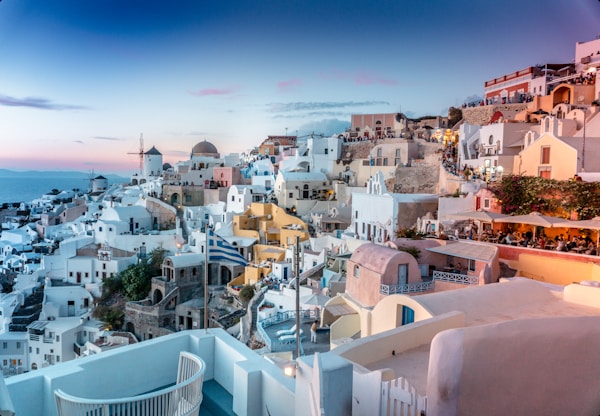
Santorini is not, by any reasonable measure, a budget destination. The most photographed island in the Mediterranean — a collapsed volcanic caldera ringed by white-washed villages, iconic blue-domed churches, and cliffs that drop 300 metres into an ink-blue sea — has fully priced its reputation into every transaction. A sunset cocktail in Oia costs EUR 20. A caldera-view room in August starts at EUR 300. A taxi from the port to Fira costs EUR 20. And yet, budget travel on Santorini is not merely possible — it is, with the right choices, a legitimate way to experience everything essential about one of the world's most extraordinary islands without the financial devastation that greets the unprepared. This guide covers every strategy available to the cost-conscious visitor.
Getting There on a Budget
Santorini is served by Santorini Airport (JTR), also called Thira Airport, which receives direct flights from Athens, most major European cities, and several Middle Eastern hubs. As a Greek domestic and international destination, there are enough carriers and routes to create meaningful competition — the key is booking timing.

From Athens (ATH), domestic flights with Aegean Airlines or Sky Express take 45 minutes and cost EUR 40–90 one-way booked 4–8 weeks ahead. Aegean in particular runs frequent promotions on the Athens–Santorini route; setting a price alert on Google Flights or Skyscanner for this route and booking when it drops below EUR 55 one-way is the most reliable cheap-flight strategy. The Athens–Santorini route is one of the busiest in Europe in summer — booking last-minute in July–August delivers EUR 150+ one-way fares.
The ferry from Athens Piraeus is the budget alternative to flying and, for travellers with time and a tolerance for overnight travel, a genuine experience in itself. Conventional ferry (Blue Star Ferries, Hellenic Seaways) takes 8–9 hours and costs EUR 35–55 in deck class (no cabin), EUR 55–90 for a shared cabin. An overnight departure (typically 7pm–8pm from Piraeus, arriving 3am–5am in Santorini) means you "sleep" on board and arrive in the early morning — saving a night's accommodation cost and arriving with the pre-dawn darkness over the caldera, which has its own drama. Deck class is perfectly comfortable with a sleeping bag or travel blanket on the outdoor loungers; the cheap inside seats are stuffy in summer.
The high-speed catamaran (Hellenic Seaways Flyingcat) covers the Athens–Santorini route in 4.5–5.5 hours but costs EUR 60–110. Worth it for daytime travel when you want to arrive without the overnight duration; not worth the premium over the overnight ferry if you're managing costs carefully.
From Crete (Heraklion), the ferry to Santorini takes 1.5–2 hours and costs EUR 30–50 — an excellent option for combining the two islands on a single Aegean trip. From Mykonos, the crossing is 2.5–3 hours (EUR 35–60). From Rhodes, the route takes 8–12 hours depending on the ferry; various Dodecanese combinations allow island-hopping itineraries with Santorini as a stop rather than a dedicated destination.
At Santorini port (Athinios), the public bus to Fira departs roughly every 30 minutes (EUR 1.80, 20 minutes) — always take this over the EUR 20–25 taxi. The bus stop is clearly signposted at the top of the port ramp. The cable car from the old Fira port (Skala) to Fira town costs EUR 6 per person (or donkey ride EUR 5, a more controversial option) but only applies if arriving on a cruise tender or very small vessel into the caldera port, not the main car ferry terminal at Athinios.
Budget Accommodation
Santorini's accommodation market is among the most expensive in Europe, particularly for caldera-view properties in Oia and Imerovigli. Budget accommodation exists but requires deliberately choosing non-caldera locations and accepting that the jaw-dropping clifftop aesthetic is not compatible with a sub-EUR 80 nightly rate in peak season. The following options represent genuine value in the Santorini context.

Villa Roussa (Fira town, EUR 40–80 for budget rooms, EUR 90–140 for private doubles, depending on season) is one of the most consistently recommended budget stays in Fira. The property is a traditional Cycladic building with clean rooms in a variety of configurations — dorm-style and private — within walking distance of the bus station, restaurants, and the caldera rim path. No caldera view from the budget rooms, but a rooftop terrace with partial views compensates. Book well ahead for July–August; this property sells out weeks in advance.
Camping Perissa (Perissa black-sand beach, camping from EUR 10–15 per person, budget bungalows EUR 25–45) is the closest Santorini gets to genuine backpacker infrastructure. Perissa is on the island's eastern coast — caldera-free, which is why it's affordable — with a long black volcanic-sand beach, a strip of tavernas and bars, and significantly lower prices across all categories compared to the caldera towns. The campsite has basic shower and kitchen facilities. Budget bungalows sleep 2–3 and include sheets. For solo travellers and those doing the Greek island backpacker circuit, this is the correct Santorini base.
Apartments and studios in Perissa, Perivolos, and Kamari (EUR 35–70 per night for a double) represent the best mid-budget option. These are the island's beach towns — black sand beaches, a working-local atmosphere, and accommodation prices 40–60% lower than the caldera side. Kitchen access in a studio apartment dramatically reduces food costs. A week in a Perissa studio costs EUR 250–400 for the accommodation alone versus EUR 800–1,500 for the equivalent nights in Oia. Combine Perissa-based accommodation with day trips to the caldera viewpoints and you experience both sides of the island at one-third the price.
Fira budget guesthouses (EUR 50–90 for a private double in shoulder season, EUR 80–130 in July–August) exist in the back streets of Fira away from the caldera rim. The price difference between a caldera-view room and a non-view room in the same price category is EUR 40–80 per night — and the caldera is a 3-minute walk from any Fira guesthouse regardless. Pay for the location in town, not for the view from your window.
Eating Cheaply Like a Local
Santorini's food economy splits sharply along geographic lines: caldera-rim restaurants in Oia and Fira charge EUR 18–35 for mains and EUR 20–25 for a cocktail with the view; the beach towns of Perissa, Perivolos, and Kamari have tavernas serving the same food for EUR 10–18 per main course; and the island's workaday food — gyros, souvlaki, bakery pies — costs EUR 4–7 anywhere on the island. Budget eating is entirely achievable; it just requires resisting the aesthetic gravity of the caldera terraces.

Gyros and souvlaki are the non-negotiable budget staple. A stuffed gyros pita (pork or chicken, topped with tzatziki, tomato, and onion) costs EUR 4–6 anywhere on the island. In Fira, the gyros stalls on the main road behind the caldera rim (specifically around the area of Mitropoleos Street) charge EUR 4.50–5.50 for a full, filling wrap. At Perissa beach, several casual spots serve souvlaki platters for EUR 8–10 — three skewers, chips, pita, and salad. This is legitimately good food, not a compromise.
The Perissa and Perivolos beach tavernas are where to eat actual sit-down meals on a Santorini budget. Main courses at honest beach tavernas run EUR 10–16: grilled octopus EUR 12–14, moussaka EUR 10–13, fresh grilled fish (priced by weight but a single portion averages EUR 14–18), Greek salad EUR 6–9. Compare this to Oia tavernas where the same moussaka costs EUR 18–24 and the Greek salad EUR 12–16 — identical food, EUR 8–10 more expensive per dish because of the caldera postcode.
In Fira itself, the distinction is between the rim restaurants (tourist-priced, EUR 18–30 mains) and the interior streets two blocks back from the caldera edge. The further you walk from the caldera rim, the more the prices approach normal Greek taverna territory. Naoussa Restaurant (on the road toward the bus station) and several unnamed family-run tavernas in the Fira back streets serve straightforward Greek food at EUR 10–16 for mains and charge carafe wine at EUR 5–8 per 500ml rather than EUR 12–18 per glass.
The island's local produce is genuinely worth seeking out. Santorini's volcanic soil produces distinctive ingredients: Santorini fava (a yellow split pea purée unlike any other in Greece, EUR 6–8 as a starter), cherry tomatoes that are sweeter and more concentrated than mainland varieties (sold at market stalls for EUR 2–3 per kilo), and the local white wines — Assyrtiko, Nykteri, Vinsanto — produced from grapes grown in the volcanic ash soil. A bottle of entry-level Assyrtiko from a supermarket costs EUR 8–12; the same wine at a restaurant costs EUR 25–45. Buy a bottle from the supermarket and drink it at a sunset viewpoint for the best-value wine experience on the island.
Free & Low-Cost Attractions
Santorini's natural and archaeological assets are genuinely spectacular, and the majority cost nothing. The island's fundamental appeal — the caldera, the views, the volcanic geology — is entirely free to experience.

The Fira to Oia caldera hike is the finest free experience on the island and arguably the best sunset walk in the Mediterranean. The 8-kilometre trail follows the caldera rim from Fira through Firostefani and Imerovigli to the village of Oia, taking 2–2.5 hours at a comfortable pace. The path hugs the cliff edge for most of its length, delivering unobstructed views of the caldera, the active Nea Kameni volcanic island, and — if you time your arrival correctly — the famous Oia sunset. This walk is entirely free, requires no booking, and the sunset at the end is better experienced from the trail above the crowds than from the packed main square in Oia itself, where hundreds of people jockey for position on the same walls. Cost: zero. Experience: genuinely world-class.
Akrotiri Archaeological Site (EUR 12 entry, reduced EUR 6 for students) is one of the best-preserved Bronze Age settlements in the world — a Minoan city buried by the volcanic eruption of approximately 1620 BC and excavated since 1967. The entire site is covered by a climate-controlled protective structure and the street-level preservation of walls, stairs, and household ceramics is astonishing. Allow 1.5–2 hours minimum. This is not a budget concession — EUR 12 for a genuinely world-class site that rivals Pompeii in preservation quality is excellent value in the Greek archaeological economy.
The Prehistoric Museum of Thera in Fira (EUR 6, students EUR 3) displays the frescoes and artefacts from Akrotiri in an air-conditioned municipal museum and provides the essential context for understanding what you see at the excavation site. The combination ticket with the site (EUR 14) is the best value if visiting both.
The black volcanic beaches of Perissa, Perivolos, and Kamari are free to access and the volcanic sand — absorbing and retaining heat in a way that white sand beaches do not — delivers a distinctive beach experience unavailable elsewhere in the Cyclades. Private beach clubs occupy portions of all three beaches but the public sections are wide and accessible. The beaches face east rather than west, which means morning sun and afternoon shade — different from the caldera's sunset orientation but genuinely beautiful in their own right.
The Oia sunset (free, obviously) is the island's signature free experience, though "free" increasingly underestimates the competition for space. Arrive at the Byzantine Castle ruins (the traditional sunset-watching spot) at least 45 minutes before sunset in peak season to secure a position; 30 minutes before is marginal. The Fira-to-Oia hike arrival mentioned above is a better alternative — you arrive via a personal achievement rather than a crowded square, and the view from the trail is cleaner.
Getting Around on a Budget
Santorini is a relatively small island — about 12 kilometres north to south — but its terrain (volcanic cliffs, winding roads, villages on different elevation levels) makes transport planning important. The public bus network is genuinely good by Greek island standards and covers the main visitor routes at very low cost.

The KTEL public bus network operates from the central bus station in Fira and covers all the main destinations on the island. Key fares: Fira to Oia EUR 1.80 (30 minutes), Fira to Perissa EUR 1.80 (30 minutes), Fira to Akrotiri EUR 1.80 (25 minutes), Fira to Kamari EUR 1.80 (20 minutes), Airport to Fira EUR 1.80 (20 minutes). All standard routes are EUR 1.80 regardless of destination — the flat fare system makes budgeting simple. Buses run roughly every 30–60 minutes depending on route and season; the timetable is posted at the Fira bus station and available on the KTEL Santorini website. Night buses run on the main routes until midnight in peak season.
Taxis are expensive relative to the bus and notorious for unavailability during peak periods. The taxi rank in Fira (Dekaochto square) has limited capacity and peak-season waits of 30–60 minutes are reported. Standard fares: Fira to Oia EUR 20–25, Fira to Perissa EUR 20–25, Fira to airport EUR 20–25. For groups of four splitting costs, taxis become competitive with buses on comfort; for individuals or couples, the EUR 1.80 bus is the overwhelming value choice. Do not assume Uber or similar apps operate on Santorini — they do not in any meaningful capacity.
ATV and scooter rental (EUR 20–35 per day) is the most popular independent transport option on Santorini and allows access to the island's secondary roads, remote viewpoints, and the interior wine village of Pyrgos that buses don't serve conveniently. The main rental strip is along the road below Fira. Traffic on the main caldera road (EP2) is heavy in peak season; ATVs are slow and should be reserved for the quieter eastern roads and village exploration rather than the main artery between Fira and Oia.
Money-Saving Tips
Base yourself in Perissa, not Oia. Perissa is the most cost-effective base on the island — accommodation runs EUR 35–70 per night for a decent double (versus EUR 200–600+ in Oia), the beach is free and uncrowded in the early morning, tavernas charge EUR 10–16 for mains instead of EUR 20–35, and the KTEL bus connects Perissa to Fira in 30 minutes for EUR 1.80. The Perissa experience is different from the caldera experience — beach-and-volcano rather than sunset-and-view — but the cost difference is dramatic and the day-trip access to the caldera towns is genuinely easy.
Do the Fira-to-Oia hike for your sunset experience. Paying EUR 18–22 for a sunset cocktail at an Oia clifftop bar is a Santorini rite of passage for those to whom money is not a constraint. For everyone else, the caldera rim hike from Fira arriving into Oia at golden hour delivers the same sunset, the same view, and exercise that justifies the subsequent dinner — for the cost of the EUR 1.80 bus back to Fira afterward. The hike takes 2–2.5 hours; start 3 hours before sunset to arrive with time to find a good viewpoint position.
Avoid July and August entirely if you have any date flexibility. Santorini in July and August is Europe's most crowded luxury destination compressed onto an island of 25 square kilometres. Accommodation prices double or triple compared to May or October. The Oia sunset square has hundreds of people competing for identical views. Restaurants are overbooked. Taxis are unavailable. The caldera hike is uncomfortably hot at midday. September offers near-identical weather, sea temperatures at their warmest, significantly lower prices, and an island that is merely busy rather than overwhelmed.
Eat gyros twice a day and splurge once. One good dinner at a caldera-rim restaurant in Fira (EUR 40–60 for two with wine) is a justifiable splurge that delivers the archetypal Santorini experience. Two gyros-and-supermarket-breakfast days flanking that single splurge keep the food budget to EUR 25–30 per person per day rather than EUR 60–100 that daily caldera-view restaurant dining requires.
Book the ferry from Athens, not the flight. The overnight Piraeus–Santorini ferry in deck class costs EUR 35–55 versus EUR 60–100 for a last-minute domestic flight from Athens. For flexible travellers, the ferry saves EUR 20–45 per person, provides the authentic Greek island transport experience, and saves a night's accommodation cost if you use the overnight departure. The Blue Star Ferries website sells tickets directly; book 1–2 weeks ahead for summer peak sailings.
Visit Akrotiri instead of (or before) the wine tours. Organised winery tours in Santorini cost EUR 35–60 per person for a guided visit including tastings. The same wine — the volcanic-soil Assyrtiko — is available in every Fira supermarket for EUR 8–12 per bottle. Meanwhile, Akrotiri Archaeological Site (EUR 12) delivers a genuinely world-class Bronze Age city that most Santorini visitors skip entirely in favour of sunset cocktails. The site is extraordinary and among the best-value paid attractions in Greece.
Use the Fira cable car and public bus to Athinios, not taxis. The cable car from caldera-level Fira to Skala (the old port below the cliff) costs EUR 6 per person and is a legitimate experience in itself — you descend 220 metres of cliff face in 3 minutes with a full caldera view. From the main Athinios car ferry port, the public bus costs EUR 1.80 to Fira. The taxi rank at Athinios in peak season can mean a 20–30 minute wait for a EUR 20 fare. The bus goes every 30 minutes, costs EUR 1.80, and goes to the same place.