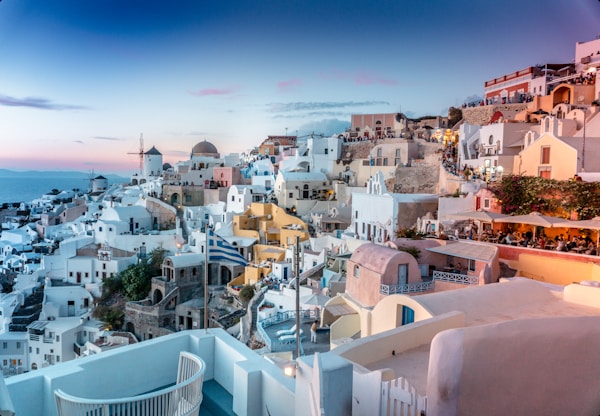
Santorini operates on two completely different planes simultaneously. There is the island you see in photographs — the white-domed churches against a cobalt sea, the cliff-edge infinity pools, the Oia sunset that millions of people have made their phone wallpaper — and there is the island you actually navigate on arrival: a semi-arid caldera rim with heavy tourist infrastructure, aggressive taxi pricing, ferry port logistics that confuse every first-time visitor, and a geographic split between the atmospheric western cliffs and the quieter eastern beach towns that most visitors never understand. This guide bridges the gap between the fantasy and the reality, covering everything a first-time visitor needs to know to arrive informed, navigate confidently, and experience both the genuine magic and the practical realities of one of the world's most visited islands.
Before You Arrive
Greece is a full Schengen Area member. Citizens of EU/EEA countries can enter on a national ID card. US, Canadian, Australian, New Zealand, UK, and Japanese passport holders can enter visa-free for up to 90 days in any 180-day Schengen period — no pre-arrangement required. If your passport is not on the Schengen visa-waiver list, apply for a Schengen Type C short-stay visa through the Greek embassy or consulate in your home country at least 6–8 weeks before travel. The fee is EUR 80 and is non-refundable. From 2025, the EU Entry/Exit System (EES) biometric registration applies to non-EU nationals at Schengen borders — expect additional processing time at Greek airports during the EES rollout period.

Greece uses the euro (EUR). Santorini is more cash-dependent than mainland Greek cities — many smaller tavernas, local market stalls, and bus ticket sellers operate cash-only, and ATMs in the main villages (Fira, Oia) can run low on banknotes during the August peak weekend. Withdraw sufficient euros — EUR 200–300 in notes — in Athens before arriving on the island if possible. ATMs are available in Fira near the bus station and in Oia on the main shopping street; fees vary by machine and card.
For mobile connectivity, Greek SIM cards are available at Athens Airport arrivals (Cosmote, Vodafone GR, Wind shops in the arrivals hall) for EUR 10–20 for 10–15GB data. If you're arriving directly at Santorini Airport without transiting Athens, there's a single small kiosk in arrivals but it is not always stocked with SIMs for tourist plans — buying in Athens is more reliable. EU roaming applies across all EU-issued SIMs including in Greece; check your carrier's fair-use data limits for roaming, as some plans cap at 15GB before reverting to slow speeds.
The geography of Santorini is the single most important thing to understand before arriving. The island is not a standard Greek island — it is the collapsed rim of a massive volcanic caldera that erupted around 1620 BC. The western side of the island (where Fira, Oia, Imerovigli, and the postcard views are) sits on the caldera rim at 200–300 metres above sea level, with near-vertical cliffs dropping to the sea. The eastern side is gently sloping, less dramatic, and home to the island's black-sand beaches (Perissa, Perivolos, Kamari) and most of the affordable accommodation. These two sides of the island have entirely different characters and price points. Many first-timers arrive expecting a single consistent island experience and are confused to find that the EUR 60-per-night studio they booked is nowhere near the caldera views they came for — the answer is that they booked on the beach side, which is deliberate and inexpensive, while the caldera side commands a significant premium.
The ferry port at Athinios (where almost all car ferries arrive) is not in any village — it's a functional port cut into the cliff face, connected to Fira by a steep winding road. The old port at Skala (below Fira, accessible by cable car) is where cruise tender boats and some small inter-island ferries dock. Many first-timers confuse the two and end up waiting for transportation at the wrong port. If your boat ticket says Athinios, take the public bus or taxi from the port road to Fira.
Getting from the Airport
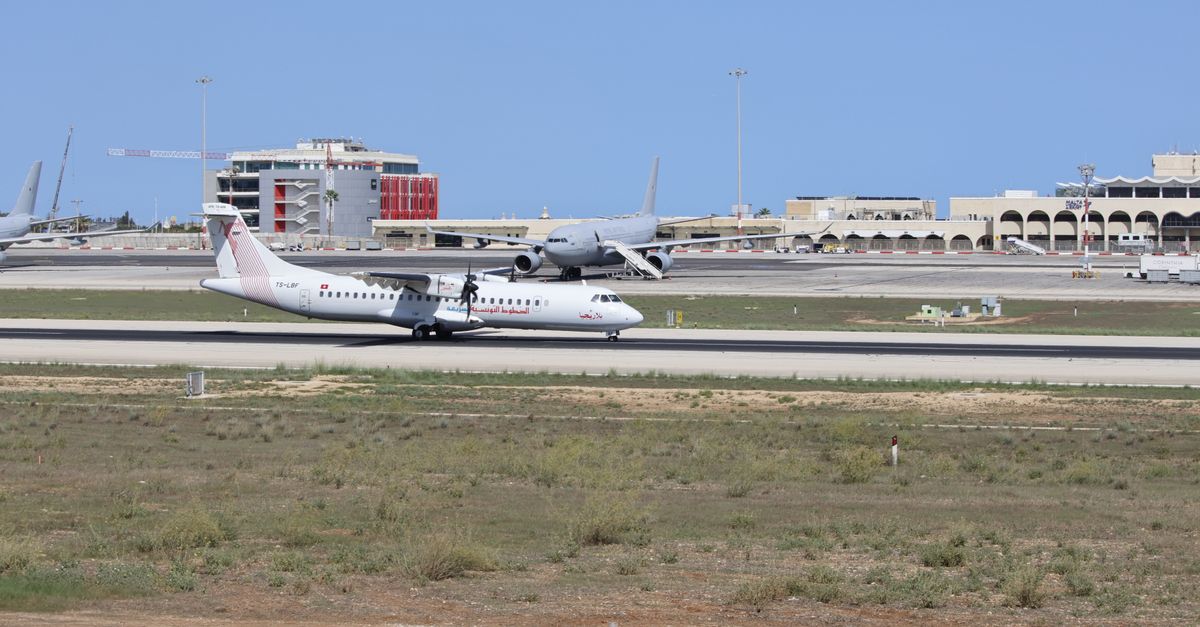
Santorini Airport (JTR/LGSR), officially named Thira Airport, sits on the eastern plateau of the island, about 6 kilometres south of Fira. It is a small but busy airport during peak season, handling a mix of domestic Greek flights, European charter flights, and Aegean/Olympic routes. Arrivals are straightforward; the challenge is the transfer to wherever you're staying.
The public KTEL bus is the first choice for budget-conscious arrivals. The bus stop is just outside the terminal exit — look for the concrete shelter and the KTEL sign. Buses run to Fira bus station roughly every 30–40 minutes in peak season (EUR 1.80, 20 minutes). From Fira bus station, connections run to Oia (EUR 1.80, 30 minutes), Perissa (EUR 1.80, 30 minutes), and Kamari (EUR 1.80, 20 minutes). The Fira bus station is the island's central hub — virtually all KTEL routes pass through it. The bus schedule is limited in the early morning and late evening; arrivals before 7am or after 10pm may require a taxi.
Taxis are available from the rank immediately outside arrivals. Standard fares from the airport: to Fira EUR 15–20, to Oia EUR 25–35, to Perissa EUR 20–25, to Kamari EUR 20–25. These fares are fixed by the local taxi authority and posted on a board at the rank — verify the posted rate before agreeing to a fare. Taxis in peak season are in high demand; there can be 10-minute queues at the airport rank during the mid-afternoon wave of arriving flights. If no taxis are available and the next bus is 30 minutes away, the walk to the main road (10 minutes) sometimes allows flagging a passing empty taxi returning from a drop-off.
Many hotels and larger guesthouses offer pre-arranged transfers from the airport for EUR 20–40 depending on vehicle type and destination. For parties of three or more with luggage, this is often competitive with the taxi rate and eliminates the queue. Contact your accommodation before arrival to arrange — they will have a driver waiting at arrivals with your name on a sign.
If you arrive by ferry at Athinios port, the public bus to Fira meets the main ferry arrivals (EUR 1.80, 20 minutes, but the bus fills fast — join the queue early on the ferry as you approach the port). Taxis at Athinios charge EUR 15–25 to Fira depending on traffic. The cable car from the old Skala port to Fira (EUR 6 per person) only applies if arriving via a small vessel or cruise tender into the caldera port, not Athinios.
Getting Around
Santorini's transport options create a genuine hierarchy of cost, convenience, and experience. Understanding them in advance prevents the common first-timer frustration of waiting 45 minutes for a taxi that was visible on the map but impossible to secure in practice.

The KTEL public bus network is the budget traveller's primary tool and more useful than its modest infrastructure suggests. All routes depart from the Fira bus station (near Dekaochto square, clearly signposted) and a flat fare of EUR 1.80 covers every destination on the island. The main routes: Fira–Oia (30 min), Fira–Perissa (30 min), Fira–Akrotiri (25 min), Fira–Kamari (20 min), Fira–airport (20 min). Buses run roughly every 30–60 minutes depending on the route; the full timetable is posted at the station and available online. Night buses on the Fira–Oia and Fira–Perissa routes run until midnight in July–August, serving the substantial after-dinner traffic. Tickets are purchased on the bus from the driver; carry small coins and EUR 2 notes.
ATV and scooter rental (EUR 20–35 per day) is the most popular transport choice among younger independent visitors and the most flexible option for exploring the island at your own pace. The rental strip is along the road below Fira toward the bus station. ATVs are low-powered (50cc), slow on hills, and unsuitable for the main Fira–Oia road in peak season when traffic is heavy. They are excellent for the eastern roads — Perissa to Akrotiri, the inland village circuit via Pyrgos and Megalochori — where buses don't go and taxis are expensive. Wear a helmet (legally required and provided), drive conservatively on wet roads (volcanic ash makes surfaces slippery after rain), and never carry two people on a single-seat ATV regardless of what the rental shop implies is acceptable.
Taxis serve the island from a central rank at Dekaochto square in Fira and from smaller stands in Oia and the main beach towns. The fundamental problem in peak season is availability — there are approximately 50 licensed taxis on Santorini and millions of annual visitors. Waiting 30–60 minutes for a taxi in August is entirely normal. For time-sensitive journeys (airport, ferry port), allow significant extra time or pre-book through your hotel. Standard Santorini fares: Fira to Oia EUR 20–25, Fira to Perissa EUR 20–25, Fira to airport EUR 15–20, Fira to Akrotiri EUR 15–20.
The cable car from Fira town down to Skala (the old port below the caldera cliffs) costs EUR 6 per person one-way and runs every 20 minutes from 6:30am to 11pm (later in peak season). It's the correct way to get from Fira to the small port for caldera boat trips and the most dramatic way to enter or exit the island if arriving by small vessel. The alternative to the cable car is 300 steps — free, but 15 minutes of steep descent.
Where to Base Yourself
Santorini's accommodation geography divides into roughly three zones, each with a distinct price point, atmosphere, and practical trade-off. The right choice depends on whether your priority is the iconic caldera aesthetic, a beach holiday, or a balance between both.

Fira and Firostefani (accommodation EUR 80–200 per night for non-view rooms, EUR 200–500+ for caldera-view rooms and suites) is the most practical base for first-time visitors. Fira is the island's capital and transport hub — the bus station, the cable car, the main restaurant strip, the Archaeological Museum, and the best range of shops are all concentrated here. Firostefani, a 10-minute walk from Fira toward Oia along the caldera rim, is quieter and prettier with fewer tour groups, at similar prices. Staying in Fira gives you the bus network at your doorstep and eliminates the taxi dependency that staying in Oia creates. Non-caldera-view rooms in Fira's back streets are significantly cheaper than rim-facing rooms; the caldera is a 3-minute walk from any Fira address regardless.
Oia (accommodation EUR 150–400 non-view, EUR 400–2,000+ caldera-view suites) is the island's most photographed village and the most expensive base. The architecture is genuinely extraordinary — the blue-domed churches, the cave houses built into the cliff face, the light at sunset on the white-washed walls — and staying in Oia delivers the Santorini that exists in the imagination. The practical trade-off: Oia is at the northern tip of the island, away from the transport hub, and dependent on taxis for most journeys. Restaurant prices are the highest on the island. The village becomes claustrophobically crowded between 5pm and 8pm during peak season as sunset viewers arrive. First-timers with budget flexibility should spend at least one night in Oia; those on tighter budgets should day-trip from Fira instead.
Perissa and Perivolos (accommodation EUR 35–80 per night for studios and budget guesthouses, EUR 80–140 for mid-range) are the eastern beach towns — no caldera views, black volcanic-sand beaches, significantly lower prices across all categories, and a more relaxed, beach-resort atmosphere. The KTEL bus to Fira costs EUR 1.80 and takes 30 minutes, making the caldera towns fully accessible as day trips. For visitors prioritising beach time, value for money, and a less intensely tourist-oriented atmosphere, Perissa is the correct base. For visitors who came specifically for the caldera experience, the 30-minute bus journey is one trade-off too many and Fira is worth the premium.
Local Culture & Etiquette
Santorini's cultural identity is complicated by its extreme tourist saturation — the island hosts roughly 2 million visitors per year on a population of about 15,000 permanent residents. The authentic Santorinian culture that existed before mass tourism was agricultural and maritime, centred on wine production, fishing, and the distinctive cave-house architecture built into the volcanic pumice cliffs. Much of that culture has been absorbed into the service economy, but it persists in forms that observant visitors can still access.

Greek hospitality — philoxenia, the philosophical love of strangers — is genuine here despite the tourist industry context. It reveals itself most clearly in the non-tourist-facing interactions: the morning coffee at a local kafeneio where the owner knows every regular by name, the taverna family that brings out extra bread without being asked, the elderly local who corrects your map reading without being asked and then offers to walk you to the junction. These interactions require moving even slightly off the main tourist circuit — the back streets of Fira, the village of Pyrgos in the interior, the morning fish market at Oia's small port at Ammoudi Bay.
Church etiquette applies across the island's many Orthodox churches, including the famous blue-domed ones that form the backdrop of every Santorini photograph. The churches are active places of worship, not merely aesthetic props. Covered shoulders and knees are required for entry; a light scarf or sarong serves this purpose. Photography inside churches during services is inappropriate; outside, during non-service hours, is generally acceptable with sensitivity. The most photographed church cluster (the three blue-domed churches of Firostefani just north of Fira) is on private property — a polite approach from the road is fine; climbing onto the private terraces for a better angle is not.
The sunset ritual in Oia is simultaneously one of the most beautiful and most socially concentrated experiences on the island. Several hundred to several thousand people gather at the Byzantine Castle ruins and along the caldera-view walls every evening in peak season to watch the sun drop into the sea beyond the caldera. The event has taken on a performative quality — applause when the sun disappears is now standard, selfie sticks compete for the same square metre of cliff edge — but the underlying phenomenon (the specific quality of light as the sun sets over a volcanic caldera) is genuinely extraordinary. Arrive early, find a position with a clear sightline, and resist the urge to spend the entire sunset staring at a phone screen. The memory is better than any photograph.
Tipping in Greece is appreciated but not obligatory. Restaurant service is generally not included in the bill; rounding up by EUR 2–5 on a dinner, or leaving 5–10% for genuinely good service, is the conventional approach. At bars and cafes, leaving coins is polite. Taxi drivers do not expect tips on standard meter fares but rounding up is common. Hotel staff who carry heavy bags deserve a EUR 1–2 per bag courtesy.
Common Mistakes to Avoid
Booking accommodation on the eastern beach side without realising it has no caldera views. This is the single most common Santorini first-timer disappointment. The island's budget accommodation is concentrated in Perissa, Perivolos, and Kamari — the eastern beach towns with black volcanic sand and no caldera views whatsoever. These are legitimately good bases for a beach holiday, but if you came to Santorini for the iconic caldera and sunset experience, a studio in Perissa delivers neither from your window. Read accommodation listings carefully: any property not in Fira, Firostefani, Imerovigli, or Oia is almost certainly not on the caldera side.
Assuming the Oia sunset is always spectacular. Santorini's famous sunset over the caldera is weather-dependent, and the Aegean can produce haze, cloud banks on the western horizon, or entirely overcast evenings without warning even in high summer. The most common disappointment in Oia is joining 500 people waiting for a sunset that arrives behind a cloud layer. Have a contingency plan — dinner at a caldera restaurant, a walk back toward Fira, or simply accepting that a dramatic almost-sunset is still beautiful — and don't structure your entire trip timing around a single weather-dependent event.
Underestimating the caldera-to-port logistics. The port at Athinios is at sea level; Fira is 300 metres above it, connected by a winding road that is permanently congested in peak season. Ferry departures frequently run on time regardless of the traffic above. If you have a 7pm ferry departure from Athinios, leaving Fira at 6:15pm is dangerously optimistic in August when the road is backed up. Allow 45–60 minutes minimum from Fira to Athinios during peak hours, and pre-book a taxi rather than assuming one will be available at the Fira rank.
Confusing Athinios port and Skala port. These are two completely different locations. Athinios is the main car-ferry terminal, cut into the cliff on the southwest coast, connected to Fira by the winding road. Skala is the small historic port directly below Fira, accessible by cable car, where cruise tenders and some small inter-island ferries dock. Your ferry ticket will specify which port. Most car ferries (Blue Star, Hellenic Seaways) use Athinios. Most caldera boat trips and the cable car experience use Skala. Arriving at the wrong port with a departure imminent is a common and avoidable error.
Taking a taxi everywhere instead of the bus. Santorini taxis charge EUR 15–25 for journeys that the EUR 1.80 public bus covers in the same amount of time. The taxi premium over the bus for a three-day visit including airport transfers, Oia day trip, and Perissa beach day is approximately EUR 80–100 per person. Many visitors are unaware that the island has a functioning public bus network because taxis are more visible at arrivals and accommodation staff sometimes promote taxis (for which they occasionally receive referral fees). The KTEL bus is reliable, cheap, and covers all the main destinations.
Skipping the archaeological site at Akrotiri. Santorini's most underappreciated major attraction is the preserved Bronze Age Minoan city of Akrotiri, buried by the 1620 BC eruption and excavated since 1967. The site is covered by a climate-controlled protective structure and the preservation — two- and three-storey buildings with original walls and staircases, household ceramics still in situ, decorated plaster still clinging to interior walls — is genuinely astonishing. Most Santorini visitors spend their entire trip on sunset cocktails and caldera views and never see the extraordinary civilisation that existed here 3,600 years ago. Allow 2 hours and go in the morning before the tour groups arrive. Entry is EUR 12.
Planning to "wing it" with restaurant reservations in peak season. The caldera-view restaurants in Fira and Oia that deliver the full Santorini dining experience — sunset views, fresh Aegean seafood, local Assyrtiko wine — are booked solid weeks in advance for July and August dinner service. Walking in and asking for a table at 7:30pm at a caldera restaurant in August is nearly always unsuccessful. If a caldera dinner is on your list, book a table online (most take reservations through their websites) at least 2–3 weeks ahead. Lunch reservations are easier to secure and often offer identical food and views at slightly lower demand.