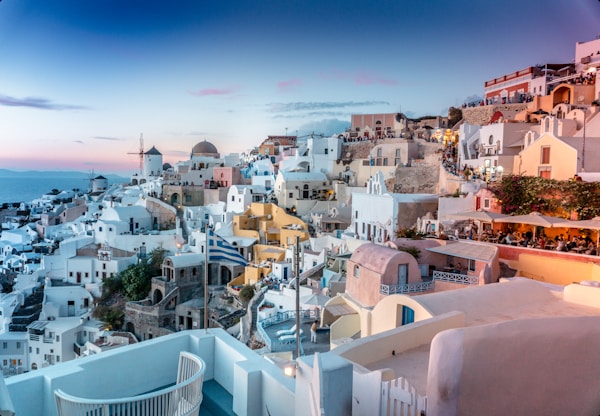
Santorini is the most photographed Greek island and one of the most visited destinations in the Mediterranean — millions of visitors come each year for the famous sunset from Oia, the white-washed cycladic architecture, and the dramatic volcanic caldera views. The Instagram version of Santorini is real. What is also real is that a destination receiving over 2 million visitors annually develops blind spots — places that the tourist current flows around rather than through, leaving genuine discoveries for those who step aside from the main channels.
The island sits in the crater of one of the largest volcanic eruptions in recorded history (the Minoan eruption, circa 1600 BC), and this geological violence is present everywhere — in the black and red volcanic beaches, in the dramatic caldera cliffs, in the pumice hills, and in the fact that the island is built on layers of compressed volcanic ash that archaeologists have barely begun to excavate. The ancient Minoan city of Akrotiri, buried under the ash like an Aegean Pompeii, is one of the most important archaeological sites in the world.
Budget €80–120 per day in shoulder season (April–May, October), €120–180 in peak July–August. The euro is used throughout Greece. Prices on Santorini are significantly higher than on other Greek islands, and even dramatically higher than the Greek mainland. The strategies in this guide will help you experience the island well while avoiding the most extreme tourist markups.
1. Akrotiri — The Bronze Age City
The Minoan city of Akrotiri, excavated from under 30 metres of volcanic ash since the 1960s, is one of the most important archaeological sites in the Mediterranean and one of the most undervisited given its significance. The eruption that destroyed it (around 1600 BC) preserved multi-storey buildings, elaborate frescoes, pottery, furniture, and food stores in extraordinary condition — an Aegean Bronze Age city frozen at a moment of complete cultural sophistication.
Unlike Pompeii, Akrotiri shows a city that had time to evacuate — no human remains have been found, suggesting the residents fled before the eruption. What they left behind was their material world: painted frescoes showing young fishermen, boxing children, spring landscapes, and naval processions that demonstrate a Minoan culture of extraordinary artistic achievement, now displayed in the National Archaeological Museum in Athens (the originals) and in replicas at the site itself.
The excavation is at the southern tip of Santorini, near the village of Akrotiri. Take bus from Fira (central Santorini) to Akrotiri village — journey 30 minutes, €2. The archaeological site is a 10-minute walk from the village. Open Tuesday to Sunday 8am to 8pm in summer, 8am to 3pm in winter. Closed Monday. Admission €12. Allow 2 hours. Arrive at opening time to beat the tour groups that arrive from 10am onwards.
The excavated city is now covered by a modern protective roof structure, which means visits are comfortable even in extreme heat. The excavation is ongoing — active digging is visible from the visitor walkways, which gives the site an atmosphere of genuine discovery rather than museum presentation. The frescoes remaining in situ (several have been moved to Athens) are extraordinary and worth examining closely. The site audio guide (€4 extra) is excellent and genuinely improves the experience.
2. Emporio — The Venetian Fortress Village
Emporio, in the southern centre of Santorini, is the island's largest inland village and one of its best-preserved — a compact medieval settlement centred on a Venetian-era castle (the "Kasteli") that was built on a commanding hill above the village in the 15th century as a refuge from pirate raids. The castle walls, the fortified church, and the maze of lanes within the medieval perimeter are all intact and almost entirely tourism-free.
The castle district of Emporio is a remarkable piece of medieval Cycladic urbanism — the streets are deliberately narrow to prevent horses (and therefore armed attackers) from entering, the houses are built with no ground-floor windows, and the whole settlement is designed to function as a refuge at a moment's notice. Walking through it is walking through a functional defence system, which is entirely different from the aesthetic experience of the tourist-oriented villages.
Take bus from Fira to Emporio — journey 20 minutes, €1.50. The village is free to walk and open at all hours. The kafeneio (traditional coffee shop) in the main village square serves Greek coffee and pastries at mainland prices — €1.50 for coffee. Walk the full circuit of the Venetian castle walls and then the surrounding village lanes to find the small Orthodox churches, stone-carved fountains, and domestic architecture that represent Santorini before tourism transformed it.
The surrounding area of Emporio is excellent for walking — the volcanic landscape of the southern part of the island is more varied and less dramatically scenic than the caldera edge, which means fewer visitors and a more authentic engagement with the actual terrain. The trail to the ancient Minoan settlement of Mesa Vouno (the hill behind Emporio with Bronze Age ruins) takes 45 minutes uphill and offers views that differ entirely from the famous caldera panoramas.
3. Red Beach and Vlychada — Volcanic Shores
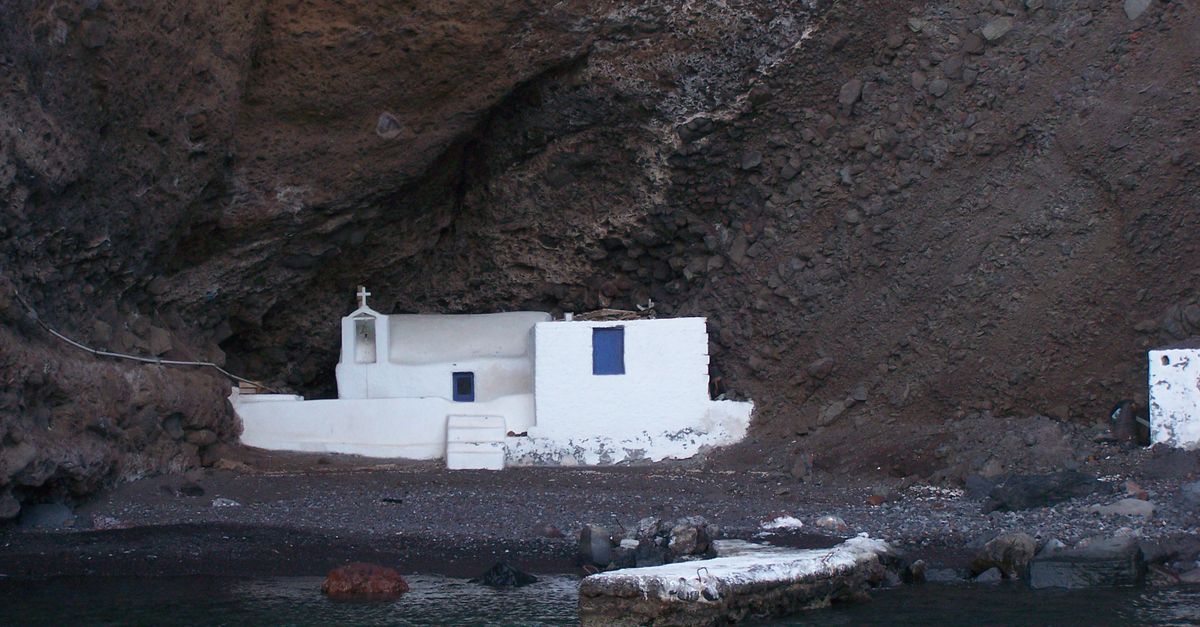
Santorini's volcanic geology creates beaches that are entirely unlike anything else in the Mediterranean — the Red Beach near Akrotiri, with its dramatic cliffs of red and black volcanic rock, the White Beach accessible only by boat, and the extraordinary Vlychada beach on the south coast, whose white pumice cliffs have been eroded into surreal organic shapes by wind and waves, creating a landscape more reminiscent of the American Southwest than a Greek island.
Red Beach is well-known but manageable outside July and August — arrive before 9am or after 4pm to experience the dramatic setting without crowds. The beach itself is accessible on foot from the Akrotiri archaeological site carpark (15 minutes) or by boat from the Akrotiri port. The cliff path above the beach gives the most dramatic view of the red volcanic formations. Swimming is excellent but the beach is steep — water shoes recommended.
Vlychada beach (pronounced "Vlee-KHA-tha") on the south coast is the island's best-kept geological secret — a 1.5km beach of grey volcanic sand backed by white pumice cliffs eroded into fantastical columns and overhangs. Take bus from Fira toward Perissa and get off at Vlychada junction, then walk 15 minutes or take a taxi. The beach has one café, no sun loungers for rent, and a local clientele that is grateful for its relative obscurity. Free access, excellent swimming in calm seas, extraordinary landscape.
The harbour area at Vlychada has a small marina and several fish tavernas that serve the local fishing community — the best fish on Santorini at the lowest prices. The octopus drying on lines outside the harbour tavernas (a quintessential Greek coastal image) ends up on your plate as either grilled octopus (€12–16) or octopus salad (€8–10). The house wine at any of these tavernas is local Santorini white — the volcanic soil's contribution to a crisp, mineral, slightly smoky wine that is the island's real claim to gastronomic fame.
4. Pyrgos — The Traditional Village
Pyrgos, in the centre of Santorini at the foot of Profitis Ilias (the island's highest point), is the most traditional intact village on the island — a labyrinthine settlement that climbs a volcanic hill through a series of nested fortification rings, with the ruins of a Venetian castle at the summit and the entire village spread below it in concentric layers of whitewashed houses, domed churches, and stone-paved lanes that the tourist economy has barely reached.
The village was the capital of Santorini until the late 19th century and retains the gravitas of a place that once had genuine administrative significance. The medieval lanes are too narrow for vehicles, which forces all movement to foot pace and creates a silence unusual for Santorini. Several of the houses in the upper village have been converted into small guest houses and café-restaurants with caldera views that rival anything in Oia at a fraction of the price.
Take bus from Fira to Pyrgos — journey 15 minutes, €1.50. The village is free to walk. The views from the castle ruins at the summit reach to both the caldera and the east coast — a full panorama of the island. Several kafeneion and small restaurants in the village serve local food at local prices. The sunset from Pyrgos competes with the famous Oia sunset and is enjoyed by approximately 20 people rather than 2,000.
The Profitis Ilias monastery at the summit of the mountain above Pyrgos (walking trail from the village takes 90 minutes, or road accessible by scooter or car) houses an important collection of Byzantine icons and religious manuscripts in its museum (€2 admission). The monastery itself is still active, with monks in residence, and the view from the summit — at 567 metres, the highest point on the island — encompasses Santorini, neighbouring Ios, Anafi, and in exceptional visibility the Cretan mountains to the south.
5. Oia Before and After
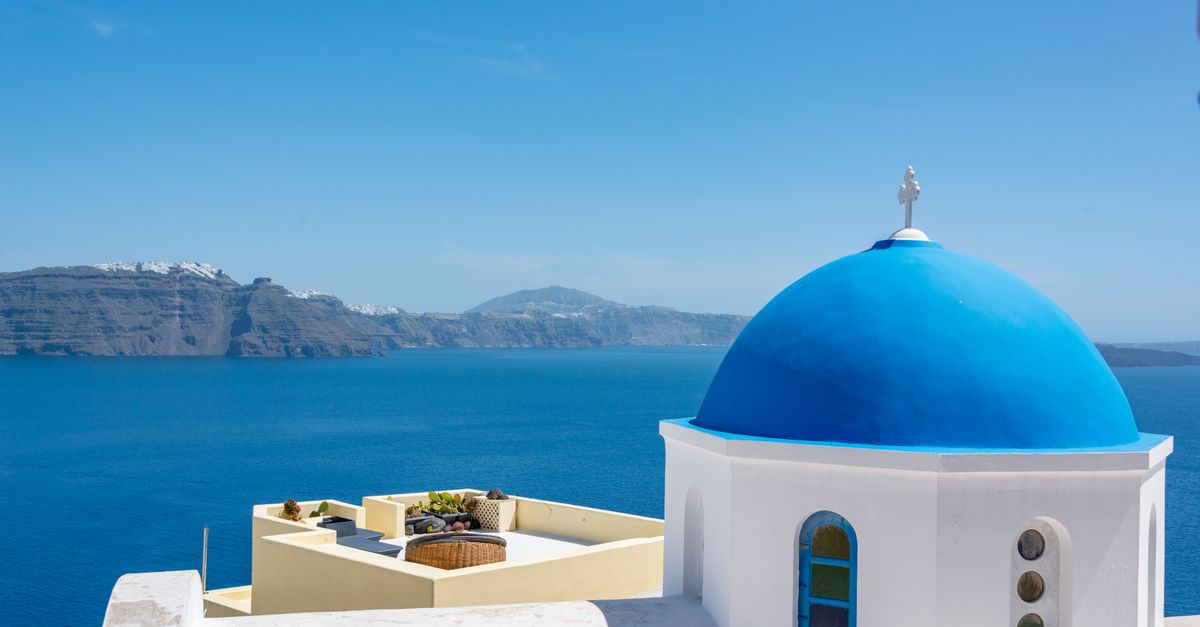
Oia is irreplaceable — the stacked blue-domed buildings on the caldera edge, the light, the famous sunset. No amount of crowds entirely diminishes it. But there is an Oia before and after the tourist day that is a different place entirely. Before 9am, the village is inhabited almost exclusively by photographers who rise early and the residents who run it — the light at dawn on the white walls is completely different from the afternoon light, and the silence allows the place to speak for itself. After 10pm, after the sunset crowds have dispersed and the restaurants have closed for late dinner, the village lanes empty entirely and the caldera is dark except for the boat lights and the stars.
The part of Oia that most sunset tourists miss: the path heading northeast from the main village toward the old castle ruins (Ammoudi waterfront is also missed by many) and the small port of Ammoudi Bay below the village — 214 steps down the cliff (accessible from the western end of the village) to a tiny harbour with fresh fish tavernas, crystal water, and the best swimming near Oia at a location that the sunset crowds rarely reach because it requires effort.
Ammoudi Bay is accessed by the famous donkey path or on foot down the steps from the western end of Oia main street. The descent takes 15 minutes on foot; returning uphill takes 25 minutes. The tavernas at the bottom serve fresh fish grilled simply — the daily catch from the morning's boats, at prices substantially below the cliff-top restaurants. A full fresh fish meal for two with wine costs €35–50. Swimming from the rocks below the tavernas is excellent and the bay is sheltered from the afternoon wind that affects many Santorini beaches.
The Oia sunset is genuinely spectacular when seen from a position that is not the main village viewpoint — try the castle ruin platform at the northeastern end of the village (free access, fewer people) or the caldera-edge path heading south from Oia toward Imerovigli. The path between Oia and Imerovigli, taking 90 minutes to walk, offers continuous caldera views with approximately 50 people spread over its entire length versus the 2,000+ who crowd Oia's main sunset point.
6. Imerovigli — The Quiet Caldera
Imerovigli, between Fira and Oia on the caldera edge, is the highest and — some argue — the most spectacular of the caldera-edge settlements. It has the same white architecture, the same blue domes, the same dramatic drop to the sea — and approximately one-tenth of the visitors that Oia receives at any given time. The village has concentrated high-end accommodation that caters to honeymooners and serious luxury travellers, but the walking paths through the village and out along the caldera edge are entirely free and entirely open.
The Skaros rock, a dramatic volcanic plug that extends from the Imerovigli cliff into the caldera, was the site of a Venetian castle demolished by earthquake in 1956. The path out to the Skaros rock — a vertiginous walk along a narrow path at the caldera edge — takes 30 minutes return and provides the most dramatic close-up view of the caldera geometry anywhere on the island. Vertigo sufferers should skip it; everyone else should make it a priority.
Bus from Fira to Imerovigli takes 10 minutes and costs €1.80. Walk from Fira along the caldera edge path — 30 minutes of spectacular walking between the two villages, on a path that was the island's main road before the modern road was built. The path continues north to Oia in another 90 minutes, making the full Fira–Imerovigli–Oia walking route a half-day excursion with the best caldera views on the island.
The café-restaurants in Imerovigli serve similar caldera-view food at slightly lower prices than Oia. Several of the village's small kafeneion serve traditional Greek coffee and sweets (loukoumades — fried dough balls with honey, €5) in settings overlooking the caldera that have none of the tourist-performance of the famous Oia sunset cafés. Particularly: the kafeneion on the main path through the village that has been operated by the same family since 1978.
7. Santorini Wine — The Volcanic Terroir
Santorini's wine is one of the most distinctive and historically significant in Greece — produced from indigenous Assyrtiko grapes grown in basket-trained vines (kouloures) whose shape protects the grapes from the island's fierce winds, on volcanic soil that produces wines of extraordinary minerality and salinity. The wine tradition here is at least 3,500 years old, and the current generation of Santorini winemakers is producing internationally acclaimed wines from this ancient terroir.
The best winery visit for a genuine education: Santo Wines Winery in Pyrgos (the island's largest cooperative, excellent free tasting with views, no pretension), Boutari Winery near Megalochori (excellent tour and tasting for €10, the most educational experience), and Venetsanos Winery on the caldera edge near Megalochori (the most spectacular setting for tasting, €15 for a tasting flight). All three accept walk-in visitors in shoulder season; book in advance for peak summer.
The Vinsanto fortified wine — made from sun-dried Assyrtiko grapes — is Santorini's most distinctive and historically important product. Aged in barrel for a minimum of two years, it has a complex dried-fruit, caramel, and volcanic mineral character that makes it one of the most interesting dessert wines produced anywhere in Europe. A glass of aged Vinsanto at any of the above wineries costs €6–10; a bottle costs €20–40 depending on age.
The village of Megalochori, in the centre of the island, is surrounded by the majority of Santorini's active vineyards and is the best base for winery walking — several wineries are within walking distance of the village and the volcanic landscape between them is worth exploring slowly. The village taverna at Megalochori's main square serves traditional Greek food and a house Santorini white that is more interesting than anything available in Fira's tourist restaurants at half the price.
8. Perivolos and Perissa — The Black Sand Beaches
Santorini's east coast beaches — Perivolos and Perissa, both of black volcanic sand — are genuinely excellent for beach-going in a way that the caldera-edge experience is not. The black sand absorbs heat intensely and creates warm water temperatures earlier and later in the season than most Mediterranean beaches. The beach infrastructure is well-developed and the stretch from Perissa through Perivolos to Agios Giorgos covers 4km of dark sand with numerous beach bars, water sports operators, and fish tavernas.
The beach at Perivolos is the least touristy section — primarily patronised by Greeks and Greek-Cypriot visitors who rent apartments in the adjacent village rather than hotels. The fish tavernas on the Perivolos waterfront serve excellent fresh grilled fish at prices that are the lowest on the tourist-accessible coast — a whole fresh bream (tsipoura) grilled with lemon and olive oil costs €15–18, significantly below the caldera-side restaurant equivalents.
Bus from Fira to Perissa takes 30 minutes, €2. The buses run every 30–60 minutes in summer. The beach is free to access at all points. Sun lounger rental at any of the numerous beach operators costs €8–12 per day for two loungers and an umbrella — negotiate for longer stays. The Perissa end of the beach has the best snorkeling — rocks at the south end where the beach meets the Mesa Vouno cliff have abundant marine life including octopus and sea urchins.
Mesa Vouno — the dramatic volcanic rock that separates Perissa from Kamari beaches — contains the ancient city of Ancient Thira, inhabited continuously from the 9th century BC to the Byzantine period. The path to the summit and the ruins takes 90 minutes from the south end of Perissa beach. Admission €4. The ruins are extensive and the views from the summit (360 metres) are extraordinary — east to the open Aegean, west to the caldera. Bring water; there is no shade on the path or the summit.
9. The Caldera Hiking Trail
The full caldera walking trail from Fira to Oia — a 10km route along the caldera edge that was the island's main pedestrian artery before the road was built — is Santorini's best kept secret for active visitors. The trail passes through Imerovigli, over the Skaros rock path (optional detour), and along the northern caldera edge to Oia, offering continuous views of the caldera, the volcanic islands, and the surrounding sea that no vehicle-based journey can match.
The trail takes 3–4 hours at a moderate pace, including stops for photographs and Skaros detour. It is waymarked throughout, mostly on well-maintained stone paths, with sections of narrow caldera-edge walking that require care but are not technically difficult. The descent into Oia at the end of the walk gives the village's famous blue domes at eye level from the path above — one of the best approach views in Greece.
Begin the walk from the cable car station in Fira — the caldera path starts from the old port steps and heads north. Bring 2 litres of water per person (no water points on the trail), sun protection, and walking shoes. The best time to walk is April–May or October–November when temperatures are manageable. In summer, start at 6am and complete the walk before noon. Take the bus back from Oia to Fira (€2, 20 minutes) to avoid the return walk.
The middle section of the trail, between Imerovigli and the Oia approach, is the most spectacular and the least walked — most people who begin the trail at Fira reach Imerovigli and stop for a café break, then decide to bus or taxi forward. Those who continue earn the most dramatic section of the walk through entirely more private landscape. In October, the trail is sometimes completely empty, and walking it is among the most serene experiences that a Greek island can offer.
10. Volcanic Islands Day Trip
The volcanic islands at the centre of the Santorini caldera — Nea Kameni (active volcano, last eruption 1956) and Palea Kameni (older volcanic island with hot springs) — are the closest active volcanic terrain accessible to tourists anywhere in the Mediterranean. Most visitors to Santorini never set foot on them despite the fact that regular boat tours depart several times daily from the Fira old port and the trip costs €15–25.
Nea Kameni allows visitors to walk to the active crater — a 30-minute scramble across grey volcanic rock to a steaming crater that smells strongly of sulphur and is warm underfoot. The path is unmarked but well-trodden; wear closed shoes and don't touch any pooled yellow deposits. The crater last erupted 70 years ago but is seismically active — earthquakes are regular in the caldera and the volcanic activity is genuine and ongoing.
The Palea Kameni hot springs are accessible from the boat by swimming — the water around the island is geothermally heated to 28–35°C and stained yellow by dissolved sulphur. The combination of warm water, the volcanic island behind you, and the caldera cliffs above creates a bathing experience that is entirely unique. Bring a swimsuit you don't mind staining yellow.
Boat tours to both islands depart from Fira old port (reached by cable car, €6 each way, or by donkey for the traditionalist experience) multiple times daily in summer, less frequently in winter. The standard tour (€25) visits both islands plus allows a sunset swim from the boat. Book at any tour office in Fira. The independently operated smaller boat tours (€15) are less polished but more flexible — enquire at the old port directly from the boat operators.