3-Day Porto Itinerary: Ribeira, Port Wine & São Bento Station
Porto is Lisbon's grittier, more authentic sibling — a city of blue-tiled facades, steep cobblestone streets, and port wine cellars carved into granite hillsides. It sits where the Douro River meets the Atlantic, spreading across hills that make San Francisco look flat. Three days covers the essential Porto and leaves time for riverside wine tasting and the beautiful Atlantic coast.
This itinerary moves from the historic centre to the port wine district to the coastline, grouping attractions by location to minimize the punishing hill climbs.

Ribeira, Dom Luís Bridge & Livraria Lello
Morning: São Bento Station & Clérigos Tower (9:00 AM - 11:30 AM)
Start at São Bento Railway Station — the entrance hall is covered in 20,000 azulejo tiles depicting Portuguese history, from medieval battles to rural life. Entry is free (it is a functioning station). Spend 20 minutes studying the panels — the detail is extraordinary and often missed by tourists rushing through.
Walk five minutes uphill to the Clérigos Tower (€8 entry), the baroque bell tower that defines Porto's skyline. The 240-step climb rewards with 360-degree views of the city, river, and ocean. The church below (free entry) is one of Porto's finest baroque interiors.
Midday: Livraria Lello & Bolhão Market (11:30 AM - 1:30 PM)
Livraria Lello (€8 entry, redeemable on book purchases) is regularly named the world's most beautiful bookshop. The neo-gothic interior, crimson staircase, and stained-glass ceiling inspired JK Rowling during her years teaching English in Porto. Buy the ticket at the shop across the street — the queue moves quickly. Five minutes inside is sufficient; the shop is small.
Walk to the recently renovated Mercado do Bolhão (free entry) — Porto's historic iron-and-glass market. Fresh fish, cheese, flowers, presunto (cured ham), and port wine from local producers. Have lunch at one of the market's food counters — a bifana (pork sandwich, €3-4) and a glass of port (€2-3) makes a perfect Porto lunch.
Afternoon: Ribeira & Dom Luís Bridge (2:00 PM - 5:00 PM)
Descend to the Ribeira — Porto's UNESCO-listed waterfront quarter. The narrow streets open to a broad square (Praça da Ribeira) facing the Douro River. Rabelo boats — flat-bottomed vessels that once carried port wine barrels from the Douro Valley — line the quay. Walk along the river to the Church of São Francisco (€8 entry) — the interior is covered entirely in gold-leaf carved wood. The contrast between the sober granite exterior and the explosive golden interior is shocking.
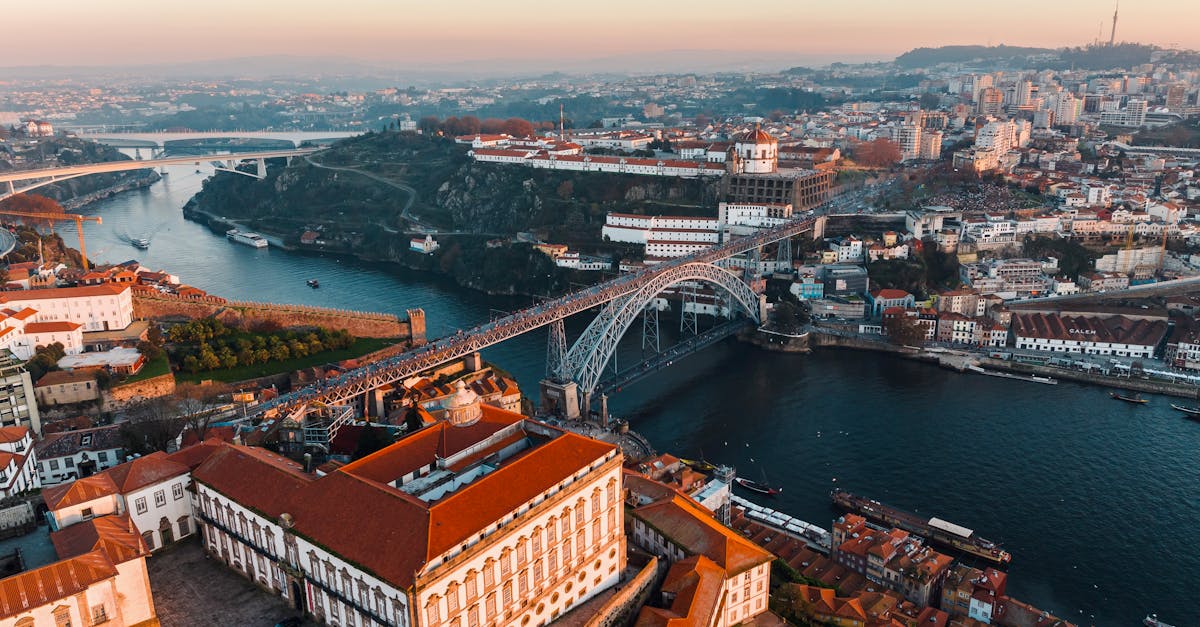
Cross the Dom Luís I Bridge on the upper deck (free, pedestrian) for the definitive Porto view — the Ribeira facades, the river, and the port wine lodges of Vila Nova de Gaia on the opposite bank. The bridge is 45 metres above the river and slightly terrifying. Cross at sunset for the best light.
Port Wine Cellars in Vila Nova de Gaia
Morning & Afternoon: Port Wine Tastings (10:00 AM - 4:00 PM)
Cross to Vila Nova de Gaia — the south bank of the Douro — where virtually every major port wine house has its cellars. Taylor's (€15 tour + tasting), Graham's (€15-25), and Sandeman (€15-22) offer guided tours through centuries-old cellars followed by tastings of white, ruby, tawny, and vintage ports.
Taylor's has the best terrace views. Graham's has the best food pairing options. Sandeman has the most theatrical presentation (guides in black capes). Visit two cellars maximum — tasting fatigue is real when the wine is 20% alcohol. Allow 90 minutes per cellar including the tour.
For a more intimate experience, skip the big names and visit smaller producers. Kopke (the oldest port house, founded 1638) and Ramos Pinto offer excellent tastings at lower prices (€10-15) with smaller groups.

Foz do Douro, Serralves & the Atlantic Coast
Morning: Foz do Douro (9:00 AM - 11:30 AM)
Take the vintage tram No. 1 (€3, or use Andante card) from Infante to Passeio Alegre — a 30-minute ride along the river to the Atlantic Ocean. Foz do Douro is where the Douro River empties into the sea. Walk the Pergola da Foz promenade along the ocean, past the Felgueiras Lighthouse and rock pools. The sea air and open horizons are a refreshing contrast to the compact city centre.
Coffee and pastéis de nata at Tavi in Foz (€1.20 each) — locals say they rival Lisbon's Pastéis de Belém.
Afternoon: Serralves Museum & Gardens (12:00 PM - 3:00 PM)
The Serralves Foundation (€20 museum + gardens, €10 gardens only) is Porto's modern art museum set in 18 hectares of designed gardens. The Álvaro Siza-designed building houses rotating contemporary art exhibitions. The Art Deco Casa de Serralves and its formal gardens are beautiful independently. The treetop walk (included) gives an aerial perspective of the park. Allow 2-3 hours for both.
Late Afternoon: São Bento Return & Sunset (4:00 PM - 7:00 PM)
Return to the centre for a final wander. The Porto Cathedral (Sé do Porto, free entry, €3 for the cloister) commands the highest point in the old city. The cloister azulejo tiles are among the finest in Porto. Watch sunset from the Jardim do Morro viewpoint on the Gaia side — the entire Ribeira turns golden for about 20 minutes before dusk.
| Activity | Cost (€) |
|---|---|
| Clérigos Tower | €8 |
| Livraria Lello | €8 (redeemable) |
| Church of São Francisco | €8 |
| Port wine cellar tour (each) | €10-25 |
| Serralves Museum + Gardens | €20 |
| Vintage Tram No. 1 | €3 |
| Meals per day (mid-range) | €25-40 |
| 3-day estimated total | €180-300 |

Porto is a city that earns loyalty. It is beautiful without being polished, historic without being precious, and affordable without compromising quality. The port wine is magnificent, the food is robust, and the light on the Douro at sunset is among the finest in Europe. Three days makes you a fan. A second visit makes you a devotee.
Day Trips from Porto
Porto sits at the mouth of the Douro Valley — one of the world's great wine landscapes — and within easy reach of Atlantic beaches, medieval towns, and green river valleys. Even a short trip rewards with scenery that makes the hour or two of travel entirely worthwhile.
The Douro Valley (1.5–2 hours by train from Campanhã station, around €12–15 return) is Porto's single best day trip. The Linha do Douro train hugs the northern bank of the river past steeply terraced vineyards, schist villages, and ancient quintas. Alight at Pinhão — a small town surrounded by some of the finest port wine estates in Portugal — for a tasting at Quinta do Crasto or Quinta da Gaivosa (€10–18 per person). The return journey at sunset, with the vineyards turning amber, is arguably the most scenic two hours in Portugal.
Braga (1 hour by train, €3.50 each way) is Portugal's most religious city and one of its oldest — it was settled before the Romans arrived. The Cathedral (Sé de Braga) dates to 1070 and contains some of the finest medieval art in the country. The Bom Jesus do Monte sanctuary (€1 funicular) sits on a hilltop 5 km outside the city, its baroque staircase lined with fountains and chapels representing the five senses and three virtues. Braga's central market and the Praça da República make excellent spots for coffee and pastry before the return train.
Guimarães (1 hour by train, €3.20 each way) is considered the birthplace of Portugal — the castle where Afonso Henriques, the first King of Portugal, was born in 1109 still stands above the old town. The medieval centre is UNESCO-listed and almost untouched, a remarkable concentration of granite architecture, arcaded streets, and historic churches. The Paço dos Duques de Bragança (€5) and the Palace of the Dukes of Braganza are both exceptional. Budget travellers should note that Guimarães offers excellent mid-range restaurants at prices noticeably lower than Porto's tourist centre — lunch for two runs €18–25 here versus €35–45 in Ribeira.
Porto Food Guide → Porto on a Budget →