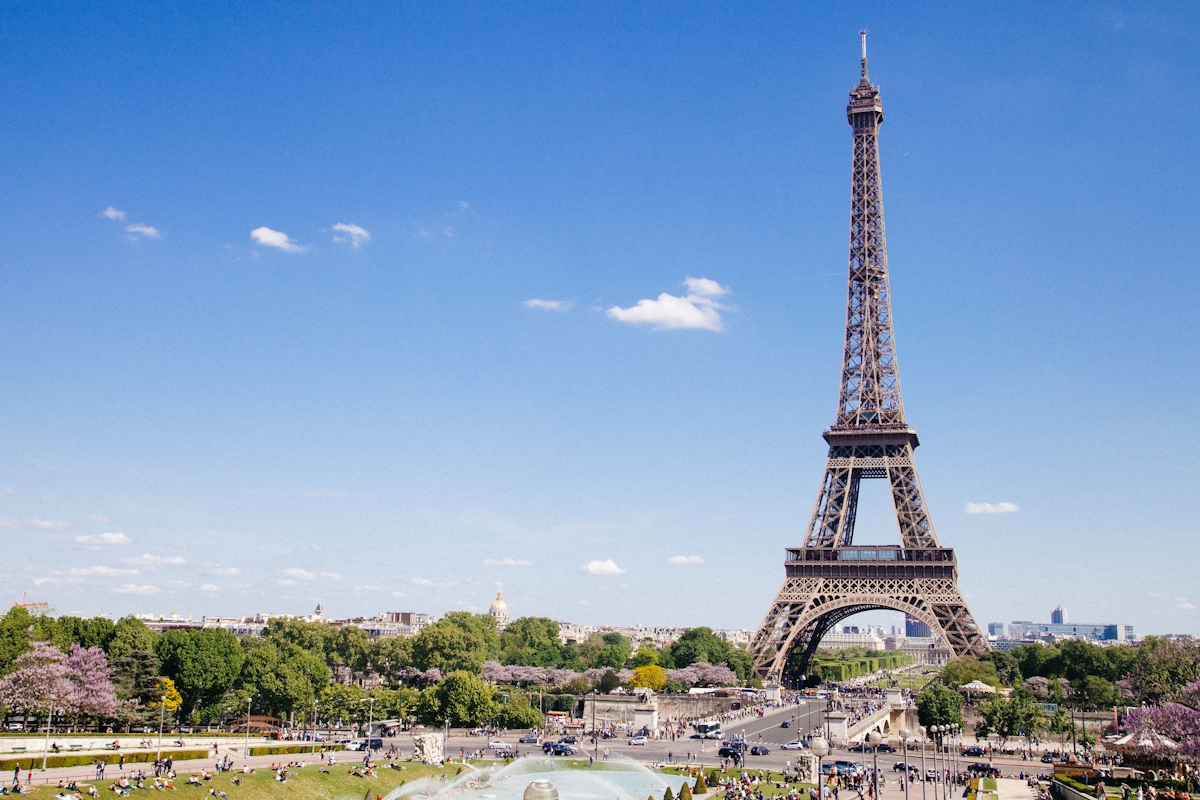
Paris has a problem that most cities would envy: its famous attractions are so spectacular that visitors rarely venture beyond them. The Eiffel Tower, Louvre, Notre-Dame, Sacre-Coeur, and Champs-Elysees absorb the attention of millions of tourists each year, and they deserve every visitor they get.
But Paris is a city of 20 arrondissements, each with its own character, and some of the most magical, atmospheric, and genuinely Parisian places in the city are ones that most tourists never discover. The places on this list are not secret — Parisians know them well, and locals fill them on weekends and warm evenings.
They are simply overlooked by visitors who, understandably, are drawn to the world-famous landmarks first. If this is your first trip to Paris, visit the Eiffel Tower and the Louvre — they are magnificent and you should see them. But carve out time for the places on this list, because they will show you a Paris that the postcard industry ignores: a Paris of canal-side picnics, abandoned railways reclaimed by wildflowers, quirky museums that surprise and delight, village-like neighborhoods where the only tourists are the ones who did their homework, and covered passages that have been sheltering Parisian shoppers since the days of Balzac.
These are the places that make you fall in love with Paris as a city to live in, not just a city to photograph.

1. Canal Saint-Martin — The Real Parisian Hangout
The Canal Saint-Martin is a 4.5-kilometer waterway in the 10th arrondissement that has become one of the most beloved spots in Paris for locals, particularly younger Parisians who gather along its banks on warm evenings with bottles of wine and picnic supplies from the nearby bakeries and fromageries. The canal, built by order of Napoleon in 1825 to supply Paris with fresh water, is crossed by elegant iron footbridges and lined with plane trees, and its locks still operate as working elements of the city's waterway system.
The neighborhood gained international recognition as a filming location for the 2001 film Amelie (the famous stone-skipping scene was filmed here), and the gentle, bohemian atmosphere of the film accurately reflects the real character of the area. Walking from Place de la Republique northward along the canal to the Bassin de la Villette takes about 45 minutes at a leisurely pace and passes cafes (Chez Prune is the iconic canal-side spot), independent bookshops, vintage clothing stores, and some of the best specialty coffee in Paris (Ten Belles, Holybelly).
On Sunday mornings, the roads along the canal are closed to traffic and filled with joggers, cyclists, and families. The canal is completely free to enjoy, and the best experience is simply buying a baguette, some cheese, and a bottle of wine from the neighborhood shops and sitting on the stone bank watching the boats pass through the locks.
Metro: Republique or Jacques Bonsergent.
2. Butte-aux-Cailles — A Village Inside Paris
Tucked away in the 13th arrondissement, Butte-aux-Cailles is a small hilltop neighborhood that feels genuinely like a village that has been absorbed into the city but never lost its character. The narrow streets are lined with low-rise buildings, independent restaurants, and some of the best street art in Paris — colorful murals and paste-ups appear on walls, shutters, and doorways throughout the area.
The atmosphere is residential, artistic, and distinctly left-leaning, with a strong community feel that is rare in central Paris. The neighborhood's most unusual attraction is the Piscine de la Butte-aux-Cailles, an Art Deco public swimming pool built in 1924 that is fed by a natural artesian well — the water comes from an underground spring and is naturally warm.
Swimming is open to the public for approximately €4, and the building itself is worth visiting for its architecture alone, with an outdoor pool that operates during summer months. Rue de la Butte-aux-Cailles and Rue des Cinq Diamants are the main streets for restaurants and bars — Le Temps des Cerises (a cooperative restaurant since 1976), Chez Gladines (famous for enormous, hearty Basque-style salads at very reasonable prices), and numerous small bars with live music create an evening atmosphere that is lively but never touristy.
Butte-aux-Cailles is the kind of neighborhood that makes Paris residents defensive when journalists write about it — they don't want it to change. Metro: Place d'Italie or Corvisart.
3. Pere Lachaise Cemetery — A Museum Without Walls
Pere Lachaise is the largest cemetery in Paris, and it is far more than a burial ground — it is a vast, hilly, tree-shaded park filled with extraordinary funerary art, famous graves, and a haunting atmosphere that makes it one of the most compelling places in the city to spend a few hours. Established in 1804, the cemetery holds the remains of Oscar Wilde (whose tomb, by Jacob Epstein, features an angel covered in lipstick kisses from visitors), Jim Morrison (whose grave is the most visited and is permanently surrounded by pilgrims, security guards, and a slightly surreal atmosphere), Frederic Chopin (whose simple grave is always adorned with fresh flowers), Edith Piaf, Marcel Proust, Moliere, Balzac, and hundreds of other notable figures from French and world history.
The graves themselves are works of art — elaborate Gothic tombs, weeping angels, life-sized sculptures, and mausoleums that range from the elegantly simple to the absurdly grand. The cemetery covers 44 hectares (110 acres), so it is genuinely large enough to wander for hours and still find quiet corners where you are alone among the ancient tombs.
Free maps are available at the entrances on Boulevard de Menilmontant and Rue du Repos, but the best approach is to pick up a map, identify the famous graves you most want to find, and then let yourself wander — getting slightly lost in Pere Lachaise is part of the experience. Admission is completely free.
Open daily from 8 AM (9 AM on weekends). Metro: Pere Lachaise or Gambetta.

4. Promenade Plantee (Coulee Verte) — The Original High Line
Before New York's High Line became the most famous elevated park in the world, Paris had already built one. The Promenade Plantee, also known as the Coulee Verte Rene-Dumont, is a 4.7-kilometer elevated walkway built on the viaduct of a disused railway line (the former Vincennes railway) that stretches from the Bastille opera house to the edge of the Bois de Vincennes in the 12th arrondissement.
The walkway runs above street level for much of its length, passing through tunnels of greenery, over rose-covered arches, and alongside the upper floors of Parisian apartment buildings, giving you a perspective of the city that is entirely different from street level. The Viaduc des Arts, the series of arches beneath the elevated section near Bastille, has been converted into artisan workshops and galleries — furniture makers, violin restorers, fabric designers, and other traditional craftspeople work in the beautifully restored brick arches.
The promenade is particularly lovely in spring when the climbing roses and wisteria are in bloom, and in autumn when the leaves change color. The walk from Bastille to the Bois de Vincennes takes about an hour at a leisurely pace and is almost entirely flat.
Completely free, open daily from 8 AM (9 AM on weekends) until sunset. The entrance near Bastille is a stairway at the rear of the Opera Bastille, behind 1 Rue de Lyon — it is easy to miss if you don't know to look for it.
Metro: Bastille.
5. Rue Cremieux — Paris in Pastel
Rue Cremieux is a short pedestrian street in the 12th arrondissement, just a few minutes' walk from the Gare de Lyon, that has become one of the most photographed locations in Paris. The street is lined on both sides with low-rise houses painted in a rainbow of pastel colors — mint green, lavender, baby blue, lemon yellow, coral pink — creating an effect that looks like a street from a Wes Anderson film transplanted into the middle of Paris.
The street is residential, and the full-time residents have had a complicated relationship with its Instagram fame — at various points, they have petitioned to restrict access or install gates due to the constant flow of photographers. If you visit, be respectful: don't block doorways, don't sit on windowsills, keep noise down, and remember that people live here.
A quick photograph and a walk along the street is perfectly fine; a two-hour photo shoot with costume changes is not. The street is free to visit and takes about five minutes to walk end to end.
It pairs well with a visit to the Promenade Plantee (which starts nearby) or the Marche d'Aligre, one of Paris's best outdoor food markets, a ten-minute walk away. Metro: Gare de Lyon or Quai de la Rapee.
6. Musee de la Chasse et de la Nature — The Quirky Museum
The Museum of Hunting and Nature, housed in two magnificent 17th-century mansions in the Marais, is one of the strangest and most delightful museums in Paris — and almost entirely unknown to tourists despite its prime location in one of the city's most visited neighborhoods. The museum takes the concept of a hunting museum (which sounds dry and controversial) and transforms it into something entirely unexpected: a series of rooms that combine antique weaponry, taxidermied animals, fine art, and contemporary installations in ways that are by turns beautiful, unsettling, humorous, and thought-provoking.
You might walk into a room where a polar bear stands beside a 17th-century Dutch painting, or encounter a contemporary art installation about animal extinction in a room lined with 18th-century wallpaper. The museum was radically reimagined by artist and designer Robert Doisneau in the 2000s, and the result is closer to an art experience than a traditional museum.
Admission is approximately €8, and the museum is free on the first Sunday of each month. The building itself — two connected hotels particuliers with original staircases, fireplaces, and wood paneling — is worth the visit regardless of the collection.
Allow 60-90 minutes. Metro: Rambuteau or Hotel de Ville. The museum is small enough to visit in combination with exploring the Marais district.

7. Parc des Buttes-Chaumont — The Locals' Favorite Park
While tourists flock to the Jardin du Luxembourg and the Tuileries (both of which are beautiful), Parisians in the know head to the Parc des Buttes-Chaumont in the 19th arrondissement, a dramatically landscaped park that feels more like a romantic landscape painting than an urban green space. Built on a former quarry and garbage dump during Haussmann's renovation of Paris in the 1860s, the park features artificial cliffs rising 30 meters above a central lake, a waterfall, a suspension bridge, a grotto with fake stalactites (one of which was designed to be taller than those in the Grotte de Lascaux), and the Temple de la Sibylle — a small classical temple perched on a rocky island in the middle of the lake, accessible by a vertiginous footbridge, offering panoramic views across Paris including a clear sightline to the Sacre-Coeur.
The park is vast (25 hectares), hilly (wear comfortable shoes — the elevation changes are significant), and on warm weekends it fills with picnicking Parisians, musicians, runners, and families. The Pavillon Puebla restaurant on the park's southern edge offers dining in a former hunting lodge with a lovely terrace.
The park is completely free, open daily from 7 AM to varying closing times (as late as 10 PM in summer). Metro: Buttes Chaumont or Botzaris.
8. The Covered Passages — 19th Century Shopping Arcades
Paris was once home to over 150 covered passages — glass-roofed shopping arcades that were the precursors to the modern shopping mall, built in the early 19th century to allow Parisians to shop in comfort regardless of weather. Today, about 20 survive, and the best of them are magnificent time capsules of 19th-century commercial life.
Galerie Vivienne (near the Palais Royal) is the most beautiful, with ornate mosaic floors, neoclassical columns, and elegant shops including the legendary Legrand Filles et Fils wine shop, which has been operating since 1880. Passage des Panoramas (near the Grands Boulevards) is the oldest covered passage in Paris (1799) and has reinvented itself as a food destination, with excellent small restaurants, wine bars, and specialty shops lining its corridors.
Passage Jouffroy (directly across the boulevard from Passage des Panoramas) houses the Musee Grevin wax museum, antique book dealers, and quirky shops selling walking canes and vintage toys. Passage Brady (near Strasbourg-Saint-Denis) is known as "Little India" for its concentration of Indian and Pakistani restaurants.
Walking through the passages in sequence — Panoramas, Jouffroy, and Verdeau — takes about 30 minutes and transports you into a world of gas lamps (many still original), glass ceilings, and a pace of commerce that predates department stores by half a century. All passages are free to enter and are open during normal business hours.
Metro: Grands Boulevards or Bourse.
9. Belleville Chinatown — Authentic Food and Panoramic Views
While most Paris guides direct food-seekers to the larger Chinatown in the 13th arrondissement, the Belleville neighborhood in the 19th and 20th arrondissements offers a more authentic, less touristy, and culinarily superior Asian food experience. Belleville is Paris's original immigrant neighborhood, and its streets reflect waves of immigration from China, Vietnam, North Africa, and sub-Saharan Africa, creating a multicultural atmosphere found nowhere else in the city.
Boulevard de Belleville and the streets surrounding it are lined with Chinese restaurants, Vietnamese pho shops, North African couscous restaurants, and Turkish kebab houses, many of which serve food of extraordinary quality at prices that feel like a different city from the tourist-oriented restaurants near the Louvre. Highlights include the hand-pulled noodle restaurants on Rue de Belleville (where you can watch noodles being stretched and cut to order), the dim sum restaurants on weekends (arrive early — locals queue), and the numerous Asian supermarkets selling ingredients that are impossible to find elsewhere in Paris.
The culinary experience aside, Belleville also offers one of the best panoramic views in Paris: the Parc de Belleville, a tiered park on the hillside, has a terrace at its summit that offers a sweeping view across the entire city, with the Eiffel Tower, Sacre-Coeur, and the Centre Pompidou all visible. Unlike the views from Sacre-Coeur or the Eiffel Tower itself, the Belleville viewpoint is almost entirely free of tourists.
The park is free, and the view is best at sunset. Metro: Belleville or Pyrenees.

10. La Petite Ceinture — The Abandoned Railway
La Petite Ceinture is a disused railway line that once circled the entire inner perimeter of Paris, connecting the city's main-line stations before the metro was built. The railway operated from 1852 until its gradual closure in the early 20th century (the last passenger services ended in 1934), and for decades the 32-kilometer circuit of tracks, tunnels, cuttings, and stations sat abandoned, slowly being reclaimed by nature.
In recent years, the city of Paris has begun opening sections of the Petite Ceinture as public walking trails, creating some of the most unusual and atmospheric walks in the city. The accessible sections vary (check the mairie of each arrondissement for current openings), but the most established include sections in the 12th, 15th, and 16th arrondissements.
Walking along the disused tracks — with wildflowers growing between the rails, old station platforms visible through the undergrowth, and the city visible above the cuttings on both sides — is a genuinely extraordinary urban experience. The contrast between the peaceful, almost rural atmosphere of the railway corridor and the dense city just meters above is remarkable.
The Petite Ceinture is also a haven for urban wildlife — foxes, hedgehogs, and dozens of bird species have colonized the corridor. Free to access at designated entry points. Wear sturdy shoes, as the ground is uneven.
The most easily accessible section is in the 15th arrondissement, entering near Rue Olivier de Serres. Metro: Convention (for the 15th arrondissement section) or various stations depending on the section you wish to walk.

Practical Tips for Exploring Hidden Paris
Getting Around
The Paris Metro is the most efficient way to reach all the locations on this list. A single ticket (t+) costs €2.15, or you can buy a carnet of 10 tickets for €16.90. The Navigo Easy card (a rechargeable contactless card, €2 for the card plus the cost of loaded tickets) is the most convenient option — load it with individual tickets or a day pass (Navigo Jour, €8.45 for zones 1-2) and tap at turnstiles.
All the locations on this list are within zones 1-2. For a full day of hidden-gems exploration, a Navigo Jour day pass will save money if you make more than four metro journeys.
The Velib bike-sharing system (€5 for a day pass, first 30 minutes of each ride free for mechanical bikes) is also excellent for reaching many of these locations, particularly along the Canal Saint-Martin and in Belleville.
Timing Your Visit
Most of the locations on this list are at their best on weekday afternoons, when Parisian locals are at work and the hidden gems are at their quietest. Weekends bring more local visitors to the parks and canal, creating a livelier but busier atmosphere. Pere Lachaise is most atmospheric on weekday mornings when the cemetery is nearly empty.
The covered passages are best during their normal shopping hours (roughly 9 AM to 7 PM, though individual shops vary). Canal Saint-Martin is most charming in the late afternoon and early evening, when the cafe terraces fill up and the light on the water is golden.
La Petite Ceinture and the Promenade Plantee are most pleasant in the morning or late afternoon, avoiding the midday sun in summer.
Combining the Gems
Several of these locations can be combined into excellent half-day routes. Route 1: Start at Bastille, walk the Promenade Plantee, detour to Rue Cremieux, and end at the Marche d'Aligre for lunch.
Route 2: Explore the covered passages (Panoramas, Jouffroy, Verdeau) in the morning, then walk or metro to Canal Saint-Martin for an afternoon canal-side picnic. Route 3: Morning at Pere Lachaise cemetery, then metro to Belleville for lunch in Chinatown and a sunset view from Parc de Belleville.
Route 4: Morning at Butte-aux-Cailles (swim in the Art Deco pool, explore the street art), then afternoon at the Parc des Buttes-Chaumont with a stop at a covered passage en route. Each of these routes gives you a full, satisfying half-day of exploring a Paris that most visitors never see.