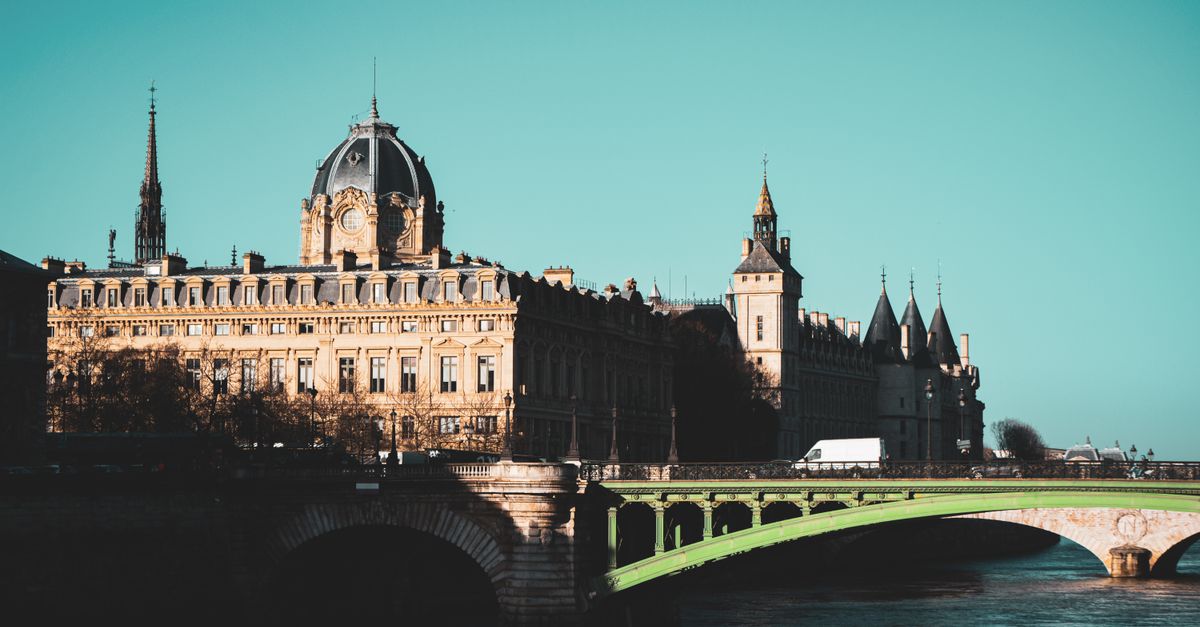
Paris is the most visited city in the world, and it earns that distinction honestly. No other city concentrates so much beauty, history, art, food, and cultural weight into such a compact, walkable space.
But Paris is also a city that can feel unwelcoming to first-time visitors who show up without preparation. The metro system is vast and confusing. The restaurant culture follows rules that aren't posted anywhere.
The cultural norms around greetings, tipping, and personal space are different enough from most other countries to cause genuine friction if you don't know them. And the sheer density of things to see can be paralyzing — do you start with the Louvre or the Musee d'Orsay?
Is the Eiffel Tower worth the queue? Which neighborhood should you stay in? This guide answers all of those questions with specific, tested recommendations, real prices, and the kind of practical advice that turns a stressful first visit into a trip you'll remember for decades.
Paris rewards preparation. The more you know before you arrive, the more the city opens up to you — and once it opens, there is genuinely no city on Earth that can match it.

Before You Go — Essential Preparation
Visa and Entry Requirements
Paris is in France, which is part of the Schengen Area. Citizens of the EU, US, UK, Canada, Australia, Japan, and many other countries can enter visa-free for up to 90 days within a 180-day period.
Starting in 2025, non-EU citizens from visa-exempt countries will need to register through the ETIAS (European Travel Information and Authorisation System) before traveling — this is an online application that costs €7 and is valid for three years. Indian, Chinese, and many other passport holders require a Schengen visa, which must be applied for at the French consulate in your country.
Processing takes 15-30 working days, so apply well in advance. Bring a printed copy of your travel insurance — it's technically required for Schengen entry, and while it's rarely checked, immigration officers have the right to ask.
Currency and Money
France uses the euro (€). Credit and debit cards are accepted almost everywhere — France has been largely cashless for years, and contactless payment is standard even at small shops and market stalls.
Visa and Mastercard are universally accepted; American Express less so. However, carry €50-100 in cash for small purchases, market stalls, tips, and the occasional cafe or bakery that doesn't take cards.
ATMs are everywhere and offer the best exchange rates — avoid the currency exchange bureaus at airports and tourist areas, which charge terrible rates and high commissions. If your home bank charges foreign transaction fees, consider getting a travel-focused card before your trip.
Apple Pay and Google Pay work widely in Paris.
Best Time to Visit
The ideal windows are April to mid-June and September to October. Spring brings mild temperatures (12-20°C), blooming chestnut trees along the boulevards, and manageable crowds. Autumn offers similar weather plus the wine harvest season and a cultural calendar packed with exhibitions, concerts, and fashion events.
July and August are peak tourist season — the city is hot (often above 30°C, and most older buildings lack air conditioning), crowded, and many local restaurants close for annual vacations. That said, August has a particular charm: the Parisians leave and the city belongs to visitors and immigrants, with reduced traffic and a more relaxed atmosphere.
Winter (November to February) is cold, grey, and rainy, but the city is at its most atmospheric, hotel prices drop significantly, and museum queues are short. Christmas markets and decorations along the Champs-Elysees are genuinely beautiful in December.
Language Tips — Bonjour Matters More Than You Think
The single most important thing you can do to improve your experience in Paris is to say "bonjour" (or "bonsoir" after 6 PM) as the first word out of your mouth in every interaction. Before asking a question, before ordering food, before entering a shop — bonjour.
This isn't optional politeness in France; it's a fundamental social expectation, and skipping it is perceived as genuinely rude. The stereotype of the rude Parisian almost always stems from interactions where the visitor skipped the greeting.
Beyond bonjour, learning "s'il vous plait" (please), "merci" (thank you), "excusez-moi" (excuse me), and "parlez-vous anglais?" (do you speak English?) will cover most situations. Most Parisians under 40 speak at least basic English, and many are fluent, but they appreciate the effort of starting in French.
In restaurants, "l'addition, s'il vous plait" (the bill, please) is essential — waiters in France will never bring the bill without being asked, as it's considered rude to rush diners.
Getting from the Airport to the City

From Charles de Gaulle (CDG) Airport
CDG is 25 kilometers northeast of central Paris. You have several options, and they vary enormously in price and convenience. The RER B train is the best value: it runs every 10-15 minutes from CDG Terminal 2 and Terminal 3 stations directly to central Paris, stopping at Gare du Nord, Chatelet-Les Halles, Saint-Michel, and Luxembourg.
The journey takes 35-50 minutes and costs €11.45. Buy tickets at the machines in the station (English language option available) or use contactless payment at the gates. The RER B is reliable but can be crowded during rush hours and is occasionally affected by strikes — check the RATP app before traveling.
Taxis from CDG to Paris operate on a fixed-rate system: €55 to the Right Bank (north of the Seine) and €62 to the Left Bank (south). These prices are legally mandated and non-negotiable — refuse any driver who quotes a different price.
The taxi rank is outside the arrivals hall; the queue can be long but moves quickly. Never accept a ride from someone who approaches you inside the terminal — these are unlicensed drivers.
Uber and Bolt operate from CDG and typically cost €35-55, though surge pricing can push this higher. The Roissybus runs to Opera in central Paris for €16.60 and takes about 60-75 minutes depending on traffic.
For most first-time visitors, the RER B is the best choice: it's fast, cheap, and drops you at the most central stations in Paris.
From Orly Airport
Orly is 13 kilometers south of central Paris and generally handles European and domestic flights. The OrlyBus runs to Denfert-Rochereau station (with metro and RER connections) every 10-15 minutes, costs €11.50, and takes about 30 minutes.
The Orlyval automated train connects to the RER B at Antony station, from where you can continue to central Paris — the combined fare is about €14.40. Taxis from Orly operate on fixed rates: €37 to the Left Bank and €44 to the Right Bank.
Tram T7 runs from Orly to Villejuif-Louis Aragon metro station for standard metro pricing, but it's slow and requires a transfer. For most visitors, the OrlyBus is the simplest option from Orly.
Where to Stay — Neighborhood Guide

Le Marais (3rd and 4th Arrondissements)
The Marais is the most popular neighborhood for first-time visitors, and justifiably so. This is one of the few areas of central Paris that survived Haussmann's 19th-century reconstruction, so the streets are narrow, medieval, and full of character rather than the wide boulevards typical of other central arrondissements.
The neighborhood is packed with independent boutiques, art galleries, falafel joints on Rue des Rosiers, and some of Paris's best museums, including the Musee Picasso and the Carnavalet. It's centrally located with easy walking access to Notre-Dame, the Bastille, and the Ile Saint-Louis.
Hotel prices are high — expect €150-250 per night for a decent mid-range hotel, €80-120 for a well-located hostel bed. The Marais is lively at all hours, especially on Sundays when most of the rest of Paris is closed.
Best for: first-time visitors who want to be in the center of everything.
Saint-Germain-des-Pres (6th Arrondissement)
The Left Bank's most prestigious neighborhood is elegant, literary, and expensive. This is the Paris of Hemingway, Sartre, and Simone de Beauvoir — the historic cafes where they sat (Les Deux Magots, Cafe de Flore) are still operating, though at prices that would have appalled the existentialists.
The Jardin du Luxembourg is steps away, the Musee d'Orsay is a short walk north, and the narrow streets are lined with bookshops, antique dealers, and patisseries. Hotels here are some of the priciest in Paris — €200-400 per night is standard for mid-range, and budget options are essentially nonexistent.
The trade-off is that the neighborhood is beautiful, quiet at night (by Paris standards), and absolutely dripping with atmosphere. Best for: visitors with a generous budget who prioritize charm and atmosphere over nightlife.
Montmartre (18th Arrondissement)
Montmartre is the Paris of postcards: cobblestoned streets climbing a steep hill, the white dome of Sacre-Coeur at the summit, artists painting in Place du Tertre, accordion music drifting from vine-covered cafes. It's also significantly cheaper than central Paris, with decent hotel rooms available for €90-150 per night.
The neighborhood is hilly (very hilly — those cobblestone streets are steep), slightly removed from the main sights, and the area immediately around Sacre-Coeur can feel touristy and aggressive with scam artists. But venture just a few blocks from the basilica and you'll find a genuine village atmosphere with local wine bars, bakeries, and restaurants that serve real Parisian food at non-tourist prices.
The Abbesses metro station puts you on the metro network with easy access to everywhere else. Best for: budget-conscious visitors and romantics who don't mind the hills.
Bastille (11th Arrondissement)
Bastille is where young Parisians actually go out. The neighborhood around Place de la Bastille and the streets stretching northeast into the 11th arrondissement — Rue de la Roquette, Rue Oberkampf, Rue Jean-Pierre Timbaud — form the densest concentration of bars, restaurants, and nightlife in Paris.
This is also one of the most diverse neighborhoods in central Paris, with excellent North African, Vietnamese, and Chinese food alongside classic French bistros. Hotels are more affordable than in the central arrondissements (€100-180 per night for mid-range), and the atmosphere is local and lively.
The downside is that some streets can be noisy at night and the area doesn't have the architectural grandeur of the Marais or Saint-Germain. Best for: visitors who want nightlife, diverse food, and a more local-feeling base.
Top 10 Must-See Sights with Entry Fees
1. The Louvre — The world's most visited museum and home to 35,000 works of art including the Mona Lisa, Venus de Milo, and Winged Victory of Samothrace. Entry: €22, free on the first Saturday evening of each month.
Book time-slot tickets online in advance. Plan at least 3-4 hours, and accept that you won't see everything.

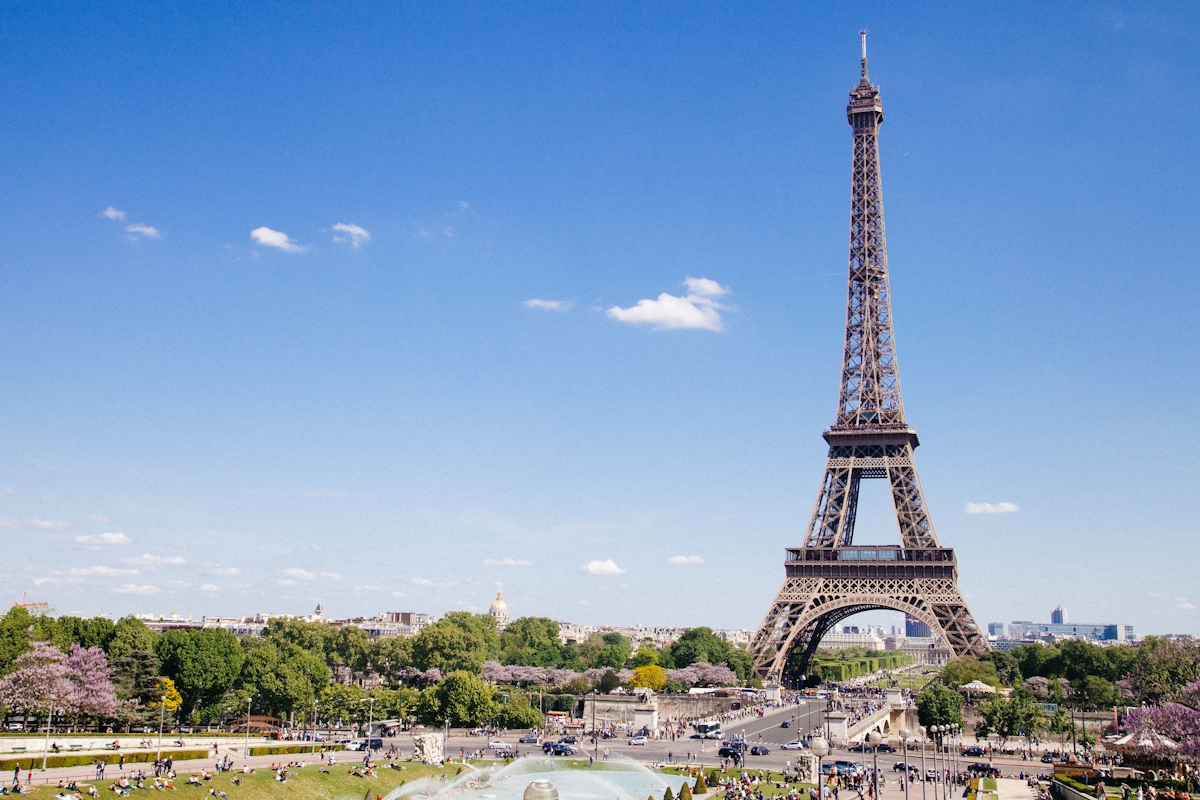
2. Eiffel Tower — You already know what it looks like, but the experience of being underneath it, surrounded by its massive iron lattice, is genuinely awe-inspiring. Lift to 2nd floor: €18.80, lift to summit: €29.40, stairs to 2nd floor: €11.80.
Book online weeks in advance — tickets sell out. The summit is worth the extra cost on clear days.
3. Musee d'Orsay — Impressionist masterpieces (Monet, Renoir, Degas, Van Gogh, Cezanne) housed in a spectacular converted railway station. Entry: €16, free on the first Sunday of each month. Often more rewarding than the Louvre for visitors who don't want to spend an entire day in a museum.
4. Notre-Dame Cathedral — Reopened after the devastating 2019 fire and years of restoration. The cathedral is free to enter, though you may need to queue. The restoration work is extraordinary, and the cleaned interior reveals medieval details that were hidden under centuries of grime.
5. Sacre-Coeur Basilica — The white-domed church at the summit of Montmartre offers free entry to the main church and panoramic views of Paris from the steps outside. The dome climb (€7) provides 360-degree views that rival the Eiffel Tower at a fraction of the cost.
6. Sainte-Chapelle — A 13th-century Gothic chapel with floor-to-ceiling stained glass windows that, on a sunny day, transform the interior into a kaleidoscope of colored light. Entry: €11.50. Often overlooked by visitors focused on Notre-Dame, but arguably more beautiful. Short visit (30-45 minutes).
7. Palace of Versailles — Louis XIV's absurdly opulent palace, 40 minutes from central Paris by RER C train (€4.10 each way). Entry: €21 for the palace, €27 for palace and gardens including fountain shows (seasonal). Go on a Tuesday or Wednesday for the smallest crowds; never on a Monday (closed) or Sunday (packed).
8. Musee de l'Orangerie — Two oval rooms housing Monet's massive Water Lilies murals, designed by the artist specifically for this space. The effect is immersive and meditative. Entry: €12.50. Small museum, 1-2 hours is sufficient. Located in the Tuileries Garden.
9. Pantheon — A neoclassical temple in the Latin Quarter housing the tombs of Victor Hugo, Marie Curie, Voltaire, Rousseau, Alexandre Dumas, and other French luminaries. Entry: €11.50. The Foucault Pendulum, demonstrating the Earth's rotation, hangs in the center of the building.
10. Palais Garnier (Opera House) — The Paris Opera House is one of the most lavishly decorated buildings in the world, with a ceiling painted by Chagall and a grand staircase that makes every visitor feel like they're in a film. Self-guided tour: €15. No booking required during the day.

Etiquette — The Unwritten Rules
Greetings and Social Norms
Beyond the essential bonjour, there are several social norms that will make your interactions smoother. In shops, greet the shopkeeper when you enter and say "au revoir" when you leave, even if you don't buy anything.
In restaurants, wait to be seated — don't sit down at an empty table without catching the waiter's eye first. The French dining pace is deliberately slow; your waiter is not ignoring you, they're giving you space to enjoy your meal. Asking for the bill signals the end of the experience, which is why they wait for you to request it.
The French concept of personal space in conversation is smaller than in the US or UK — people stand closer and the customary greeting between acquaintances involves cheek kisses (la bise), though you'll only encounter this if you're meeting French people socially.
Dining and Tipping
Service is included in all French restaurant bills by law (service compris). There is no obligation to tip beyond this, and French waiters do not depend on tips for their income.
However, it is customary to round up or leave a small additional amount for good service — typically 5-10% or simply rounding up to the nearest euro on a small bill. For a €45 dinner, leaving €48-50 is generous and appreciated.
In cafes, leaving the small change from your order is standard. Never tip 15-20% as you would in the US — it will be appreciated but it marks you immediately as an unfamiliar tourist and can actually create awkwardness.
At restaurants, bread is served automatically and is free. Water can be ordered free (une carafe d'eau) — you don't need to buy bottled water unless you want sparkling.
Sunday Closures
Paris largely shuts down on Sundays. Most shops, many restaurants, and some museums close for the day. This catches many visitors off guard, especially those used to cities where Sunday trading is normal.
The Marais is the major exception — shops and restaurants there stay open on Sundays, making it the default destination for Sunday wandering. Major museums like the Louvre and Orsay are open on Sundays (the Louvre is closed Tuesdays, the Orsay on Mondays).
Supermarkets close by 1 PM on Sundays. Bakeries typically open Sunday morning — grab your croissants early. Plan your Sunday around parks, museums, and the Marais, and save your shopping for other days.
Safety — Pickpocket Hotspots and Scams
Paris is a safe city by global standards, but petty theft — specifically pickpocketing — is a genuine problem in tourist areas. The highest-risk locations are: Metro Line 1 (which connects all the major tourist stops: Louvre, Champs-Elysees, Concorde, Bastille), the area around the Eiffel Tower (especially the Champ de Mars and Trocadero), and the steps of Sacre-Coeur in Montmartre.
Keep your phone in a zipped pocket or cross-body bag, never in a back pocket. Be aware of common scams: the "gold ring" scam (someone "finds" a ring near you and tries to charge you for it), the petition scam (someone asks you to sign a petition then demands money), and the "friendship bracelet" scam at Sacre-Coeur (someone ties a bracelet on your wrist and demands payment).
The response to all of these is a firm "non, merci" and keep walking. On the metro, keep bags in front of you, especially on crowded trains at tourist-heavy stations.
Violent crime against tourists is very rare; the risk is almost entirely limited to pickpocketing and scams. The general rule: if a stranger approaches you with a story, a question, or an offer, they almost certainly want your money or your attention as a distraction for a pickpocket working behind you.
Essential Paris Apps
Citymapper — Hands down the best navigation app for Paris. It combines metro, bus, tram, RER, walking, and cycling directions into a single interface and accounts for real-time delays, station closures, and strikes. The "get me home" button at the end of a long day is worth the download alone.
RATP — The official app from Paris's transport authority. Less user-friendly than Citymapper but essential for checking real-time service status, especially during the frequent strikes and maintenance closures that affect the metro and RER. It also sells digital tickets that you can load onto your phone.
TheFork (LaFourchette) — France's leading restaurant reservation platform. Beyond the convenience of booking a table in English, many restaurants offer promotional discounts of 20-50% off the food bill when you book through the app.
This can save you a significant amount of money over the course of a trip, even at mid-range and upscale restaurants.
Google Translate — The camera function, which translates text in real time through your phone's camera, is invaluable for reading menus, signs, and museum information that isn't available in English. Download the French language pack for offline use before you travel.
Uber — Works in Paris exactly as expected. Generally cheaper than taxis (except during surge pricing), and useful when the metro closes between roughly 1:15 AM and 5:30 AM (later on weekends). Bolt is also available and sometimes cheaper.
The complete Paris food guide — croissants to Michelin stars The perfect 5-day Paris itinerary for first-time visitors Explore all Paris travel guides and recommendations