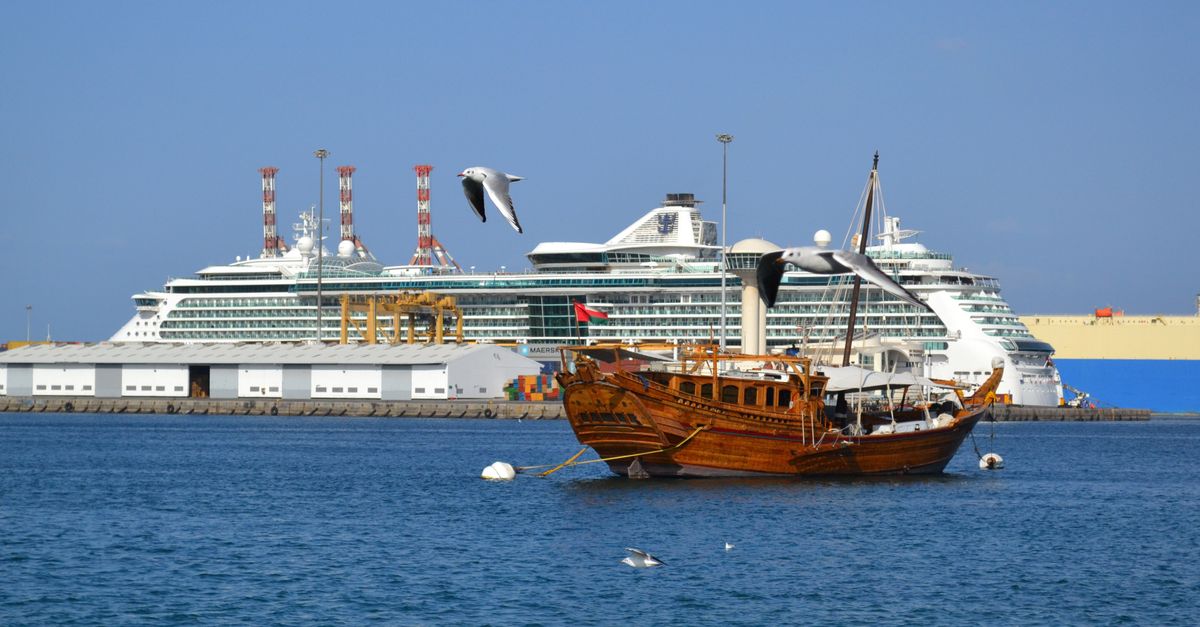
Muscat is the Gulf's best-kept budget secret. While Dubai and Abu Dhabi have built entire economies around extracting money from visitors, Oman's capital moves at a different pace — quieter, more genuine, and far more affordable once you understand where the value lies. The Sultan Qaboos Grand Mosque is free to enter. Muttrah Souk is free to wander for hours. The corniche promenade along the old harbour costs nothing but time. A full day of sightseeing in Muscat can be done for under OMR 5 ($13 USD) in entry fees, with a generous restaurant lunch adding another OMR 3-4. That said, transport is the one area where Muscat demands careful planning — there is no metro and taxis are expensive. Know how to move around cheaply and the city's generosity with free attractions pays off across your entire trip.
Getting There on a Budget
Muscat International Airport (MCT) is served by Oman Air and several budget carriers including flydubai, Air Arabia, and IndiGo. The most competitive fares come from Dubai (AED 150-350 one way), Mumbai (INR 6,000-12,000), and Colombo, with flydubai and Air Arabia regularly running promotional fares that undercut Oman Air by 40-60 percent. Set price alerts on Google Flights for the Muscat route three to six months ahead — the lowest fares appear during Oman's shoulder seasons: May to September (summer, very hot) and early January.

Flying into Dubai and connecting overland to Muscat is sometimes cheaper than direct flights, particularly for travellers from Europe or North America. The Dubai to Muscat bus run by National Express Oman departs from Deira's Al Ghubaiba bus station and costs around OMR 5-7 ($13-18 USD) for the 6-7 hour journey. It crosses the UAE-Oman border at Hatta or Al Wajajah — ensure your Oman e-visa is valid before boarding. The Oman e-visa costs $20-25 USD and is issued within 24 hours for most nationalities at evisa.rop.gov.om.
From India, IndiGo, Air India, SpiceJet, and Oman Air compete on the Mumbai, Hyderabad, Kochi, and Delhi routes. Hyderabad to Muscat fares on IndiGo can drop as low as INR 7,000-9,000 one way with two months' advance booking — among the best-value long-haul fares available from southern India.
Travel insurance is mandatory for the Oman e-visa application — budget OMR 1.5-3 ($4-8) for a basic travel insurance certificate if your existing policy does not meet Oman's requirements. Buy it at the same time as your visa through the official portal.
Budget Accommodation
Muscat's accommodation scene for budget travellers centres on the Ruwi and Muttrah districts, where Indian-operated guesthouses and older business hotels offer the most competitive rates. The city lacks a hostel culture comparable to Southeast Asia or Europe, but double rooms in the INR 1,500-2,500 equivalent (OMR 8-13) range are findable with advance booking.

Ramee Guestline Hotel in Ruwi is a reliable mid-budget choice with clean double rooms at OMR 18-28 ($47-73) per night on Booking.com. Ruwi is Muscat's Indian Quarter — busy, full of cheap restaurants, and well-connected by orange-and-white city buses to other parts of the capital. The Ramee's location means supermarkets, pharmacies, and budget eateries are all within a five-minute walk.
Al Falaj Hotel, also in Ruwi, is a larger three-star property with rooms from OMR 22-35 ($57-91) per night. It has a pool, a reasonable in-house restaurant, and is directly on a bus route. The rates are slightly higher than true budget, but the facilities justify the gap for travellers wanting a pool after a day of sightseeing in Muscat's heat.
Oman Beaches Hotel near Qurm Beach offers budget-facing rooms at OMR 18-26 ($47-68) per night, with the appeal of being close to the beach. Qurm is a quieter residential neighbourhood, more spread out than Ruwi and less walkable to restaurants, but Careem is a five-minute app ride away. The Best Western Muscat on Al Qurum Street starts at OMR 28-40 ($73-104) — the upper end of budget, but the brand reliability and breakfast inclusion make the per-day food saving significant.
Airbnb apartments in Ruwi and Old Muscat start at OMR 15-25 ($39-65) per night for a studio with a kitchen. A kitchen matters enormously in Muscat — cooking your own breakfast and lunch cuts food costs by OMR 8-12 per day, meaning a five-day apartment stay often costs less than an equivalent hotel even before food savings are factored in.
Eating Cheaply Like a Local
Muscat's best-value food is concentrated in Ruwi and Muttrah, where South Asian and Omani-run restaurants cater to the city's large expatriate workforce. The standard lunch of rice, dal, and sabzi costs OMR 0.5-0.8 ($1.30-2.10) at Ruwi's Indian canteens — impossibly cheap for a Gulf capital. Full restaurant meals with a grilled main course run OMR 1.5-3 ($4-8) at local spots.

Bin Ateeq Restaurant near Ruwi High Street is one of Muscat's most respected budget Omani eateries, serving traditional shuwa (slow-cooked spiced lamb), majboos rice, and harees (wheat and meat porridge) at prices honest to the origins of the food — OMR 1.5-2.5 ($4-6.50) for a full meal. The portions are enormous and the quality genuinely excellent. It is always full of Omani men at lunch — the best possible endorsement.
Muttrah Souk area has several small cafes and tea shops where karak chai (spiced milk tea) costs OMR 0.1-0.15 ($0.25-0.40) per glass and fresh juices run OMR 0.3-0.5 ($0.80-1.30). Breakfast of khubz (flatbread) with labneh and hummus at a souk-adjacent cafe costs OMR 0.5-0.8. Halwa (Omani rose and saffron sweet) from the souk confectionery shops is OMR 0.8-2 per 200g — buy a small bag as both a snack and an edible souvenir.
Al Farooq Restaurant in Ruwi serves biryani, butter chicken, and South Indian thalis that are indistinguishable from the best restaurants in Chennai or Hyderabad — at Ruwi prices of OMR 0.8-1.8 ($2-4.70) per dish. Naan bread is OMR 0.1-0.15 each. A satisfying full dinner costs OMR 2-3 ($5-8) per person. The restaurant is open until midnight, which makes it ideal after an evening at Muttrah Corniche.
Fish markets in Muttrah and the main Muscat Municipal Fish Market sell fresh Gulf catch — kingfish, hammour, and tuna — at OMR 1.5-4 ($4-10) per kilogram. If your accommodation has a kitchen, buying fish and grilling it yourself is both cheaper and fresher than any restaurant. The Fish Market on Al Mina Road opens from 5 AM to 1 PM daily.
Free and Low-Cost Attractions
Sultan Qaboos Grand Mosque is free to enter for non-Muslims between 8 AM and 11 AM from Saturday to Thursday. It is one of the most beautiful mosques in the Islamic world — the main prayer hall contains a 21-tonne Swarovski crystal chandelier and a hand-knotted carpet covering 4,343 square metres, woven by 600 Iranian craftswomen over four years. Free abayas and head coverings are provided at the entrance for women. Arrive at 8 AM for an uncrowded experience and brilliant morning light on the white marble exterior.

Muttrah Corniche, the 1.5-kilometre promenade along the old harbour, is free to walk at any hour. The waterfront is flanked by traditional white-painted buildings, fishing dhows, and the dramatic cliffs of the Al Hajar mountains. The view from the corniche toward the old gate (Bab Muttrah) is one of Muscat's most photographed scenes. Early morning and evening walks are the best times — the heat is manageable and the light is golden.
Muttrah Souk (Al Dhalam) is free to enter and wander for hours. Established over 200 years ago, it is one of the oldest souks in the Arabian Peninsula — a labyrinth of lanes selling frankincense, silver jewellery, Omani khanjars (curved daggers), textiles, spices, and handicrafts. Even if you buy nothing, the souk is an extraordinary sensory experience. Frankincense from Oman's Dhofar region costs OMR 0.5-3 ($1.30-8) per packet — buy from vendors in the interior lanes rather than shops facing the corniche, where prices are inflated for tourists.
Bait Al Zubair Museum in Old Muscat charges OMR 2 ($5.20) entry — one of Muscat's best-value paid attractions. The private collection documents Omani heritage through weapons, jewellery, costumes, and household objects across four interconnected historic buildings. The museum is well-curated and the garden cafe serves good coffee at OMR 0.8-1.2. Open Saturday to Thursday, 9 AM to 5 PM.
The Al Alam Royal Palace gardens and the adjacent Portuguese forts of Jalali and Mirani are viewable from outside free of charge — the palace itself is not open to visitors. The view from the waterfront road of the blue and gold palace flanked by its twin forts is one of Muscat's definitive images and requires nothing but showing up.
Getting Around on a Budget
Muscat's greatest budget challenge is transport. There is no metro system and the city is spread across 3,500 square kilometres of valleys and coastal corridors. The distances between Muttrah, Old Muscat, Ruwi, Qurm, and the Seeb Airport zone are significant — 15 to 30 kilometres in some cases. Understanding the available options before arrival saves both money and frustration.

Muscat Bus Network (Mwasalat) operates air-conditioned city buses on key routes at OMR 0.2-0.4 ($0.52-1.04) per journey. The most useful route for tourists is the number 1 bus connecting Ruwi with Muttrah, the number 2 bus along the coastal road, and the airport connector. Buses run from 6 AM to 10 PM. Google Maps shows Muscat bus routes and stops with reasonable accuracy — use it to plan journeys. The Mwasalat app allows route planning and shows real-time arrivals.
Careem (Uber's Middle East equivalent) is the standard ride-hailing app in Muscat. Fares are transparent and significantly lower than metered taxis: Ruwi to Muttrah costs OMR 1.5-2.5 ($4-6.50), Ruwi to Qurm is OMR 2.5-3.5 ($6.50-9), and the airport to Ruwi runs OMR 4-6 ($10-16). Download Careem before arrival. Metered taxis are available at hotels and main stands at higher rates — useful when Careem surge pricing hits during peak hours.
Renting a car from the airport is the best option for day trips outside Muscat. Economy cars (Kia Picanto, Toyota Yaris) cost OMR 8-15 ($21-39) per day from local operators like Budget Oman or Europcar. A car makes Wahiba Sands, Wadi Shab, and Nizwa day trips feasible without the OMR 60-120 cost of a private tour. International driving licence required alongside your home country licence.
Money-Saving Tips
The Oman e-visa costs $20-25 USD if you apply directly at evisa.rop.gov.om. Third-party visa agents charge $45-80 for the same visa with no added value. Always apply directly through the official portal — processing takes 24-72 hours and the system is user-friendly. Keep the approval email printed or screenshot — it is checked at the immigration desk.
Visit the Sultan Qaboos Grand Mosque on the same morning you plan to explore Old Muscat and the Al Alam Palace area. The mosque is in Bausher, a 10-minute Careem ride from Old Muscat. Combining both in a single OMR 5-7 transport day eliminates a separate return journey, saving OMR 4-6 in Careem fares. Map your sightseeing routes geographically rather than thematically — Muscat's spread means poor routing wastes money on transport.
Carry cash for the Muttrah Souk. Card machines exist in the larger shops but many of the most interesting stalls are cash only. Frankincense, halwa, and silver items are also significantly cheaper when you pay cash and can politely negotiate — expect to negotiate 10-20% off the first price quoted. Never negotiate aggressively; Omani merchants consider hard bargaining distasteful. A soft counter-offer and a smile usually works.
Drink water from the tap in Oman — it is safe and among the cleanest municipal water in the Gulf. Bottled water in tourist areas costs OMR 0.2-0.5 ($0.52-1.30) per 500ml. A refillable 1-litre bottle saves OMR 3-6 per day for active sightseers. The climate demands at least three litres daily from October to April and four to five litres in summer.
Book accommodation at least two weeks in advance for the October to March peak season — Muscat's limited budget accommodation sells out quickly during this period. Off-season visitors (May to September) can negotiate 20-30% off rack rates at smaller guesthouses by asking directly rather than going through booking platforms.
Day trips to Wahiba Sands (Sharqiyah Sands) or Wadi Bani Khalid are far cheaper in a hired car than on an organised tour. A rental car costs OMR 8-12 ($21-31) per day; organised desert tours start at OMR 25-40 ($65-104) per person. Split among two or three travellers, self-driving is the obvious choice. The drives are straightforward on paved roads until the final sand section.