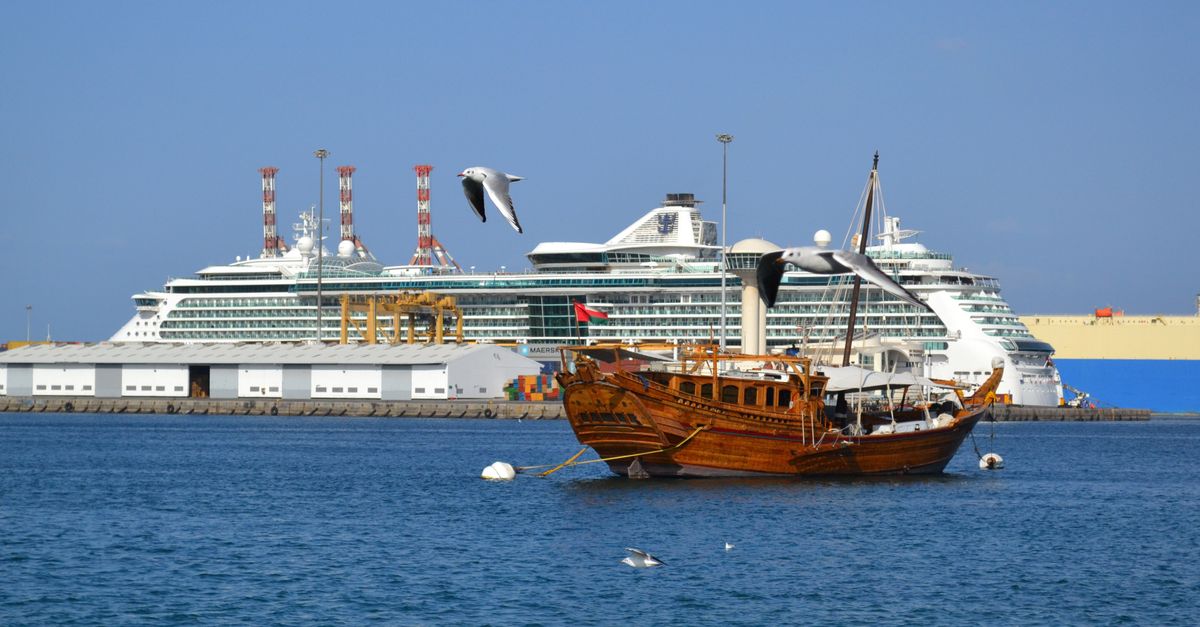
Muscat is one of the Gulf's most consistently underestimated capitals. Where Dubai performs spectacle and Abu Dhabi performs grandeur, Muscat performs something more unusual: restraint. The city limits building heights to maintain its relationship with the Al Hajar mountains that frame it on every side. The Sultan Qaboos Grand Mosque takes its proportion from classical Islamic architecture rather than competitive excess. The old harbor at Muttrah has been a working port for 2,000 years and still looks like one. In a region where authenticity often feels like a museum reconstruction, Muscat has the real thing in enough quantity to sustain genuine travel discovery.
The Sultanate of Oman around Muscat is geologically and culturally extraordinary — the Al Hajar mountains are among the oldest exposed geology on the Arabian Peninsula, the Batinah coast fishing communities have operated continuously since pre-Islamic times, and the frankincense trade that made southern Arabia legendary still has working groves accessible in Dhofar. Around the capital itself, the wadis (seasonal riverbeds) that cut through the mountains create microecosystems that support endemic wildlife and provide the most dramatic landscape within an hour's drive of any Gulf capital.
These ten hidden corners of Muscat and its surrounding region go beyond the Grand Mosque and the Muttrah Souk to the geological, architectural, and human depth that makes Oman the most interesting country in the Arabian Peninsula. Dress conservatively, carry water constantly, and go early in the day before the heat organizes everything against you.

1. Muttrah Fish Market at Dawn
The Muttrah Fish Market sits at the base of the old Muttrah Corniche, directly below the Portuguese-era Muttrah Fort, and operates from 5 AM as the night's fishing catch from the Sea of Oman is brought in. This is one of the most active and least-touristed fish markets in the Gulf — the buyers are almost exclusively the Indian, Pakistani, and Bangladeshi restaurant kitchen staff who provision Muscat's enormous South Asian food service sector, alongside Omani household buyers who come for the specific fish varieties unavailable in supermarkets. The scale is enormous: swordfish, tuna, shark, kingfish, squid, and varieties of reef fish whose English names don't exist are laid out in rows extending across a floor the size of a football pitch.
The fish variety at Muttrah reflects Oman's extraordinary marine biodiversity. The Sea of Oman and the Arabian Sea produce species from both tropical Indian Ocean and temperate Western Indian Ocean zones. The hammour (grouper) that fills Gulf restaurant menus is the standard; more interesting are the kinnad (emperor fish), the farida (queen fish), and the occasional hawksbill turtle accidentally caught in drift nets — illegal to sell and released, but photographed by the sellers with casual admiration before returning to the sea.
The market is at the Muttrah end of the Corniche, near the dhow harbor. Open from 5 AM, the wholesale trading phase ends by 7 AM and retail begins. Entry free. Bring cash (OMR); no card machines. Prices are seasonal and species-dependent — kingfish runs OMR 2.5-4.0 per kg, hammour OMR 3.5-6.0. The freshness of the fish at this market, moved from boat to market in under three hours, is impossible to replicate in a supermarket context. The smell is exactly what you'd expect: powerful and oceanic.
After the fish market, walk 5 minutes along the Corniche to the Muttrah Souk entrance — the covered souk opens at 8 AM and the early morning visit, before the tour groups arrive, allows actual shopping rather than tourist crowd navigation. The souk sells Omani silver jewelry, frankincense and incense (bukhoor), traditional khanjars (curved daggers), and the woven textiles specific to each Omani region. The price differential between morning (negotiable, lower) and midday (fixed, higher, tourist-oriented) can reach 30%.
2. Wadi Shab's Inner Pools
Wadi Shab is 120 km south of Muscat on the Coastal Road toward Sur, and it's in enough guidebooks to have a parking problem on Fridays. The inner pools — reached by swimming through a submerged cave passage at the far end of the accessible canyon — are visited by perhaps 10% of the people who walk to the first and second pools. The cave passage is approximately 10 metres long and requires swimming in chest-deep water through a narrow limestone slot before emerging in a hidden chamber with a 15-metre waterfall pouring into a circular turquoise pool. The experience is as physically involving as it sounds and as visually extraordinary as you're imagining.
The geological context of Wadi Shab explains the turquoise water: the wadi cuts through the Hajar limestone formation, and the water chemistry of calcium-carbonate-saturated mountain springs produces the same optical effect as the famous Plitvice Lakes in Croatia. The turquoise color is light-dependent — brilliant in full sun between 10 AM and 2 PM, more subdued in morning shade. The limestone canyon walls have been polished smooth by centuries of flood events that occur in the brief but intense Omani rainy season.
Drive south from Muscat on the Coastal Road (Route 17) to the Wadi Shab turning — GPS works reliably. Parking OMR 1. The walk from the road to the first pool takes 45 minutes through date palm gardens and past a traditional Omani village. A small boat crossing costs OMR 0.5 per person (cash). The inner cave approach requires asking the local guides at the second pool — they know the safe route and the water level on any given day (it varies with season). No entry fee for the wadi itself.
Go midweek and early (7 AM start from Muscat) to avoid the Friday and weekend crowd that can make the cave passage feel less adventurous. Bring a waterproof bag for phone and valuables, water shoes (the rocks are sharp when wet), and a change of clothes. The wade back through the cave passage after the inner pool is faster but colder — the water temperature is around 22°C even in summer, cold enough to feel cold after 30 minutes in it.
3. Ras Al Jinz Turtle Reserve
Ras Al Jinz, at Oman's easternmost point 210 km south of Muscat near Sur, is the world's most important nesting beach for the green sea turtle — 20,000 females nest here annually, the largest concentration on the Indian Ocean rim. The Oman government has managed it as a strict reserve since 1996: the beach is closed except for guided nocturnal tours, the turtles are not disturbed during nesting, and the guide ratio is controlled to ensure genuine wildlife experience rather than tourism circus. The result is one of the finest wildlife experiences in Arabia, executed with a conservation seriousness rare in the Gulf.
The nocturnal beach visit (mandatory, guided, in small groups of maximum 8) begins at 9 PM and 12 midnight. Guides have radio contact with beach monitors who track emerging turtles in real time — groups are led to the specific section of beach where a nesting is in progress. The experience of watching a 150-kg green turtle excavate her nest chamber with her front flippers, lay 80-120 eggs, cover and camouflage the nest, and return to the sea is one of those genuinely profound wildlife encounters that changes the register of how you see the natural world. Photography is permitted with red light filter only (provided by the reserve).
Reservations are mandatory and must be made weeks in advance during peak season (July-November, the primary nesting period). Contact Ras Al Jinz Scientific and Visitor Center directly. Tour cost OMR 15 per person. The reserve's guesthouse (OMR 40-80 per room) allows staying the night and attending both the evening and pre-dawn tour. Day visits (9 AM to 5 PM, non-nesting hours) cost OMR 5 and include the visitor center museum.
The Sur-to-Ras Al Jinz road passes through the old Sur dhow-building shipyard — the last active traditional wooden dhow construction yard on the Arabian Peninsula. The Sur Dhow Factory is viewable from the road and occasionally from a public observation point. The dhows built here (traditional sambuq and boom designs) are still used for fishing and coastal cargo throughout the Gulf. Stopping to watch the construction — entirely by hand using century-old techniques — is one of the most extraordinary industrial craft experiences in Oman.
4. Nizwa Fort and Traditional Souk
Nizwa, 160 km inland from Muscat in the Al Dakhiliyah region, was Oman's capital until the 17th century and remains the spiritual and cultural center of the country's interior. Nizwa Fort (built 1668, considered the finest circular tower fort in Oman) is on the tourist circuit. The Friday market beside the fort — a working Omani livestock and produce market that has operated continuously for centuries — is not. Every Friday from 7 AM to noon, Nizwa's market handles live goats and cattle traded between tribal buyers, the freshest date varieties from the surrounding date palm gardens, Omani honey (the Jebel Akhdar mountain honey is internationally valued and sold here at local prices), and silver jewelry from tribal craftsmen who attend specifically for this market.
The silver jewelry at Nizwa's Friday market is the finest Omani silver craft available at market (rather than retail) prices. Nizwa silver is the traditional center of Omani silversmithing — the khanjar hilts, the Maria Theresa thaler-decorated necklaces, and the elaborate Omani anklets (khalakhal) are all made in the Nizwa region. Genuine antique pieces from the 19th century appear at the market; the price difference between antique and new requires experience to navigate but the relative cheapness of genuine new work makes the Friday market worth visiting regardless.
ONTC buses from Muscat's Azaiba bus station to Nizwa run several times daily (OMR 3.5, 2.5 hours). Private taxis from Muscat: OMR 25-30 one way. The fort is open daily 9 AM to 4 PM (entry OMR 3 foreigners). The Friday market is free and begins at the fort's base. The souk adjacent to the fort (covered, permanent) sells Omani craft and food daily but Friday has the largest selection and lowest prices.
The Jebel Akhdar ("Green Mountain") plateau, 50 km from Nizwa and accessible by 4WD on a mountain road, sits at 2,000 metres altitude and has a climate so different from the Omani lowlands that it grows roses, pomegranates, apricots, and peaches that supply the perfume industry and the Muscat gourmet market. The Jebel Akhdar rose water distillation happens in March-April and is accessible to visitors who arrange with local villages. This combination — Nizwa Fort Friday market plus Jebel Akhdar rose harvest — makes a two-day trip from Muscat that represents the most compressed version of Omani cultural depth available.
5. Old Muscat's Portuguese Forts
Muscat's Old City area (the original Muscat, distinct from the Muttrah neighborhood and the modern capital sprawl) is a walled historic area containing the Royal Palace, the two Portuguese sea forts (Mirani and Jalali), and a cluster of historic merchant houses that have been impeccably restored. Most visitors do a drive-through or a quick photograph. The forts are the thing to actually spend time with: Fort Mirani and Fort Jalali face each other across the narrow entrance to Muscat harbor, a 16th-century Portuguese defensive arrangement that controlled all maritime access to the bay. The architecture combines Portuguese military engineering with Omani vernacular construction in a way that shows the practical accommodation between occupier and occupied.
Fort Jalali is a working military facility and closed to civilians. Fort Mirani is also technically closed to visitors — the outer walls and the approach can be walked, and the view of the harbor entrance from below the fort is the best possible angle on the Portuguese colonial geography. The sea between the two forts was where Vasco da Gama's Portuguese fleet anchored in 1507. The bay they controlled is still the same bay, with the same headlands, the same narrow entrance, and the same water. History at this scale is available for free and requires only walking to the fort base.
Old Muscat is accessible from Muttrah by local taxi (OMR 2-3) or a 30-minute Corniche walk. The Al Alam Palace (Royal Palace) facade is the best visible piece of Omani state architecture — not the largest or oldest, but the most refined, with its blue and gold tile work on the principal facade visible from the small public square outside the palace gates. The palace interior is closed to visitors.
The Bait Al Zubair Museum in Old Muscat, in a restored merchant house on the Old Muscat road, is the finest small museum in Oman: private collection of traditional Omani material culture (weapons, textiles, jewelry, household objects) assembled by a prominent Muscat family. Entry OMR 3. Open Saturday to Thursday, 9:30 AM to 1 PM and 4 PM to 7 PM. The quality and depth of the collection rival the national museum for specific categories of Omani craft, and the building itself — a traditional Omani merchant house with internal courtyard — is architecturally the most accessible traditional domestic architecture in Muscat.
6. Qurum Nature Reserve's Mangroves
Qurum Nature Reserve, in the upscale Qurum residential district of Muscat, contains the only mangrove forest in the capital's urban boundary. The mangrove channel — about 2 km long, navigable by kayak or on foot on a raised wooden walkway — supports breeding populations of flamingo, heron, and egret in the middle of a city of 1.5 million people. The reserve exists because Sultan Qaboos personally ordered its protection during the 1970s development of the Qurum area, and the Muscat Municipality has maintained it since with a seriousness that is exceptional by Gulf standards.
The flamingo population at Qurum peaks in winter (November-February) when the Muscat temperature drops to a range that both flamingoes and birdwatchers find agreeable. Counts of 50-80 flamingoes in the mangrove lagoon at dawn are routine in peak season. The mangroves themselves (Avicennia marina, white mangrove) are in excellent health — an unusual condition given the urban pressure that surrounds them — and the walking path through the reserve provides a genuinely quiet natural experience 20 minutes from the Sultan Qaboos Grand Mosque.
The reserve entrance is on the Qurum Corniche road, opposite the Qurum beach hotel district. Entry free. The wooden walkway is open 6 AM to 9 PM. The kayak rental (through the adjacent Qurum Natural Park) costs OMR 5 for 30 minutes — the kayak route through the mangrove channels is different from and more interesting than the walking path. Early morning is best for birds; evening is better for air temperature in summer.
The Qurum Beach adjacent to the reserve is Muscat's most accessible public beach — clean, with lifeguards on weekends, and usable for swimming from October to April (summer sea temperatures reach 33°C and the water feels more like a bath than a swim). The combination of nature reserve mangroves in the morning and beach swimming in the late afternoon makes Qurum one of the most complete single-day urban natural experience in the Gulf.
7. Wadi Bani Auf (The Loop)
Wadi Bani Auf in the Western Al Hajar mountains, 130 km west of Muscat, is one of the most dramatic driving experiences in Oman — a narrow mountain track that descends from the Rustaq side of the mountains, passes through the village of Bilad Sayt (considered one of Oman's most beautiful villages), and drops via a series of tight switchbacks into the wadi bottom before climbing back to the plateau. The track requires a 4WD vehicle and moderate off-road confidence; it also passes through a landscape of ancient terraced agriculture, falaj irrigation channels, and mountain villages where the human relationship with an extreme environment has been sustained for over a thousand years.
Bilad Sayt village is the jewel of the route: a cluster of traditional stone houses perched on a ridge above three converging wadis, surrounded by date palms and fruit orchards irrigated by the falaj system (an ancient underground channeling system for bringing mountain spring water to agricultural land). The village is occupied year-round by a small farming community — the inhabitants have maintained the terracing against extraordinary engineering odds, building stone retaining walls on slopes of 40-60 degrees. The UNESCO Global Geopark designation of the Al Hajar mountain system includes Bilad Sayt as a prime example.
The Loop requires a 4WD rental from Muscat — daily rates OMR 35-60 for a basic 4WD. The Rustaq-to-Bilad Sayt approach is better (less traffic, better direction of descent). Leave Muscat by 6 AM to be at Bilad Sayt by 9 AM for optimal light. The full loop from Muscat return takes 7-8 hours with stops. Pack 4 litres of water per person, snacks (no food facilities on the mountain track), and full tank of fuel from Rustaq.
The falaj channels at Bilad Sayt are a working engineering system, not a museum piece. The water flows continuously from the mountain springs through underground channels that were dug by the community 800 years ago and have been maintained ever since. Omani aflaj (plural of falaj) are listed as a UNESCO World Heritage property specifically for the combination of engineering ingenuity, ecological sustainability, and continuous operation. Seeing one in active use at Bilad Sayt — watching the water appear from the mountain rock and flow into the palm gardens — is the most eloquent possible explanation of why this technology was listed.
8. Muscat's Indian Quarter (Ruwi)
Ruwi is Muscat's traditional commercial district and the center of the city's enormous South Asian community — an Indian, Pakistani, and Sri Lankan business district that has operated here since Omani trading connections with the Indian subcontinent began in the first century CE. Today Ruwi is a dense commercial area of Indian and Pakistani restaurants, textile shops selling South Asian fabric, gold souk (separate from the Muttrah gold souk), and community organizations for the various South Asian national communities. It's 100% functional and 0% tourist — the closest thing Muscat has to a genuinely working-class urban neighborhood.
The street food in Ruwi is the best in Muscat for South Asian varieties: Hyderabadi biryani from shops that have been operating here since the 1970s, Pakistani halwa puri breakfast available from 7 AM, South Indian dosa at the Tamil workers' canteens, and Kerala fish curry at the Malayalam-language restaurants that serve the Malayali community that constitutes a significant fraction of Muscat's Indian workforce. The prices are South Asian rather than Gulf: a full Hyderabadi biryani plate for OMR 1.5, a breakfast set for OMR 0.8.
Ruwi is accessible from the Muscat City Centre by taxi (OMR 3-5) or by the Muscat Bus Rapid Transit (BRT) system (OMR 0.5) from the Ruwi BRT station. The commercial district is most active from 9 AM to 1 PM and from 4 PM to 9 PM (two-shift retail culture). The gold souk (separate from Muttrah) has competitive prices because it serves the Indian and Pakistani community buying 22-karat gold jewelry at near-spot-price rather than the tourist market.
The Ruwi bus station area has the best collection of Indian sweets shops in Muscat — the mithai (traditional Indian sweets) here are made daily in the shop kitchen rather than imported, which makes the quality exceptional. Barfi, halwa, gulab jamun, and the Kerala-specific banana halwa are all available at OMR 0.5-0.8 per 100g. The sweet shops open early (7 AM) specifically for the office-going South Asian community having their morning mithai with chai before the working day.

9. Bimmah Sinkhole
Bimmah Sinkhole, 90 km south of Muscat on the Coastal Road, is a 40-metre wide, 20-metre deep limestone collapse cave filled with turquoise water — one of the most dramatic natural geological features on the Arabian Peninsula. The water is a mix of seawater seeping through the limestone and freshwater springs from above, creating a slightly saline swimming pool at the correct temperature (26°C year-round) for comfortable swimming. The geological formation took approximately 800,000 years to develop through progressive limestone dissolution; the collapse that created the current open sinkhole was relatively recent in geological time.
The sinkhole has been developed as a tourism site by the Muscat Municipality — there's a circular path, steps to the water, and changing facilities. It's free to visit. The development is minimal and tasteful, which is worth noting in a region where natural attractions are sometimes over-engineered. Swimming in the sinkhole is actively encouraged. The fish that live in the water (small cichlid-type species) approach swimmers to nibble dead skin in the same way as the "fish spa" experience — only this is free and in a natural geological formation rather than a mall attraction.
Drive south from Muscat on Route 17 to the Bimmah Sinkhole sign — GPS coordinates 22.5623°N, 59.0564°E. Entry free, parking OMR 0.5. Open 7 AM to 10 PM daily. Combine with Wadi Shab (35 km further south) for a full coastal geology day. The Coastal Road between Muscat and Ras Al Jinz is the most beautiful road in Oman: the Al Hajar mountains drop directly into the Arabian Sea for 200 km, and the road negotiates between cliff and coast with views that are better than anything on the standard Muscat city tour.
The village of Bimmah above the sinkhole is a traditional Omani coastal fishing village that has processed this extraordinary geological feature as background to daily life for centuries. The villagers swim in the sinkhole casually, the children use the steps as a diving board, and the entire atmosphere suggests that having a 40-metre turquoise sinkhole in your neighborhood is simply the unremarkable geographical fact of being born in Bimmah. This ordinariness is itself extraordinary.
10. Sultan Qaboos Grand Mosque at Pre-Dawn Prayer
The Sultan Qaboos Grand Mosque is Muscat's primary tourist attraction, open to non-Muslims from 8 AM to 11 AM daily except Friday. The pre-dawn Fajr prayer — which non-Muslims cannot formally attend — nonetheless transforms the mosque complex in ways that the daytime visit cannot match. The mosque's exterior is illuminated at full intensity before dawn, and the minaret lights are visible from the higher hills around Muscat as a reference point across the dark city. From the elevated road near the Bawshar neighborhood to the north, the mosque complex illuminated against the dark Al Hajar mountains before sunrise is among the most beautiful architectural views in Arabia.
The daylight visit to the mosque is also better approached differently from the standard tourist group timing. Arriving precisely at 8 AM when the gates open (rather than at 9 or 10 AM when the groups arrive) allows an unhurried hour in the main prayer hall — which contains the world's second-largest hand-knotted carpet (4,343 square metres, woven by 600 Iranians over four years) and one of the world's largest hand-blown glass chandeliers (8 tonnes, 14 metres in diameter). The carpet in the early morning light, before footfall warms and compresses it, shows its color most clearly.
The mosque is on Sultan Qaboos Street in the Al Ghubrah area, accessible from anywhere in Muscat by taxi (OMR 3-6 depending on origin). Entry free. Dress code strictly enforced: women require abaya (black robe covering everything except face and hands) available for loan at the entrance; men require long trousers and covered arms. Photography is permitted in all public areas of the mosque.
The mosque library (open during visitor hours, contained in a separate building within the complex) holds a collection of Islamic manuscripts and rare books in Arabic, Persian, and Ottoman Turkish. It's open to visitors and the librarian is happy to show significant items from the collection. The library building's architecture is the finest subsidiary structure in the complex — a small dome and courtyard arrangement that references classical Abbasid library design. This is the least-visited building in the mosque complex and the most architecturally interesting after the main prayer hall.