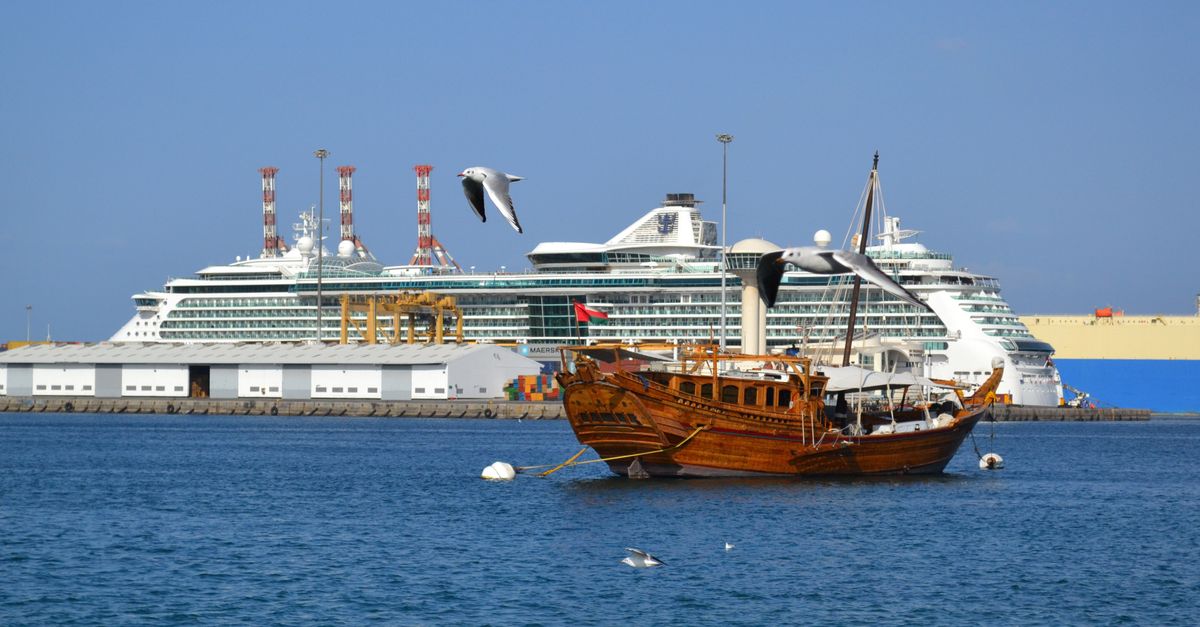
Muscat is the kind of city that surprises first-time visitors — not with the vertical spectacle of Dubai or the ancient chaos of Cairo, but with a quieter confidence. Oman's capital spreads across a dramatic coastline backed by the bare limestone Al Hajar mountains, its white-painted low-rise buildings reflecting a decades-old planning law that forbids structures that would break the skyline. What you find here is a genuinely safe, genuinely welcoming Arab city where the Grand Mosque admits all visitors free of charge, the old souk has operated for two centuries without gentrification, and a taxi driver will hand back the excess change you accidentally gave him. Getting the practicalities right before you arrive — visas, currency, transport, the absence of a metro — transforms what can seem like a logistically awkward destination into one of the most rewarding first international trips in the Middle East.
Before You Arrive
Most nationalities can obtain an Oman e-visa before arrival. The official portal is evisa.rop.gov.om — apply directly here and avoid third-party agents who charge two to three times the official fee. The standard single-entry tourist visa costs $20 USD and is valid for 30 days. A multiple-entry visa costs $50 USD and is valid for one year with stays of up to 30 days per visit. Processing typically takes 24-72 hours; apply at least three days before your flight.

Citizens of GCC countries (Saudi Arabia, UAE, Bahrain, Kuwait, Qatar) receive visa-free access on arrival. Citizens of the UK, US, EU countries, Australia, Canada, Japan, and approximately 70 other nationalities can use the e-visa system. A small number of nationalities, including India and Pakistan, are eligible for a visa on arrival at Muscat airport for OMR 6 ($15.60) — check the Royal Oman Police website for the current approved list, as it changes periodically. Citizens of Israel may visit Oman; check current bilateral arrangements before booking. Travel insurance covering medical evacuation is technically required for the e-visa application — budget OMR 2-4 ($5-10) if your existing travel policy needs supplementing.
Currency is the Omani Rial (OMR). One OMR equals approximately $2.60 USD and is pegged to the US dollar, so exchange rates are predictable. Notes come in denominations of 50, 20, 10, 5, and 1 rial, plus 500 and 100 baisa coins (1,000 baisa = 1 OMR). The rial is one of the world's highest-value currencies — an OMR 50 note is worth $130 USD and looks almost identical to smaller denominations, so count your change carefully.
SIM cards are available at the airport from Omantel and Ooredoo. A tourist SIM with 10-15 GB of data costs OMR 3-5 ($8-13). Oman's cellular coverage is excellent in Muscat and along main highways but patchy in mountainous interior areas. Download Maps.me with the Oman offline map as a backup to Google Maps. WhatsApp, Instagram, and most social apps work freely. VoIP calls via WhatsApp are restricted — they may require a VPN, though enforcement varies.
Getting from the Airport
Muscat International Airport (MCT) was fully upgraded in 2018 with a new terminal capable of handling 12 million passengers annually. It sits in the Seeb district, 32 kilometres west of Ruwi (the commercial centre) and 40 kilometres from Muttrah and Old Muscat. Immigration queues are typically 15-40 minutes for e-visa holders; the e-visa lane is faster than the visa-on-arrival queue. Collect your bags and head outside to the official transport zone.

Careem and Yango are both active at Muscat Airport and offer the most transparent pricing. Open the app before you exit the building and request the ride from the arrivals area. Fares to Ruwi cost OMR 4-6 ($10-16), to Muttrah OMR 5-7 ($13-18), and to Qurm OMR 5-7 ($13-18). The journey takes 30-45 minutes depending on traffic. This is the standard option for independent travellers — there is no reason to use a metered taxi when Careem pricing is fixed and visible in advance.
Metered taxis wait in the official taxi queue outside arrivals. The metered fare from the airport to Ruwi typically runs OMR 6-9 ($16-23) depending on the exact destination and traffic. Agree on the fare or confirm the meter will be used before entering — some drivers attempt to quote flat rates higher than the meter would show. Only use taxis from the official stand inside the airport perimeter, not drivers who approach you in the arrivals hall.
Mwasalat Bus Route 1 connects the airport to Ruwi bus station for OMR 0.2 ($0.52) — by far the cheapest option. The bus runs roughly every 30-60 minutes from 6 AM to 10 PM. It is air-conditioned, reliable, and takes 40-55 minutes depending on stops. This route is ideal for solo budget travellers with manageable luggage. It is not practical with large suitcases at peak hours.
Hotel shuttles are operated by larger four-star and five-star properties. If your hotel offers a shuttle, book it in advance through the hotel directly — it is typically free or OMR 5-10 ($13-26), cheaper than a private taxi for a single traveller.
Getting Around the City
Understanding Muscat's geography is the most important practical insight for first-timers. The capital is not a compact walkable city — it is a collection of distinct districts separated by mountain ridges and up to 40 kilometres of highway. Muttrah (the old port and souk), Old Muscat (the palace and historic embassies), Ruwi (the commercial hub), Qurm (beachside residential), and Madinat Qaboos (the upscale diplomatic quarter) are all 10-30 kilometres apart. You need transport for almost every journey.

Careem is the essential app. Download it before arriving. Create an account and add a payment method — it accepts international credit cards without issue. Careem surge pricing is predictable: it peaks during the 12:30-2 PM lunch break and the 6:30-8:30 PM evening rush. Avoid scheduling long trips during these windows. The standard non-surge fare structure makes Careem significantly cheaper than metered taxis for journeys under 15 kilometres.
Mwasalat city buses are the cheapest transport option, covering key corridors at OMR 0.2-0.4 ($0.52-1.04) per journey. The number 1 bus runs Ruwi to Muttrah. The number 2 coastal bus passes Qurm Beach and Al Qurum Natural Park. Frequency is every 20-40 minutes on main routes during the day. Buses stop at 10 PM. Download the Mwasalat Ahlan app for route maps and schedules. Carry small coins — drivers do not always have change.
Car rental makes sense from day two or three if you plan to visit areas outside the city. Economy cars from Europcar, Avis, or local operators at the airport start at OMR 8-15 ($21-39) per day. An international driving permit (IDP) alongside your home driving licence is technically required in Oman — in practice, many hire companies accept a foreign licence alone, but carry an IDP to avoid complications at police checkpoints. Roads are excellent, signage is bilingual (English and Arabic), and driving standards are reasonable by Gulf standards.
Walking is practical only within specific districts. Muttrah Souk and corniche is a compact, walkable area of about one square kilometre. Old Muscat between the palace and Bait Al Zubair Museum is walkable in 15-20 minutes. Both areas have shade and sea breezes that make walking tolerable from October to March. From May to September, walking in Muscat between 9 AM and 5 PM is not recommended — heat exhaustion risk is real even for acclimatised visitors.
Where to Base Yourself
Muttrah is Muscat's most characterful neighbourhood for first-time visitors. The old port district clusters around the corniche waterfront and the souk, with whitewashed buildings against the black Al Hajar mountains. Staying in Muttrah means the souk, the fish market, and the waterfront are all walkable. Guesthouses and smaller hotels here run OMR 18-35 ($47-91) per night. The neighbourhood is slightly worn — more working harbour than polished tourist zone — but this is precisely what makes it interesting. The Muttrah Fish Market at 6 AM is one of the most atmospheric scenes in the Gulf.

Ruwi is the budget traveller's practical base. Muscat's commercial and business district, Ruwi is centred on Ruwi High Street and the adjacent Clock Tower roundabout. The neighbourhood is dense with Indian, Pakistani, and Bangladeshi restaurants serving some of Muscat's cheapest food, and is well-connected by bus to other districts. Accommodation clusters around OMR 15-28 ($39-73) per night. Ruwi is not glamorous — it looks and feels like a South Asian commercial district transplanted to the Arabian Peninsula — but its utility for budget travellers is unmatched. ATMs are plentiful, pharmacies are on every corner, and supermarkets stay open until midnight.
Qurm and Madinat Qaboos form Muscat's modern residential and expat hub, running along the beach south of Old Muscat. Hotels here — including most international chains — range from OMR 40-120 ($104-312) per night. The neighbourhood is quieter, greener, and more spacious than Ruwi, with Al Qurum Natural Park (Oman's first park), Qurm Beach, and the Royal Opera House nearby. For first-time visitors prioritising comfort and modern facilities over local atmosphere, the chain hotels of Qurm are the most predictable choice. The Royal Opera House Muscat, which stages world-class performances from October to April, is walking distance from the Qurm hotels.
Local Culture and Etiquette
Oman is among the most socially relaxed countries in the Arabian Peninsula — more liberal than Saudi Arabia, comparable to Bahrain, and in some respects more welcoming to non-Muslim visitors than the UAE. That said, Muscat is still a conservative Muslim city and the etiquette expectations are genuine rather than performative.

Dress conservatively away from beach and hotel pool areas. Men in shorts are generally accepted in malls, restaurants, and tourist areas — though long trousers are always appropriate and required at the Grand Mosque. Women should cover shoulders and knees in public areas outside the beach. A light linen shirt and loose trousers are comfortable in the heat and appropriate everywhere. At the Sultan Qaboos Grand Mosque, women must additionally cover their hair — a loose scarf brought specifically for the visit is the standard approach. Free abayas are provided at the mosque entrance.
During Ramadan (dates shift annually by the Islamic calendar), eating, drinking, and smoking in public during daylight hours is prohibited for everyone, including non-Muslims. Restaurants operate with covered entrances or serve food in closed rooms. Hotels provide screened dining areas for non-fasting guests. The atmosphere after sunset is warm and communal — iftar meals are generous and the public mood is festive. If visiting during Ramadan, embrace the evening culture; the experience is genuinely rewarding.
Tipping in Muscat follows Gulf norms. Restaurant service charges of 5-10% are often included in bills at tourist-facing establishments — check before adding extra. Where service is not included, 10% is standard at sit-down restaurants. Taxi and Careem drivers do not expect tips but appreciate rounding up to the nearest 0.5 OMR. Hotel porters expect OMR 0.5-1 per bag.
Alcohol is served in licensed hotel bars and restaurant venues only. You cannot buy alcohol in supermarkets, off-licences (which exist only at one government-run store for residents with a permit), or in any venue without a liquor licence. This is not burdensome — most budget restaurants in Ruwi and Muttrah are unlicensed, which means meals are alcohol-free. If you want a drink, budget for a licensed hotel bar: OMR 3-6 ($8-16) for a beer or glass of wine.
Photography requires sensitivity. Omani people, particularly women in traditional dress, often decline to be photographed and the request can cause offence. Government buildings, military installations, and the palace area should not be photographed. Landscapes, architecture, the souk, and public street scenes are generally fine. Always ask before pointing a camera at a person's face. The Grand Mosque interior is photography-permitted except during prayer times.
Common Mistakes to Avoid
Trying to walk between major attractions in summer heat. Muscat in July and August reaches 46°C by midday, and the humidity near the corniche makes it feel hotter. First-timers who assume they can walk from the souk to Old Muscat (4 kilometres through open sun with no shade) often experience genuine heat-related distress. Use Careem for journeys over 500 metres between 9 AM and 5 PM from May through September. The fare is OMR 1.5-3 — never worth risking heat exhaustion to save.
Assuming you can buy alcohol anywhere. Supermarkets in Muscat do not sell alcohol. Off-licences for residents exist (Muscat Duty Free, the Qurum government liquor store) but require an Omani resident permit to purchase. As a tourist, your only options are hotel bars, hotel restaurants with liquor licences, and the airport duty free. Budget and plan accordingly. Attempting to bring large quantities of alcohol into the country is illegal and border checks at the airport do scan luggage.
Visiting the Grand Mosque on a Friday. Non-Muslim visitors are welcome Saturday through Thursday, 8 AM to 11 AM only. On Fridays, the mosque is closed to non-Muslim visitors entirely. This is the single most common planning error for first-timers — arriving at the mosque entrance on a Friday morning to find it inaccessible wastes a full day. Add this to your itinerary planning as a fixed constraint.
Not bargaining in the souk — or bargaining too aggressively. Muttrah Souk is a negotiating environment, but Omani vendors are not the hard-sell merchants of some other souks. The expected approach is a polite counter-offer of 10-20% below the asking price, delivered without aggression. Walking away with a frustrated expression is considered rude. Accept that you will sometimes pay slightly over the local price — this is normal for tourists everywhere and the difference is usually OMR 0.5-2, not worth the social discomfort of hard bargaining.
Underestimating driving distances for day trips. Wahiba Sands (the Sharqiyah desert) is 250 kilometres from Muscat — a two-hour drive each way on good highways. Wadi Shab is 140 kilometres. Nizwa is 165 kilometres. These are all perfectly feasible as day trips but require a full day and an early start (leave by 7 AM). Travellers who assume these are 45-minute jaunts end up rushing the experience or turning back early. Rent a car with a full tank of petrol the night before a day trip so you can leave at dawn without delay.
Missing the Muttrah Fish Market by sleeping in. The market operates from approximately 5:30 AM to 1 PM and is at its most spectacular and active between 6 and 8 AM, when the night's catch arrives and the trading is at full volume. By 10 AM the best fish is gone and the atmosphere has subsided. Set an alarm. The thirty-minute visit is one of the most memorable experiences in Muscat, available to anyone who shows up early enough.
Leaving Oman without visiting anything outside Muscat. The capital is an excellent destination but it is only a fraction of what Oman offers. Wadi Bani Khalid, the Wahiba Sands, the walled city of Nizwa, Jebel Akhdar's rose gardens, and Wadi Shab's turquoise swimming pools are all within three hours of Muscat. Even a single day trip to one of these destinations fundamentally changes how you understand the country. Allocate at least one full day to leave the capital.