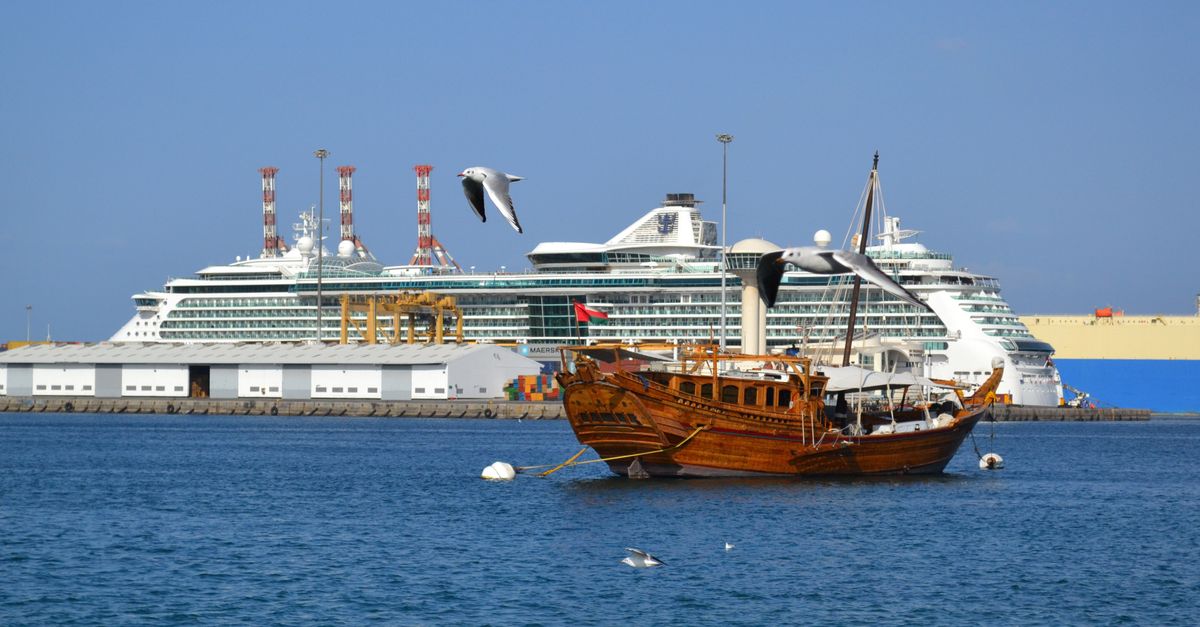
Muscat is the Arabian Peninsula's most understated capital — a city that chose preservation over Dubai-style development. White buildings are mandated by law, the Sultan Qaboos Grand Mosque is genuinely breathtaking, and the wadis and fjords surrounding the city offer natural scenery that rivals Norway. Three days covers the cultural sights, coastal beauty, and the emerging food scene of Oman's capital.

Grand Mosque, Muttrah Souq & Corniche
Morning (8:00 AM) — Sultan Qaboos Grand Mosque: One of the world's most beautiful modern mosques (free, open 8-11 AM Sat-Thu, modest dress required). The main prayer hall holds the world's second-largest hand-woven carpet (4,263 square meters) and a Swarovski crystal chandelier. The white marble architecture and peaceful gardens are stunning. Allow 1.5 hours.
Midday — Muttrah Souq: Oman's oldest marketplace winds through narrow lanes selling frankincense (OMR 2-10), silver khanjar daggers (OMR 15-100), textiles, and antiques. Bargain firmly but respectfully. The souq opens onto the Muttrah Corniche — a scenic waterfront promenade with dhow boats and mountain views.
Afternoon — Royal Opera House: The stunning modern opera house (guided tours OMR 3, closed during performances) showcases Omani and international culture. The marble interiors and Islamic geometric designs are world-class. Check the schedule for evening performances (OMR 10-50).
Evening — Al Bustan or Shatti Al Qurum: Dinner at Kargeen Caffe (OMR 3-8/dish) — set in a garden courtyard with Omani and international dishes. The atmosphere under lanterns and palm trees is peak Muscat. Alternatively, the fish restaurants along the Corniche serve fresh catch at OMR 5-12.
Wadi Shab & Coastal Beauty
Full Day — Wadi Shab: Drive 1.5 hours southeast to one of Oman's most spectacular wadis (free entry, parking OMR 1). A boat crossing (OMR 1) and 45-minute hike through a canyon reach turquoise swimming pools fed by waterfalls. The final waterfall requires swimming through a narrow gap in the rock. Bring water shoes and swimwear. Start early — the canyon gets hot by noon.
Alternative — Bimmah Sinkhole: En route to Wadi Shab, stop at this stunning limestone sinkhole (free) filled with turquoise water. Swimming is allowed. The formation is 40 meters wide and 20 meters deep — a geological oddity that's become an Instagram sensation.
Evening — Return via Sur: The coastal town of Sur has a dhow-building yard where traditional boats are still constructed by hand (free to watch). The lighthouse and corniche offer sunset views. Return to Muscat by evening.
Forts, Museums & Departure
Morning — Al Jalali & Al Mirani Forts: The twin Portuguese-era forts guard Muscat's harbor entrance. Al Jalali (exterior only — it's a museum by appointment) and Al Mirani (military, closed) are best viewed from the waterfront. The old Muscat gate between them leads to the Sultan's Al Alam Palace (exterior only — ornate gold and blue facade).
Midday — National Museum: Oman's modern museum (OMR 5) covers the country's history from prehistoric times through the maritime empire to modern nation-building. The shipbuilding and navigation galleries reflect Oman's seafaring heritage. Allow 2 hours.
Afternoon — Qurum Beach & Al Mouj: The city's best public beach with clean sand and swimming. The nearby Al Mouj development (The Wave) has waterfront restaurants and a marina — Muscat's most modern dining area.

Getting Around Muscat
Muscat is a fundamentally car-dependent city — a long, narrow ribbon of urban development stretching 40 kilometres along the Gulf of Oman between the Hajar Mountains and the coast. There is no Metro and bus services are infrequent and poorly mapped for tourists. Understanding the city's geography and transport options before arrival saves significant time and frustration, particularly in summer heat when walking between attractions is genuinely unpleasant.
The city is organised into distinct districts separated by stretches of road: Muttrah (the old port and souq), Old Muscat (the historic core with the forts and palace), Ruwi (the commercial CBD), Qurum (residential with beach), Shatti Al Qurum (restaurants and hotels), and Al Khuwair (government buildings and the Grand Mosque). The distance from Muttrah to the Grand Mosque is roughly 12 kilometres. Between Old Muscat and Al Mouj Marina it's 20 kilometres. Factor these distances into your daily planning.
The most practical transport option for independent travellers is a rental car (OMR 15-25 per day from Hertz, Avis, or Budget at Muscat International Airport). Roads are excellent, signage is in both Arabic and English, and driving customs are broadly similar to Europe or the Gulf — calm, orderly, and with strict speed enforcement by radar cameras. The only real challenge is that Muscat's street addressing system is not yet fully digitised: Google Maps handles the major routes well but struggles with small lanes in older districts. Download maps offline before arriving.
For those who prefer not to drive, Uber does operate in Muscat (unlike most of Oman) and is the recommended option for point-to-point travel. A journey from Muttrah Souq to the Grand Mosque costs approximately OMR 3-5. White taxis are available at hotels and the airport — negotiate the fare before entering, as meters are not universally used. The standard rate from the airport to Shatti Al Qurum hotels is OMR 6-8. Otaxi, the local alternative to Uber, sometimes offers better fares within Muscat's downtown districts and is worth downloading as a backup app.
The Muttrah Corniche is the one area of Muscat that rewards walking: a flat 5-kilometre waterfront promenade connecting the souq to the fish market and old city, lined with benches, fishermen, and dhow boats. Walk it in the early morning (before 9 AM) or in the evening after 5 PM when the light turns golden and temperatures drop to bearable levels. The stretch between Muttrah and the Al Jalali Fort is among the most scenic seaside walks in the Middle East and costs nothing beyond comfortable shoes.
Practical Tips
Oman is the Arabian Peninsula's most welcoming and culturally rich destination. Unlike Dubai's spectacle, Oman emphasizes heritage, nature, and genuine hospitality. The Omani rial (OMR) is one of the world's strongest currencies — 1 OMR = roughly $2.60. Budget OMR 40-80/day for mid-range travel. ATMs are widely available. Credit cards work at hotels and larger restaurants.
Oman's dress code is conservative but not oppressive. Cover shoulders and knees in public. At mosques, women must cover hair and wear ankle-length clothing — abayas are provided at major mosques. Men should wear long trousers. Despite these norms, Omanis are relaxed and hospitable — visitors who dress respectfully receive extraordinary kindness in return.
A rental car (OMR 15-25/day) is essential for exploring Oman beyond Muscat. The roads are excellent, driving is on the right, and the scenery is spectacular. Wadi adventures require a 4WD during wet periods. Fill your tank at every opportunity — gas stations are sparse in rural areas. International driving licenses are required. Uber doesn't operate in Oman — use local taxi apps or negotiate with drivers.
Best Times to Visit & Budgeting
Timing your visit matters enormously for both weather and crowds. Peak tourist seasons bring higher prices, sold-out accommodations, and crowded attractions. Shoulder seasons (the weeks just before and after peak) often deliver the best balance — good weather, manageable crowds, and reasonable prices. Off-season travel is the cheapest but check for monsoon rains, extreme heat, or seasonal closures.
Budget planning for three days should account for accommodation (30-40% of total), food (20-25%), transport (15-20%), activities and entrance fees (15-20%), and a contingency buffer (10%). The biggest savings come from choosing accommodations wisely — a well-located mid-range hotel that eliminates taxi costs can be cheaper than a budget hotel in a remote area plus daily transport.
Travel insurance is non-negotiable. A single hospital visit in most Asian countries costs more than a year of comprehensive travel insurance (0-80 for a 2-week trip). Ensure your policy covers emergency medical evacuation — this is the expensive scenario that justifies the premium. Download your policy documents to your phone for offline access.
Currency exchange tips: ATMs generally offer better rates than airport exchange counters. Withdraw larger amounts less frequently to minimize per-transaction fees. Carry some US dollars (0-100) as universal backup — they're accepted in emergencies across most of Asia. Notify your bank of travel plans to prevent card blocks. Use a travel-specific card (Wise, Revolut) for the best exchange rates and lowest fees.
Download essential apps before arriving: Google Maps (with offline maps for your destination), Google Translate (with offline language packs), the local ride-hailing app (Grab for Southeast Asia, DiDi for China, Uber/Ola for India), and your accommodation booking confirmation. A portable battery pack (10,000-20,000 mAh) keeps your phone alive through a full day of navigation, photography, and ride-hailing.