Krabi is not naturally a budget destination — the dramatic limestone karsts, turquoise Andaman waters, and cinematic beaches attract a premium-paying crowd, and the infrastructure around Ao Nang has priced itself accordingly. But Krabi rewards the traveler who knows where to look. The local market scene is outstanding and dirt cheap, ferry logistics are genuinely affordable, the best beach on the Andaman coast (Railay) costs only a ฿100 longtail boat ride to reach, and the town of Krabi itself — five kilometres from Ao Nang — operates on an entirely different, far more local price register. This guide shows you how to do Krabi properly for a fraction of the standard tourist budget.
Getting There on a Budget
The cheapest way to reach Krabi from Bangkok is by overnight bus, operated by companies including Sombat Tour and Transport Co. Departures from Bangkok's Southern Bus Terminal (Mo Chit) or Ekkamai Eastern Bus Terminal run nightly at approximately 6–8 PM, arriving in Krabi Town 10–12 hours later. Fares for VIP air-conditioned overnight buses run ฿650–850 — a significant saving over any flight, and the overnight timing means you also save on one night's accommodation.

Budget flights are the fastest option. AirAsia, Nok Air, and Thai Lion Air operate Bangkok (Don Mueang) to Krabi (KBV) routes with promotional fares as low as ฿599–899 one way when booked 3–6 weeks in advance. Full-service Thai Airways and Bangkok Airways charge ฿1,500–3,000 for the same route. Avoid the reflex of booking through Bangkok Airways thinking it implies quality on this route — the budget carriers serve the same Krabi International Airport and the experience is identical. Check Google Flights and set a price alert 45–60 days before your travel dates for the best deals.
From Krabi Airport to Ao Nang (the main tourist hub), the airport minibus charges ฿150–200 per person and drops passengers at the Ao Nang main road. This is consistently the best value for airport transfers — avoid private taxis at the arrivals exit which quote ฿500–800 for the same journey. For Krabi Town (5 km closer to the airport), songthaew (shared trucks) run for around ฿80–100. Confirm the fare and the drop point before boarding any vehicle at Krabi Airport.
From Phuket, the best budget connection is the shared minivan or bus service via the Southern Bus Terminal in Phuket Town. Minivans run several times daily and cost ฿200–250 for the 2.5–3 hour journey. Ferries between Phuket and Krabi (Rassada Pier to Krabi Pier, high season only) cost around ฿350–450 and offer spectacular Andaman views — a more memorable if slower option for those not in a hurry.
Budget Accommodation
Budget accommodation clusters in three zones: Krabi Town (cheapest, most local), Ao Nang (most convenient, mid-range), and the Railay / Tonsai area (remote but beautiful, budget options exist at Tonsai Beach). For pure budget travel, Krabi Town is the base of choice.

The Porch Hostel (Krabi Town, near Chao Fa Pier) is consistently the top-rated budget property in Krabi — a boutique hostel in a converted shophouse with dorm beds from ฿300–380 per night. The eight-bed dorms are well-designed with curtained pods, individual lights, and charging points. Common areas are social without being loud, the free breakfast is a genuine meal, and the owners are a reliable source of ferry schedules and island day trip advice. Private rooms with shared bathroom start at ฿850.
Sleep Easy Hostel (Krabi Town) offers the city's most affordable dorm beds at ฿250–300 per night in clean six-bed rooms with lockers and good showers. The location is less scenic than The Porch but 10 minutes closer to the bus station, making it convenient for early morning departures. The staff organise group island-hopping excursions that reduce per-person costs by 30–40% versus individual bookings.
Highland Hostel (Ao Nang, 5 minutes from the beach) is the best budget option if you specifically need to be in Ao Nang rather than Krabi Town. Dorm beds run ฿380–450, reflecting the 20–30% premium that Ao Nang commands over the town. The location within walking distance of the beachfront justifies the small price increase for those who want to stumble to the beach each morning.
Tonsai Bay Resort bungalows (Tonsai Beach, accessible only by longtail boat) cater to the rock-climbing and backpacker crowd who want to be remote. Basic fan bungalows start at ฿400–600 per night, and the trade-off is total isolation — no road access, generators power the beach at night, and facilities are basic. If your idea of Krabi is waking up on a jungle-backed beach with no cars in earshot, this is the pick regardless of price.
Eating Cheaply Like a Local
The gap between tourist-strip food prices and local market prices in Krabi is wider than almost anywhere else in Thailand. Ao Nang restaurant menus routinely charge ฿200–350 for pad thai or a green curry; the same dishes cost ฿50–80 five kilometres away in Krabi Town. The solution is knowing where the local eating is.

Krabi Town Morning Market (Maharaj Road, daily 6–10 AM) is the most vibrant and cheapest food experience in the province. Vendors sell rice porridge (jok) with pork and century egg for ฿40, fried dough sticks (pa thong ko) with sweetened condensed milk for ฿20, steamed buns for ฿10–15, and freshly pressed sugarcane juice for ฿20. The market is used entirely by local families and migrant workers — no tourist menus, no tourist pricing.
Krabi Town Night Market (Khong Kha Road / Maharaj Road, daily from 5 PM) is the evening equivalent. It expands significantly on Fridays and weekends into a full walking street format. Look for the khao gaeng stalls — pre-cooked curry and stir-fry dishes served over rice — where a heaped plate costs ฿50–70. The southern Thai specialties here are exceptional: gaeng massaman (rich, slow-cooked beef curry with potatoes and peanuts, ฿60–80), khua kling (dry, intensely spiced minced meat stir-fry, ฿60–70), and khao yam (cold rice salad with toasted coconut, dried shrimp, and herbs, ฿40–60).
Krabi Boat Noodles (near the pier, Chao Fa Road) serves the authentic central-Thai small bowl noodle soup that has become one of Thailand's most popular cheap meals. Small bowls are ฿25–30 each; order 4–5 for a full meal. The broth — dark, complex, and slightly funky from pig's blood and five-spice — is unlike anything available at tourist restaurants.
Ao Nang options on a budget: Even in tourist-heavy Ao Nang, the 7-Eleven food counter (rice boxes ฿35–45), the small local coffee shops one block back from the main drag (Thai iced coffee oliang, ฿25–35), and the lunch stalls that set up on back streets from 11 AM to 2 PM (lunch sets ฿70–100) offer relief from restaurant prices. Ask your hostel staff for the nearest khao gaeng stall — every local in Ao Nang knows one.
Self-catering: Fresh markets in Krabi Town sell tropical fruit at extraordinary prices — a bag of rambutan, mangosteen, or pineapple for ฿20–40 — and the Tesco Lotus on Maharaj Road stocks local dairy, bread, and snacks at supermarket prices. Bringing lunch supplies for a beach or island day saves ฿200–400 versus buying from beach vendors.
Free and Low-Cost Attractions
Krabi's landscape does most of the work for free — the jaw-dropping scenery is on every corner, accessible by short walks, cheap longtail boats, and a healthy willingness to get your feet wet.

Railay Beach is almost certainly Thailand's most beautiful beach and it costs just ฿100 each way to reach by shared longtail boat from Ao Nang pier (10 minutes). There is no road access — the peninsula is surrounded by limestone cliffs — so the beach remains car-free and remarkably atmospheric. Spend the day swimming in turquoise water, exploring the short trail to the eastern beach's famous "Princess Lagoon," and watching rock climbers work the cliff faces at sunset. Bring your own food and water to avoid the inflated on-beach restaurant prices.
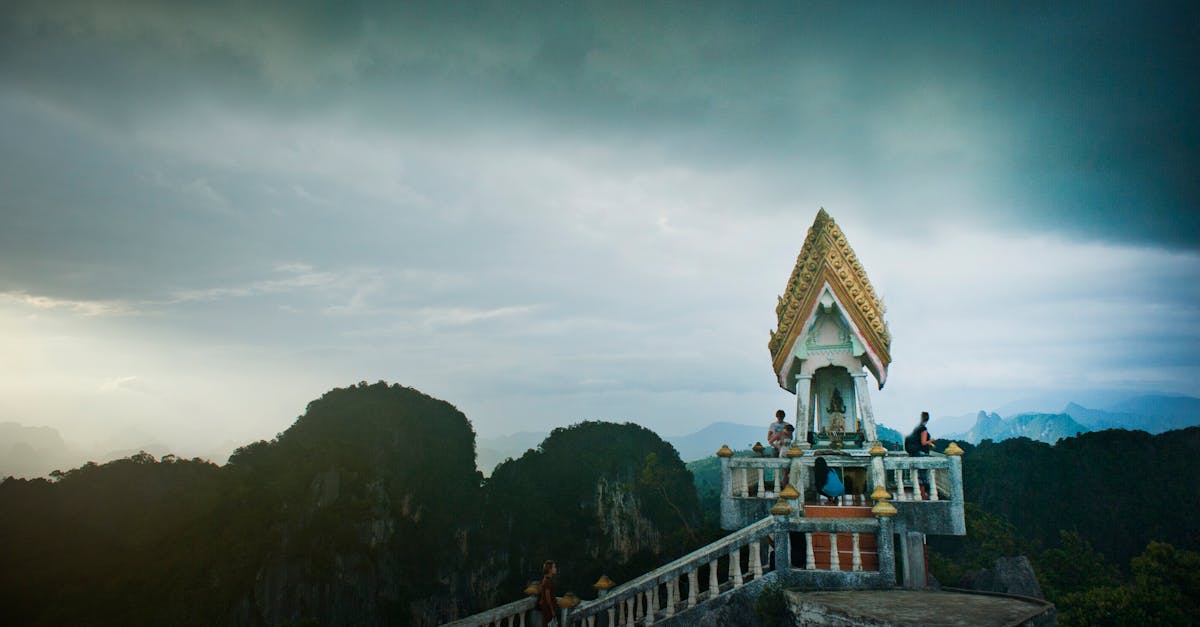
Tiger Cave Temple (Wat Tham Suea) sits at the top of 1,237 stairs climbing a dramatic karst peak 8 km from Krabi Town. Entry is free, the climb takes 30–45 minutes, and the 360-degree view from the summit — jungle, karst peaks, mangroves, and the distant Andaman Sea — is among the finest in southern Thailand. Start before 8 AM to avoid the worst heat. Dress modestly. Songthaew to the temple from Krabi Town costs ฿80–100.
Kayaking through Ao Thalane mangroves can be arranged independently for far less than the tour price. Rent a single kayak at Ao Thalane pier for ฿200–300 per day (versus ฿1,200–1,800 for a guided tour) and explore the mangrove channels at your own pace. The pier is accessible by songthaew from Krabi Town for ฿60–80.
Thung Teao Forest Natural Park (Crystal Pool) charges a modest ฿200 entry fee for access to a series of natural swimming pools fed by underground springs — the water is unnervingly turquoise and genuinely cool and clear. The short forest walk to reach the main pool is beautiful. The park is 50 km from Krabi Town; a shared songthaew tour departs from Chao Fa Road in Krabi Town for around ฿200 per person. Worth the trip if you have an extra day.
Getting Around on a Budget
Krabi Town and Ao Nang are connected by songthaew (shared red pickup trucks) running a fixed route along Highway 4 for ฿40–50 per person. They run regularly during daylight hours and stop running around 6–7 PM. Flag one down on the main road, and confirm the destination before boarding. This single route handles the majority of budget traveller transport needs in the province.

Within Krabi Town, everything of interest — the pier, the night market, the morning market, most guesthouses, bus and minivan terminals — is within comfortable walking distance (1–2 km) for those staying near the town center. Bicycle rental is available from a few guesthouses for ฿80–120 per day and is a pleasant way to explore the flat town area.
Longtail boats are the defining transport mode of the Krabi coast. The shared longtail from Ao Nang to Railay Beach costs ฿100 each way and runs whenever enough passengers have gathered (usually 5–10 minutes at most times of day). The shared boat between Railay and Tonsai costs ฿100. Chartered longtails are dramatically more expensive (฿1,500–2,000 for a half-day); stick to shared services for all standard routes.
For exploring the hinterland — Tiger Cave Temple, Thung Teao Forest, and the hot springs at Hat Yao — motorbike rental from Krabi Town shops costs ฿200–250 per day for a standard automatic scooter. The roads outside of Ao Nang and Krabi Town are quiet and pleasant, making this a genuinely good way to explore the province. A Grab Car from Krabi Town to Ao Nang typically costs ฿150–200 and is a fair option for late-night journeys after the songthaews stop running.
Money-Saving Tips
Base yourself in Krabi Town, not Ao Nang. The price difference is 25–40% on accommodation, 50–70% on food, and significant on transport. The songthaew to Ao Nang and the pier costs ฿40–50 and takes 20 minutes. Spending five nights in Krabi Town versus Ao Nang easily saves ฿1,500–3,000 on accommodation alone, plus thousands more on daily food and drink.
Do the Four Islands or island tours from Krabi Town pier. All the same boats, same islands, same snorkeling gear — ฿500–600 per person from the town pier versus ฿1,200–1,500 from Ao Nang tour counters. The additional ฿200–300 that Ao Nang tours charge covers the operator's retail margin and your guide's commission. Go direct to the source.
Snorkel gear rental saves money vs. tour packages. Renting a mask and snorkel from a dive shop in Krabi Town costs ฿50–80 per day. Bringing your own on the shared longtail to Railay or on the Four Islands boat means you avoid the overpriced gear bundled into tour packages — and you can use it multiple days.
Book bus tickets directly with operators. Sombat Tour and Transport Co. have direct booking counters near Krabi Town bus station. Buying through guesthouses or tour agencies adds ฿50–150 per person in commission. For the overnight bus back to Bangkok, the saving on a two-person trip covers a night's accommodation.
Eat at the night market every day. A ฿200 meal budget per day is comfortable if you use the Krabi Town Night Market (Monday to Sunday) and the Friday–Sunday walking street market. Western breakfasts at Ao Nang cafes can cost ฿150–250 for a mediocre eggs-and-toast; the same money at the morning market buys multiple excellent local dishes and leaves change.
Visit in low season (May–October) for maximum value. Accommodation prices fall 30–50%, tour prices become negotiable, and boat schedules remain largely intact except during peak storms. June and July see the most rain but also the most dramatic skies; the mangrove kayaking and Tiger Cave Temple are excellent year-round regardless of weather.