Krabi Province delivers one of Southeast Asia's most arresting first impressions: limestone karst towers rising from a turquoise sea, white-sand beaches backed by jungle, and a coastline so photogenic it has appeared in countless films and travel campaigns without ever requiring enhancement. For first-time visitors, the landscape alone is worth the trip. But Krabi has a learning curve — navigating its disconnected beaches, understanding the boat logistics between islands and peninsulas, choosing the right base, and avoiding the traps of overpriced tours and tourist-strip restaurants all make a real difference to your experience. This guide covers everything you need to arrive informed, move confidently, and leave having experienced the province properly.
Before You Arrive
Visa and entry requirements: Thailand grants 30-day visa-free entry to citizens of more than 60 countries, including the UK, USA, all EU member states, Australia, Canada, and New Zealand. From 2024, Thailand expanded its visa exemption scheme significantly. Present your passport, proof of onward travel, and evidence of adequate funds (฿10,000 per person) at the immigration counter on arrival — no advance application is needed for exempt nationalities. If you plan to stay longer than 30 days, a 60-day tourist visa can be applied for at Thai embassies or consulates in your home country before departure. Extensions of 30 days are available at Krabi's immigration office (Hat Yao, south of Krabi Town) for ฿1,900.

Currency: Thailand uses the Thai Baht (฿). Approximate exchange rates: ฿35 = USD 1, ฿44 = EUR 1, ฿55 = GBP 1. Cash is essential in Krabi — longtail boat captains, market vendors, small guesthouses, and most local restaurants only accept cash. Carry ฿500–1,500 in smaller denominations at all times. Thai ATMs charge foreign cardholders a ฿220–250 fee per transaction; minimise this by withdrawing larger amounts (฿5,000–10,000) per visit. Exchange cash at licensed exchange booths in Krabi Town or Ao Nang for rates meaningfully better than airport or hotel desk rates — SuperRich operates across Thailand and is a reliable benchmark for fair rates.
SIM card: Purchase a Thai tourist SIM at Krabi Airport on arrival, or at the AIS/DTAC/True Move shops in Ao Nang or Krabi Town within your first hour. A 30-day unlimited data package costs ฿299–399 — extraordinary value that includes calls and works across all four provinces of southern Thailand's Andaman coast. This is non-negotiable for independent travel in Krabi: you need Google Maps for songthaew navigation, Grab for late-night transport, and WhatsApp to coordinate with boat captains and guesthouses that communicate only via line or message. Roaming on a foreign SIM for a single day often costs more than a month of Thai data.
What to pack for Krabi specifically: Reef-safe sunscreen (required at all national marine parks as of 2021, and available locally for ฿150–400 if you forget). A light cotton or linen layer for temple visits. Sandals that can get wet — you will wade to longtail boats regularly. A dry bag for electronics on boat trips. Mosquito repellent for jungle walks and mangrove kayaking, particularly at dawn and dusk.
Getting from the Airport
Krabi International Airport (KBV) sits 15 km east of Krabi Town and 30 km from Ao Nang. It is a small regional airport with a straightforward single arrivals hall — you will clear immigration (for international flights) and collect bags within 30–45 minutes of landing.

The best-value transfer to Ao Nang is the airport minibus that departs from outside the arrivals exit when passengers have gathered. Fares are ฿150–200 per person and the journey takes about 40 minutes to Ao Nang's main road. This is operated by several private companies with counters near the exit; all charge similar fares and all are legitimate.
To Krabi Town (closer to the airport), shared songthaews (red pickup trucks) run for ฿80–100 per person. Journey time is approximately 20 minutes. This is the right choice for budget travelers based in the town rather than Ao Nang.
Metered taxis are available at the arrivals exit and cost approximately ฿500–600 to Ao Nang or ฿300–400 to Krabi Town. They are legitimate but represent poor value compared to the minibus for solo or pair travelers. For groups of three or four, the taxi fare split becomes competitive with the minibus.
Private transfer services bookable in advance cost ฿700–1,200 to Ao Nang but are only worth considering for families with multiple bags or arrivals after 9 PM when the minibus service has stopped running. Most guesthouses and hostels in Ao Nang and Krabi Town can arrange a pickup with 24 hours notice for ฿400–600.
Many visitors fly into Phuket (HKT) and connect to Krabi by shared minivan — a 2.5–3 hour journey for ฿200–250 per person. This often makes sense when Phuket has cheaper international fares, and the drive south along the Andaman coast is pleasant. Minivan services depart from Phuket airport's arrivals area throughout the day.
Getting Around
Understanding Krabi's transport geometry is the single most useful thing a first-timer can do. The province is not a single contiguous beach town — it is a collection of disconnected beaches, islands, and peninsulas connected by road (for inland areas) and boat (for coast and islands). Knowing which transport mode goes where eliminates confusion and overpaying.
Songthaew (shared pickup trucks) handle the main overland route between Krabi Town and Ao Nang for ฿40–50 per person. They depart from Maharaj Road in Krabi Town and from the main Ao Nang junction, running roughly every 20–30 minutes during daylight hours (until approximately 6–7 PM). Flag one down on the road or wait at known stops. This is the correct way for budget travelers to commute between the town and the beach area.
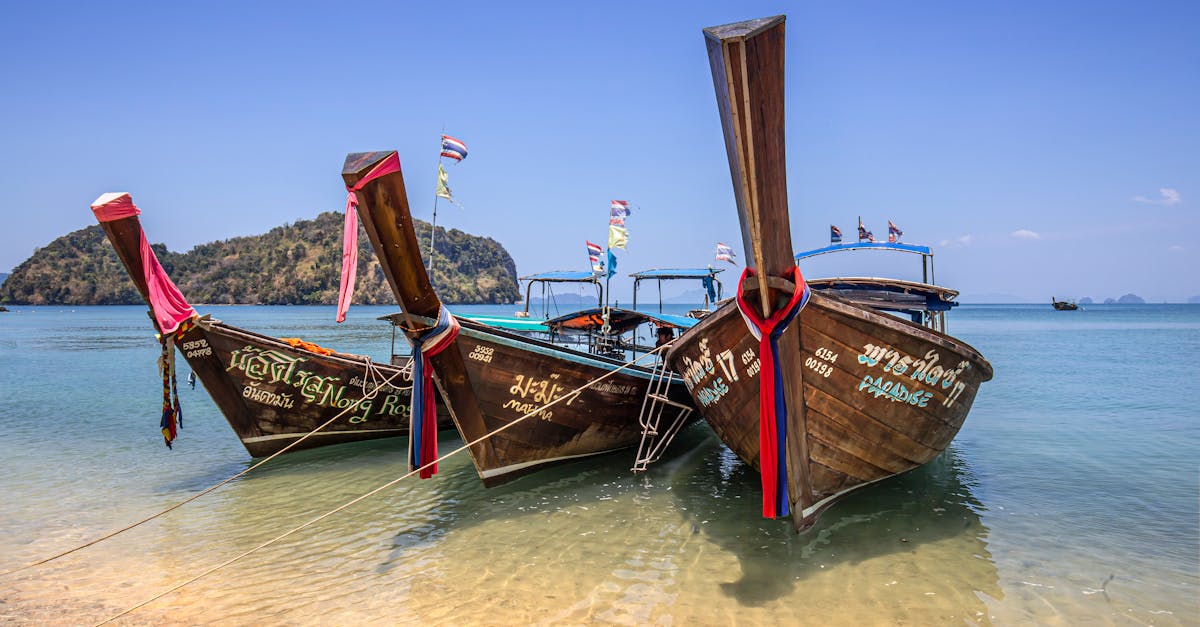
Longtail boats are the definitive Krabi experience and essential for reaching Railay Beach, Tonsai Beach, and many of the islands. The shared longtail from Ao Nang pier to Railay East costs ฿100 per person each way — the boat departs when 8–10 passengers have boarded, usually a wait of 5–15 minutes. Night boats (after 6 PM) charge ฿150 per person. Always confirm whether you're boarding a shared boat (reua ruam) or being pushed toward a charter.
Ferries connect Krabi Town's Chao Fa Pier to Koh Lanta (฿350–400, 2 hours) and to Koh Phi Phi (฿400–450, 90 minutes), with high-season departures usually at 9 AM and 1 PM. These are the cheapest connections to Krabi's most popular island day trips and overnight destinations. Book the day before at pier counters or through your accommodation.
Grab (ride-hailing) works in Krabi Town and Ao Nang and is the recommended option for late-night transport when songthaews have stopped running. A Grab Car from Ao Nang to Krabi Town typically costs ฿150–200 and takes 20–25 minutes. The app requires a Thai SIM with data to function.
Where to Base Yourself
Choosing the right base in Krabi is more consequential than in most Thai destinations, because the province's key attractions are spread across a wide area and poor placement adds hours and hundreds of baht in daily transport costs.

Ao Nang is Krabi's main tourist hub and the right base for most first-time visitors. It is the closest point to Railay Beach (10-minute longtail), has the widest range of accommodation, and gives easy access to the island tours that depart from the pier each morning. The beach at Ao Nang itself is pleasant but not spectacular — the real payoff is the convenience and the 10-minute boat ride to Railay. The main road through Ao Nang has restaurants, ATMs, tour agents, pharmacies, dive shops, and everything else a visitor needs. Accommodation ranges from ฿250 dorm beds to ฿5,000 resort rooms; the ฿800–1,500 range offers good mid-budget hotels with pools within 10 minutes' walk of the beach.
Krabi Town is the budget alternative — 5 km inland from the coast, significantly cheaper on accommodation and food, and more authentically Thai in character. The town has its own charm: a riverside location, excellent night markets, a lively local scene, and a boat pier (Chao Fa) for direct ferries to Koh Phi Phi and Koh Lanta without rerouting through Ao Nang. The trade-off is the ฿40–50 songthaew fare and 20-minute journey each time you want the beach. For stays of 4+ nights or visitors primarily interested in islands, Krabi Town is the smarter base.
Railay Beach itself has accommodation in several categories — Railay Bay Resort, The Rayavadee (luxury), and mid-range bungalows — but prices are premium and you must boat in all your supplies and luggage. For a 2–3 night special stay mid-trip, staying on Railay is worth the premium; as a base for exploring the entire province, it is logistically inconvenient.
Koh Lanta (2 hours by ferry from Krabi Town) is the right choice for those who want a calmer, less-touristed island experience for 3–5 days. The island has long beaches, a relaxed pace, and is significantly less busy than Phi Phi or Railay. Budget bungalows start at ฿400–600 on the west coast beaches.
Local Culture and Etiquette
Religious sites: Krabi Province has a significant Muslim population — particularly in Krabi Town — as well as Buddhist temples. Dress modestly when visiting temples (covered shoulders and knees, shoes removed before entering shrine buildings) and when walking through local market areas away from the beach. A light scarf in your bag solves every dress-code situation. At Tiger Cave Temple, the rule is enforced at the base before you start the climb.

Marine parks and coral: The islands around Krabi — Koh Poda, Koh Kai (Chicken Island), the Four Islands group — fall within marine protected areas. Use reef-safe sunscreen only (chemical sunscreens containing oxybenzone and octinoxate are banned and damaging to coral). Do not touch, stand on, or collect coral or marine life. Responsible snorkeling means fins pointed away from the reef at all times. Several boats now conduct briefings before entering snorkeling areas; take these seriously.
Beach and island conduct: Topless sunbathing is technically illegal in Thailand and draws disapproving reactions from Thai locals, even at tourist beaches. Full nudity is never acceptable. Quiet, respectful behaviour is appreciated on longtail boats and at smaller island beaches where local fishing communities live year-round.
Bargaining culture: Prices at market stalls and local shops are generally fair and fixed — do not bargain at food stalls, where margins are already thin and where Thai vendors find aggressive price negotiation disrespectful. Bargaining is appropriate for souvenirs, tailored clothing, and tours where the price is a starting offer. Even there, conduct it with a smile and a tone of friendly negotiation rather than confrontation.
Plastic reduction: Krabi's islands and beaches deal with serious plastic pollution. Bring a reusable water bottle (all accommodation has refill stations or sells large cheap refill jugs) and decline single-use plastic bags. The Thai government has made progress on plastic reduction since 2020 but the problem is ongoing in marine areas. Your individual choices matter in a small marine environment.
Common Mistakes to Avoid
Booking all tours through Ao Nang tour counters. The main drag in Ao Nang is lined with tour agencies selling the same island trips, snorkeling excursions, and speedboat charters. Prices are uniformly inflated by 30–100% compared to negotiating directly at the pier or booking through your hostel. The Four Islands trip from an Ao Nang counter costs ฿1,200–1,500; from Krabi Town pier it is ฿500–600. For a group of two doing three tours, this mistake costs ฿2,000–5,000 over a week.
Staying only in Ao Nang and missing Krabi Town. Many visitors fly in, check in to Ao Nang, spend five days on the beach, and leave without ever seeing the province's excellent local character. The Krabi Town night market, the morning riverside scene, Tiger Cave Temple, and the mangrove boat trip from Ao Thalane all require leaving Ao Nang — and all are among the most rewarding experiences in the province.
Missing Railay Beach because the boat seems complicated. The opposite of the above mistake — some first-timers, unfamiliar with the longtail system, avoid Railay and spend their whole trip on Ao Nang Beach, which is significantly less beautiful. The longtail from Ao Nang pier to Railay East is a 10-minute, ฿100 trip that runs continuously throughout the day. It is the best ฿100 you will spend in Thailand. Do not skip it.
Underestimating monsoon season logistics. If visiting May–October, understand that sea conditions can cancel boat trips on 2–4 days per week during heavy weather periods. Build flexibility into your schedule — do not plan a 3-day trip with every day committed to a specific island tour. Keep one or two free days for weather-delayed activities. When boats are cancelled, Krabi Town's markets, Tiger Cave Temple, and the Crystal Pool at Thung Teao Forest all work perfectly regardless of weather.
Exchanging currency at the airport. Krabi Airport has one exchange booth that offers rates consistently 3–5% below the Ao Nang and Krabi Town street rates. Exchange only ฿500–800 at the airport for immediate transport, then go to the SuperRich or Vasu counters in town for the remainder. On ฿10,000 exchanged, the difference in rates is ฿300–500 — enough for a full market dinner and a boat trip.
Ignoring the SIM card at the airport. Without a local SIM, you lose access to Grab (ride-hailing), Google Maps offline (essential for navigation on back roads), real-time ferry schedule checking, and WhatsApp communication with local boat captains and accommodation. First-timers who skip the airport SIM and rely on hostel Wi-Fi spend their first day piecing together logistics that a ฿350 SIM card would have resolved immediately. Buy it on arrival.
Wearing beach clothes to the tiger cave temple and town markets. Krabi Town and several inland attractions are working local communities, not beach zones. Arriving at Tiger Cave Temple in a bikini top and shorts (too short) will result in being turned away at the gate. Ao Nang's beach-resort atmosphere does not extend to the province's interior — keep a light cover-up and a pair of longer shorts in your day bag at all times.