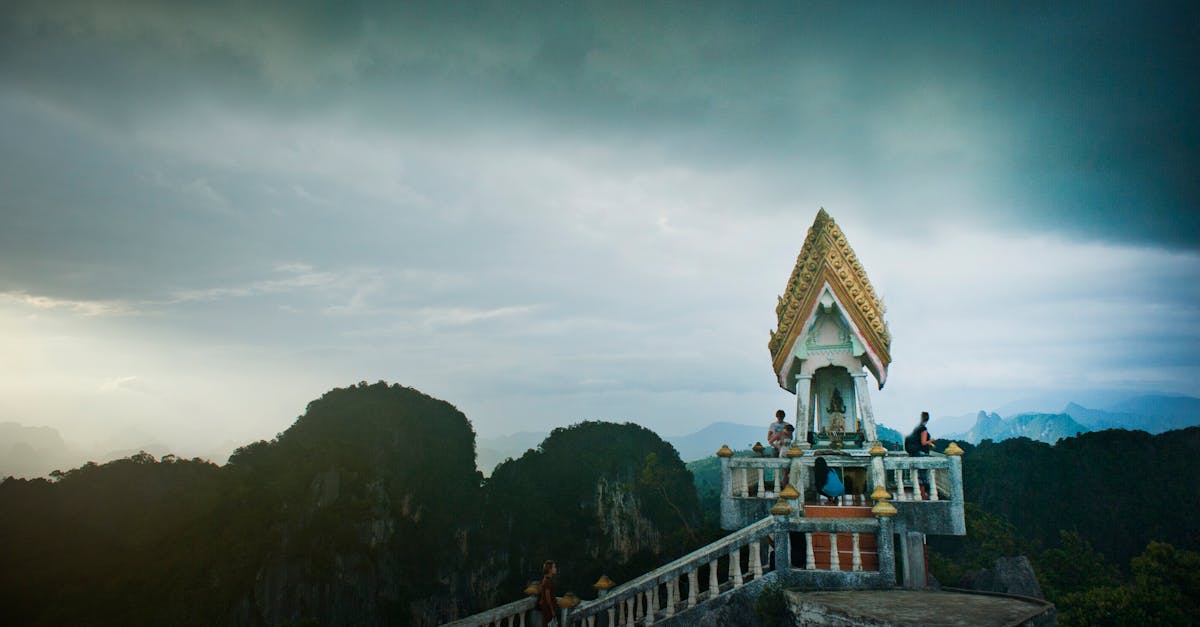
Krabi is often treated as a staging post for the Phi Phi Islands and Railay Beach, and it certainly excels at providing access to some of Thailand's finest island scenery. But Krabi Town itself, and the mainland coastal areas around it, represent a genuinely interesting Thai provincial city that has maintained its character despite 30 years of tourism development. The mangrove river system, the inland cave temples, the traditional Muslim fishing communities of the Klang River, and the extraordinary limestone karst landscape that extends inland from the coast are all more accessible and more rewarding than the standard Phi Phi day trip allows for.
This guide is for travelers who want to understand Krabi Province rather than simply access its islands. It's for those who will eat at the night market rather than the Ao Nang tourist strip, who will take the local ferry rather than the speedboat, and who will find that the most extraordinary snorkeling in Krabi Province is not at Phi Phi Don but at a small uninhabited island that the standard tours don't go to because it requires 20 minutes more boat time. The reward for this effort is the Thailand that existed before mass tourism arrived.
Ten places in Krabi Province where the genuine landscape, culture, and marine environment come through without the resort packaging.

1. Krabi Town Night Market — The City's Real Evening
Krabi Town's night market (Talad Kaset) on Friday, Saturday, and Sunday evenings on Khong Kha Road by the river is one of Thailand's finest provincial night markets — a genuine local social event that happens to accommodate visitors rather than a tourist market that grudgingly acknowledges locals. The range of southern Thai food available at a single venue is remarkable: khao yam (the southern herb rice salad), massaman curry, kanom jeen with fish curry sauce, fresh grilled seafood from the Andaman catch, and the extraordinary southern Thai desserts (khanom krok, khanom buang) that are specific to this cultural zone and unavailable in tourist restaurants.
The prices at Krabi Town night market are precisely what you would pay in any Thai provincial town for this quality of food: 40–100 THB per dish, 30 THB for a fresh juice, 20 THB for a bag of sticky rice. The evening begins at around 5pm and peaks at 7–9pm when local families from the surrounding town and villages converge for dinner. The Khong Kha riverside setting, with the limestone karst towers visible across the mangroves in the evening light, is one of the finest dinner backdrops in Thailand at any price point.
Krabi Town is 45km from Ao Nang. The night market is on Khong Kha Road along the Krabi River, in the heart of the old town. Songthaew (shared taxi) from Ao Nang costs 40–50 THB and takes 40 minutes. The night market is Fridays, Saturdays, and Sundays 5pm–10pm. Several excellent local restaurants operate year-round in the old town on Khong Kha Road — particularly Ao Nang's sister, the locally-run cafe-restaurants along Maharaj Road that serve Krabi's best khao yam (the southern herb rice salad) at 60–80 THB.
Krabi Town's location at the confluence of the Krabi and Isra rivers, with the mangrove forest visible from the town piers and the dramatic limestone karst skyline behind it, is an extraordinary urban setting that most visitors drive through without stopping. The morning walk along Khong Kha Road at 6am, when the fishing boats are unloading and the town is waking up, reveals a riverfront town of genuine character — mango trees overhanging the river walk, the smell of fresh fish and frangipani, elderly residents doing morning exercises on the pier facing the karst mountains.
2. Tham Seua (Tiger Cave Temple) — The 1,237-Step Mountain
Tiger Cave Temple, 3km east of Krabi Town, is famous for the 1,237 steps that lead to its summit — where a large golden Buddha image sits on top of a 600-meter limestone karst with a 360-degree view over the limestone landscape of Krabi Province that is, without overstatement, one of the finest views in Thailand. The view takes in the Andaman Sea, the offshore islands, the mangrove river systems, and the extraordinary inland karst landscape that makes Krabi Province unique in the world. The climb takes 30–45 minutes of sustained effort. The descent takes 30 minutes. Most people who do it agree it is one of the finest free experiences in the country.
The base complex of Tham Seua is equally remarkable — a series of temple buildings built into and around the cave systems of the limestone massif, with natural rock formations incorporating into the shrine design. The entrance cave (where the temple name comes from — claw marks on the cave walls attributed to tigers, more likely leopards) has a massive seated Buddha surrounded by stalactite formations that create a dramatically beautiful interior with natural lighting from the cave mouth. The monastic community here is serious — this is a forest temple in the vipassana tradition, and the monks live in caves along the cliffs.
Tiger Cave Temple is at 204 Moo 5 Thupatemi, accessible from Krabi Town by songthaew (Route 3 east, 30 THB, 15 minutes) or rental motorbike. Free entry. The staircase is open from 5am; the golden summit is most extraordinary at dawn (sunrise over the limestone landscape) and sunset. Bring water and wear rubber-soled shoes — the steps are steep and occasionally slippery. The monkeys at the base are numerous and aggressive toward food; keep all food sealed. The summit golden hour (around 6:30am in winter, 5:30am in summer) is the finest photographic opportunity in Krabi Province.
The forest trail at the base of the temple complex (free, takes 1 hour) circles through the limestone cave systems and passes several meditation caves where monks have lived in retreat for years. The trail ends at a forested amphitheater of limestone walls that creates the impression of a cathedral — this is the "tiger cave" itself, now used as a meditation space for the monastic community. Non-participants are welcome to walk through quietly.
3. Railay Beach by Local Ferry — The Different Way to the Famous Place
Railay is undeniably one of Thailand's most beautiful beach settings — limestone karsts rising from the Andaman Sea on three sides of a peninsula accessible only by water. The standard approach (speedboat from Ao Nang, 150 THB, 15 minutes) delivers you into a beach that is at capacity from 10am daily with tours from Ao Nang and from Phi Phi. The alternative: the public longtail ferry from Krabi Town pier (70 THB, 45 minutes via mangrove channels) deposits you at Railay's less-visited East Beach and arrives before the tourist speedboats from Ao Nang begin operations.
East Railay Beach, which the tourist economy focuses on West Railay and Phra Nang Cave Beach, is less photogenic but quieter and has the advantage of the morning light from the eastern sun illuminating the limestone towers before the haze builds. More importantly, arriving at 8am before the crowds gives you Phra Nang Cave Beach (the finest beach in the area) in something approaching solitude for 90 minutes before the first Ao Nang speedboats arrive. Phra Nang's combination of white sand, turquoise water, overhanging limestone, and the dramatic sea cave with its fertility shrine (the cave phallus offerings made by local fishermen have created one of the more surreal religious landscapes in southern Thailand) is at its most extraordinary in this morning window.
Longtail ferries from Krabi Town pier depart when full (usually 7–8am and 9–10am). Return ferries from East Railay Beach to Krabi Town depart approximately 3pm and 5pm. One-way 70 THB. The mangrove channel section of the journey (20 minutes of the 45-minute crossing) is itself extraordinary — the boat navigates between karst towers rising directly from the mangrove, and the scale of the limestone above the narrow channel is dizzying. No tour operator organizes this journey because the commercial advantage is in the Ao Nang speedboat operation.
The Diamond Cave on the Railay Peninsula's interior ridge (free access, 15-minute walk from East Beach, flashlight required) has stalactite formations of exceptional quality — the calcite crystals that form the "diamond" sparkle are genuine geological features rather than a marketing exaggeration. The cave is cool (an advantage in the midday heat) and completely free to enter. Several other cave systems on the peninsula are marked on trail maps available from the restaurants at the beach junction.
4. Klong Thom Hot Springs — The Jungle Thermal Pool
The Klong Thom hot springs (Khlong Thom Nuea, 60km southeast of Krabi Town) flow through a jungle stream that has been naturally heating to 40–42°C before reaching the park swimming area. The combination of the jungle setting — primary forest with dappled light, the sound of birds and insects, the smell of sulfur from the spring mixing with the forest — and the physical experience of hot water in a cool forested setting is one of southern Thailand's finest natural bathing experiences. This is not a developed spa; it is a natural stream with several bathing areas of varying temperatures, accessible via a short walk through genuine jungle.
The specific attraction at Klong Thom that most visitors miss is upstream: 200 meters above the main hot spring pool, the stream flows through a section of the forest where the water temperature is highest (45–50°C, too hot to enter) and the mineral deposits have created extraordinary formations of orange and white calcium carbonate on the stream bed and banks. These formations, similar to the Pamukkale terraces in Turkey but at a much smaller scale and in a jungle rather than an open hillside, are genuinely beautiful and visible from the path. The interaction of the hot mineral water with the cool jungle stream creates perpetual mist in the pool areas — on cooler mornings this mist, lit by shafts of sunlight through the forest canopy, creates the most photographically dramatic natural spa in Thailand.
Klong Thom hot springs are in Klong Thom National Park, 60km southeast of Krabi Town on Route 4 toward Trang. Accessible by rental car (the most flexible option, 800–1,200 THB/day), songthaew from Krabi Town market (60 THB, 60 minutes, morning departures only), or organized day tour from Krabi Town hotels (600–900 THB including transport). Park entry 200 THB. Open daily 8am–6pm. The springs are most peaceful on weekday mornings; weekend afternoons can be crowded with Thai families. Bring a towel and wear a swimsuit under your clothing.
The Klong Thom area also has excellent emerald crystal cave (Tham Nam Yen), accessible by a 30-minute boat trip from the same national park zone — the cave's interior has clear blue-green water illuminated by natural light from a ceiling opening, creating the "emerald" effect. The boat trip through the mangrove channel to reach the cave is itself excellent.
5. Ko Lanta — The Quieter Alternative to Phi Phi
Ko Lanta Yai, 70km south of Krabi Town, is one of Thailand's most underrated large islands: 27km long, significantly less developed than Koh Samui or Koh Phangan, with a west coast facing the Andaman sunset and beaches that get dramatically less crowded as you move south from the main commercial area. The island's Muslim fishing community (the sea gypsies of the Urak Lawoi people have lived here for centuries) gives it a cultural dimension that the more developed resort islands lack. The national park at the southern tip has excellent jungle trails, coral reefs, and the island's finest beaches entirely within the park boundary.
Ko Lanta Old Town (Ban Ko Lanta), on the island's east coast, is the original Chinese-Muslim trading community — wooden stilted shophouses over the sea, a century-old port that served the trade between Krabi, Trang, and Penang, and a genuine living community that has not been converted to tourism. The old town has several interesting small shops selling traditional southern Thai crafts, a few café-style restaurants that serve the best khao yam on the island, and the atmospheric quality of a place that exists for reasons unrelated to your visit.
Ko Lanta is accessible by ferry from Krabi Town pier (twice daily, 2.5 hours, 300–400 THB) or from Ao Nang/Phi Phi junction (various). The car ferry (from the bridge at the mainland end) allows motorbike access without renting on the island. Day trips from Krabi to Ko Lanta are possible but overnight stays are substantially better — the beach experience improves dramatically after 5pm when the day-trippers from Krabi and Phi Phi leave. The cheapest accommodation on the island's north coast: 800–1,500 THB/night for basic fan rooms at long-established family guesthouses along the beach road that have been operating since before the internet and have no reason to advertise.
Ko Lanta National Park at the southern tip is accessible by motorbike from the main beach road (all the way south, 30km) or by organized boat trip. The park entry fee is 200 THB. The beach inside the park (Hin Ngam Bay) is the finest on the island — white sand, clear water, and the absolute certainty that the tour speedboats will not arrive because this beach is inside the national park and accessible only to those who make the effort. This is the most reliable guarantee of an empty beach in the Krabi region.
6. Koh Kai (Chicken Island) — The Snorkeling Without the Crowd
The Four Islands tour from Krabi and Ao Nang visits Ko Kai (Chicken Island, named for its distinctive rock formation), Ko Tub, Ko Mor, and Ko Hua Khwan. This tour is fine. The problem is that 50 boats do the same tour simultaneously and the snorkeling stops, while genuinely having decent coral, are at the same spots as every other boat. An independently organized longtail trip to just Ko Kai — rented from the Ao Nang beach or from Krabi Town pier for 1,200–1,800 THB for the full boat — visits the same island's less-frequented north and east sides, where the coral is considerably better and the boat count is zero.
Ko Kai's best snorkeling is on the island's northeastern reef, accessible by snorkeling from the east beach in calm conditions (December–April) or by entering from the longtail boat in the shallows. The coral here is healthier than the standard Four Islands tour spots because the tour boats don't go to the northeastern side — they stick to the western beach for the picnic stop, which means the eastern reef is always in its natural state. Reef fish include large parrotfish, several grouper species, and the occasional reef blacktip shark that patrols the coral edge.
Longtail boat hire from Ao Nang Beach: approach the boat operators at the Ao Nang pier directly (avoid the touts on the beach road). A full-day private longtail to Ko Kai with snorkeling stops costs 2,000–3,500 THB for the boat (shareable among 4–8 people). Bring your own snorkel equipment from Ao Nang (rental available at dive shops for 100–150 THB). November to April is the best season; May–October has rough seas that make the crossing unsafe. Snorkeling conditions are best on the incoming tide — ask any experienced boat operator for the optimal timing on the day of your visit.
The connecting sandbars between Ko Tub and Ko Mor (part of the Four Islands group) appear at low tide and allow walking between the islands — genuinely remarkable and part of the Four Islands appeal. Timing your private boat visit for the low tide window (check tide tables at any Krabi dive shop) ensures access to this sandbar walk without the 50 boats of the commercial tour.

7. Kayaking the Ao Thalane Mangroves — Paddling Through a Karst Landscape
Ao Thalane, 25km north of Krabi Town, is the finest sea kayaking destination in the province — a sheltered bay of mangrove channels navigating between limestone karst towers that rise 200–400 meters from the water. The combination of the scale of the karst (towers that make you feel tiny) and the intimacy of the mangrove channels (narrow enough that you paddle within arm's reach of the root systems on both sides) creates an experience that is both dramatic and meditative. At high tide, when the mangrove roots are submerged, the channels become accessible deep into the forest interior. At low tide, the mud flats expose the extraordinary invertebrate life of the mangrove ecosystem.
The Ao Thalane kayaking is best done with a guide on the first visit — the channel network is genuinely labyrinthine and a guide who knows it prevents significant time spent lost in the mangroves. Several Krabi Town operators run half-day guided kayaking tours at 1,200–1,800 THB per person including transport, guide, and equipment. The half-day format is optimal: a full day in the mangrove channels at low tide becomes a challenge of mud navigation rather than a pleasure of paddling. High tide coinciding with morning is the optimal combination — check tide tables on any given day.
Ao Thalane is 25km north of Krabi Town on Route 4, accessible by rental car or motorbike (35 minutes), or by organized tour from Krabi hotels. The launch point has a small café serving Thai breakfast. The kayaking departs from here; no additional entry fees. The best months are December to April when rainfall is minimal and the water visibility in the channels is highest. October to November (the beginning of the dry season) can have excellent light and slightly cooler temperatures despite some rainfall.
The surrounding Ao Thalane bay also has excellent rock climbing routes (300+ bolted routes on the karst walls above the water) that attract advanced climbers specifically because the sea-cliff routes are shorter and more technical than the overland routes at Railay. Several Krabi climbing schools (Hot Rock, King Climbers) run day trips to Ao Thalane for experienced climbers wanting routes away from Railay's crowded venues.
8. Susaan Hoi (Shell Cemetery) — The 40-Million-Year-Old Bed
The Shell Cemetery at Laem Pho, 17km west of Krabi Town on the Ao Nang road, is one of only three such formations in the world — a beach where 40-million-year-old freshwater shell fossils have accumulated into a solid limestone shelf that extends along the coast. The formation is remarkably large: hundreds of meters of fossilized shell compacted into solid rock, emerging from the Andaman Sea at low tide. Walking on it is permitted (wear shoes — the fossilized shell surface is sharp) and the detail of the individual fossils, visible at close range, reveals the extraordinary diversity of freshwater fauna in the ancient Tethys Sea that covered this region before tectonic forces raised the limestone into the karst mountains above.
The geological significance is real — this is not a heritage site of human construction but a naturally occurring fossil record of extraordinary age. The formation's survival despite being walkable and on a tourist coast is partly due to Thai Marine National Park regulations and partly due to the natural hardness of the fossilized limestone. The beach adjacent to the shell cemetery (Laem Pho Beach) is an excellent swimming beach with no facilities and very few visitors — the combination of a geological wonder and an empty beach makes Susaan Hoi one of the best free excursions from Krabi Town.
Susaan Hoi is at Laem Pho, 17km west of Krabi Town on the Ao Nang Road. Accessible by rental motorbike (20 minutes from Krabi Town) or songthaew from Krabi Town market (40 THB). Free entry. Most dramatic at low tide when the full fossil bed is exposed. The beach is best for swimming on the incoming tide when the water is clearest. Arrive morning or late afternoon for the best light on the fossil formations. The nearby Ao Nang beach road has several good local seafood restaurants (look for open-air sheds with boats visible on the water behind them) serving the day's catch at local prices.
The coastal road from Susaan Hoi north toward the Phi Phi viewpoint area has several unmarked beach access points — dirt roads leading to small coves between limestone headlands that are entirely undeveloped and frequently empty. Exploring these by motorbike (watch for loose sand on the paths) provides the closest to a virgin beach experience available from Krabi Town without getting on a boat.
9. Night Kayaking in Ao Luek — Bioluminescence
The Ao Luek district north of Krabi Town, particularly the sheltered bays around Koh Hong (not the same Ko Hong as the famous island tour destination), has exceptional bioluminescence on still nights when the sea temperature is high and the plankton concentration is at peak. Paddling a kayak through water that glows blue-green with every stroke, with the limestone karst towers as dark shadows against the star-filled sky above, is one of the most beautiful natural experiences available in Thailand — and it is available free to anyone with a kayak and knowledge of which bays to find it in.
The bioluminescence is strongest on new moon nights (when no moonlight washes out the effect), in the dry season (November–April), and in sheltered bays with calm water. Several Krabi kayak operators run evening tours specifically to bioluminescent bays at 1,500–2,000 THB per person — the price includes transport, guide, and a flashlight for the mangrove sections. The highlight of the tour is always the five minutes when the guide turns the flashlight off and you're paddling in darkness with only the bioluminescent glow to show your paddle strokes. This is one of the most reliably magical natural light experiences in Southeast Asia.
Independent access to bioluminescent bays is possible by renting a kayak from Ao Luek village (100km north of Krabi Town, accessible by rental car) in the early evening and paddling into the sheltered bays as darkness falls. This requires confidence with ocean kayaking and a downloaded Maps.me map of the bay system. The Koh Hong area near Ao Luek has the best concentration of sheltered bioluminescent water. The full experience — the mangrove channels by day, the limestone towers at sunset, and the bioluminescent water at night — makes an overnight trip to Ao Luek one of the finest multi-experience days in southern Thailand.
Ao Luek town itself, 45km north of Krabi Town on Route 4, has an excellent Friday night market (5–9pm) that serves as the social center for the surrounding district. The food here — coconut-based curries, fresh river fish in southern Thai style, the extraordinary khanom (desserts) of the Muslim southern Thai tradition — represents the cuisine of inland Krabi Province that the coastal tourist zone rarely shows. Pad thai is not on any menu; this is a point in the market's favor.
10. Krabi's Local Farms — Rubber, Palm, and Orchid Country
The agricultural landscape of Krabi Province, visible from the highway between Krabi Town and Ao Nang but rarely entered by visitors, is dominated by rubber and palm oil plantations that represent the economic foundation of the region outside of tourism. The rubber tapping tradition — small farmer families working their own plots, harvesting the latex from rubber trees in the pre-dawn hours when the flow is highest — is one of the most distinctive agricultural practices of southern Thailand and is typically invisible to visitors who travel only between the beach and the pier.
Several agritourism operations in the area around Krabi Town invite visitors to join the rubber tapping process: waking at 4am, learning to score the tree trunk, watching the latex flow and coagulate in the collection cups. This is genuinely skilled work that farmers have been doing for generations, and the pre-dawn forest atmosphere — cool, dark, with bioluminescent fungi occasionally visible in the tree hollows — has a quality that no scheduled attraction can replicate. The family operations around Khlong Muang district (15km north of Ao Nang) are the most accessible and welcoming.
The orchid farms in Krabi Province (several concentrated near Klong Thom, 60km southeast) grow both commercial cut flower varieties and rare endemic orchids found only in the limestone karst habitats of this region. Dendrophylax krabi and Liparis krabi are among the endemic species documented here in the past decade; the farms that participate in conservation programs display and propagate these species alongside commercial production. A visit to the Klong Thom area during the wild orchid flowering season (March–May) can include both the hot springs and the orchid displays in a single day trip.