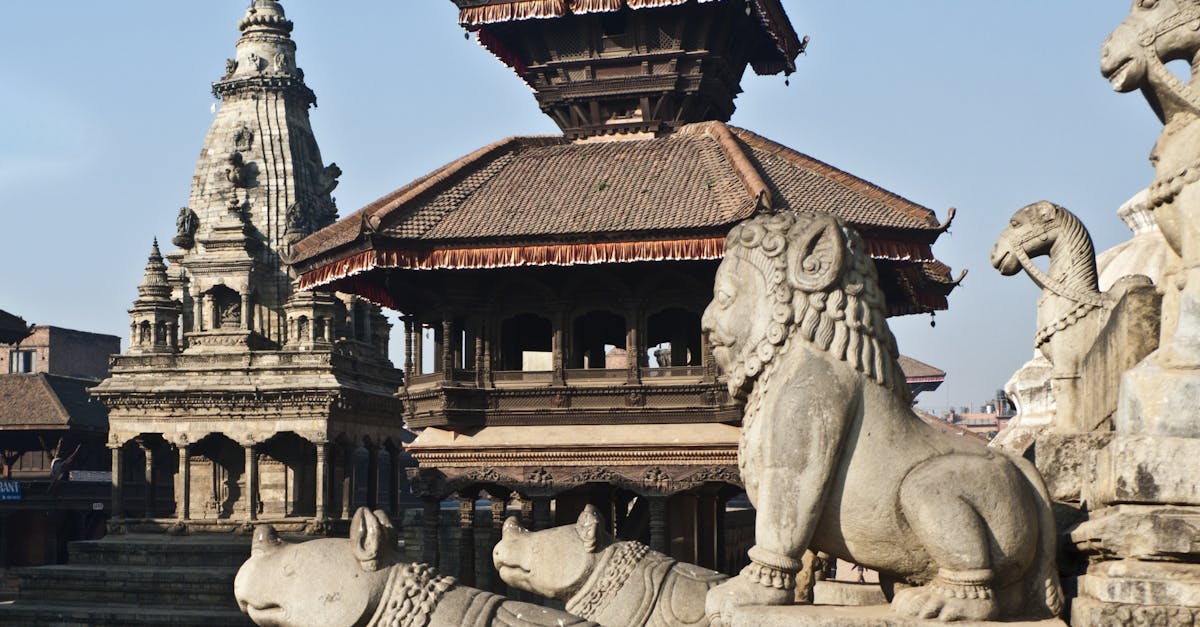
Arriving in Kathmandu for the first time is equal parts overwhelming and exhilarating. The city is ancient and chaotic, stacked with medieval pagodas and modern construction in equal measure, fragrant with incense and diesel. It sits in a bowl-shaped valley at 1,400 metres, ringed by hills and — on clear mornings — backed by Himalayan peaks that seem impossibly close. Kathmandu is the gateway to Nepal's mountains, but it earns its own three-to-four day exploration without ever leaving the valley: three UNESCO World Heritage Zones, the living goddess Kumari's palace, the world's largest Buddhist stupa at Boudhanath, and street-food lanes that predate European tourism by centuries. First-time visitors consistently underestimate how much there is to absorb here, and this guide exists to ensure you arrive prepared, oriented, and ready to make the most of every hour.
Before You Arrive
Most nationalities require a visa to enter Nepal, and the process is genuinely straightforward — one of the easiest in Asia. Tourist visas are available on arrival at Tribhuvan International Airport and at major land border crossings. The fees are: 15-day single entry $30 USD, 30-day single entry $50 USD, 90-day multiple entry $125 USD. Payment is accepted in USD cash, Indian Rupees, or major currencies at the official exchange rate; credit cards are accepted at the airport but add a processing fee. If you plan to leave and re-enter Nepal (for example, to cross into Tibet or India), budget for the multiple-entry option.

Visa on arrival requires: your passport (valid for 6+ months beyond arrival date), a passport-sized photo (a digital photo booth is available at the airport if you forget), and a completed application form (available on the plane or at the airport). The queue at the airport can take 45–90 minutes during peak morning arrival periods. Complete the online pre-registration at nepalimmigration.gov.np before your flight — this speeds processing considerably, though it does not guarantee a faster queue.
Currency is the Nepali Rupee (NPR). 1 USD ≈ NPR 135. ATMs are widely available in Thamel and accept international Visa and Mastercard; Nabil Bank and Standard Chartered give the best rates and charge NPR 350–500 withdrawal fees for foreign cards. Indian Rupees (INR) are accepted widely but at an unofficial rate. Do not bring USD expecting to spend them directly — while some guesthouses accept USD, the general economy runs on NPR.
Altitude is not a significant concern in the Kathmandu Valley (1,400m), but if you're continuing to Pokhara (820m, lower), or to any trekking route starting at 2,500m+, plan acclimatization time. Do not fly directly from Kathmandu to Lukla (2,800m) as your first day on a high-altitude trek — one to two nights in Kathmandu provides minimum acclimatization before ascending.
Travel insurance is essential. Ensure your policy covers emergency medical evacuation by helicopter — this is the standard emergency extraction method in Nepal's mountains and costs $5,000–20,000+ without insurance. Confirm coverage explicitly before purchasing.
Pack layers rather than one heavy piece. Kathmandu's temperature range is significant: October–November is warm (22–28°C days, 8–14°C evenings), December–February is cold (10–18°C days, below 5°C nights). Lightweight wool or fleece for evenings is necessary from October. Temples require covered shoulders and knees — thin linen or cotton clothing that layers is the practical wardrobe.
Getting from the Airport
Tribhuvan International Airport (KTM) is 6 km east of Thamel, the main tourist and accommodation district. It's a compact airport — arrivals, immigration, baggage, and the exit take 45–90 minutes depending on visa queue length. Exit customs and you enter a chaotic welcome hall of taxi touts, hotel reps, and money changers.

The official pre-paid taxi counter is inside the arrivals building, before you exit to the main hall. Pay here for a fixed-rate taxi: NPR 700 to Thamel, NPR 800 to Patan, NPR 900 to Boudhanath. This is the safest and most transparent option. Take your printed receipt and your assigned driver will meet you at the exit. Do not negotiate with the taxi touts beyond the counter — they quote NPR 1,500–2,500 and the counter rate is the fair one.
If you have the Pathao or inDrive app set up before landing, you can walk outside the terminal gates (100 metres) and request a ride. App-based fares to Thamel run NPR 400–550, undercut the pre-paid counter by 30–40%. The trade-off: you need a working SIM card and internet to do this, and negotiating the crowd outside the terminal with luggage takes effort. Worth the saving if you're organized; use the pre-paid counter if you're exhausted.
There is no airport rail or bus service. The public mini-buses that stop on the main road outside the airport zone serve local routes and are not practical for airport transfers with luggage. Taxis are the only viable first-night option.
Journey time to Thamel is 20–40 minutes depending on traffic. Morning arrivals (7–10 AM) typically face worse traffic. Evening arrivals (6–9 PM) can be slightly faster. The road passes through dense Kathmandu neighbourhoods — your first impression of the city is traffic, dust, prayer flags, and the chaos of a South Asian capital.
Getting Around the City
Kathmandu does not have a metro or tram system. The city's traffic is dense, and the road network — medieval at its core — was never designed for the volume of vehicles now using it. Once you accept these conditions, getting around becomes a manageable puzzle.

Taxis are the default for most tourist journeys. Meters exist but are rarely used with foreigners. Establish the fare before getting in: Thamel to Patan Durbar Square NPR 250–300; Thamel to Boudhanath Stupa NPR 300–400; Thamel to Pashupatinath NPR 300–400; cross-Thamel within the tourist zone NPR 150. Taxis are identified by black license plates; three-wheelers (tempos) are green-plated and cheaper for short hops.
Pathao is Nepal's dominant ride-hailing app, similar to Southeast Asia's Grab. Fares are preset by the algorithm and consistently lower than negotiated taxi fares. Download and register before arriving — you need a phone number to verify. Once active, it's the most convenient way to get around without negotiating every single trip.
Walking is genuinely the best way to experience central Kathmandu. Thamel, Asan Tole, Indra Chowk, Kathmandu Durbar Square, and the old-city lanes are all within 30 minutes' walk of each other on foot. Traffic navigates around pedestrians with a resigned tolerance. A good-quality face mask (N95 or similar) is useful for the most congested streets — the diesel and dust in central Kathmandu is real and accumulates over several days.
Local mini-buses (micro-buses) run fixed routes for NPR 20–40 and connect Kathmandu to Patan, Boudhanath, and Bhaktapur. Ask guesthouse staff for the specific route and departure point — routes change and are not signed in English. Crowded during peak hours but a genuine local experience.
For a full day exploring all three Durbar Squares (Kathmandu, Patan, Bhaktapur), negotiate a private taxi for the day: NPR 3,000–4,500 for an 8-hour hire. The driver waits at each site while you explore — significantly more efficient than separate trips.
Where to Base Yourself
Thamel is where the overwhelming majority of first-time visitors stay, and for good reason. This dense, walkable neighbourhood north of Kathmandu Durbar Square is Nepal's trekking-equipment and guesthouse capital — every service a traveller needs is available within a ten-minute walk: guesthouses from NPR 700/night to NPR 8,000+, dozens of restaurants serving everything from dal bhat to wood-fired pizza, trekking gear shops, money changers, pharmacies, and every travel agency in Nepal. The streets are narrow and pedestrian-friendly at their core. Thamel is noisy — bars and restaurants operate until midnight or later — but earplugs solve that. For a first visit with logistical uncertainty, Thamel is the correct base.

Patan (Lalitpur), across the Bagmati River, is Kathmandu's artistically refined sister city and an increasingly popular alternative base. Staying here puts you within steps of Patan Durbar Square — arguably the most beautiful of the three valley Durbar Squares — and in a neighbourhood with a more genuine local character than tourist-heavy Thamel. Guesthouses range from NPR 1,200 to NPR 5,000/night. The trade-off: fewer restaurant and service options than Thamel, and 30–40 minutes' travel to northern Kathmandu sights. Ideal for a return visit or for travellers who prioritize quiet over convenience.
Boudhanath neighbourhood (Chabahil/Boudha) offers a uniquely meditative atmosphere — Tibetan Buddhist monasteries ring the great stupa, and the morning kora (circumambulation) with monks and devotees is one of the most atmospheric things you can do in Nepal. A handful of guesthouses operate here from NPR 1,500–4,000/night. Best suited to visitors with a specific interest in Tibetan Buddhism or those who want the quietest possible urban base. Central Kathmandu attractions require a 30-minute taxi or mini-bus journey.
First-timers with five days or fewer: stay in Thamel. Return visitors with more time: combine two nights in Thamel with two nights in Patan — the contrast between the tourist hub and the authentic Newari city is one of Kathmandu Valley's richest travel experiences.
Local Culture and Etiquette
Nepal is a multi-religious society. The majority of the population is Hindu, with significant Buddhist communities — particularly the Newari people of the Kathmandu Valley and Tibetan communities around Boudhanath. The two traditions coexist at the same sites: Swayambhunath has both Hindu and Buddhist shrines, and Pashupatinath has Buddhist monasteries on the hill above its Hindu ghats. Approach all religious sites with the same respectful posture regardless of denomination.

Shoes off before temple entry. This is the consistent rule across Hindu temples and Buddhist gompas alike. Remove shoes before stepping onto any temple platform or entering any inner shrine. Leave them at the designated rack or hold them — most sites have shoe-watchers for a voluntary NPR 10–20 tip.
Dress modestly at all religious sites. Covered shoulders and knees are expected. Many sites lend shawls or longyis at the gate; bring your own to avoid dependency. This applies to all genders — it's a cultural expectation, not a gendered rule.
Circumambulate clockwise. Buddhist stupas and monuments are always walked clockwise (keeping the stupa to your right). Spinning prayer wheels as you walk is encouraged — the rotation should also be clockwise. Anti-clockwise movement at a stupa will confuse or mildly upset local devotees who are in the middle of their practice.
The Kumari (Living Goddess). At Kathmandu Durbar Square, the Kumari Bahal is the palace of Nepal's living goddess — a young girl selected through ancient rites as the human manifestation of the goddess Taleju. She occasionally appears at her window. Visitors may watch from the courtyard but must not photograph the Kumari directly. This is a deeply held religious practice, not a tourist display; observe quietly and do not direct a camera toward the window.
Tipping. Not mandatory in Nepal but appreciated. Restaurant bills don't automatically include service. A 10% tip at a sit-down restaurant is generous and welcomed; NPR 50–100 for a tea shop is appropriate. Trekking guides and porters operate on an established tipping culture (NPR 500–1,000/day per group is standard); day guides in Kathmandu do not have a fixed standard but NPR 500–1,000 for a half-day is fair.
Common Mistakes to Avoid
1. Skipping Patan to focus only on Thamel. Most first-timers spend their entire Kathmandu stay in the Thamel bubble — trekking gear shopping, tourist restaurant meals, and day trips to the big sites. Patan Durbar Square, a 30-minute taxi ride away, is arguably more beautiful than Kathmandu's own Durbar Square and has the finest museum in the valley. The surrounding lanes contain practicing metalworkers, thangka painters, and woodcarvers whose families have worked the same craft for generations. At minimum, dedicate one full afternoon to Patan.
2. Arriving without USD for the visa on arrival fee. The visa fee must be paid in foreign currency — NPR is not accepted for the visa itself. Bring $50 USD in cash (for a 30-day visa) in any condition; ATMs before the visa desk dispense NPR, not USD. This catches a surprising number of travellers who assume they can pay in local currency upon landing.
3. Assuming ATMs will work when you need them. Kathmandu ATMs have a per-transaction limit (typically NPR 10,000–15,000 per withdrawal, roughly $75–110 USD), charge foreign card fees, and occasionally run out of cash or go offline. Withdraw more than you need in a single session rather than relying on multiple daily ATM visits. The Nabil Bank and Standard Chartered ATMs in Thamel have the most consistent availability for international cards.
4. Trying to see all three Durbar Squares in one day. Kathmandu, Patan, and Bhaktapur — all UNESCO World Heritage Sites, all separately ticketed (NPR 1,000–1,500 each), all deserving 2–3 hours minimum. Rushing all three in a single day means you see the main squares without time for the back lanes, the museum, the restoration projects, or the neighbourhood life that makes each city distinct. Do two on day one, the third on day two.
5. Ignoring the pollution and not packing a face mask. Kathmandu's air quality ranks among the worst of any Asian capital, particularly in winter (November–February) when temperature inversions trap vehicle emissions in the valley. A single day of walking the central streets without a mask leaves your throat coated. Pack an N95 or equivalent; they're widely available in Thamel for NPR 80–150 if you forget, but the local supply varies.
6. Booking a sunrise helicopter flight to Everest Base Camp on day one. Commercial Everest helicopter flights (typically $200–350 per person) operate in the early morning from Kathmandu airport. Booking one as your first activity is a common first-timer move — and a mistake. Clear weather for Himalayan views requires dry-season timing (October–November, February–March). Booking on arrival without checking weather forecasts risks a flight into cloud cover with zero views. Spend your first day in the valley, ask at guesthouses about current visibility, and book only when the weather looks definitively clear.
7. Not allowing adjustment time for gastrointestinal adaptation. Kathmandu food is excellent, but travellers' stomachs from North America, Europe, and East Asia often need 24–48 hours to adapt to the new bacterial environment. Eating heavily from street stalls on day one — delicious as they are — frequently triggers stomach issues that sideline visitors for a day. Start with restaurant-prepared cooked food, advance to street food by day two, and stay hydrated. Oral rehydration salts (ORS sachets) are available at every pharmacy for NPR 30 each and are more effective than anything for mild traveller's stomach.