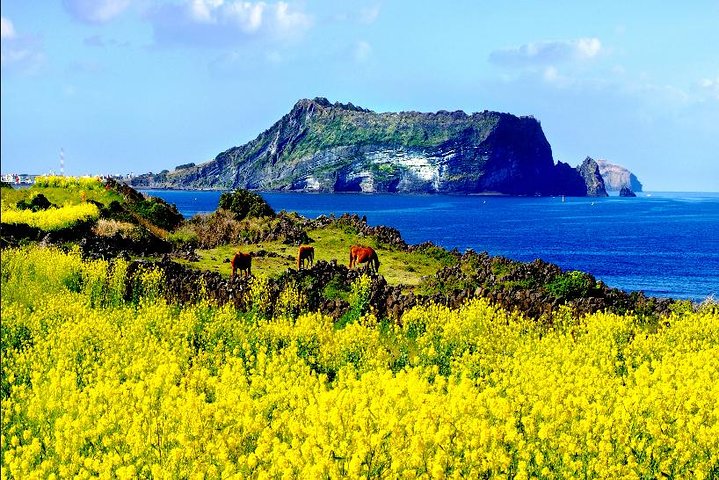
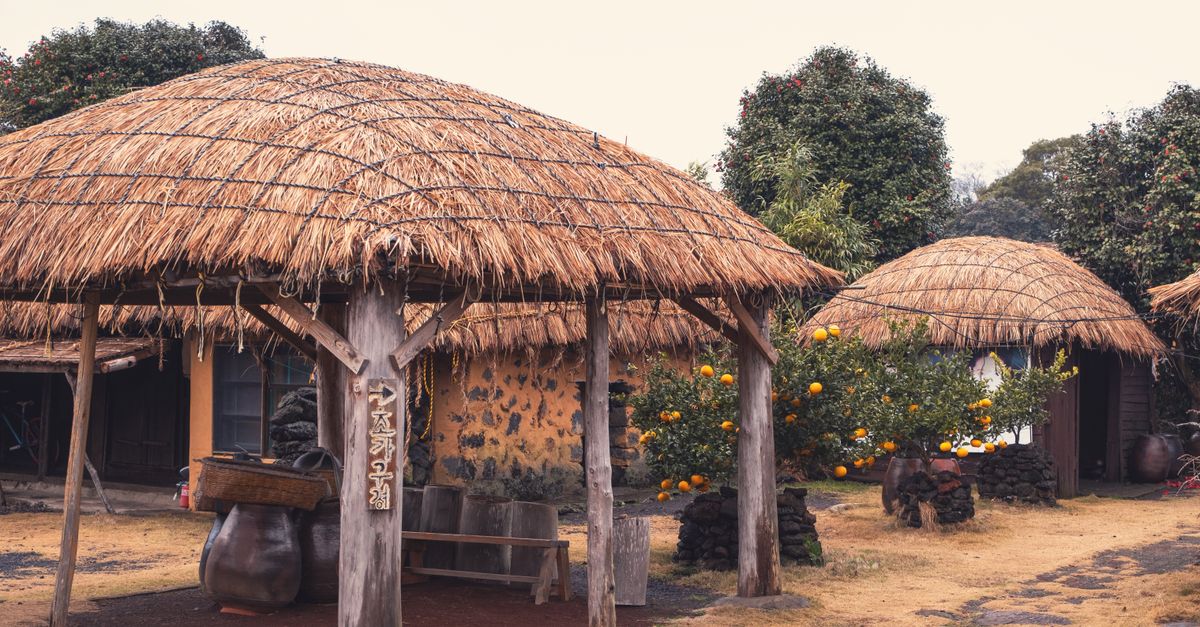
Jeju Island manages the difficult trick of being simultaneously South Korea's most popular tourist destination and one of its most genuinely surprising ones. This volcanic island — formed by Hallasan, a shield volcano that last erupted 25,000 years ago — is a UNESCO triple-crown destination (Biosphere Reserve, World Heritage Site, and Geopark), a domestic honeymoon institution, a haenyeo diving culture that has survived unchanged for centuries, and a landscape of black basalt coastlines, tangerine orchards, and prehistoric stone grandfather statues (dolhareubang) that looks like nowhere else in East Asia. It is also, practically speaking, far easier to visit than most first-timers expect — good airport connectivity, English signage at all major sites, and a local culture that is warmly accustomed to international visitors. This guide covers everything you need before your first visit.
Before You Arrive
Visa and Entry

Jeju Island has a unique visa policy within South Korea: most nationalities receive a 30-day visa-free entry specifically for Jeju, even if their nationality would normally require a visa to enter the South Korean mainland. This means travelers from countries including China, India, Vietnam, Philippines, Indonesia, and many others can visit Jeju without a visa, provided they do not plan to travel onward to the mainland. This Jeju-specific exemption is one of the island's most significant advantages for Asian regional travelers.
For nationalities that already receive visa-free entry to South Korea (US, UK, EU, Australia, Canada, Japan, and many others), Jeju is simply part of a standard South Korean trip requiring no additional documentation. Standard 90-day visa-free access applies.
The K-ETA (Korea Electronic Travel Authorization) — a KRW 10,000 pre-registration system required for some visa-exempt nationalities — has had periods of exemption and re-implementation. Check the Korean Immigration Service website (immigration.go.kr) before travel, as exemptions are updated periodically. Your passport must have at least six months of validity remaining.
Currency
South Korea uses the Korean Won (KRW). Approximate exchange rates: KRW 1,350 to USD 1; KRW 1,480 to EUR 1. You will routinely deal with numbers in the tens of thousands — a taxi from the airport costs KRW 8,000-12,000, a bowl of noodles is KRW 8,000-12,000, and a guesthouse room runs KRW 50,000-100,000. Cards (Visa, Mastercard) are accepted at hotels, restaurants, and many shops. Cash is advisable for Dongmun Market stalls, small guesthouses, and haenyeo experience activities. ATMs are available at the airport (Global ATMs at the CU convenience store inside the terminal), at convenience stores throughout the island, and at bank branches in Jeju City.
SIM Cards and Connectivity
Korean tourist SIM cards are available at Jeju Airport's arrivals hall from KT, SK Telecom, and LG U+ counters. A 7-day unlimited data SIM costs approximately KRW 22,000-28,000. Coverage on Jeju is excellent across the island, including on Hallasan's main trails and at coastal sites. Pocket Wi-Fi routers are also available for rent at the airport for groups traveling together. Free Wi-Fi is available at the airport, at most guesthouses, and in all convenience stores.
Best Time to Visit
Jeju is a year-round island. Spring (late March to May) is the most popular and visually dramatic season — cherry blossom season (late March to mid-April) and canola flower season (mid-March) cover the island in pink and yellow respectively, and the temperatures are mild at 13-20°C. Autumn (September-November) offers crisp weather, autumn foliage on Hallasan, and lower crowds than spring. Summer (July-August) is humid and hot (26-32°C) with the risk of typhoons in August and September. Winter (December-February) is cold (3-10°C) but brings the lowest prices of the year, clear days with snow-capped Hallasan views, and tranquil beaches with none of the summer crowds.
Getting from the Airport
Jeju International Airport (CJU) is compact, well-organized, and located just 2.5 kilometres from Jeju City center — one of the most conveniently situated airports in Korea. Transfer options are simple and clearly signed in Korean and English.

City Bus Routes 100 and 600 (KRW 1,300) — The most affordable option. Bus 600 is an express route connecting the airport to Jeju City center's main hotels and then continuing east along the coast toward Seongsan and Pyoseon. Bus 100 runs west toward Hallim. Buses depart from the stop immediately outside the arrivals exit — look for the clearly marked bus bays. Journey to central Jeju City is approximately 15-25 minutes. This is perfectly adequate if your accommodation is in central Jeju City and you are traveling light.
Local City Buses (Routes 36, 37, 38) — Slower local buses stopping at residential neighborhoods between the airport and the city center, KRW 1,200. Useful if your guesthouse is off the main express route.
Taxi (KRW 8,000-12,000) — Taxis are metered and available immediately outside arrivals. The 10-15 minute journey to central Jeju City costs KRW 8,000-12,000. All taxis are metered and legitimate. If you have heavy luggage or are arriving late and your rental car pickup is in the city (many car rental offices are not at the airport itself), a taxi is the practical choice. Kakao Taxi (the Korean equivalent of Uber, available via the KakaoTalk app) works on Jeju and is often slightly cheaper than hailing.
Car Rental from the Airport — Multiple rental agencies have desks in the arrivals hall, including Jeju Air Car Rental, AJ Rent-a-Car, Lotte Rent-a-Car, and KT Kumho Rent-a-Car. If you have pre-booked a rental car (strongly recommended), collecting it at the airport is the most efficient approach. You will need an international driving permit in addition to your national license.
There is no rail connection to Jeju City — this small island simply never built one. The bus and taxi options above are the complete set of airport transfer options.
Getting Around the City
The central tension of Jeju Island travel is that the attractions most worth visiting are spread across an island 73 kilometres east to west, while the affordable accommodation and food are concentrated in Jeju City in the northwest. How you resolve this defines your budget, flexibility, and daily experience.

Rental Car (KRW 30,000-60,000/day) — For most first-time visitors spending more than two days, renting a car is the honest recommendation. Jeju's public bus system exists but is slow (major cross-island routes take 80-100 minutes each way), infrequent in coastal areas, and requires planning that limits spontaneity. A rental car allows you to combine Seongsan Ilchulbong, Manjanggul Cave, and the east coast in a single efficient day. AJ Rent-a-Car, Jeju Air Car Rental, and Lotte Rent-a-Car all offer compact cars from KRW 35,000-50,000 per day. An international driving permit is required for non-Korean license holders. Fuel is purchased at the 24-hour GS Caltex and SK Energy stations found throughout the island. Parking at tourist sites typically costs KRW 1,000-3,000 per visit and is well-signposted.
Public Bus (KRW 1,200-3,000) — The intercity bus system uses the 900-series route numbers for cross-island express routes and 200-series for coastal circuits. The No. 201 bus circles the east coast (Seongsan, Seongeup, Pyoseon) and No. 202 covers the west (Hallim, Aewol). The Jeju Bus Information app, available in the Korean App Store with partial English function, provides timetable and routing. Google Maps now has reasonably accurate Jeju bus routing. The system is usable but demands patience — a round trip to Seongsan from Jeju City takes approximately 3 hours of transit alone.
Scooter/E-Bike Rental (KRW 20,000-35,000/day) — Available from several rental shops near Jeju City's seafront and near Seongsan. Practical for the Olle coastal trails and Seongsan area exploration. Not suitable for Hallasan mountain access. A Korean or international driving license with a motorcycle endorsement is technically required, though enforcement varies.
Taxi (KRW 3,300 base meter) — For point-to-point trips within Jeju City or short coastal hops, metered taxis are available throughout the island. They become expensive for cross-island travel — Jeju City to Seongsan by taxi costs approximately KRW 45,000-55,000 one way.
Where to Base Yourself
Jeju Island's accommodation landscape divides into three main zones, each suited to different travel priorities.

Jeju City (Jeju-si) — The island's main city and the best overall base for first-time visitors. Jeju City offers the widest variety of accommodation at the lowest prices, the island's best food market (Dongmun), good transport connections in all directions, and the practical infrastructure of a proper city (hospitals, banks, large supermarkets, international restaurants). Guesthouses and budget hotels range from KRW 40,000-90,000 per night; mid-range hotels from KRW 80,000-150,000. The international airport is five minutes from the city center. The main drawback is distance from the scenic east coast sites — Seongsan is 45 minutes by car. Best for: budget travelers, first-timers wanting maximum flexibility, anyone planning to use the bus system.
Seogwipo City (south coast) — Jeju's second city, on the dramatically beautiful south coast where the Olle Trails and the Cheonjiyeon and Jeongbang waterfalls are located. Seogwipo has a slower pace than Jeju City, a lovely seafront promenade, and several mid-range to luxury hotels including the Lotte Hotel Jeju and Shilla Jeju. Accommodation from KRW 70,000-180,000 for mid-range, with beach resorts from KRW 200,000+. The distance from Jeju City (30 minutes by car, 60+ by bus) means less flexibility for airport connections. Best for: couples, resort-seekers, Olle trail walkers, and anyone whose itinerary is centered on the south coast.
Seongsan / East Coast area — Small coastal village at the base of Seongsan Ilchulbong crater, best suited to travelers who want to hike the crater at sunrise without driving across the island at 4 AM. The village has a growing cluster of guesthouses and pension-style accommodation from KRW 50,000-120,000 per night — quieter, more rural, and distinctly less urban than Jeju City. The local seafood restaurants (haenyeo-caught abalone and sea urchin) are a genuine draw. Best for: sunrise hikers, east coast Olle trail walkers, and travelers who want the island experience with minimal urban infrastructure.
Local Culture and Etiquette
Jeju has a distinct cultural identity within South Korea that first-time visitors — especially those arriving directly from Seoul — may find notably different. The island's relative geographic isolation historically produced a culture with unique characteristics: a matrilineal social structure influenced by the haenyeo (female diver) tradition, a more relaxed attitude to formality than mainland Korea, and a subtropical warmth that extends to the social atmosphere.

Haenyeo respect — Jeju's haenyeo (free-diving women, predominantly older women who have dived since youth) are a living UNESCO Intangible Cultural Heritage and central to Jeju's cultural identity. When watching haenyeo demonstrations at Seongsan or Hamdeok Beach, maintain respectful distance during diving preparations and do not interrupt or photograph the women entering the water without their awareness. Ask before photographing haenyeo in close-up at market stalls where they sell their catch. These women are not performers — this is their working life.
Temple and shrine etiquette — Jeju has several significant Buddhist temples (Gwaneumsa at the foot of Hallasan, Sanbanggulsa in a seaside cave on the west coast). Standard Buddhist temple etiquette applies: remove shoes before entering main halls, do not photograph monks without permission, move quietly, and dress modestly (shoulders and knees covered). Temple grounds are generally free to enter and open to visitors. Sanbanggulsa specifically is inside a dramatic volcanic cliff cave and requires modest dress for entry.
Hallasan trail rules — South Korea's national parks are strictly managed. On Hallasan, trail turnaround times are enforced to ensure all hikers descend safely before dark. Rangers will turn back hikers who arrive at the summit shelter after the posted noon cutoff (times vary by season — check the Hallasan National Park website). Dogs are not permitted on trails. Do not leave the marked path. Take all litter with you — the park is maintained to a very high standard and this is a matter of cultural pride.
General Korean social norms on Jeju — The Confucian age-based hierarchy of mainland Korean culture is present but applied more loosely on Jeju. The two-handed giving and receiving norm (passing objects, money, and business cards with both hands, or with one hand supported at the wrist) is still observed in formal contexts. Removing shoes when entering traditional guesthouses (minbak), tea houses, and some restaurants is standard. Tipping is not customary in Korea — attempting to leave a tip can create awkwardness. Service quality is expected to be good regardless.
Common Mistakes to Avoid
1. Trying to see the entire island by bus in 2-3 days. Jeju's public bus system is functional but slow. If you spend 80 minutes each way getting from Jeju City to Seongsan by bus, you have already lost close to three hours of your day to transit before seeing anything. First-timers who do not rent a car routinely find they cannot visit more than one or two major sites per day. Rent a car for at least two of your days if the budget allows — or aggressively prioritize sites based on geography.
2. Booking a Seongsan sunrise visit without planning the transport. Seongsan Ilchulbong is justifiably famous at sunrise, but the crater is 45 minutes by car from Jeju City. To catch sunrise (which occurs as early as 5:36 AM in summer), you would need to leave Jeju City by 4:30 AM in a rental car. Without a car, the earliest bus does not arrive in time. The solution is either to stay in Seongsan village the night before, or to accept that you will visit the crater at a non-sunrise time — which is still beautiful, just less dramatic.
3. Underestimating Hallasan hiking difficulty and timing. Hallasan is South Korea's highest mountain, and the summit trails (Seongpanak: 9.6 km one-way, approximately 4.5-5 hours ascending) are serious mountain hikes, not gentle nature walks. Start no later than 9 AM for the summit trails to comfortably reach the top and descend before the park's afternoon closing cutoff. Bring adequate food, water (at least 2 litres for the summit attempt), warm layers (temperatures at the summit can be 10-15°C colder than the base), and waterproof clothing regardless of the morning forecast.
4. Visiting all UNESCO sites in a single rushed day. Seongsan Ilchulbong (east coast), Manjanggul Cave (north coast), and Hallasan (central) are all UNESCO World Heritage Sites, but they are spread across the island. A "UNESCO day" attempting all three results in rushed visits to each and a stressful day of driving. Give Hallasan its own dedicated hiking day, and pair Seongsan with Manjanggul Cave and the east coast Olle Trail on another day.
5. Renting a car without downloading offline maps first. Korean navigation apps (Naver Map, Kakao Map) require mobile data for full function. While SIM cards are available at the airport, first-timers sometimes find themselves driving without data in areas with patchy coverage. Download offline map data for Jeju Island from Naver Map or Maps.me before leaving the airport Wi-Fi zone. Jeju's roads are well-signed in Korean and English, but GPS navigation is still essential for finding guesthouses and smaller sites.
6. Eating only at the tourist restaurants near major sites. The restaurants clustered outside Seongsan's parking area and near the Manjanggul Cave entrance are dramatically overpriced compared to equivalent food in Jeju City or Seogwipo. Jeonbokjuk (abalone porridge) near Seongsan costs KRW 25,000-35,000; the same dish at Dongmun Market in Jeju City costs KRW 12,000-18,000. Eat strategically — fill up at Dongmun Market or a city restaurant before driving to the east coast sites.
7. Missing Jeju's unique local specialties in favor of generic Korean food. Every Korean tourist destination has samgyeopsal and bibimbap. Jeju has hairtail fish (galchi jorim), raw sea urchin on rice (sea urchin bibimbap at Seogwipo seafood restaurants), black pork (heuk dwaeji samgyeopsal — genuinely different from mainland pork, richer and more marbled), hallabong citrus (a Jeju-specific mandarin variety, dramatically sweeter than standard tangerines), and abalone in multiple preparations. First-timers who default to familiar Korean dishes miss the most interesting food the island offers.