Cusco is a city that requires a different kind of preparation than almost anywhere else a first-time visitor will travel. It is not difficult — the infrastructure is well-developed for tourism, the people are hospitable, English is spoken at most guesthouses and restaurants — but the combination of extreme altitude, a genuinely complex set of sites to sequence, and the irreversible nature of a sold-out Machu Picchu entry slot means that arriving unprepared creates real, avoidable problems. The former capital of the Inca Empire sits at 3,400 metres above sea level in the Peruvian Andes, surrounded by the most sophisticated stonework civilisation in pre-Columbian history. Getting there well-informed transforms a disorienting arrival into a seamless one. This guide covers every essential piece of knowledge before your first day in Cusco.
Before You Arrive
Citizens of the United States, European Union, United Kingdom, Canada, and Australia do not require a visa for Peru. Entry is granted on arrival for tourism purposes for up to 90 days. You will be issued a tourist card (Tarjeta Andina de Migración) on arrival at Jorge Chávez International Airport in Lima — keep this document carefully as you must surrender it when you leave Peru. Losing it results in a fine and delays at the border. The regulations apply at land crossings as well as airports.

Peru's currency is the Sol (PEN). As of 2025–2026, the exchange rate is approximately 1 USD to PEN 3.65–3.75. ATMs are widely available throughout central Cusco — the BCP and BBVA machines on Avenida El Sol and near the Plaza de Armas are the most reliable. Machine fees vary: BCP charges PEN 10–15 per withdrawal while Interbank and Scotiabank sometimes charge less. Notify your home bank of your travel dates before departure to prevent fraud-block card lockouts. US dollars are accepted at some tourist businesses but always at a slightly unfavourable rate; change dollars to soles at casas de cambio (exchange bureaus) on Avenida El Sol rather than at your hotel.
The single most important preparation for Cusco is altitude management. At 3,400 metres (11,150 feet), Cusco sits roughly 1,000 metres higher than Denver and 2,000 metres higher than most of Europe's major cities. Acute Mountain Sickness (AMS) affects a significant proportion of visitors regardless of fitness level — it is a physiological response to reduced oxygen, not a reflection of physical conditioning. Symptoms include headache, nausea, fatigue, dizziness, and shortness of breath. They typically appear within 6–12 hours of arrival and resolve within 24–48 hours with proper rest and hydration.
The standard approach: arrive in Cusco with no major activities planned for the first 24 hours. Drink abundant water. Avoid alcohol for the first two days. Eat light meals — heavy food worsens nausea at altitude. Coca tea (mate de coca), available free at virtually every guesthouse and sold at pharmacies and markets for PEN 4–6 a box, genuinely reduces mild AMS symptoms and is widely used by locals and visitors alike. Acetazolamide (Diamox, available by prescription) is the pharmaceutical option for travellers with a history of serious altitude sickness — consult a travel medicine doctor before departure if this applies to you.
Getting from the Airport
Alejandro Velasco Astete International Airport (IATA: CUZ) sits 3 kilometres southeast of Cusco's Plaza de Armas — closer to the city centre than almost any major airport in South America. The short distance is somewhat deceptive: road congestion between the airport and the historic centre can extend the journey to 20–35 minutes during peak hours, and altitude hits you the moment you step off the plane onto the apron.

The authorised taxi service operates from a clearly marked kiosk inside the arrivals hall. Fixed-rate tickets to the city centre cost PEN 25–35 depending on your exact destination. Pay at the kiosk before leaving the terminal and take the printed receipt to your driver outside. This fixed-rate system exists specifically to protect arriving tourists from overcharging — do not negotiate with drivers in the car park, and do not accept unsolicited offers from strangers in the arrivals hall. The legitimate kiosk is the only safe option for airport taxis.
For most first-time visitors arriving from Lima with luggage and at altitude for the first time, the PEN 25–35 taxi is the correct choice. There are no colectivos (shared minibuses) serving the airport route. The bus network does not serve the airport. Walking outside the terminal in search of cheaper options exposes you to unlicensed operators and adds unnecessary stress to an already physiologically demanding arrival.
If you are arriving as part of a group of three or four people, the fixed-rate taxi splits cheaply per person. Ask for a vehicle that fits your party at the kiosk — larger vehicles are available. Some hostels and hotels offer airport pickup for PEN 30–50 per vehicle; this can be convenient but rarely saves money over the airport taxi kiosk.
Getting Around
Cusco's historic centre is one of the most walkable city centres in South America. The Plaza de Armas is the geographical and social hub, and most of what a first-time visitor wants to see — Qorikancha, the Cathedral, the San Pedro market, the San Blas artisan neighbourhood, and the Inca stonework lining streets like Loreto and Hatunrumiyoq — sits within a 15-minute walk in any direction. Good walking shoes with ankle support are essential; the streets in the historic centre are paved with irregular cobblestones and slopes are steep, particularly in the San Blas neighbourhood above the plaza.

For destinations beyond the immediate centre — the ruins of Saqsaywamán above the city, the Sacred Valley towns, or Pisac market — the options are shared colectivos and taxis. Shared colectivos to Sacred Valley destinations depart from fixed terminals outside the historic centre: the terminal for Pisac is on Calle Puputi near the Ovalo de la Familia roundabout (PEN 5–8 to Pisac, 45 minutes, departs when full). For Ollantaytambo (PEN 10–15, 1.5 hours), depart from the same area. City taxis for short journeys within central Cusco are agreed verbally before boarding and cost PEN 5–10 for most rides; PEN 8–15 after dark.
The ride-hailing apps Beat and InDriver operate in Cusco and provide upfront pricing, eliminating the need to negotiate. InDriver in particular allows you to propose a fare which drivers can accept or counter — during normal hours you can usually match or beat street taxi prices. Download both apps before travel, as they require local phone numbers for verification in some configurations; using your SIM-enabled phone simplifies this.
Altitude affects physical exertion significantly in the first few days. What feels like an easy 10-minute uphill walk in London or New York will leave you genuinely short of breath in Cusco until your body begins adjusting. Pace yourself, stop when you need to, and do not be surprised — this is physiology, not fitness failure.
Where to Base Yourself
Cusco's neighbourhoods each offer a different experience, and your choice of base determines the character of your visit more than any other single decision.

The Historic Centre (around the Plaza de Armas and Plaza Regocijo) is the most convenient base for first-timers — the Cathedral, Qorikancha, the central market, and the main tour operator strip are all within easy walking distance. Accommodation ranges from budget hostels at PEN 40–60 per dorm bed to mid-range hotels at PEN 200–400 for a private double. The trade-off is noise — the streets around the plaza are lively until midnight on weekends and construction noise is common in the mornings — and the slightly higher prices that come with the premium location.
San Blas is the neighbourhood that Cusco lovers recommend. A 10-minute uphill walk northeast of the plaza, it occupies a hillside of whitewashed walls, artisan workshops, narrow cobblestone lanes, and small guesthouses that feel genuinely local rather than tourist-infrastructure. Prices run 20–30% below equivalent properties in the plaza area, the restaurants are better value, and the atmosphere is calmer. The downside is the walk back uphill at altitude after a long day — tolerable once you've acclimatised, exhausting in the first 48 hours.
San Cristóbal, above San Blas and toward Saqsaywamán, offers similar character to San Blas at even lower prices, but the altitude here — already 100–200 metres above the plaza — makes it unsuitable as a first-night base for visitors newly arrived from sea level. Consider it for nights three and four once you've adjusted.
For a first Cusco trip, the practical recommendation is to book two nights in the historic centre or lower San Blas to allow for acclimatisation, then reassess. If the altitude is manageable by day three, the upper neighbourhoods become viable and offer better value.
Local Culture & Etiquette
Cusco is both a thriving Quechua and Andean cultural centre and one of South America's busiest tourist cities. Navigating the intersection requires some awareness of how the local culture works and where the tourist experience ends and real life begins.

The Quechua language is widely spoken alongside Spanish throughout the Cusco region — in the markets, in the villages of the Sacred Valley, and among older residents throughout the city. A few words of Quechua go a genuinely long way: imaynallan kanki (how are you), añay (thank you), and allillanmi (I'm fine) are received with real warmth and are remembered. Spanish is the language of commerce and most tourist interaction; English is spoken at all hostels and tour operators and in most central restaurants.
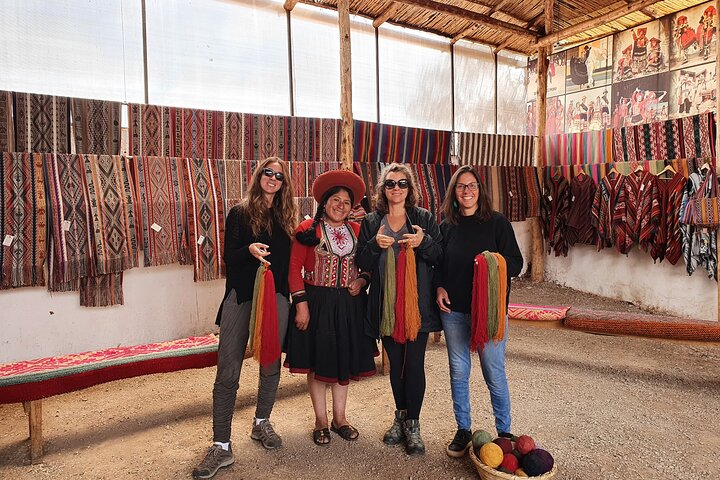
Photography etiquette requires particular care in Cusco and the Sacred Valley. Many local people in traditional dress near the plaza, at market stalls, and at archaeological sites will pose for photographs for a tip — PEN 2–5 is the expected amount per person photographed, and it's the correct way to handle the exchange. Photographing people without asking and then attempting to leave without paying is disrespectful and causes genuine friction. At the same time, not every person in traditional dress is requesting payment — some are simply dressed for the day. Read the situation, make eye contact, and ask through gesture if you're uncertain.
The Inti Raymi festival (Festival of the Sun) on June 24 is Cusco's most extraordinary annual event — a massive re-enactment of Inca solar ceremonies at Saqsaywamán. Tickets sell out months ahead. The week surrounding June 24 is the most crowded and most expensive time to visit Cusco, but for the cultural experience it offers, many travellers consider the premium worthwhile. Book everything — accommodation, Machu Picchu, train — at least 8 weeks ahead for Inti Raymi week.
Tipping is expected in tourist-facing businesses. Restaurant servers: 10% at sit-down restaurants; PEN 5–10 per meal at budget restaurants. Tour guides: PEN 30–50 for a half-day tour, PEN 50–80 for a full day, more for multi-day treks. Porters on the Inca Trail: minimum USD 10 per porter per day as per industry standard, and tipping well is important — porter wages are low and the work is physically demanding.
Common Mistakes to Avoid
Rushing to Machu Picchu on day one. The train journey from Ollantaytambo to Aguas Calientes takes 1.5 hours; the bus from Aguas Calientes to the Machu Picchu gate takes 25 minutes; the site sits at 2,430 metres of altitude. Arriving in Cusco at 3,400 metres and immediately descending to Machu Picchu at 2,430 metres the next morning sounds easier — you're going down in altitude. But the full-day physical exertion at a site requiring 3–5 hours of walking on your second day at altitude, before your body has adjusted to the Andean environment, consistently produces miserable experiences. Day three or four is the minimum sensible Machu Picchu schedule.
Buying Machu Picchu tickets from touts. The official and only legitimate ticket sales channel is machupicchu.gob.pe. Anyone in Cusco offering to sell you Machu Picchu tickets — in a travel agency, on the street, or in a café — is either reselling genuine tickets at inflated prices (illegal) or selling forgeries. Forgeries exist and are convincing. Paying USD 80–120 for a forgery that is rejected at the gate on the day is a documented and recurring problem.
Underestimating the altitude at Saqsaywamán. The fortress sits 200 metres above the Plaza de Armas. The uphill walk from the city takes 35–45 minutes and is steep. At altitude, many visitors find this more taxing than expected. Go slowly, stop when you need to, bring water, and don't attempt it before day three of your visit.
Eating a heavy dinner on the first night. Altitude suppresses appetite and compromises digestion. A large dinner of red meat and wine on arrival night reliably produces nausea, poor sleep, and a rough morning. Eat lightly — soup and bread, or a simple soup-based Andean dish — on the first evening and drink two litres of water before bed.
Changing money at the airport or hotel. Airport exchange rates in Cusco are typically 8–12% worse than the best rates available on Avenida El Sol in the city. Change only what you need for the taxi at the airport (PEN 25–35); use an ATM or a reputable casa de cambio on Avenida El Sol for larger amounts.
Booking the Hiram Bingham train as the default. The PeruRail Hiram Bingham is a beautiful 1920s Pullman-style luxury train, and it costs PEN 500+ one way to Aguas Calientes. The Vistadome covers the same route for PEN 80–200 with panoramic windows. Unless a luxury train experience is specifically your goal, the Vistadome is the correct choice — the scenery is identical and the experience of arriving at Machu Picchu Pueblo station is the same regardless of which train brought you there.
Ignoring warning signs of altitude sickness beyond mild headache. Mild headache, slight fatigue, and reduced appetite are normal AMS symptoms that resolve with rest and fluids. The warning signs that require medical attention are: severe headache unresponsive to paracetamol, difficulty walking in a straight line, confusion, persistent vomiting, or breathlessness at rest. Cusco has two altitude medicine clinics (Clinica Internacional and Hospital Antonio Lorena) and the Seremi clinic on Calle Heladeros that sees altitude-related cases daily and can administer supplemental oxygen. Do not push through severe symptoms — descend to a lower altitude if needed, as this is the only reliable treatment.