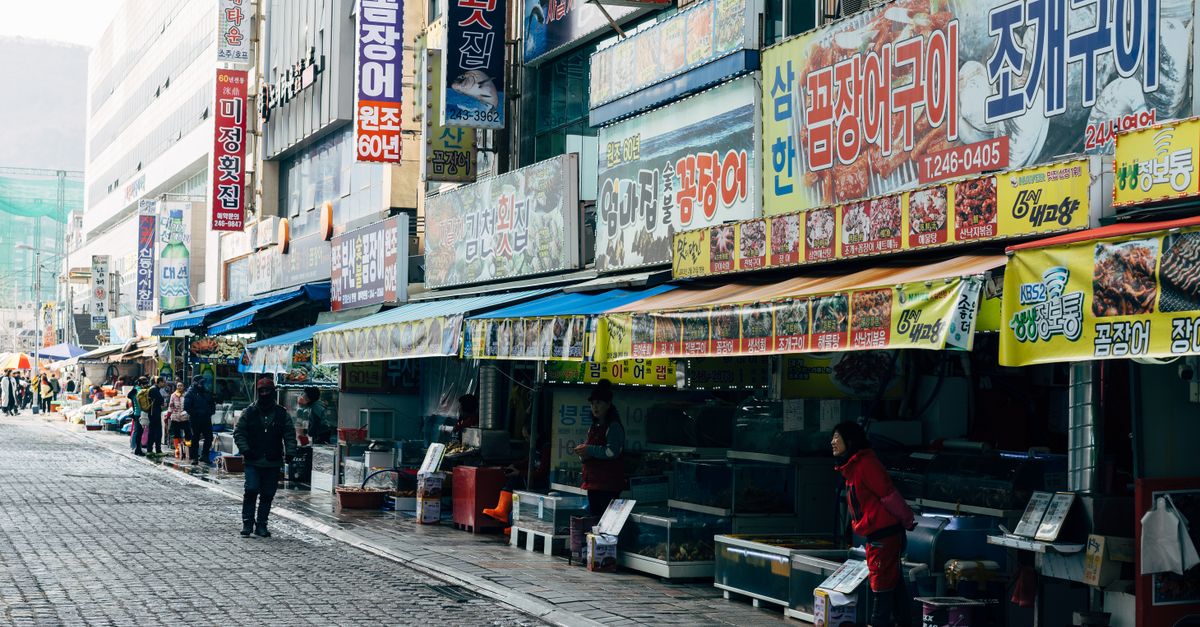
Busan lands on first-time visitors with an immediacy that few cities can match. Within hours of arriving, you're likely to be standing on a wide crescent of sand with mountains at your back, or leaning over a market stall at Jagalchi watching a haenyeo diver's catch go from net to plate in twenty minutes. South Korea's second city and principal port has the scale and infrastructure of a major metropolitan area but the character and warmth of a place that has never quite forgotten its fishing village origins. The practicalities are straightforward once you know them, and this guide covers everything you need to land confidently, move freely, and avoid the mistakes that slow down a first visit.
Before You Arrive
Citizens of most Western countries — including the United States, the United Kingdom, the European Union, Canada, Australia, New Zealand, and Japan — can enter South Korea visa-free for up to 90 days under bilateral agreements. However, all nationalities must register with the K-ETA (Korea Electronic Travel Authorization) system before boarding, which requires completing a short online application at eta.go.kr at least 72 hours before departure. The K-ETA costs KRW 10,000 and is valid for two years or multiple entries. Citizens of some countries are exempt from K-ETA but still subject to the 90-day rule. Check the Korean Ministry of Justice website for the current list, as it changes periodically.

Korea operates on the Korean won (KRW). Notes come in denominations of KRW 1,000, 5,000, 10,000, and 50,000. The KRW 50,000 note is the most useful for daily spending. ATMs at banks (Woori, Shinhan, KB Kookmin) and post offices reliably accept foreign Visa and Mastercard debit cards with minimal fees. Airport exchange booths offer poorer rates than city-centre bank ATMs — take enough cash at the airport to cover your first night's accommodation and transport, then exchange or withdraw the rest in Seomyeon or Nampo-dong.
The T-money card is non-negotiable for getting around Busan efficiently. It's a reloadable transit card that works on the subway, city buses, and many taxis, providing a small per-ride discount over cash fares and enabling free transfers between bus and subway within thirty minutes of tapping out. Buy one at any CU or GS25 convenience store for KRW 4,000 (including KRW 500 deposit) and load credit at the same counter. A starting balance of KRW 20,000 covers several days of typical sightseeing movement.
Busan is temperate but seasonally extreme. July and August are hot, humid, and crowded — beach season in full swing, with temperatures peaking around 32°C and afternoon thunderstorms common. September through November is the finest time to visit: clear skies, temperatures in the 15–25°C range, and the city returned to the locals. December through February is cold and occasionally receives light snowfall; pack a proper winter coat. Spring (March–May) is excellent and underrated, with cherry blossom along the Oncheoncheon Stream in April.
Getting from the Airport
Gimhae International Airport (PUS) sits in the city's western suburbs, roughly 15 kilometres from the central Seomyeon district and 25 kilometres from Haeundae Beach. Despite the distance, the journey into the city is straightforward and inexpensive.

The cheapest option is subway Line 2, which connects Gimhae Airport Station (connected to the terminal by a short walk and a light rail spur) directly to the main subway network. The fare to Seomyeon — the city's commercial centre — is KRW 1,800 in cash or KRW 1,500 with a T-money card, and the journey takes approximately 55–65 minutes with one or two transfers. The route can feel slow with luggage, but it is perfectly manageable if you're travelling light.
The Gimhae Light Rail (Busan–Gimhae Light Rail Transit, BGL) runs between the airport and Daejeo Station, where passengers transfer to subway Line 3 or Line 2. This is faster than the bus in traffic and costs the same as the subway — your T-money card covers both legs seamlessly.
The airport limousine bus (KRW 7,000) is the most convenient option for travellers with heavy bags. Several routes cover the main hotel zones: Route 2 serves Seomyeon and Bujeon; Route 3 runs to Haeundae via Centum City. Journey times are 40–70 minutes depending on traffic, and buses run every 20–40 minutes from 5:30 a.m. to 10 p.m. Buy tickets at the bus ticket counter outside the arrivals hall.
A standard metered taxi from the airport to Seomyeon costs KRW 20,000–28,000 and to Haeundae KRW 30,000–40,000. The journey takes 30–50 minutes outside rush hour. Taxis are clearly marked and metered — there is no airport surcharge beyond the normal meter fare. Use KakaoTaxi to request an English-mode ride if you prefer to have the destination pre-set.
Getting Around the City
Busan's public transport network is clean, punctual, and extensive enough to reach every major attraction without a car. The subway carries the heavy lifting, and bus routes fill the gaps. Understanding the two-line backbone saves time on every journey.

Subway Line 1 (orange) runs northeast to southwest, passing through Nopo (northern terminus), Seomyeon (the city's main interchange), Nampo-dong, and continuing to the southern port area. This is the line for traditional markets, Jagalchi, and BIFF Square. Subway Line 2 (green) runs east–west along the coast, connecting Haeundae in the east through Centum City, Seomyeon, and continuing west to the airport light rail interchange. This is the beach and shopping line. The two lines intersect at Seomyeon Station — if you're lost, go to Seomyeon and reorient.
Subway operating hours are 5:30 a.m. to midnight daily, with trains running every 3–5 minutes during peak hours and 7–10 minutes in the evening. Real-time train arrival times are displayed on platform screens in Korean and English. The subway app Kakao Metro gives route guidance, carriage-specific door positions for exits, and real-time delay notifications.
City buses supplement the subway and are essential for Gamcheon Culture Village (Bus 2, 2-2), Taejongdae (Bus 88), and several beach access roads not served by the subway. Buses run the same T-money fare as the subway (KRW 1,500), and the free transfer window between subway and bus is 30 minutes. Naver Maps and Google Maps both provide accurate real-time bus routing in Busan.
Taxis are metered and reliable. The base fare is KRW 4,800 for the first two kilometres. Deluxe (black) taxis start higher but are more spacious. KakaoTaxi is the standard hailing app and has an English language setting. Drivers are generally honest and navigation-capable, though English communication may be limited — having your destination written in Korean characters helps.
Where to Base Yourself
Busan's neighbourhoods are distinct enough in character that where you sleep significantly shapes the city you experience. Three areas account for most first-time visitor accommodation, and each has a clear personality.

Seomyeon is the city's commercial and transport centre — the point where subway Lines 1 and 2 intersect, surrounded by an underground food mall, department stores, dozens of restaurants, and the city's most concentrated nightlife strip. Staying in Seomyeon means you can reach every major attraction efficiently without commuting to the action. The neighbourhood lacks beachfront or the visual drama of other areas, but it is supremely practical. Mid-range hotels here (think business hotels with private bathrooms and breakfast options) run KRW 60,000–120,000 per night. Hostels start at KRW 18,000 for a dorm bed.
Haeundae is Busan's beach resort district — wide, photogenic Haeundae Beach flanked by luxury hotels, seafood restaurants, and the marina development of Dongbaek Island. If you're visiting in summer, waking up 200 metres from the sand is a genuine pleasure. Outside July–August, however, the beach resort infrastructure operates at reduced capacity and the neighbourhood feels slightly hollow without the crowds. Accommodation runs KRW 80,000–200,000 for a mid-range hotel room; budget hostels exist but are fewer than in Seomyeon. The Gwangalli Beach area, about 15 minutes west by subway, offers a similar vibe at 20–30% lower prices and with arguably better café and bar culture.
Nampo-dong and the BIFF Square area put you at the heart of Busan's old city — walkable to Jagalchi Fish Market, the Gukje International Market, Taejongdae bus links, and the ferry terminal for Tsushima and Fukuoka. The neighbourhood has the most authentic everyday character of the three: street vendors, traditional Korean restaurants, and the residual energy of a port city that has been receiving ships and sailors for centuries. Budget and mid-range guesthouses here run KRW 40,000–90,000 for a private room.
Local Culture and Etiquette
South Korea has a highly developed culture of social consideration, and Busan — while slightly more relaxed than Seoul — shares most of its norms. Understanding the basic social conventions makes interactions warmer and prevents inadvertent offence.

Tipping is not practised in South Korea, and in some contexts it can cause confusion or mild awkwardness. Service charges are not added to bills at restaurants, cafés, or taxis. The price on the menu is the price you pay; no additional percentage is expected or wanted. This applies in all contexts: high-end restaurants, barbershops, hotel porters. Leave the tip habit at the airport.
Shoes off, always. When entering a Korean home, a temple floor, or any space with a raised platform and a pile of shoes at the entrance, remove your footwear without being asked. Many traditional Korean restaurants have floor-seating areas where this rule applies. Socks with holes are a genuine social embarrassment — pack accordingly.
When receiving a drink or any item poured or passed by an older person, use two hands or support your receiving arm with your free hand under the elbow. This is a basic gesture of respect that Koreans of all ages will notice and appreciate. The same applies when handing something to an elder.
At restaurants, don't signal the server by snapping fingers or waving aggressively — say "jeo-gi-yo" (roughly "excuse me, over here") in a clear voice. Most Korean restaurants have a call button on the table; use it freely.
Basic Korean words earn a disproportionate amount of goodwill. "Gamsahamnida" (thank you, formal) or "gomawo" (informal), "annyeonghaseyo" (hello, formal), and "juseyo" (please give me this) take five minutes to learn and transform the reception you get in markets, guesthouses, and traditional restaurants. English is widely spoken among younger Koreans in tourist-facing roles, but making any attempt in Korean opens doors.
At temples like Beomeosa, dress modestly — covered shoulders and knees are expected. Photography inside the main hall requires permission. The rule of thumb is: if monks are actively present, observe quietly and ask before pointing a camera.
Common Mistakes to Avoid
Busan is a forgiving city, and most first-timer errors amount to lost time or minor inconvenience rather than catastrophe. But several recurring mistakes consistently diminish first visits in ways that are entirely avoidable.
Visiting Gamcheon only at midday in summer. The Gamcheon Culture Village is most photogenic in the soft light of mid-morning (9–11 a.m.) or late afternoon (4–6 p.m.), and its narrow alleyways become genuinely uncomfortable in peak summer heat. The midday August crowds, combined with the steep climbs and reflected heat from painted walls, turn what should be a pleasant two-hour exploration into an exhausting ordeal. Go early, go in autumn, or both.
Expecting Jagalchi Market to be a tourist-friendly food hall. Jagalchi is a working commercial fish market — chaotic, occasionally pungent, and entirely uninterested in tourist comfort. The raw fish restaurants on the upper floors are excellent value, but they are staffed by ajumma who will not speak English and will not explain the pricing in advance. Point at the tank, agree on a price before the fish is cut, and enjoy one of the finest seafood experiences in Asia. Budget KRW 30,000–50,000 for a two-person platter.
Underestimating the city's size and the value of subway Line 2. First-timers frequently book accommodation in Nampo-dong or Seomyeon and then spend two hours trying to reach Haeundae by bus. Subway Line 2 connects central Busan to Haeundae in 28–35 minutes. Learn this line; it is your most useful single piece of transport information in the city.
Eating at restaurants directly facing the beach at Haeundae. The restaurants on the beachfront promenade at Haeundae charge a significant location premium and serve food that is, frankly, inferior to what you'll find two streets back. The seafood restaurants and pojangmacha stalls on the streets parallel to the beach (particularly around Haeundae Market) are better, cheaper, and staffed by people who cook for locals rather than tourists.
Not carrying cash. Card acceptance is widespread in Busan's larger establishments, but street food stalls, traditional market vendors, temple donation boxes, and many older restaurants are cash-only. Carrying KRW 20,000–30,000 in small notes at all times prevents the awkward shuffle at the pojangmacha cart when you reach for your phone and the vendor shakes her head.
Skipping the Dongnae area entirely. Most first-timers concentrate on Haeundae, Seomyeon, and Nampo-dong and never make it to the city's historic inland districts. Dongnae Hyanggyo Confucian Academy and the nearby Bokcheon Museum (which documents the ancient Gaya Kingdom tombs found directly under the modern city) are among Busan's most genuinely fascinating sights. The subway ride takes 20 minutes from Seomyeon.
Booking Spa Land without a towel rental. Spa Land in Centum City is a genuinely world-class jjimjilbang (Korean bathhouse complex), but the base entry fee of KRW 18,000 covers access only. Towels, the signature orange uniforms for the communal rest areas, and locker access each carry small additional charges. Budget KRW 22,000–25,000 all-in for a complete visit and check the operating hours — the complex closes for cleaning on alternating Monday mornings.