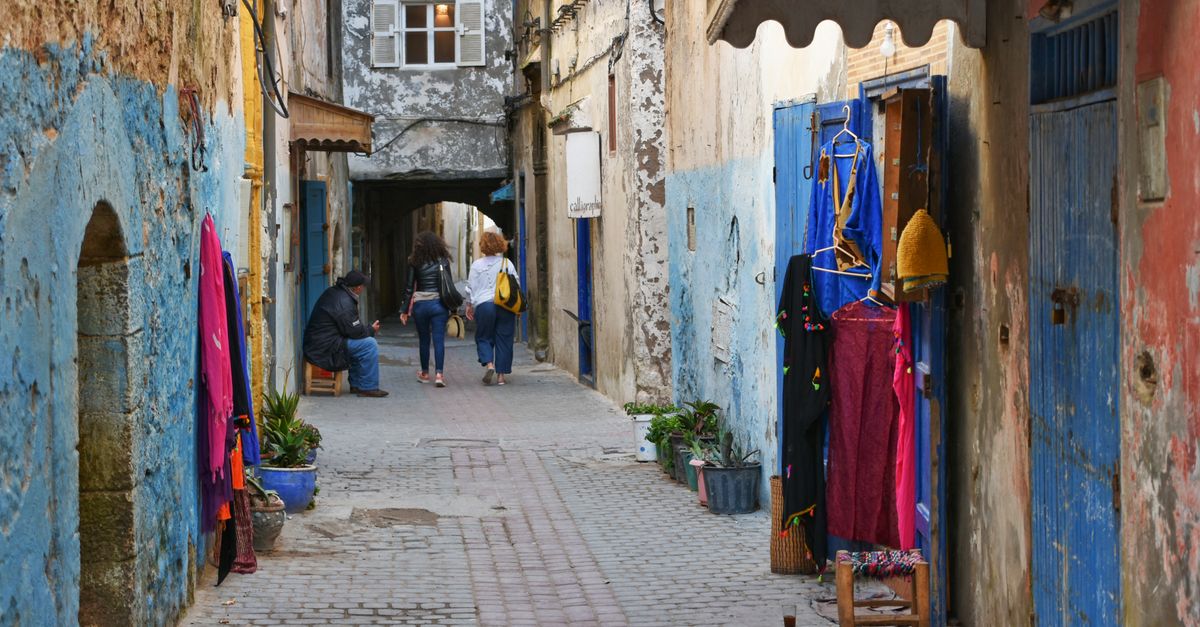
Essaouira is the budget traveler's reward after the chaos of Marrakech. The whitewashed Atlantic port, three hours west of Marrakech across the Argan plains, is smaller, calmer, cheaper, and far easier to navigate than any of Morocco's imperial cities. The medina is a UNESCO-listed grid (a grid, not a maze — designed by a French engineer for the sultan in the 1760s), the beach stretches eight kilometers down to the surf town of Sidi Kaouki, and the sea breeze keeps temperatures 8-10 degrees cooler than inland in summer. A backpacker can comfortably live on MAD 300-450 per day (USD 30-45 / EUR 28-42), and a couple sharing a private riad room with breakfast can do MAD 600-800 per day combined.
The catch in Essaouira is not faux guides or pushy hawkers — there are very few here — but the temptation of seafood restaurants on the harbor that price for European tourists. This guide covers honest budget choices for transport, beds, fish-market grilling, ramparts walks, and the small daily costs that make or break a Moroccan budget trip.
Getting There on a Budget
Essaouira-Mogador Airport (ESU) is small, sits 15 kilometers south of town near Sidi Kaouki, and runs seasonal flights from London Luton, Paris, Brussels, and Belgium with Ryanair and easyJet. Off-season fares from London land around GBP 35-60 one way booked six weeks out. From ESU into town, the only public option is a petit taxi at MAD 150-200 (USD 15-20) by meter, or a pre-arranged riad transfer for MAD 200. There is no airport bus, which is the single inconvenient thing about Essaouira budget travel. Sharing a taxi with other arrivals is common — wait at the rank for two minutes and ask anyone who looks like they are heading to the medina.

The vast majority of travelers arrive overland from Marrakech, and the cheapest route is the Supratours bus from the Supratours station next to Marrakech train station. Tickets cost MAD 90-100 (USD 9-10) one way for the three-hour ride and depart roughly six times daily between 6 AM and 7:30 PM. Book at supratours.ma the day before, or buy at the counter on the morning of travel — the bus is rarely full off-season. CTM runs the same route for MAD 80-100 from the CTM station near Bab Doukkala, with similar timing. Both buses drop at the Essaouira bus station, which is a 15-minute walk or MAD 15 petit taxi from the medina.
Grand taxis from Marrakech to Essaouira run MAD 100-130 per shared seat (six per car) and cut the trip to about 2.5 hours, but you wait at the rank near Bab Doukkala until the car fills. From Agadir, Supratours runs three daily buses for MAD 100-120 in three hours. From Casablanca, take the train to Marrakech (MAD 90-150 second class) and bus on, which is faster and cheaper than a direct bus.
Budget Accommodation
Essaouira has the best hostel scene in Morocco outside Marrakech, and the medina's compact grid means almost every cheap bed is a 5-minute walk from the harbor. Atlantic Hostel Essaouira runs dorm beds at MAD 130-160 (USD 13-16) including a fresh-baked breakfast on the rooftop, with a clear view across the medina to the ramparts. The atmosphere is sociable without being a party hostel — the staff organize walking tours, surf-lesson group discounts, and shared cooking on the roof terrace. Private rooms with shared bathroom run MAD 320-400.

Dar Mimouna and Casa Lila offer budget-riad style accommodation in the MAD 350-500 range per double room with private bathroom and a Moroccan breakfast included. Casa Lila in particular sits quietly on Rue Mohamed Diouri, two streets back from the noisy harbor area, and the four rooms book out fast in shoulder season. Riad Mimouna (separate from Dar Mimouna) is the slight splurge option at MAD 600-800 per night for a small double overlooking the ocean ramparts — the location, perched directly on the Skala wall, is the cheapest oceanfront riad bed in town.
Three further options to know: Hostel Essaouira Wind for MAD 120-150 dorms a block from Bab Marrakech, Dar Loulema for MAD 450-650 doubles with breakfast in the southern medina, and Riad Asmitou for MAD 380-500 with a particularly good rooftop. Direct booking via WhatsApp or hostel email knocks 10-15% off Booking.com rates almost universally. Negotiate stays of four or more nights — most riads will discount 20-25% in low season (November-February, excluding Christmas and New Year).
Eating Cheaply Like a Local
The single greatest food bargain in Morocco is the Skala fish market grill at the Essaouira harbor. The drill: walk to the row of blue-and-white stalls between the port gate and the ramparts, pick your fresh fish from the ice (sea bass, sardines, sole, octopus, calamari, and the local mackerel-like salmonete are abundant and cheap), agree a price by weight (sardines MAD 30-40 per kilo, sea bass MAD 80-120 per kilo, calamari MAD 60-80 per kilo), and the stallholder grills it on charcoal in front of you with bread, salad, and harissa for MAD 20-30 extra. A full grilled-fish lunch for two with bread and a soft drink runs MAD 100-160 total, which is half what a sit-down harbor restaurant charges for the same fish.

The pricing is negotiable but not aggressive — quote a number 20% lower than the first ask, settle in the middle, and check the scale before they weigh. The stalls all look identical because they essentially are; pick the one that is busy with locals rather than the one with the touts shouting in English.
For non-seafood meals, Triskala Cafe on Rue Touahen serves modern Moroccan and vegetarian dishes for MAD 70-110 per main, and Le Coquillage just inside the medina does seafood pastilla and grilled sole at MAD 90-130 — both deliver mid-range quality at lower prices than the harbor strip. Cafe Taros's rooftop is overpriced for food but the MAD 30 mint tea at sunset is the iconic photo spot of Essaouira and worth it for one evening. Street-food breakfast: msemen with honey for MAD 8-12, a glass of fresh-pressed orange juice for MAD 10-15 from any cart along Avenue Mohammed Ben Abdellah, and bread bakeries selling khobz at MAD 1.50 per round.
Self-catering pays off in Essaouira because the medina has small grocery shops and the daily produce market behind Bab Doukkala — fresh tomatoes, olives, oranges, and bread for under MAD 50 covers two people for a picnic on the ramparts. Most hostels and budget riads have shared kitchens.
Free & Low-Cost Attractions
The Skala de la Ville — the famous sea-facing rampart wall with bronze cannons captured from the Spanish, Portuguese, and Dutch, and the photo location of Game of Thrones' Astapor — costs MAD 10 (USD 1) to enter, which is the most photogenic dirham you will spend in Morocco. Plan your visit for late afternoon when the light hits the cannons sideways and the waves crash against the seawall below. The lower Skala du Port at the harbor itself is free, with the same dramatic views and the addition of seagulls, blue boats, and the working fishery.

The medina ramparts are entirely free to walk along the seaward edge, and the eight-kilometer beach south to Diabat and Sidi Kaouki is free. Camel and horse rides on the beach run MAD 100-200 for an hour but the walk itself costs nothing and delivers the iconic dunes-and-Atlantic photo. The Moulay Hassan square at the heart of the medina is free, the daily artisan studios off Rue de la Skala are free to browse (woodworkers using thuya wood, the fragrant local burlwood, are a particular highlight), and the Sidi Mohammed ben Abdallah Museum charges MAD 20 for a small but well-curated collection of Berber jewelry and historic photographs.
The Mellah (former Jewish quarter) is free to walk and includes the restored Slat Lkahal synagogue (small donation appreciated, MAD 10-20). Borj el-Berod, the ruined fortified tower at the south end of the bay where Jimi Hendrix supposedly wrote "Castles Made of Sand" (the timeline does not actually work, but the legend persists), is a free 45-minute walk along the beach. The fish auction at the harbor at 5 PM is unticketed and a free spectacle.
Getting Around on a Budget
The medina is a compact grid roughly 600 meters by 400 meters, and you can walk corner to corner in 10-12 minutes. Everything you came for — riads, restaurants, the Skala, the harbor, the beach access at Bab el-Bahr — sits inside this grid. Walking is the only sensible option. Wear sandals or shoes that handle a little sand.

For the longer beach to Sidi Kaouki (8-10 kilometers south), the cheapest motorized option is the Number 5 local bus from Bab Doukkala for MAD 7, which runs hourly. A petit taxi to Sidi Kaouki costs MAD 80-120 by meter, or MAD 200-250 round-trip with a one-hour wait at Sidi Kaouki for swimming, lunch, or a surf lesson. Within town, petit taxis are MAD 8-15 for any trip inside the medina-to-bus-station radius. Horse-and-buggy carriages at the harbor square run MAD 80-150 for a 30-minute town tour — kitsch but reasonably priced for a family with small children. Donkey carts handle freight delivery in the medina and are not really for tourists, despite what postcards suggest. Camel rides on the beach run MAD 100-200 per hour, generally negotiable to MAD 80 if you book direct with the handler rather than through a hotel.
Money-Saving Tips
Seven rules to keep your Essaouira budget tight without feeling like you are missing the experience:
1. Use ATMs at Banque Populaire or BMCE on Avenue de l'Istiqlal, not the tourist exchange counters. The exchange shacks at the harbor pay 5-7% below the bank rate, and the MAD 30 ATM fee is cheaper for any withdrawal over MAD 1,000.
2. Skip the harbor sit-down restaurants — eat at the Skala fish-market grills instead. Same fish, same charcoal, half the price, and arguably better atmosphere.
3. Negotiate haggling lightly here. Essaouira vendors are not as aggressive as Marrakech and the starting price is often only 1.5-2x the real value. Counter at 50-60% rather than 30% — you will get there faster and the vendor will not feel insulted.
4. Bring layers. The Atlantic wind blows year-round and afternoon temperatures can drop 8-10 degrees from morning. Buying a fleece or jacket in town costs MAD 200-400 — pack one and save the cash.
5. Argan oil bargains exist outside the medina. The big Berber women's cooperatives on the Marrakech road sell certified argan oil for MAD 200-280 per 100ml, half the medina shop prices. Combine the visit with a stop on the day you arrive or depart by bus.
6. Refill water at your riad rather than buying plastic bottles. Most riads filter and offer free refills. Bring a 1-liter reusable bottle.
7. Stay four nights and bargain for a discount. Three is the median tourist stay; four flips the calculation for budget riads, and most will offer 15-20% off the nightly rate to lock in the longer booking.