Bali occupies a unique position in the budget travel world: it's a destination where $25-40 per day buys you an experience that feels luxurious. Not "budget luxurious" or "luxurious for the price" — genuinely, tangibly wonderful.
For IDR 400,000-600,000 per day, you can sleep in a clean guesthouse surrounded by rice terraces, eat three meals of some of the most flavorful food in Southeast Asia, rent a scooter to explore volcanic landscapes and hidden waterfalls, and watch the sun sink into the Indian Ocean from a clifftop temple. The gap between what Bali costs and what Bali delivers is wider than almost anywhere else on earth.
But Bali also has a trap built into its tourism infrastructure: a parallel pricing universe where the same island costs 3-5 times more for no meaningful improvement in experience. The cocktail bars of Seminyak, the infinity-pool villas of Uluwatu, the wellness retreats of Canggu — these are priced for digital nomads on Western salaries and honeymooners on holiday budgets.
The budget Bali exists just one street behind, one village over, one conversation with a local away from the markup. This guide maps the affordable Bali in detail — where to stay, eat, move, and experience the island on IDR 350,000-600,000 per day without missing anything that matters.

Budget Accommodation: Guesthouses and Homestays (IDR 150,000-300,000)
Bali's accommodation spectrum runs from IDR 80,000 hostel dorms to IDR 15,000,000-per-night cliff villas, but the sweet spot for budget travelers is the traditional guesthouse (losmen) and family-run homestay. These are the foundation of Balinese tourism hospitality — small properties with 4-10 rooms, often built around a family compound, where the owners live on-site and breakfast is included.
What IDR 150,000-300,000 Gets You
At the lower end (IDR 150,000-200,000, roughly $10-13 USD), expect a clean room with a private bathroom, fan or basic air conditioning, a comfortable bed, WiFi, and a simple breakfast of banana pancake or nasi goreng and fruit. The room will be basic but clean, the bathroom functional, and the setting often surprisingly beautiful — many budget guesthouses in Ubud have garden views or rice paddy vistas that hotels charge 10 times more for.
At IDR 250,000-300,000 ($16-20 USD), you step up to properties with swimming pools, better furnishings, hot water (not always a given at the cheapest places), and sometimes a small balcony or terrace. These are the kind of properties where you might genuinely forget you're on a tight budget.
Best Budget Areas
Ubud has the deepest pool of budget accommodation on the island. The streets branching off Jalan Monkey Forest — particularly Jalan Bisma, Jalan Kajeng, and the road to Penestanan — are lined with guesthouses in the IDR 150,000-250,000 range.
The further you walk from the center (10-15 minutes), the cheaper and quieter the options become, and many offer rice paddy views. Amed on the east coast is Bali's most underrated budget destination — a quiet fishing village with snorkeling off the beach, volcanic sand, mountain backdrops, and guesthouses from IDR 150,000.
Munduk in the central highlands offers cool mountain air, waterfalls within walking distance, and homestays from IDR 120,000 in a setting that feels like a different island from the southern tourist areas. Sanur is the budget-friendly alternative to Seminyak for beach access — a laid-back coastal town with a paved beachfront path, calm water, and guesthouses from IDR 200,000 that are a fraction of what equivalent beachside rooms cost in Kuta or Seminyak.
Canggu has become expensive for its main strip, but the northern end toward Pererenan still has guesthouses from IDR 200,000-300,000.
Hostels
For solo travelers, Bali's hostel scene is strong and growing. Dorm beds run IDR 80,000-150,000 ($5-10) in Ubud, Canggu, and Kuta/Seminyak. In Da Lodge Canggu (from IDR 100,000) has a pool and social atmosphere.
Puri Garden Hostel Ubud (from IDR 90,000) is set in a garden compound near the Monkey Forest. Quality varies, so check recent reviews — some Bali hostels are excellent value, while others cut corners on cleanliness.
Eating at Warungs: IDR 20,000-40,000 per Meal
A warung is the backbone of Balinese food culture — a small, family-run restaurant, often just a few tables under a corrugated roof or open-air pavilion, serving home-cooked Indonesian and Balinese food at prices that make eating out cheaper than cooking.
The food at a good warung is not "cheap food" in the diminished sense — it's the food that Balinese families have been cooking for generations, made fresh daily from local ingredients, and served with the casual generosity that characterizes Balinese hospitality.
What to Eat
Nasi campur (mixed rice) is the default warung meal — a plate of steamed rice surrounded by small portions of whatever the cook has prepared that day: chicken or pork in spiced sauce, tempe manis (sweet fried tempeh), lawar (vegetable and coconut salad), sambal, krupuk (crackers), and often a piece of sate. A plate costs IDR 20,000-35,000 ($1.30-2.30) and is a complete, balanced meal.
Nasi goreng (fried rice) and mie goreng (fried noodles) are ubiquitous at IDR 15,000-30,000, always served with a fried egg, krupuk, and pickled vegetables. Babi guling (suckling pig) is Bali's signature dish — a whole roasted pig with crispy skin, spiced meat, lawar, and rice.
At tourist restaurants it's IDR 80,000+, but at local warungs in Gianyar, Ubud, and Denpasar you'll find plates for IDR 30,000-45,000. Warung Ibu Oka in Ubud is the most famous (Anthony Bourdain featured it), and a plate is IDR 50,000, but nearby Warung Babi Guling Pak Malen serves comparable quality for IDR 35,000.
Sate (grilled skewers) comes in dozens of varieties — chicken, pork, fish, minced meat (sate lilit) — and costs IDR 15,000-30,000 for a full portion with rice and peanut sauce. Gado-gado (steamed vegetables with peanut sauce) is a satisfying vegetarian option at IDR 15,000-25,000.
Bakso (meatball soup) is sold from carts and small shops for IDR 10,000-20,000 — a steaming bowl of broth with meatballs, noodles, and greens. Nasi jinggo is the ultimate budget meal — small portions of rice with sambal and a choice of topping, wrapped in banana leaf, sold from roadside stalls for IDR 5,000-8,000 ($0.35-0.55).
You'll often need two or three for a full meal, but even then it's absurdly cheap.
Where to Find the Best Warungs
The golden rule: eat where Balinese people eat. If a warung is full of locals at lunchtime, the food is good and the prices are local. If it has an English menu with photos and no Balinese customers, you're paying a tourism premium for inferior food.
In Ubud, the best local warungs cluster along Jalan Raya Andong (the road toward Tegallalang), in Peliatan village, and along Jalan Sukma. In Denpasar, the Pasar Badung night market and the warungs along Jalan Teuku Umar serve some of the best and cheapest food on the island.
In Sanur, walk past the beachfront restaurants to the warungs on Jalan Danau Tamblingan's side streets.

Smoothie Bowls and Tourist Food
Bali's Instagram-famous smoothie bowls (IDR 45,000-75,000) and avocado toasts (IDR 50,000-80,000) represent the tourist economy at work — paying 3-4 times local restaurant prices for photogenic Western food. There's nothing wrong with enjoying them occasionally, but a budget traveler relying on these cafes will spend 3-4 times what warung-focused travelers spend on food.
One smoothie bowl at a Canggu cafe costs the same as three full warung meals. Save the trendy cafes for a treat, not a daily habit.
Free and Cheap Things to Do in Bali
Bali's greatest experiences are natural and cultural — rice terraces, temples, beaches, volcanoes, and the daily rituals of Balinese Hindu life. Many of these cost nothing or nearly nothing.
Rice Terraces
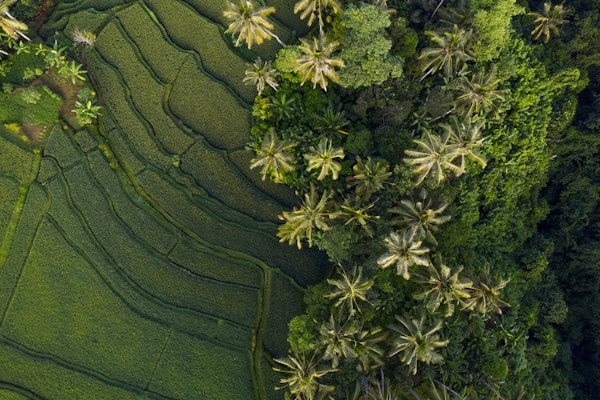
The terraced rice paddies that define Bali's interior landscape are free to walk through in most areas. Tegallalang north of Ubud is the most famous, and the main viewing platforms now charge IDR 15,000, but the walking paths through the surrounding terraces extend for kilometers and are free.
Jatiluwih in Tabanan, a UNESCO World Heritage Site, charges IDR 40,000 but covers an enormous area of some of the most beautiful agricultural landscape in the world — easily worth a half-day exploration. The terraces along the road between Ubud and Tirta Gangga in east Bali are free, uncrowded, and stunning.
Temple Exteriors and Ceremonies
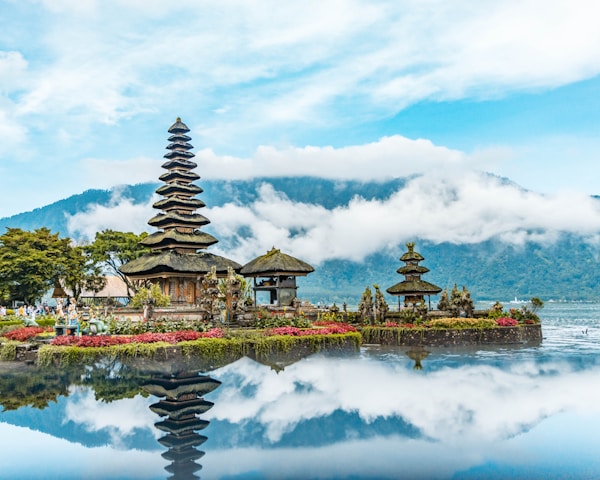
Bali has over 20,000 temples, and while the major tourist temples charge entrance fees (IDR 30,000-60,000), the vast majority of Bali's temples are free to visit from the outside — and the exteriors, with their ornate stone carvings and split gates draped in black-and-white checkered cloth, are often more photogenic than the interiors. More importantly, Balinese temple ceremonies happen constantly — processions through villages, offerings at family temples, and full-scale odalan (temple anniversary) celebrations with gamelan music, dancing, and elaborately dressed worshippers.
These are public events, and respectful visitors wearing a sarong are generally welcome to observe. Ask your guesthouse host when the next ceremony is happening — there's almost always one within walking distance.
Beaches
Bali's beaches are free, and the variety is remarkable. Padang Padang (small entrance fee of IDR 15,000) is a dramatic cove beneath cliffs. Green Bowl Beach requires a steep staircase descent but rewards you with an almost-empty white sand beach.
Nyang Nyang Beach in Uluwatu is one of the most beautiful and least visited beaches in Bali — a long white sand stretch accessible via a steep path. Amed's volcanic black sand beach has excellent snorkeling directly from shore.
Sanur's calm, shallow beach is perfect for relaxing. Balangan Beach offers dramatic cliff views and consistent surf.
Ubud Art Walks and Cultural Experiences
Ubud's streets are lined with galleries, workshops, and studios where Balinese artists create paintings, wood carvings, silver jewelry, and textiles. Walking through the Ubud art market (bargain hard — start at 30% of the asking price), visiting the galleries along Jalan Raya Ubud, and watching artisans at work in the villages of Mas (wood carving), Celuk (silver), and Batuan (painting) costs nothing.
The daily offerings (canang sari) placed everywhere — tiny woven baskets of flowers, rice, and incense — are themselves miniature works of art, a constant reminder that aesthetics are woven into every aspect of Balinese life.
Sunset Viewpoints
Bali's sunsets are legendary, and the best viewpoints are free. Uluwatu Temple charges IDR 50,000 but watching the sunset from the cliffs nearby is free. The beaches of Kuta and Seminyak offer wide-open sunset views at no cost. Campuhan Ridge Walk in Ubud — a paved path along a narrow ridge between two valleys — is one of the most beautiful short walks in Bali, especially at sunrise or late afternoon.
The viewpoints along the road to Kintamani overlooking Mount Batur and its caldera lake are free and unforgettable.

Transport: Getting Around Bali Cheaply

Scooter Rental (IDR 70,000/day)
A scooter (usually a Honda Vario or Scoopy 110cc automatic) rents for IDR 60,000-80,000 per day, dropping to IDR 50,000-60,000 for weekly rentals. This is the single most liberating budget decision you can make in Bali — it gives you complete freedom to explore remote temples, hidden beaches, mountain villages, and roadside warungs at your own pace.
Petrol is cheap (about IDR 10,000 per liter, and a full tank lasts days of normal riding). However, take this seriously: Bali traffic is chaotic, roads in rural areas can be narrow and poorly maintained, and accidents involving tourists are common.
Make sure your travel insurance covers motorbike riding, wear a helmet always, and don't ride at night if you can avoid it. An international driving permit (IDP) is technically required.
Grab (Ride-Hailing App)
Grab operates throughout southern Bali and is significantly cheaper than traditional taxis. A ride from Kuta to Seminyak costs about IDR 25,000-40,000, Ubud to Tegallalang about IDR 40,000-60,000. However, note that Grab drivers face restrictions in some areas — parts of Ubud center, Tanah Lot, and some tourist zones have bans enforced by local taxi cooperatives.
In these areas, you may need to walk a few hundred meters to a main road for pickup. Despite this, Grab is the most cost-effective and transparent way to get between areas without a scooter.
Shared Drivers and Day Tours
For day trips covering multiple stops (e.g., Ubud temples circuit, east Bali tour, north Bali waterfalls), hiring a private driver for 8-10 hours costs IDR 500,000-700,000 ($33-47). Split between 2-4 travelers, this is excellent value and saves the stress of navigating unfamiliar roads.
Drivers typically know the best routes, can recommend local warungs for lunch, and will wait patiently at each stop. Your guesthouse can arrange a driver, or ask fellow travelers at your hostel to split the cost. For longer distances, Perama shuttle buses run fixed routes between tourist areas (Kuta-Ubud-Lovina-Amed) for IDR 50,000-100,000 per leg.
Money-Saving Strategies for Bali
1. Eat Where Locals Eat
This is the single most impactful budget strategy. A tourist restaurant in Seminyak charging IDR 65,000 for nasi goreng is selling the exact same dish (or worse) that a warung 200 meters away sells for IDR 18,000. Follow the Balinese workers at lunchtime and eat where they eat.
2. Avoid the Seminyak Markup
Seminyak and the southern end of Canggu operate on a fundamentally different pricing structure than the rest of Bali. Accommodation, food, and drinks all cost 2-4 times more than equivalent options in Ubud, Sanur, Amed, or Munduk.
A beer at a Seminyak beach club is IDR 80,000; at a warung in Ubud, it's IDR 25,000. If you want the beach club experience, allocate one day for it rather than basing yourself there.

3. Cook at Your Guesthouse
Many guesthouses and homestays offer kitchen access or at minimum a kettle and fridge. Bali's local markets sell incredible fresh produce — tropical fruits, vegetables, eggs, instant noodles — at rock-bottom prices.
A bag of fresh mangoes from a roadside stall costs IDR 15,000-25,000. Pasar Ubud (Ubud Market, early morning produce section before 8 AM) sells fresh fruit, vegetables, and staples at local prices.
4. Travel During Off-Season
May, June, and September offer the best value in Bali — the weather is still dry (Bali's dry season runs April to October), but accommodation prices drop 20-40% from peak season (July-August and December-January). The shoulder months also mean fewer crowds at popular sites.
Even October and early November, when brief afternoon showers begin, offer excellent value with mostly good weather.
5. Skip the Tourist Activities Markup
White-water rafting, ATV tours, and organized day trips booked through tourist agencies often carry 50-100% markups. Book directly with operators, check for online promotions, or ask your guesthouse host to arrange activities — they often have local connections that get better prices.
For snorkeling, bring your own mask (or buy one cheaply) rather than renting from tour operators at IDR 50,000-100,000 per session.
Daily Budget Breakdown
| Category | Backpacker (IDR/day) | Budget Traveler (IDR/day) |
|---|---|---|
| Accommodation | IDR 100,000-150,000 (hostel/basic guesthouse) | IDR 200,000-300,000 (guesthouse with pool) |
| Breakfast | IDR 0 (included) or IDR 15,000 | IDR 0 (included) or IDR 25,000 |
| Lunch | IDR 20,000-30,000 (warung) | IDR 30,000-50,000 (warung/local restaurant) |
| Dinner | IDR 25,000-40,000 (warung) | IDR 40,000-70,000 (restaurant) |
| Snacks & Drinks | IDR 15,000-25,000 | IDR 25,000-40,000 |
| Transport | IDR 60,000-80,000 (scooter rental) | IDR 70,000-150,000 (scooter + fuel/Grab) |
| Activities | IDR 0-30,000 (free/cheap) | IDR 30,000-80,000 (one paid activity) |
| Daily Total | IDR 220,000-370,000 | IDR 395,000-715,000 |
At current exchange rates (approximately IDR 15,500 to $1 USD), the backpacker daily budget translates to $14-24 USD, and the budget traveler to $25-46 USD. These are extraordinary numbers for a destination of Bali's beauty and cultural richness.
Even at the higher end of budget travel, you're spending less per day than a single dinner at a mid-range restaurant in most Western cities — and getting a full day of tropical island life in return.
The key mindset shift for budget Bali is understanding that the most expensive version of the island isn't the best version. The warung meal is better than the tourist restaurant meal.
The guesthouse with rice paddy views is more memorable than the generic hotel. The scooter ride through village roads at golden hour is more thrilling than any organized tour. Bali's best experiences are its cheapest ones — the island was designed for people who show up with curiosity and a willingness to eat where the locals eat, walk where the tourists don't, and let the island reveal itself on its own generous terms.
Read our Complete Bali Itinerary Guide See our Singapore Budget Travel Guide