Three days in Bali is not enough. Let's be honest about that upfront. The island has enough temples, rice terraces, surf breaks, volcanic hikes, and hidden waterfalls to fill three weeks without repetition.
But three days, planned with intention, can give you the essential Bali experience: the spiritual weight of Ubud's water temples, the raw coastal beauty of the Bukit Peninsula, and the cosmopolitan buzz of Seminyak's beach clubs and restaurants. This itinerary moves fast but builds in enough breathing room that you won't feel like you're ticking boxes on a checklist.
A critical note before we start: Bali's distances are deceptive. The island is only 140 kilometers across, but roads are narrow, traffic is chaotic, and a journey that looks like 30 minutes on Google Maps often takes 90 minutes in reality.
Every day in this itinerary is organized geographically to minimize transit time. We strongly recommend hiring a private driver for all three days — it costs IDR 600,000 to IDR 800,000 per day (roughly $38 to $50 USD) including fuel and a patient local who knows the back roads.
This is not a luxury; it is the most efficient way to see Bali. Your driver becomes your guide, your translator, and your insurance against the island's notoriously confusing road system.

Ubud — Temples, Rice Fields & Sacred Springs
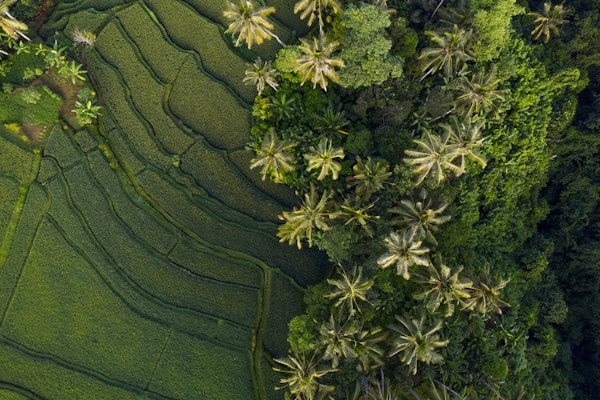
Morning (7:00 AM) — Tegallalang Rice Terraces: Start early. By 10 AM, the terraces swarm with tour buses and the Instagram crowd, and the experience diminishes sharply. At 7 AM, the light is golden, the air is cool, and you might have certain sections nearly to yourself.
The Tegallalang terraces are not the largest in Bali — that honor goes to Jatiluwih — but they are the most dramatic, with steep, cascading tiers carved into a narrow valley. The subak irrigation system here is a UNESCO-recognized tradition dating back over a millennium.
Walk the trails between the paddies rather than staying on the main road viewpoints. Entry costs IDR 15,000 per person. Several swing operators along the route offer the now-famous "Bali swing" experience for IDR 200,000 to IDR 400,000 — the views are genuine, the pricing is pure tourist markup, and the queues are long.
Skip the swings and spend the time walking deeper into the terraces instead.
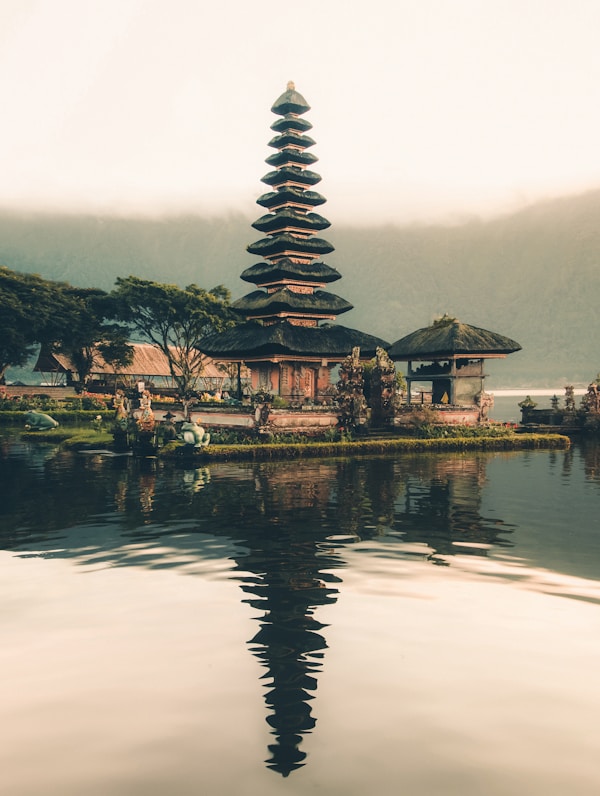
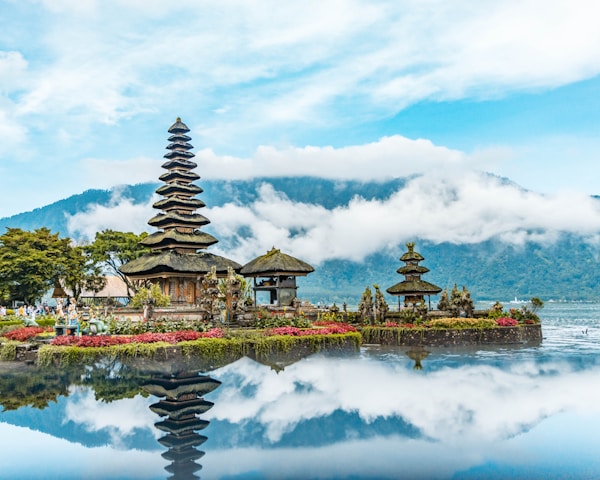
Mid-Morning (9:30 AM) — Tirta Empul Water Temple: Drive 15 minutes north to one of Bali's most sacred sites. Tirta Empul, founded in 962 AD, is a Hindu water temple built around natural springs that Balinese Hindus believe have purifying properties.
Visitors can participate in the purification ritual (melukat): you change into a sarong, wade into the spring-fed pools, and pass under a series of 13 carved stone spouts, letting the water flow over your head at each one while offering a brief prayer. This is not a performance for tourists — Balinese families do this regularly as part of their spiritual practice.
Approach it with respect and it becomes one of the most memorable experiences in all of Southeast Asia. Entry costs IDR 50,000. Sarong rental is IDR 15,000 if you don't bring your own.
Note: the springs are genuinely cold, especially in the morning. Leave valuables with your driver or in the provided lockers (IDR 10,000).
Late Morning (11:30 AM) — Lunch in Ubud: Head back toward Ubud center for lunch. Locavore to Go on Jalan Dewi Sita is the casual sibling of Bali's most acclaimed fine-dining restaurant — their nasi campur (mixed rice plate with multiple side dishes) costs IDR 65,000 and showcases local Balinese ingredients at a fraction of the main restaurant's price.
If you want something quicker, Warung Biah Biah on the same street serves traditional Balinese food — think babi guling (suckling pig) and lawar (minced meat with coconut and spices) — at local prices: IDR 35,000 to IDR 55,000 per dish. Eat on the upstairs terrace overlooking the street.

Afternoon (1:30 PM) — Sacred Monkey Forest Sanctuary: The Ubud Monkey Forest is a nature reserve and Hindu temple complex sheltering over 1,260 long-tailed macaques across 30 acres of dense tropical forest. The ancient banyan trees, moss-covered stone temples, and dragon-carved staircases make it atmospheric regardless of the monkeys — but the monkeys are the stars. They are wild, intelligent, and entirely unafraid of humans.
Entry costs IDR 80,000 for adults. The monkeys will steal anything not secured: sunglasses, water bottles, hats, phones, food. Remove dangling accessories before entering, secure your phone in a zipped pocket, and do not bring food.
Despite their boldness, bites are rare unless provoked. Walk the full loop through the forest — it takes about 60 to 90 minutes, and the deeper sections are less crowded and more beautiful than the entrance area.
Evening (6:30 PM) — Kecak Fire Dance: End your Ubud day with the Kecak dance, a traditional Balinese performance that replaces the typical gamelan orchestra with a circle of 50 or more bare-chested men who provide the rhythm through synchronized chanting: "cak-cak-cak-cak." The performance tells an episode from the Ramayana epic, involves fire walking, and takes place at sunset in an open-air amphitheater. The most atmospheric venue is the Pura Dalem Taman Kaja temple in central Ubud — performances start at 7 PM and last about an hour.
Tickets cost IDR 100,000 at the door. Arrive 20 minutes early for a good seat.
Uluwatu & The Bukit Peninsula — Cliffs, Beaches & Sunset
Morning (8:30 AM) — Padang Padang Beach: Drive south to the Bukit Peninsula, Bali's limestone tail. The landscape shifts from lush jungle to dry scrubland and dramatic sea cliffs. Padang Padang is a small cove reached by descending a narrow staircase carved through a rock formation.
The beach itself is compact — maybe 100 meters of white sand — but the turquoise water, rock formations, and jungle backdrop make it feel like a movie set (it literally was one — the Julia Roberts film "Eat, Pray, Love" was shot here). Entry is IDR 15,000.
Arrive early to get a spot. The beach gets packed by noon, especially on weekends. Swim in the sheltered cove — the water is calm and warm year-round.
Late Morning (10:30 AM) — Suluban Beach (Blue Point): A 10-minute drive from Padang Padang brings you to Suluban, also known as Blue Point — a surfer's beach wedged between towering limestone cliffs. The access path is an adventure itself: you descend through a cave in the cliff face, emerging onto a rocky beach that feels genuinely hidden.
This is a working surf break — the left-hander here is respected — so watch from the rocks if you are not an experienced surfer. Single Fin, the famous cliff-top bar perched above the beach, is the perfect place to watch the surfers while drinking a cold Bintang (IDR 65,000 for a large bottle).
Their terrace has one of the best ocean views in Bali, and on Sundays their pool party runs from afternoon into evening. Even on quiet days, the panoramic view from the deck is worth the beer price alone.
Afternoon (1:00 PM) — Lunch & Spa: The Bukit has excellent warungs. Warung Mina near Uluwatu serves fresh grilled seafood — whole snapper with sambal matah, steamed rice, and vegetables for IDR 75,000. After lunch, treat yourself to a Balinese massage.
Spa culture in Bali is world-class and absurdly affordable by Western standards. A 60-minute traditional Balinese massage at a reputable spa like Karma Spa near Uluwatu costs IDR 250,000 to IDR 400,000 (roughly $16 to $25) — the same treatment would cost $120 or more in a Western city.
The Balinese style combines deep tissue pressure, long strokes, and aromatherapy oils. Book 90 minutes and let the morning's exertion dissolve.
Late Afternoon (5:00 PM) — Uluwatu Temple (Pura Luhur Uluwatu): This is the day's showpiece. Uluwatu Temple sits on a sheer 70-meter cliff above the Indian Ocean — one of Bali's six key spiritual pillars, believed to protect the island from evil sea spirits.
The temple itself is small and partially closed to non-worshippers, but the clifftop walkways offer staggering sunset views. Entry costs IDR 50,000 and includes a sarong (mandatory). Watch out for the monkeys here — Uluwatu's macaques are bolder than Ubud's and are specifically known for snatching sunglasses and phones from tourists.
Remove everything shiny from your person before entering. Time your visit so you are at the western cliff edge by 5:45 PM — the sunset here, with the temple silhouetted against a burning sky, is one of Bali's defining images.
There is also a nightly Kecak dance performance at Uluwatu's clifftop amphitheater at 6 PM (IDR 150,000) — if you skipped the one in Ubud, catch it here. The clifftop setting is more dramatic than any indoor venue.
Evening (7:30 PM) — Jimbaran Seafood Dinner: Drive 20 minutes north to Jimbaran Bay, where a row of seafood restaurants set their tables directly on the sand. This is Bali's signature dining experience: choose your seafood from an ice display — prawns, lobster, snapper, squid, clams — and it is grilled over coconut husks and served with rice, sambal, and plecing kangkung (water spinach salad).
Menega Cafe and Teba Cafe are the most established, though quality is consistent across most of the beach restaurants. A seafood platter for two (grilled prawns, half lobster, snapper, squid, clams, rice, and vegetables) costs IDR 450,000 to IDR 700,000 — expensive by Balinese warung standards but extraordinary value for a beachfront lobster dinner.
The lanterns on the sand, the sound of the waves, and the fading sunset make this deeply romantic and entirely unforgettable.

Seminyak — Brunch Culture, Beach Clubs & Modern Bali
Morning (8:30 AM) — Breakfast at Sisterfields: Your final day starts with what might be the best breakfast in Bali. Sisterfields on Jalan Kayu Jati, Seminyak, is an Australian-run cafe that has become a Bali institution since opening in 2014.
The space is bright, the coffee is excellent (they roast their own beans), and the menu goes far beyond the typical tourist breakfast. The ricotta hotcakes with honeycomb butter (IDR 95,000) are famous for good reason — fluffy, rich, and almost too beautiful to eat. The shakshuka (IDR 85,000) and the smashed avocado on sourdough (IDR 80,000) are equally strong.
Go before 9 AM or expect a 20 to 30 minute wait — this place is perpetually popular with Bali's expat community and visiting Australians. Coffee runs IDR 45,000 to IDR 65,000 for specialty drinks.
Late Morning (10:30 AM) — Seminyak Shopping: Walk off breakfast along Jalan Raya Seminyak and Jalan Kayu Aya (also called Eat Street), Seminyak's main commercial arteries. This is where Bali's design and fashion scenes converge.
Bamboo Blonde sells resort wear designed and produced locally. Magali Pascal is a French-Indonesian designer whose Seminyak flagship carries pieces that cost a fraction of what they sell for in Paris.
Kendra Gallery stocks contemporary Balinese art and handcrafted jewelry. For homewares, Kim Soo has curated Indonesian textiles, ceramics, and furniture since the 1990s. Bargaining is not expected in established boutiques but is standard at market stalls — start at 40 percent of the asking price and settle around 60 percent.
Budget IDR 500,000 to IDR 2,000,000 depending on your self-control.

Midday (12:30 PM) — Potato Head Beach Club: Potato Head on Jalan Petitenget is Bali's most iconic beach club and a genuine design landmark. The facade is made from 4,000 reclaimed shutters, the interior features furniture by Indonesian designers, and the infinity pool overlooks Petitenget Beach.
Unlike many Bali beach clubs that feel like spring break operations, Potato Head has a cultural program — art exhibitions, vinyl DJ sets, sustainable design initiatives — that gives it substance beyond the day-drinking. A day bed costs IDR 500,000 with a minimum spend requirement of IDR 500,000 on food and drinks (split between two people, this is easy to hit).
Cocktails run IDR 150,000 to IDR 200,000 — expensive by Bali standards, affordable by any global beach club metric. Their food is better than it needs to be: the smoked tuna burger (IDR 165,000) and the crispy chicken karaage (IDR 120,000) are legitimately good.
Spend 2 to 3 hours here. Swim, eat, soak in the design, and accept that this is a very good way to spend an afternoon.
Afternoon (3:30 PM) — Echo Beach, Canggu: Drive 20 minutes north to Canggu's Echo Beach for a rawer coastal experience. Echo Beach is the antithesis of Potato Head's polished aesthetic — it is a black-sand surf beach with a row of beachfront warungs, a steady stream of surfers, and an atmosphere that captures what Bali felt like before the luxury development arrived.
Grab a fresh coconut (IDR 25,000) from one of the beach vendors and watch the surfers. If the waves are not too big, you can rent a surfboard and take a lesson (IDR 350,000 for a 2-hour group lesson including board).
The warungs along the beach serve cold Bintang (IDR 35,000) and nasi goreng (IDR 40,000) with ocean views that would cost ten times as much at a curated venue.
Evening (7:30 PM) — Dinner at Merah Putih: End your Bali trip with a statement meal. Merah Putih on Jalan Petitenget is housed in a soaring, cathedral-like space with 12-meter ceilings, raw concrete columns, and a reflection pool that runs through the dining room.
The food is modern Indonesian — traditional recipes refined with contemporary technique but never stripped of their character. The bebek goreng (crispy duck, IDR 195,000) is extraordinary: the skin shatters, the meat is moist, and the sambal has genuine heat.
The tasting menu (IDR 650,000 per person for 7 courses) is the best way to experience the range — it moves through Javanese, Balinese, and Sumatran cuisines with a coherence that demonstrates how vast and varied Indonesian cooking actually is. Cocktails (IDR 145,000 to IDR 175,000) are inventive and use local ingredients — the lemongrass gimlet is superb.
This is a special-occasion restaurant by any global standard, at a price that would barely cover a main course in New York or London.
Budget Breakdown (Per Person, 3 Days)
| Category | Budget | Mid-Range | Luxury |
|---|---|---|---|
| Accommodation (3 nights) | IDR 600,000 ($38) | IDR 2,400,000 ($154) | IDR 9,000,000 ($577) |
| Food & Drinks | IDR 750,000 ($48) | IDR 2,250,000 ($144) | IDR 5,500,000 ($353) |
| Transport (driver 3 days) | IDR 1,800,000 ($115) | IDR 2,100,000 ($135) | IDR 3,000,000 ($192) |
| Activities & Entry Fees | IDR 500,000 ($32) | IDR 1,200,000 ($77) | IDR 3,000,000 ($192) |
| Total 3 Days | IDR 3,650,000 (~$234) | IDR 7,950,000 (~$510) | IDR 20,500,000 (~$1,315) |
Practical Tips
Hiring a Driver
A private driver for the day (10 to 12 hours) costs IDR 600,000 to IDR 800,000 including fuel and the driver's lunch. This is the standard arrangement for sightseeing in Bali, and it is vastly superior to renting a scooter (dangerous on unfamiliar roads with aggressive traffic), using ride-hailing apps for each trip (Grab works in Bali but is resented by local taxi cooperatives who sometimes block pickup areas), or joining group tours.
Your hotel can arrange a driver, or book through recommendations — many excellent drivers have WhatsApp numbers shared on travel forums. Tip your driver IDR 50,000 to IDR 100,000 at the end of the day if the service was good.

Money
The Indonesian Rupiah (IDR) comes in large denominations — a single US dollar equals roughly 15,600 IDR. ATMs are plentiful in tourist areas and dispense IDR 1,000,000 to IDR 2,500,000 per withdrawal. Use ATMs inside banks or malls rather than standalone machines on the street, which occasionally have skimmers installed.
Carry cash for warungs, temples, and market shopping. Mid-range restaurants and all hotels accept credit cards. Be careful with money changers — the ones advertising suspiciously good rates on Jalan Legian are notorious for sleight-of-hand scams.
Use bank-rate exchanges like BMC or Central Kuta, or simply withdraw from ATMs.
Respect the Culture
Bali is a Hindu island in a Muslim-majority country, and religion permeates daily life in visible ways. You will see offerings (canang sari — small palm-leaf baskets with flowers, incense, and sometimes candy) placed on sidewalks, shop entrances, and car dashboards every morning.
Do not step on them. Temple ceremonies happen constantly — processions may block roads, and your driver will know to wait patiently. If you stumble upon a ceremony, you are usually welcome to observe quietly from a respectful distance.
Never point your feet at a shrine or person (the feet are considered the lowest, most impure part of the body in Hindu culture). Do not touch anyone's head (the highest, most sacred part).
These aren't tourist rules — they are deeply held cultural values.
Want more Southeast Asia itineraries? Read our Bangkok 3-Day Itinerary for another action-packed city trip in the region.