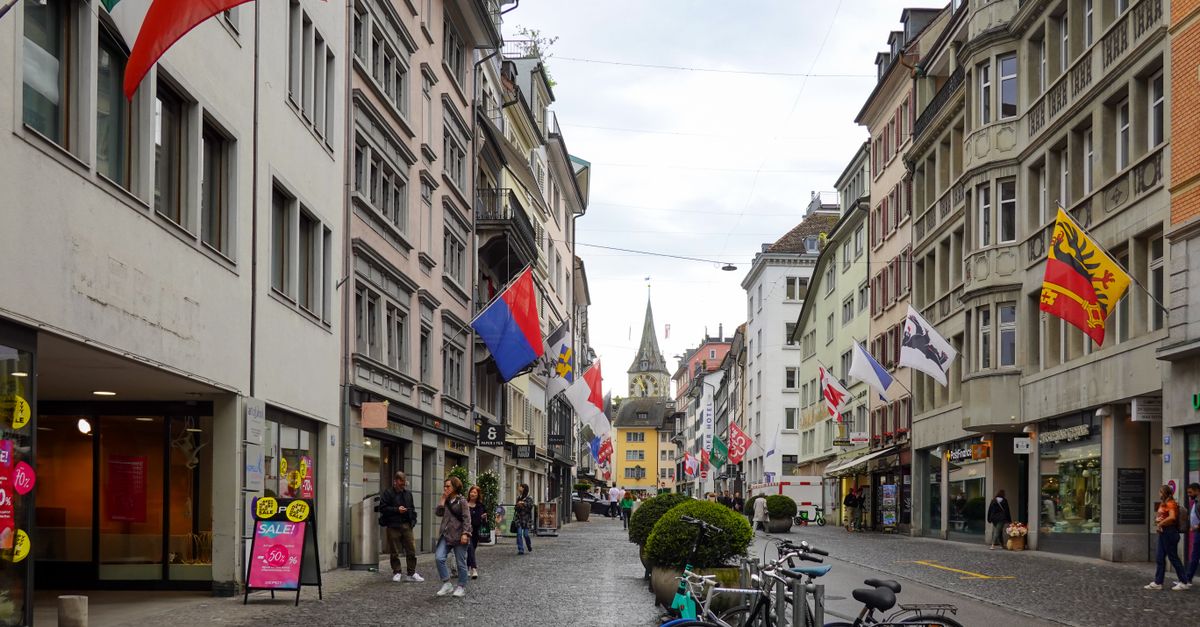
Zurich occupies an uncomfortable position in the collective imagination of budget travelers: Switzerland's largest city, its financial capital, and by most global cost-of-living indexes, one of the most expensive cities on the planet. Those measurements are accurate. A beer costs CHF 7–9, a sit-down lunch CHF 22–35, and a decent private hotel room rarely falls below CHF 130. And yet travelers who approach Zurich with the right strategy — eating where locals eat, sleeping in the right neighborhoods, leaning hard on free attractions — consistently find that a full, satisfying visit is possible for CHF 80–100 per day. That is not comfortable luxury. But it is Zurich: the lake, the medieval Altstadt, the river, the mountains on the horizon, and a city that functions with a quiet precision found almost nowhere else in Europe.
Getting There on a Budget
Zurich Airport (ZRH) is Switzerland's largest international hub, served by Swiss International Air Lines, Edelweiss, and most major European and intercontinental carriers. The budget airlines — easyJet and Wizz Air — fly into ZRH from major European cities, though not at the rock-bottom prices you'd find for, say, a Ryanair flight to a satellite airport 90 kilometres from Rome. Zurich's airport is genuinely at Zurich, and the convenience is built into the price.

From the airport to the city center, the ZVV S-Bahn train is the obvious choice and one of the few genuinely cheap transport moments in Switzerland. The S10 and S16 trains connect Zurich Airport directly to Zurich Hauptbahnhof (the central station) in 10 minutes for CHF 6.80, using a Zone 110 single ticket purchased from the machine on the platform before boarding. Trains run every 10–12 minutes throughout the day. Do not take a taxi from the airport unless expense is no concern — airport taxis to the city center cost CHF 55–75.
For travelers arriving overland, Zurich Hauptbahnhof connects to the entire European rail network. From Basel by IC train: CHF 31–38 (55 minutes). From Bern: CHF 53 (55 minutes). From Geneva: CHF 84 (2h 45min). From Munich by EC train: CHF 79–99 (3h 45min). Book via sbb.ch — the Swiss Federal Railways website — at least a few days ahead for the best Sparpreis (saver fare) prices, which can cut long-distance fares by 30–40%.
Arriving by bus via FlixBus or comparable operators connects Zurich to dozens of European cities at prices well below rail. The Zurich FlixBus terminal is at Sihlquai, a short tram ride from the center. Journey times are longer but costs from cities like Stuttgart (from CHF 9), Lyon (from CHF 19), and Vienna (from CHF 25) make the overnight bus a genuine budget option for flexible travelers.
Budget Accommodation
Zurich's accommodation market is expensive by most European standards, but genuine budget options exist if you know the right neighborhoods and book early. The magic word is Langstrasse — District 4 and the surrounding streets of District 3 (Wiedikon) host the city's backpacker infrastructure, ethnic restaurants, and lower-cost guesthouses, all within 15–20 minutes' walk of the Hauptbahnhof.

City Backpacker Hotel Biber (Niederdorfstrasse 5, Altstadt) is Zurich's most well-located hostel, sitting in the heart of the old town with dormitory beds from CHF 38–48 per night depending on season. Private rooms start around CHF 110–130. The hostel is small, friendly, and fills quickly — book at least two weeks ahead in summer. Breakfast is not included but the location, within walking distance of virtually every Altstadt attraction, offsets the cost premium of staying in the old town.
Youth Hostel Zurich (Mutschellenstrasse 114, Wollishofen) is the SFJ-affiliated hostel on the south side of the lake, about 15 minutes from the center by tram. Dorm beds from CHF 42–55, private doubles from CHF 120–145. The facility is large, clean, and well-managed, with a kitchen and a pleasant lake-adjacent location. HI membership saves CHF 6 per night.
Langstrasse guesthouses and budget hotels — the strip running through Districts 4 and 5 has a rotating selection of independently run budget hotels offering private rooms from CHF 90–130 per night. Standards vary, so read reviews carefully, but options like Hotel Leoneck (CHF 120–160, known for its cow-themed decor and central location on Leonhardstrasse) and Hotel Otter (CHF 100–140, Oberdorfstrasse) offer clean, no-frills private rooms at the lower end of Zurich's pricing.
For stays of four or more nights, short-term apartment rentals via Booking.com or direct platforms in Wiedikon and Altstetten (Districts 9 and 13, further from center but well-connected by tram) can bring the nightly cost down to CHF 75–100 for a studio with kitchen — the kitchen alone saves CHF 20–30 per day on food.
Eating Cheaply Like a Local
Food in Zurich is where budget travelers feel the squeeze most acutely. A restaurant main course rarely costs less than CHF 22–28. A coffee in a café runs CHF 4.50–6.50. Even a supermarket sandwich is CHF 5–7. But Zurich has a parallel food economy used by students, apprentices, office workers, and the city's large immigrant community that is dramatically more affordable — and often dramatically more interesting.

The foundation of budget eating in Zurich is the Migros and Coop supermarket chains. Both have large city-center locations (Migros at Löwenplatz, Coop at Hauptbahnhof and multiple city branches) with self-service hot food counters, salad bars, sandwiches, and prepared meals at CHF 7–12. A proper hot lunch — pasta, soup, or a hot dish from the counter — costs CHF 8–11. This is not a compromise; Migros and Coop food quality is high by European supermarket standards, and the hot counters serve rotating daily menus.
The university canteens (Mensa) are a genuine local secret for non-students. ETH Zurich and the University of Zurich both operate large mensas open to the public at student-adjacent prices. ETH's main mensa (Rämistrasse 101) serves hot lunches for CHF 8–12 during term time on weekdays. The food is wholesome rather than spectacular, but a full cooked meal for under CHF 10 in Zurich is a minor miracle.
Sternen Grill at Bellevueplatz is a Zurich institution: an outdoor sausage stand that has been grilling bratwurst since 1963. A classic St. Galler Bratwurst in a roll costs CHF 6.50. Locals eat standing at the counter with a small mustard pot and nothing else. It is delicious, entirely authentic, and the cheapest hot meal in central Zurich. Go at lunch or late evening when the crowd thins.
Langstrasse kebab and ethnic restaurants represent some of the best value eating in the city. The strip running south from Langstrassepassage through District 4 and into Helvetiaplatz is lined with Turkish kebab shops (CHF 12–15 for a large döner), Vietnamese pho restaurants (CHF 14–18), Indian curry houses (CHF 16–22 for a main with rice), and Middle Eastern falafel spots (CHF 10–13). The Langstrasse area feeds a diverse, local, non-tourist crowd and prices reflect that.
For a sit-down meal without tourist pricing, Haus Hiltl (Sihlstrasse 28) is the world's oldest vegetarian restaurant (since 1898) and runs an excellent weekday buffet lunch at CHF 5.80 per 100 grams — a reasonable plate of food costs CHF 16–22 depending on how much you pile on. Restaurant Zeughauskeller (Bahnhofstrasse 28a) in the Altstadt serves traditional Swiss food — rösti, Züri Geschnetzeltes, sausages — with lunch menus from CHF 18–22, which is reasonable for both quality and location.
Free & Low-Cost Attractions
Zurich's free attraction list is longer than the city's expensive reputation suggests. The city's geography — a lake, a river, medieval hills, and forested ridges — provides landscape-grade entertainment at zero cost, and several of the best cultural institutions either offer free entry or free evenings.

Lindenhügel (Lindenhügel viewpoint) — the small wooded hill above Zürichhorn, accessible from the lake promenade — provides one of the best free panoramas over the lake, city, and Alps on a clear day. No entry fee, no crowds. A 20-minute walk from Bellevueplatz along the lake shore.
The Lake Zurich promenade from Bürkliplatz to Zürichhorn is 4 kilometres of free lakeside walking. Zurich's lakefront is its true living room: on warm days the Strandbäder (lake bathing areas) fill with locals swimming directly in the lake. Frauenbad and Stadthausbad on the river Limmat, and the large lake bathing areas at Seebad Utoquai and Mythenquai, charge CHF 6–8 entry — a genuine bargain for a full afternoon of lake swimming in one of Europe's most scenic cities.
Grossmünster and Fraumünster — Zurich's two signature Romanesque churches on the Limmat — are free to enter. The Grossmünster's twin towers can be climbed for CHF 5 for excellent rooftop views. Fraumünster's Chagall windows (five full-height stained glass windows by Marc Chagall, installed 1970) are free to see as part of the church visit.
The Schweizerisches Nationalmuseum (Swiss National Museum), immediately adjacent to Hauptbahnhof in a dramatic neo-Gothic castle building, charges CHF 10 for a permanent collection entry — one of the better value museum tickets in the city, covering Swiss history, medieval art, and decorative arts from Roman times to the 20th century.
The Kunsthaus Zurich — one of Switzerland's premier art museums with significant Picasso, Giacometti, Monet, and Munch holdings — charges CHF 26 for the permanent collection. Crucially, entry is free every Wednesday evening from 5pm to 8pm. This is the best art deal in the city and should be built into any Zurich itinerary that falls on a Wednesday.
The Zurich Zoo (Zürichbergstrasse 221) costs CHF 32 for adults — considerable, but one of Europe's most acclaimed zoological institutions, with a Masoala Rainforest Hall the size of a football pitch under a glass dome. Worth budgeting for one half-day if wildlife is your interest.
Getting Around on a Budget
Zurich's ZVV public transport network is excellent and expensive by European standards but entirely manageable if you use it strategically. The city center is also genuinely walkable — many of the main attractions are within 20–30 minutes on foot from the Hauptbahnhof.

The ZVV operates on a zone-based fare system. Almost everything in central Zurich falls within Zone 110. A single Zone 110 ticket costs CHF 4.40 (short journey, up to 4 stops) or CHF 4.40–6.80 depending on journey length. A 24-hour Zone 110 day pass costs CHF 13.20 — if you take more than three trips in a day, the day pass wins. The day pass covers trams, buses, and S-Bahn trains within the zone.
The ZVV Night Network runs from approximately midnight to 5am on Friday and Saturday nights, with a CHF 5 surcharge on top of the regular fare. Late-night taxis in Zurich cost CHF 3.80 flagfall plus CHF 3.80/km, making even a short taxi ride CHF 18–30 — a compelling reason to time your return journeys before midnight on weekday nights.
Cycling is a genuinely free option in summer. Züri rollt, the city's free bike-lending scheme, operates from April to November at several city-center locations including the Hauptbahnhof and Globus. You leave a CHF 20 deposit (refunded on return) and a valid ID, and ride for free. Zurich is flat around the lake and well-supplied with bike lanes.
Money-Saving Tips
Eat lunch rather than dinner at restaurants. Nearly every Zurich restaurant with a proper kitchen offers a Tagesmenü (daily lunch menu) for CHF 18–25 that includes a main course, often a soup or salad, and sometimes a drink. The same dish ordered à la carte at dinner costs CHF 28–38. Building your one restaurant meal of the day around lunch cuts the food budget significantly.
Tap water in Zurich is exceptional. The city's tap water flows from protected Alpine catchment areas and is reliably among the cleanest municipal water in the world. Carry a reusable bottle and refill it throughout the day. Dozens of historic Brunnen (public fountains) throughout the Altstadt also provide free drinking water. Never pay CHF 4–6 for a plastic bottle of still water when a fountain is 50 metres away.
The Swiss Half-Fare Card is worth investigating for multi-day visitors. At CHF 120 for one month, the SBB Half-Fare Card halves the price of all train journeys across Switzerland. If you plan day trips to Lucerne (CHF 23–25 → CHF 11–13), Basel (CHF 31 → CHF 15), or Bern (CHF 53 → CHF 26), the card pays for itself in two or three trips. Available at any SBB train station.
Shop at Aldi and Lidl for groceries. Migros and Coop are already cheaper than Swiss restaurant prices, but Zurich's Aldi and Lidl branches undercut them by a further 15–25% on staples. Locations in Zurich include Aldi on Strassburgstrasse (District 5) and Lidl branches across the outer districts. Worth a single trip for a week's worth of breakfast supplies.
Free walking tours run daily from Zurich Hauptbahnhof. Several operators including Zurich Free Tour and New Europe run tip-based walking tours of the Altstadt leaving from the main station each morning. These cover the Grossmünster, Fraumünster, Rathaus, Lindenhügel, and river Limmat in 1.5–2 hours. The guides are knowledgeable and the format allows you to learn the city's history before exploring independently.
Visit Zurich in shoulder season. November, March, and early April see accommodation prices drop 20–35% compared to July–August and the December Christmas market period. The lake is cold, but the city is entirely operational, the museums are quieter, and the light over the Alps on clear winter days is extraordinary.
The Zurich Card beats individual tickets for museum-heavy days. If your itinerary includes the Kunsthaus (CHF 26), Swiss National Museum (CHF 10), and a half-day of tram travel (CHF 13.20 day pass), the 24-hour Zurich Card at CHF 29 covers all three for less than the museum tickets alone.