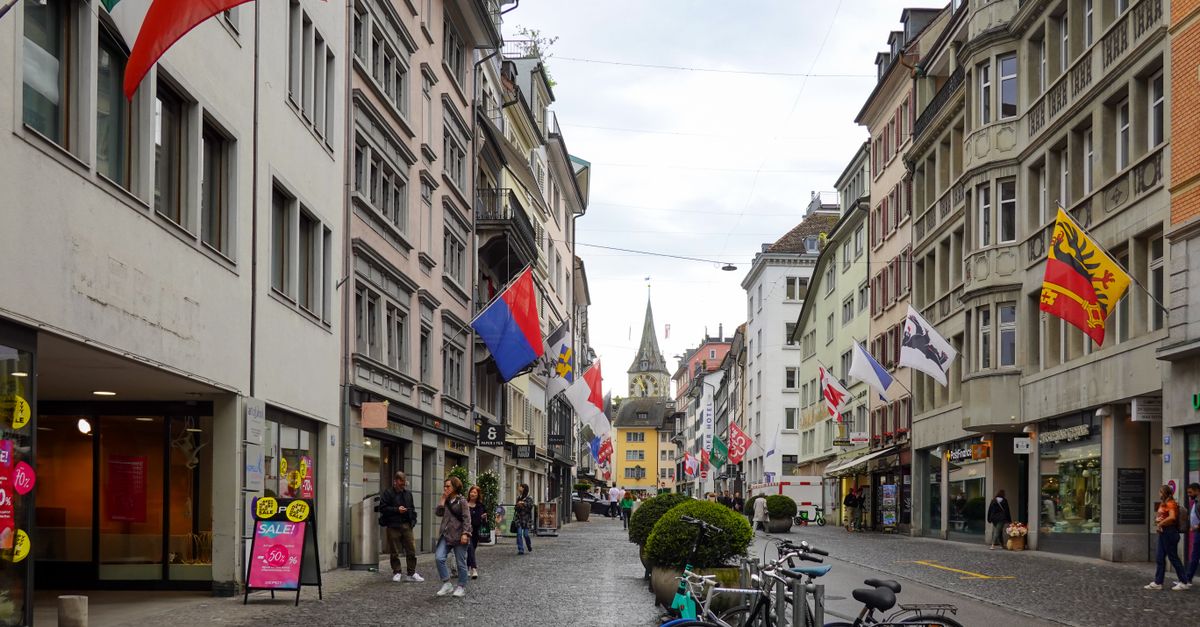
First-time visitors to Zurich typically arrive with one of two expectations: that the city will be a sanitized banking vault of glass and steel with nothing for tourists to do, or that Switzerland will feel roughly like France or Germany with slightly better trains. Both turn out to be wrong. Zurich is a genuinely beautiful medieval city on a lake with a vibrant arts and dining culture, and Switzerland is a distinct country with its own currency, its own languages, its own rhythms, and prices that are roughly 60–80% higher than Western Europe. Getting those fundamentals right before you arrive will make the experience dramatically smoother and considerably less financially shocking.
Before You Arrive
Switzerland is not a member of the European Union. It is, however, a full member of the Schengen Area, which means passport holders from EU/EEA countries, the UK, USA, Canada, Australia, Japan, and several dozen other nationalities can enter without a visa for stays of up to 90 days within any 180-day period. Citizens of countries not covered by Swiss visa-free access must apply for a Schengen C-type visa through their nearest Swiss embassy or consulate — the same visa covers travel to all 27 Schengen member states for the duration of the permitted stay.

Switzerland uses the Swiss Franc (CHF). This is non-negotiable and frequently misunderstood. Euro banknotes are accepted as a courtesy in some Zurich shops, hotels, and tourist establishments — but always at an unfavorable exchange rate, and change will be returned in CHF regardless. Never plan your Zurich trip around spending euros. Withdraw CHF from an ATM on arrival (the airport's bank machines are fee-free for most international cards, and the ZVV ticket machine at the airport train platform accepts most debit and credit cards). In mid-2025, 1 CHF is approximately EUR 1.05 or USD 1.12 — the Swiss Franc is worth slightly more than the Euro.
For mobile connectivity, the cheapest option for most visitors is a local SIM card. Sunrise, Salt, and Swisscom sell prepaid tourist SIMs at the airport, Hauptbahnhof, and electronics shops throughout the city. A standard data SIM with 10–15GB costs CHF 15–25 and lasts 30 days. EU visitors who already have unlimited EU roaming should verify their plan's Switzerland policy — many EU operators charge extra for Swiss data since Switzerland is outside the EU roaming zone.
The most important mental adjustment for first-time Zurich visitors is recalibrating cost expectations. Switzerland is expensive in a way that cannot be fully prepared for by reading about it — it must simply be accepted and budgeted for. Coffee: CHF 4.50–6.50. A beer: CHF 7–9. A restaurant main course: CHF 22–38. A supermarket lunch: CHF 8–12. Public transport single: CHF 4.40. These are not tourist prices — they are the standard Swiss cost of living for a country with median wages of approximately CHF 7,000 per month. Budget CHF 80–100 per day for a disciplined budget trip, CHF 150–200 for comfortable mid-range, CHF 300+ if you want restaurant dinners and occasional splurges.
Getting from the Airport
Zurich Airport (ZRH) is one of Europe's most efficiently designed airport-to-city connections. The airport has its own railway station below Terminal 1, reached via a short internal walkway from the arrivals hall — no buses, no long transfers, no ambiguity. The journey from the airport station to Zurich Hauptbahnhof takes 10 minutes on the S10 or S16 S-Bahn trains, which run every 10–12 minutes throughout the day.

The fare is CHF 6.80 for a Zone 121 single ticket (airport to city center). Purchase from the ZVV ticket machines on the platform — they accept cards and cash, and have English-language interfaces. Validate your ticket before boarding; Swiss transport inspectors check regularly. If you're buying a ZVV day pass for the city (CHF 13.20, covering all central zones), you'll need to add Zone 121 for the airport leg, making the total CHF 16.80 — worth it if you plan more than two city journeys on your arrival day.
The train deposits you directly at Zurich Hauptbahnhof — Switzerland's busiest railway station and the central hub for onward trams, buses, S-Bahn, and intercity trains to the rest of Switzerland and Europe. From the Hauptbahnhof, virtually every part of central Zurich is within 20 minutes on foot or two tram stops.
Taxis from Zurich Airport are available outside both terminal exits. The metered fare to the city center runs CHF 55–75 depending on traffic and exact destination — approximately ten times the train fare. For groups of three or four with heavy luggage, the taxi becomes more cost-competitive, but for most travelers the train is the obvious choice. Rideshare apps (Uber operates in Zurich) typically quote CHF 45–60 from the airport to the center.
Getting Around
Zurich's ZVV network is one of the most comprehensive urban transport systems in Europe — trams, buses, S-Bahn trains, lake ferries, and funiculars all operate under a single fare structure and a single app (ZVV). The network covers the city and extends to the entire canton of Zurich and beyond.

For most visitors, the tram network is the primary tool. Zurich has 14 tram lines running frequently from approximately 5:30am to midnight on weekdays, with reduced but operational service through the night on weekends. Tram stops are marked clearly on maps and the ZVV app shows real-time departures. Lines 2, 4, 6, 10, and 15 cover the majority of tourist destinations in the city center.
Fares are zone-based. A Zone 110 short journey single (up to 4 stops) costs CHF 2.70; a standard single for longer city journeys costs CHF 4.40. The 24-hour day pass (Tageskarte, Zone 110) costs CHF 13.20 and is the smartest purchase for any day with more than three transport journeys planned. A 72-hour day pass costs CHF 27.20, offering further savings for multi-day visitors.
For travel beyond Zurich — day trips to Lucerne (CHF 23–25 each way), Basel (CHF 31), or Bern (CHF 53) — the Swiss Travel Pass is worth investigating for stays of four or more days. The pass covers all SBB train journeys, most lake steamers, urban transport in 90+ cities, and free entry to 500+ museums. A 3-day Swiss Travel Pass costs CHF 244; 4-day CHF 279. At current prices, it pays for itself if you make two intercity journeys and use city transport daily.
Where to Base Yourself
Zurich's neighborhoods each have a distinct character, and choosing where to stay shapes the texture of the visit significantly.

Altstadt / City Center (Districts 1 and 2) — Zurich's medieval old town covers both banks of the Limmat river south of the Hauptbahnhof. Walking distance to Grossmünster, Fraumünster, the Rathaus, Bahnhofstrasse luxury shopping, and Lake Zurich promenade. The most atmospheric location for first-time visitors — medieval alleyways, guild halls, and Romanesque churches give Zurich its visual identity. Accommodation is expensive: budget hotels start at CHF 130–160 per night, mid-range from CHF 200–350. Worth paying for the experience of staying in the old city if budget permits, but most attractions are easily reached by tram from cheaper neighborhoods.
Langstrasse and District 4 — Zurich's most diverse neighborhood, running south from Langstrassepassage into Helvetiaplatz. Historically the city's red-light district, now thoroughly gentrified into a lively mix of bars, ethnic restaurants, independent shops, and the best budget accommodation in the city. Hostels and budget guesthouses from CHF 38–90 per night. Tram lines 2, 3, and 9 connect to the center in under 10 minutes. The nightlife here is genuine and local — this is where Zurich's under-35 population actually goes out.
Wiedikon (District 3) — The quiet, residential neighborhood immediately west of Langstrasse, popular with young professionals and families. Lower accommodation prices than the center (hotels from CHF 100–150), good tram connections, neighborhood bakeries and cafés, and a noticeably less touristy atmosphere. A good choice for travelers who want local residential Zurich rather than the tourist-facing center.
Local Culture & Etiquette
Switzerland has four national languages — German, French, Italian, and Romansh — and Zurich sits firmly in the German-speaking zone. The local spoken dialect is Zurich German (Zürichdeutsch), which is distinct enough from standard High German (Hochdeutsch) that even fluent German speakers occasionally struggle to follow a rapid local conversation. For visitors, this is not a problem: Zurich's residents speak excellent English as a matter of course, and service at hotels, restaurants, and tourist sites will default to English the moment a foreign accent is detected.

Swiss punctuality is not a cliché. It is a cultural value taken seriously at every level of society. Trains leave at the scheduled second. Business meetings start at the stated time, not five minutes after. If you are invited to a Swiss home or restaurant booking and you arrive late without notice, it is genuinely considered disrespectful. For the visitor, the practical implication is that public transport schedules are completely reliable — if the app says the tram arrives at 14:23, it arrives at 14:23.
Noise etiquette in Zurich is unusually strict by major European city standards. Most residential buildings observe quiet hours (Ruhezeit) from 10pm to 7am on weekdays and throughout Sunday. Loud music, shouting, and even running baths after 10pm in apartment buildings is frowned upon. This applies primarily to accommodation in residential buildings (Airbnbs, private rentals) rather than hotels with proper soundproofing, but it is worth knowing if you're staying in a residential neighborhood.
Tipping in Switzerland is entirely discretionary and never obligatory. Service charges are always included in Swiss restaurant bills by law — the price on the menu is the price you pay, with no additional service percentage expected. That said, rounding up a restaurant bill by CHF 2–5 is a common local gesture for good service, and taxi passengers typically round to the nearest franc. Do not feel pressured to tip 15–20% in the American style — Swiss hospitality workers are paid proper wages and a modest rounding-up is the genuine local norm.
Recycling and waste disposal in Zurich is meticulous and legally enforced. Household waste must be placed in official Züri-Sacks (official garbage bags sold at supermarkets), and random dumping of rubbish in public bins is frowned upon. As a visitor staying in a hotel or hostel, this is handled for you — but if you're in a self-catering apartment, ask your host about the local waste sorting and disposal system to avoid inadvertently annoying your neighbors.
Common Mistakes to Avoid
Assuming Switzerland uses the Euro. This is the single most persistent first-timer mistake — visitors arrive with only euros and spend the first hours scrambling. ATMs at the airport and Hauptbahnhof dispense CHF. Every payment terminal in Zurich processes CHF. While some establishments accept euros as a courtesy, the exchange rate applied is invariably unfavorable and change comes back in CHF. Withdraw CHF before you leave the airport arrival hall.
Boarding a train without a valid ticket. Swiss transport inspectors (Kontrolleure) are neither rare nor lenient. The penalty for riding without a valid ticket on ZVV services is CHF 100 plus the standard fare — issued on the spot, non-negotiable, payable immediately or via invoice. "I didn't know" is not an accepted defense. Buy your ticket before boarding from the platform machine and validate it if required (most ZVV tickets are pre-validated digitally, but older paper tickets require physical validation).
Confusing the Swiss Travel Pass and the Zurich Card. The Swiss Travel Pass is a national rail and transport pass for travel across Switzerland. The Zurich Card is a city-specific card covering ZVV transport and museum entry in Zurich only. They serve different purposes — the Zurich Card is the better value for short city-only visits; the Swiss Travel Pass is better for travelers making multiple inter-city journeys. Buying the wrong one wastes money.
Eating every meal in the Altstadt. The restaurants on Niederdorfstrasse and around Grossmünster target tourists with prices to match: CHF 28–38 for pasta, CHF 35–45 for fish, CHF 9 for a beer. These are not representative of Zurich's actual food culture. Walking ten minutes to Langstrasse or taking a tram to Werd or Helvetiaplatz delivers the same cuisine quality at 30–50% lower prices, often with more interesting and authentic menus.
Underestimating walking distances. Zurich's center is compact but its terrain is hilly. The walk from the Hauptbahnhof to the Kunsthaus, for instance, involves a sustained climb up Rämistrasse to the hillside above the Altstadt. Many visitors who plan to "walk everywhere" find the combination of hills and distance more taxing than expected. The tram network handles these gradients and is frequent enough that waiting is rarely more than five minutes.
Missing the free Wednesday evening at the Kunsthaus. Zurich's premier art museum — with major holdings of Picasso, Giacometti, Monet, Munch, and Warhol — charges CHF 26 for standard admission. Every Wednesday from 5pm to 8pm, entry is free. First-time visitors who don't plan their days around this miss a significant money-saving opportunity. Wednesday evening at the Kunsthaus is also a genuinely local experience — Zurich residents use the free evenings regularly, and the atmosphere is different from daytime tourist visits.
Ignoring the Landesmuseum as "just a history museum." The Swiss National Museum (CHF 10), housed in a dramatic neo-Gothic castle directly adjacent to the Hauptbahnhof, is consistently underrated by visitors who prioritize the Kunsthaus. The permanent collection covers 2,000 years of Swiss history across archaeology, medieval art, decorative arts, and a remarkable collection of historic Swiss watches and clocks. The building alone — a castellated fairy-tale structure designed by Gustav Gull in 1898 — is worth the entry fee.