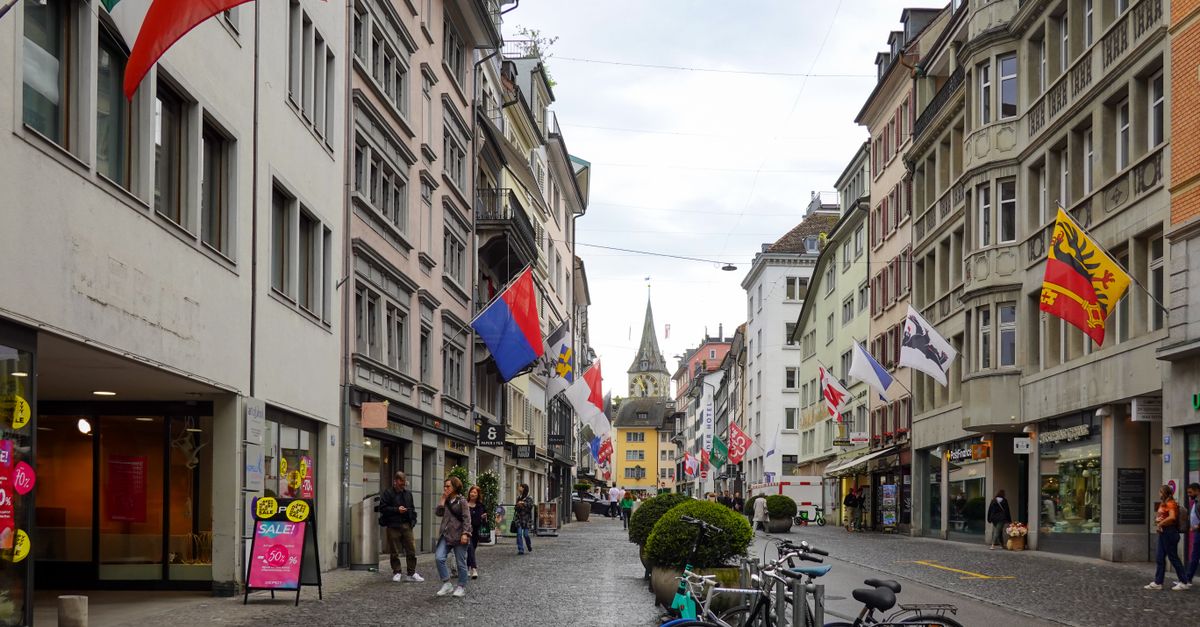
Zurich's reputation is as a banking centre and expensive transit point — a city that corporate travellers pass through rather than explore. This reputation is the product of either not having time or not knowing where to look. The Swiss financial capital is simultaneously one of Europe's most beautiful lake cities, a centre of extraordinary contemporary art, a serious food city that has quietly become one of Europe's better restaurant destinations, and a city with neighbourhood character and a pace of life that stands in complete contrast to its financial-services identity.
The city divides along the Limmat river into the Altstadt on both banks and the outlying neighbourhoods — the creative hub of Langstrasse (Kreis 4 and 5), the lakeside elegance of the Gold Coast, the quiet residential streets of Aussersihl, and the forest and lake trails that begin within walking distance of the city centre. The transformation of the former industrial district along the Hardbrücke into a cultural and nightlife zone has been one of the most successful urban regenerations in Europe.
Zurich is expensive — among the most expensive cities in Europe. A coffee costs CHF 4–5 (€4–5), a restaurant meal CHF 25–50 (€25–50). The Swiss franc (CHF) is essentially at parity with the euro. Budget CHF 150–250 per day for a full experience. This guide focuses on the city's best experiences at relatively accessible prices, but there is no way around the fact that Zurich costs significantly more than anywhere else in this series.

1. Langstrasse — Zurich's Bohemian Quarter
Langstrasse, the main street of Kreis 4 and 5 west of the Limmat, is Zurich's most interesting neighbourhood — a long, lively street and its surroundings that has been the city's working-class, immigrant, and creative district for over a century. It was notoriously the red-light district in the 1990s, and the transformation since then into a genuinely mixed neighbourhood of excellent restaurants, independent bars, creative studios, and diverse communities has been remarkable without becoming sanitized gentrification.
The neighbourhood has the highest concentration of independent restaurants in Switzerland — an extraordinary diversity of cuisines reflecting the 40%+ immigrant population of Kreis 4. Vietnamese pho, West African stews, Middle Eastern mezze, and serious Swiss Italian cooking sit within a few streets of each other, all at prices significantly below the tourist-facing restaurants of the Altstadt. Walking the Langstrasse on a Friday evening, moving between the various bars and restaurants, is the most authentic Zurich night experience available.
Take tram 2, 3, or 4 from the Hauptbahnhof (main station) west to the Langstrasse area — the journey takes 5 minutes. The neighbourhood is at its best from 7pm onwards Thursday through Saturday. Budget CHF 25–40 for a full dinner at one of the neighbourhood restaurants. The Bogen 33 bar at Langstrasse 135 is one of the best starting points — a neighbourhood bar with rotating food specials and an excellent Swiss craft beer selection.
The Kreis 5 section north of Langstrasse — the former industrial district around the Viadukt (a repurposed railway viaduct now housing design shops and a weekend market) and Schiffbau (a former shipbuilding hall now used as a theatre) — is the most architecturally interesting part of the neighbourhood. The Viadukt market on Saturdays (9am to 6pm) is excellent for local artisan food products and Swiss design.
2. Zurich's Lake Bathing Culture
In summer, Zurich develops a bathing culture (Badi-Kultur) that is one of the city's most distinctive and most enjoyable social institutions — a network of lakeside bathing establishments (Seebäder) and river bathing houses (Flussbäder) where Zurichers have been swimming since the 19th century. Most of these establishments have wooden changing facilities, diving platforms, and café terrace areas that become the most important social spaces in the city from May to September.
The most interesting are the historic wooden bathing houses on the Limmat river: the Frauenbad (women's bath, 1837 — open to all genders except men on certain days) and the Männerbad (men's bath) at the Limmatquai are atmospheric 19th-century structures that feel like swimming in living history. Both have small café areas and lounge platforms. Access costs CHF 8–10 including locker. The river current makes swimming upstream and floating back downstream the natural activity.
For lake swimming, the Seebad Enge at the southern end of the lake is the largest and most social establishment — open daily in summer from 9am, admission CHF 8, with a 50-metre pool in the lake, sunbathing areas, and a popular evening bar from 6pm. The view across Lake Zurich toward the Alps on a clear afternoon is extraordinary. Take tram 7 or 13 to Rentenanstalt/Viadukt, then walk to the lakeside.
The free public bathing spots along the lake — particularly the Zürichhorn park on the east bank and the Mythenquai area on the west — allow swimming directly from the grass or concrete edges with no facility costs. These are the most local bathing spots — bring your own towel, picnic, and wine and join the hundreds of Zurichers who treat the lake as their personal outdoor swimming pool from late May through September.
3. Swiss National Museum
The Swiss National Museum (Landesmuseum Zürich) in the extraordinary neo-Gothic castle adjacent to the Hauptbahnhof is Switzerland's most important history museum — a comprehensive journey through Swiss history from the Neolithic period to the present, housed in a building designed to resemble a fairy-tale Swiss castle and extended by a contemporary wing of remarkable architectural quality. The museum is genuinely excellent and genuinely undervisited by the international travellers who pass the building daily on their way in and out of the railway station.
The prehistoric collection — covering the remarkable lake-dwelling (Pfahlbau) cultures of the Swiss lakes, whose UNESCO-listed remains provide the most complete evidence of Neolithic and Bronze Age daily life in the world — is the finest of its kind in Switzerland. The medieval collection includes original church art, weapons, jewellery, and domestic objects from the period of Swiss confederation. The 18th and 19th-century sections document the development of Swiss political culture, banking, and textile industry with excellent material evidence.
The museum is at Museumstrasse 2, directly adjacent to the Hauptbahnhof. Open Tuesday to Sunday 10am to 5pm (Thursday until 7pm). Admission CHF 10. Combined ticket with the Museum für Gestaltung (design museum) available. Allow 3 hours for the full museum. The contemporary building extension (2016, by Christ & Gantenbein architects) is itself worth examining — a spectacular concrete and glass addition that relates to the Victorian original with considerable intelligence.
The Museum für Gestaltung (design museum) at Ausstellungsstrasse 60 (tram 4 or 13 to Ausstellungsstrasse) is one of Europe's best design museums — holding over 500,000 objects from Swiss and international graphic, product, and applied design. Permanent collection and temporary exhibitions. Open Tuesday to Sunday 10am to 5pm. Admission CHF 10. The poster collection is particularly strong — Swiss graphic design of the 20th century is internationally important and little-known outside Switzerland.
4. Kunsthaus Zürich — World-Class Art
The Kunsthaus Zürich, recently expanded by a major extension designed by Chipperfield Architects, holds the largest art collection in Switzerland — including significant works by Monet, Picasso, Giacometti (the definitive collection of the Swiss sculptor's works, including major bronzes and paintings), Expressionist masters, and the most comprehensive collection of works by Zurich Dada artists in existence. The Dada movement was founded in Zurich in 1916 at the Cabaret Voltaire, and the Kunsthaus holds the material evidence of that founding.
The Giacometti collection alone justifies a visit — the attenuated bronze figures that are Giacometti's most recognizable form are here in abundance, alongside the paintings, drawings, and early Surrealist objects that show the full range of his work. The experience of walking through a room full of the tall, thin bronze figures is extraordinarily affecting. The Dada collection — Zurich Dada publications, objects, photographs — documents one of the most important cultural movements of the 20th century at its source.
The museum is at Heimplatz 1, a ten-minute walk from the Altstadt or tram 3 or 8 to Kunsthaus. Open Tuesday to Sunday 10am to 6pm (Wednesday until 8pm). Admission CHF 23 for the permanent collection. The extension building, opened in 2021, adds 5,000 square metres of gallery space and houses the new contemporary art and modern art collections. Allow 3–4 hours for both buildings.
After the Kunsthaus, walk east into the Seefeld neighbourhood — the area between the museum and the lake is one of Zurich's most pleasant residential districts, with excellent cafés, wine bars, and the Zurichhorn park with its lake views. The Heidi Weber house (Villa Zurich) on the lake edge, designed by Le Corbusier in 1965 as the first building ever commissioned from him with a steel structure, is now the Centre Le Corbusier museum (currently open for guided tours — check current status at centrelecorbusier.com).
5. Lindenhügel — Artisan Cheese and Fondue
Swiss cheese culture is one of the world's great undiscovered food traditions, with over 450 AOP (protected origin) varieties ranging from the well-known (Gruyère, Appenzeller, Emmental) to the virtually unknown (Sbrinz, Bündner Bergkäse, Vacherin Mont-d'Or). Zurich has several excellent cheese specialists, but the most interesting encounter with Swiss cheese happens in the fondue restaurants of the city and in the artisan cheese shops of the Altstadt that source directly from the mountain producers.
For fondue in Zurich: Heugümper at Stüssihofstatt 3 (in the Altstadt, reservation essential, CHF 35–45 for a fondue per person) is considered the finest traditional fondue in the city, using a blend of Gruyère and Vacherin Fribourgeois in white wine from the Vaud. The atmosphere — medieval stone cellar, wooden furniture, candles — is exactly right. Fondue etiquette requires stirring regularly in a figure-eight pattern and penalizing anyone who drops their bread in the pot.
For artisan cheese: Käse Schmid at Münsterhof 18 in the Altstadt is the finest specialist shop in central Zurich — a small cheese shop sourcing directly from Swiss alpine producers, with a selection that changes seasonally and a staff who can explain every cheese in the case with genuine knowledge. A tasting selection of four Swiss cheeses with bread costs CHF 12–16. The seasonal Vacherin Mont-d'Or (available October to March) is one of the world's greatest cheeses and at its best here within days of production.
The Uetliberg, the forested hill west of Zurich rising to 871 metres, is the city's primary outdoor recreation area — accessible by S-Bahn line S10 from the Hauptbahnhof in 30 minutes (CHF 8.80 return). The summit has a restaurant serving Swiss alpine classics (rösti, raclette, alpine soup) with views over the city and Lake Zurich. The walking trails from the summit lead through the Albis ridge in either direction — a full day's walking through beech and fir forest above the city.
6. Cabaret Voltaire — Dada Birthplace
On February 5th, 1916, Hugo Ball, Emmy Hennings, and a group of artists, writers, and refugees opened the Cabaret Voltaire in a small bar at Spiegelgasse 1 in the Zurich Altstadt. Over the following two years, Tristan Tzara, Jean Arp, Richard Huelsenbeck, and others created Dada — the anti-art movement that laid the conceptual foundations for Surrealism, Pop Art, Fluxus, punk, and contemporary conceptual art. The building has been a Dada cultural centre since 2002 and remains one of the most historically significant addresses in 20th-century cultural history.
The current Cabaret Voltaire functions as a bar, exhibition space, and event venue hosting performances and exhibitions that reference and extend the Dada legacy. Temporary exhibitions change monthly. The permanent bar area serves drinks in a space that retains some of the original character of the 1916 venue. Evening events include poetry readings, experimental music, and performances that would not have been entirely unfamiliar to the original Dada participants.
The Cabaret Voltaire is at Spiegelgasse 1, in the heart of the Altstadt — a 2-minute walk from the Grossmünster cathedral. The bar is open daily from noon (hours vary by event programme). Entry to the bar is free; exhibitions typically CHF 5–8; evening events CHF 10–15. Check the programme at cabaretvoltaire.ch. The street itself is one of the most atmospheric in the Altstadt — narrow, medieval, with the original house numbers still in place.
The nearby James Joyce house (Augustinergasse 6) is where Joyce lived while writing Ulysses in Zurich — he arrived in 1915 and the city gave him the neutral, cosmopolitan, linguistically diverse environment in which the novel's Babel of voices could be conceived. The plaque on the building is modest; the fact is extraordinary. The Fluntern Cemetery (accessible by tram 6) holds Joyce's grave — a modest marker beside a bronze sculpture of Joyce by Milton Hebald.
7. Zurich's Village Trails — Day Walks
Within 30 minutes of Zurich's Hauptbahnhof by S-Bahn, half a dozen traditional Swiss villages and small towns offer the alpine village atmosphere that international visitors associate with Switzerland — stone farmhouses, wooden chalets, flower-bedecked balconies, church spires, and the sound of cowbells in summer pastures. These villages are entirely accessible from the city as half-day excursions and represent a Switzerland that has nothing to do with the financial services industry.
Rapperswil, on the south shore of Lake Zurich (S-Bahn S5 from Hauptbahnhof, 45 minutes, CHF 16 return), is the finest of these — a beautifully preserved medieval town with a 13th-century castle, rose garden, and excellent artisan shops along the main street. The lake crossing from Rapperswil to the Seedamm (a walkable causeway) and the restored wooden bridge to Hurden create an afternoon circuit of extraordinary lakeside beauty. The local restaurants serve traditional Swiss lake fish (felchen, egli) at CHF 30–45 for a full meal.
Baden, northwest of Zurich (S-Bahn S12, 20 minutes, CHF 10 return), is a thermal spa town with Roman and medieval heritage, a beautifully preserved old town, and the Historic Bäderquartier — the historic bathing district with its 19th-century thermal hotels currently being carefully renovated. The thermal baths at the new Fortyseven spa (CHF 35–50 per session) use the same springs that Roman soldiers bathed in 2,000 years ago.
Stein am Rhein, 60km east of Zurich on the Rhine (train from Winterthur, 1.5 hours total), is considered the best-preserved medieval small town in Switzerland — a main street lined with 16th-century painted half-timbered houses that is genuinely unchanged in its essential appearance since 1600. Day trip from Zurich with easy return by train. Several excellent Swiss restaurants in the village serve lake fish and rösti in historical settings.
8. Grossmünster and Church Treasures
The Grossmünster, the twin-towered Romanesque church that dominates the Altstadt east bank, is not a hidden gem — it is one of Switzerland's most recognizable buildings and the symbol of the Reformation in Zurich (Ulrich Zwingli began the Swiss Reformation here in 1523). But the church has several remarkable features that visitors miss: the stained glass windows commissioned from Sigmar Polke in 2009 (extraordinary works of contemporary religious art), the crypt with original Romanesque sculpture, and the cloister that most visitors walk past without entering.
The stained glass windows designed by Sigmar Polke for the north and south side-naves (completed 2009, three years before his death) are among the finest ecclesiastical glass of the late 20th/early 21st century — abstract compositions in translucent agate that flood the nave with coloured light in a way that is entirely different from traditional stained glass and entirely successful as sacred art. The Giacometti windows in the choir (Alberto Giacometti's cousin Augusto, 1933) are the warm counterpart to Polke's cool abstraction.
The Grossmünster is at Grossmünsterplatz, in the Altstadt. Open daily 10am to 6pm (winter: 10am to 5pm). Admission CHF 5 for the tower, free for the main church. The tower climb gives the best view of the Altstadt and the Limmat river. The cloister is accessed from inside the church and contains the original Romanesque figure of Charlemagne from the exterior — the historical figure who founded the original monastery here in the 9th century.
The nearby Fraumünster across the river has the stained glass windows designed by Marc Chagall in 1970 — the five choir windows are extraordinary in their colour and narrative ambition, depicting Old Testament figures and the genealogy of Christ in Chagall's characteristic blue, green, and red palette. Free to enter with a donation. Open daily 10am to 5pm. Combined with the Grossmünster and the Peterskirche (with its enormous external clock face, the largest in Europe), these three churches constitute a world-class collection of 20th-century stained glass in a compact, walkable area.

9. Predigerkirche Neighbourhood
The Predigerkirche neighbourhood, north of the Grossmünster in the eastern Altstadt, is Zurich's most interesting literary and intellectual district — centred on the Zentralbibliothek (the city's main library, housed in the former Predigerkloster, a Dominican monastery from the 13th century) and the surrounding streets of independent bookshops, cafés, and the kind of serious academic culture that exists wherever a great research library is the neighbourhood anchor.
The Predigerkirche itself — the former monastery church — is one of the finest Gothic buildings in Zurich, regularly used for concerts and accessible for general visits during the day. The monastery cloister, now part of the Zentralbibliothek complex, is a beautiful Gothic arcade that is open to library visitors and creates a meditative space in the middle of the city. The library holds Zwingli's personal Bible and several extraordinary medieval manuscripts accessible for study by request.
Walk north from the Grossmünster along Kirchgasse and Neumarkt to find the neighbourhood at its most atmospheric. The independent bookshops on this stretch of Kirchgasse and the parallel Spitalgasse are the best in Zurich — particularly Buchhandlung Calligramme (Neumarkt 4), which specialises in French and international literature and is one of the finest literary bookshops in the German-speaking world, despite being in a street few tourists visit.
Several of the best-value lunches in central Zurich are in this neighbourhood — the Café Littéraire at the Zentralbibliothek serves coffee and simple lunch at prices calibrated for students and library researchers (CHF 6–12 for lunch). The terrace overlooking the courtyard is pleasant in good weather. The neighbouring streets have several excellent traditional Swiss restaurants serving Zürigeschnetzeltes (veal in cream sauce with rösti) and Zopf (plaited bread) at CHF 25–35 for a full meal.
10. Lake Zurich South — Weinland Villages
The southwestern shore of Lake Zurich — from Thalwil to Rapperswil, known as the "Gold Coast" (Goldküste) for its sunny aspect and affluent residential character — is accessible by S-Bahn and contains a series of wine-producing villages whose lakeside character and excellent local restaurants are almost unknown outside the Swiss German-speaking community. The Zürichsee wines (predominantly white Riesling-Sylvaner and the local red Blauburgunder variety) are rarely exported and represent excellent value for a lake-side afternoon.
Meilen, on the Gold Coast (S-Bahn S6, 20 minutes from Hauptbahnhof), is the wine village par excellence — the hillside above the village is planted with riesling-sylvaner that produces a clean, refreshing white wine sold primarily in the village itself and in Zurich restaurants. The Weinhaus Zum Roten Ochsen (Dorfstrasse 3, Meilen) is the archetypal Swiss wine village restaurant — dark wood, fresh tablecloths, and an excellent selection of local wines by the glass (CHF 5–8) alongside traditional lake fish preparations.
The S-Bahn pass (ZVV Zone 10+Zone 110 day pass, CHF 21) covers the entire Lake Zurich circuit, and spending a day getting on and off the train at different lakeside villages — Küsnacht, Meilen, Männedorf, Stäfa — is one of the best day trips from Zurich. Each village has its own character and its own wine culture. The harvest season (late September to mid-October) is the best time, when the vineyards are golden and the winemakers set up tasting tables beside the S-Bahn platforms.
The Räterschen winery in Andelfingen (accessible by train to Winterthur, then connecting train), in the Zurich Weinland region north of the city, is the most interesting wine producer in the canton — making serious Pinot Noir and Blauburgunder from north-facing slopes on the Rhine that represent perhaps the finest red wine produced in German-speaking Switzerland. Open for cellar visits by appointment (CHF 10–15 for a guided tasting). The surrounding Weinland landscape — rolling hills of vineyards, medieval villages, the Rhine valley — is excellent cycling country.


