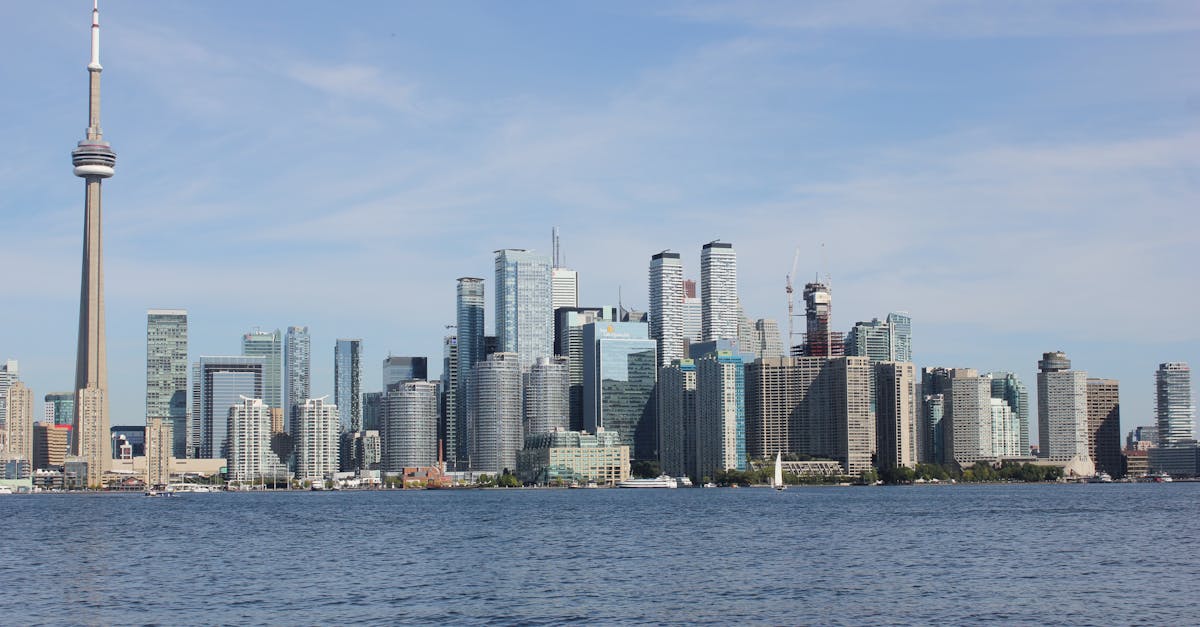
Toronto is Canada's largest city and one of the most ethnically diverse urban centres on earth, home to over 200 languages and a food scene that reflects that plurality in deeply satisfying ways. For the budget traveller, this diversity is the single greatest financial asset the city offers. You can eat your way from Jamaica to Hong Kong to Portugal to Lebanon to Ethiopia across a single afternoon in Kensington Market without spending more than CAD 40. The city's public transit system connects almost every corner of the urban grid, neighbourhoods like Chinatown and the Danforth offer restaurant meals for CAD 12–18, and the waterfront and ravine system provide kilometres of free green space. Toronto is not cheap by global backpacker standards, but it rewards the traveller who learns to move through it like a local.
Getting There on a Budget
Toronto Pearson International Airport (YYZ) is one of North America's busiest hubs, which creates genuine airfare competition on most major routes. From US East Coast cities — New York, Boston, Washington — non-stop fares regularly appear in the CAD 180–280 (USD 130–200) round-trip range during shoulder seasons. West Coast travellers from Los Angeles, San Francisco, or Seattle typically find fares in the CAD 280–420 range. European carriers including Air Transat and Corsair offer competitive transatlantic pricing, particularly if you book eight or more weeks in advance and travel in September, October, or early November.

Budget carriers WestJet and Flair Airlines serve Toronto extensively from within Canada, making domestic travel between cities like Vancouver, Calgary, and Montreal genuinely affordable. Air Canada's basic economy class — stripped of extras but functional for carry-on-only travellers — often matches or undercuts third-party booking prices when purchased directly. Set fare alerts on Google Flights with "flexible dates" enabled and monitor the cheapest months calendar, which consistently shows May, late September, and November as the most economical windows.
A second airport worth knowing is Billy Bishop Toronto City Airport (YTZ), on an island in Lake Ontario adjacent to downtown. This smaller facility is served by Porter Airlines and handles primarily Central and Eastern Canadian routes plus some US Northeast flights. If your routing goes through YTZ, the terminal is accessible via a pedestrian tunnel from the waterfront and puts you within minutes of downtown Toronto without any transit required — a genuine advantage over Pearson's 27-kilometre distance from the core.
Travelling by bus from US cities near the border — Buffalo, Detroit, New York — is a genuinely budget-competitive option. Greyhound Canada and FlixBus both connect Toronto's Union Station bus terminal to Buffalo Niagara Airport (the flight-then-bus combination from New York to Toronto can undercut direct flights by CAD 60–120), and the journey from Buffalo downtown takes roughly two hours. Cross-border coach travel requires your passport regardless of nationality.
Budget Accommodation
Toronto's hostel scene is concentrated in a few key areas, with the strongest options clustered in or near downtown and the Entertainment District. HI Toronto on Church Street is the flagship of the Hostelling International Canada network, operated in a well-maintained building with private rooms from CAD 95–120 per night and mixed dorm beds from CAD 48–65 during shoulder season, rising to CAD 70–85 in peak summer (July and August). The Church Street location is excellent — five minutes from the Church-Wellesley Village, fifteen minutes' walk from the waterfront, and directly on TTC streetcar routes.

Canadiana Backpackers Inn on Spadina Avenue puts you at the northern edge of Chinatown, arguably the city's best-positioned budget accommodation address for food access. Dorm beds run CAD 45–60 per night, with the price of proximity to some of the cheapest and most varied restaurant eating in the city built into every booking. The hostel has a sociable common area and a kitchen, and the location on Spadina means Kensington Market is a five-minute walk in one direction and the University of Toronto campus in the other.
The Rex Hotel on Queen Street West is an institution in a different sense — primarily a jazz club with rooms above, it offers simple private accommodations from CAD 80–110 per night in a neighbourhood that pulses with art galleries, vintage shops, and independent cafés. It is not a hostel and not a boutique hotel; it occupies a genre of its own. The music programming is exceptional and free to hotel guests on most evenings.
For those willing to stay slightly outside the downtown core, vacation rentals and Airbnb listings in neighbourhoods like Leslieville (east), Roncesvalles (west), and the Annex (north of Bloor) consistently offer lower prices than central hotels with TTC access to everything. A private studio in these areas can be found for CAD 80–110 per night, often with a kitchen that substantially reduces food costs over multi-night stays. The short-term rental market in Toronto is regulated — look for listings that display a city registration number, which indicates compliance with municipal licensing.
Eating Cheaply Like a Local
Toronto's greatest budget food geography can be mapped along a rough triangle: Chinatown on Spadina Avenue south of College Street, Kensington Market immediately west of Chinatown, and St. Lawrence Market at the eastern end of the waterfront district. Navigating these three areas systematically will feed you better and more cheaply than anywhere else in the city.

St. Lawrence Market, open Tuesday through Saturday, is one of North America's great covered food markets and the correct starting point for any Toronto food education. The lower level is a working farmers' and specialty market; the upper level houses the famous farmers' market on Saturdays. The non-negotiable purchase is the peameal bacon sandwich at Carousel Bakery, a Toronto institution that has been serving the same sandwich since the 1940s — peameal-crusted back bacon on a soft kaiser roll for CAD 7–9. One sandwich is a full breakfast; two is excessive but frequently attempted. Budget CAD 15–25 for a full walkthrough purchase of market foods to make a meal.
Chinatown along Spadina and Dundas delivers the city's most consistent value-to-quality restaurant ratio. Dim sum restaurants — Dragon City, Rol San, and the perennial favourite Swatow — serve tables of two to four for CAD 15–20 per person including tea. The peak dim sum window is Saturday and Sunday morning from 10 a.m. to 1 p.m.; arrive early or expect a wait. Vietnamese pho restaurants on Spadina run CAD 12–15 per bowl, generous in portion and often open past midnight. Bubble tea at CAD 6–8 from a dozen competing shops makes for an excellent afternoon snack.
Kensington Market's Bloor Street spine and the streets immediately south offer remarkable food diversity at market prices. The strip hosts Jamaican patty shops (CAD 3–4 per patty), empanada counters, Ethiopian injera restaurants, Mexican taquerias, and at least three good falafel spots — all within a ten-minute walk. Shawarma on the Bloor-Bathurst stretch comes in at CAD 10–13 for a generously loaded wrap that constitutes a full meal. This is the area where Toronto's multicultural identity translates most directly into budget advantage for the traveller.
Grocery options for self-catering are excellent throughout the city. No Frills and Food Basics are the city's value-focused chains; a Chinatown-area grocery run can produce meals at a fraction of restaurant prices. For those making a day trip to Niagara Falls, packing a lunch from a Kensington Market bakery or convenience store saves the CAD 20–30 tourist-trap pricing at Falls-area restaurants.
Free & Low-Cost Attractions
Harbourfront Centre on Queens Quay West is the budget traveller's best friend among Toronto's attractions. This cultural campus on the waterfront operates year-round with free programming including art exhibitions, outdoor concerts, dance performances, and family events spread across multiple buildings and outdoor stages. Entry to the galleries and most events costs nothing; the lakefront boardwalk connecting Harbourfront to the Toronto Islands ferry terminal is one of the city's finest free afternoon walks.

Kensington Market requires no admission because it is simply a neighbourhood — a dense, chaotically brilliant grid of independent shops, food vendors, vintage clothing stores, and murals that has functioned as Toronto's bohemian heartbeat for over a century. The weekly Pedestrian Sundays (typically the last Sunday of warmer months, May through October) close the streets to cars entirely, filling them with food stalls, buskers, and spontaneous art. This is Toronto at its most characterful and costs nothing to experience.
The Art Gallery of Ontario (AGO) on Dundas Street West is one of Canada's most significant art institutions, with a permanent collection spanning five centuries and a Frank Gehry-designed building that is itself an architectural experience. Standard admission runs CAD 28 for adults — not free, but reasonable for a collection of this depth. Critically for budget visitors: Wednesday evenings from 6–9 p.m. are offered at pay-what-you-can pricing, making the full collection accessible for whatever you choose to contribute. Arrive by 5:30 p.m. on Wednesdays to avoid the queue that forms.
The CN Tower on Front Street is Toronto's defining landmark and offers genuine views that no other structure in the city can match — the observation deck sits at 447 metres and on clear days reaches Lake Ontario's horizon. Admission runs CAD 45 for the main observation level plus CAD 4.50 extra for the glass floor. The views are spectacular but the price is real; this is a splurge item, not a budget activity. Consider whether the Toronto Islands ferry (CAD 9 return, views of the skyline from the water) offers a comparable civic experience at a fraction of the cost.
Ripley's Aquarium of Canada, adjacent to the CN Tower, costs CAD 35 for adults and is genuinely world-class — the shark tunnel walkway is one of the most impressive aquarium installations in North America. Again, this is a quality-justified splurge rather than a budget activity. Combined CN Tower and Aquarium packages can reduce total cost by CAD 8–12 if you plan to do both.
Getting Around on a Budget
The Toronto Transit Commission (TTC) operates the city's subway, streetcar, and bus network. A single cash fare costs CAD 3.35 and provides two hours of unlimited transfers between TTC vehicles. The PRESTO smart card, available at all subway stations and online, loads fare credits and offers a slight per-trip discount versus cash; more importantly, the PRESTO system allows you to tap on and off without hunting for exact change, which is practically useful given that TTC bus and streetcar fareboxes still require exact payment for cash fares.

A TTC day pass costs CAD 14.50 and is worth purchasing on any day you expect to make four or more separate trips. The GO Transit regional rail and bus network, operated by Metrolinx, extends service to the Greater Toronto Area including Hamilton, Mississauga, Brampton, and the Niagara region. A GO train to Niagara Falls runs approximately CAD 22–28 each way depending on time of day, making a day trip to the Falls feasible without a rental car.
The PRESTO card is the single smartest transport investment for any stay longer than two days. The card costs CAD 6 to acquire and is reloadable at any subway station. It works on TTC, GO Transit, UP Express, and most regional transit systems in the Greater Toronto Area, eliminating the need to carry exact change or purchase separate tickets for different services. For visitors staying a week or more, the PRESTO card simplifies every transit interaction.
Bike sharing through Bike Share Toronto (BikeShareToronto.com) offers 72-hour passes for CAD 15, providing unlimited 30-minute rides across 680+ docking stations throughout the downtown core and waterfront. For a visitor spending time in the Harbourfront, Distillery District, Kensington Market, and Chinatown corridor, the bikeshare network connects these destinations faster than waiting for streetcars and at a fraction of rideshare cost.
Money-Saving Tips
Toronto's costs are real but navigable with the right approaches. These seven strategies applied consistently can reduce a week's expenditure by CAD 200–350 without cutting into the experiences that make the city worth visiting.
Use the PRESTO card for all transit. Beyond the practical convenience, loading CAD 20–30 at the start of your visit and tracking your balance prevents the hidden cost of single-ride cash fares that quietly inflate a week's transport spending. PRESTO also gives you access to discounted GO Transit fares for day trips to Niagara Falls or Hamilton.
Eat lunch, not dinner, at restaurants. Toronto's restaurant industry runs lunch specials widely, particularly in the financial district and along the Yonge Street corridor. A restaurant charging CAD 28 for a dinner entrée typically offers the same dish at lunch for CAD 15–18. Reserve dinner spending for the markets and street food of Kensington or Chinatown where the economics already work in your favour.
Visit the AGO on Wednesday evenings. Pay-what-you-can from 6–9 p.m. turns one of Canada's great art museums into a free (or nominally priced) afternoon. The Frank Gehry renovation alone is worth the visit; the permanent collection adds hours of content.
Time your trip to avoid July and August peak. Toronto's hotel and hostel pricing jumps 25–40% during peak summer, driven by domestic tourism and international visitors attending the city's summer festival calendar. May, June, September, and October offer the same city at meaningfully lower accommodation rates and with less street congestion at major attractions.
Do the Niagara day trip by GO Train, not tour bus. Commercial tour buses from Toronto to Niagara Falls charge CAD 60–90 per person for transportation and a walking tour that takes roughly three hours. The GO Train from Union Station costs approximately CAD 22–28 each way and deposits you in Niagara Falls town centre, a short walk from the Falls viewing areas. You spend more time at the Falls, pay less, and retain full control of your schedule.
Check the Toronto Library Arts Pass program. If you plan to visit more than two paid museums, a non-resident library card at CAD 85 pays for itself immediately and provides free access to the ROM, AGO, Ripley's, and dozens of other venues that would otherwise cost CAD 25–40 each.
Explore the Don Valley and ravine trails on foot. Toronto sits on one of North America's largest urban ravine systems, with over 300 kilometres of maintained trail through forest, creekside paths, and parkland. These trails are completely free, largely undiscovered by short-stay tourists, and provide a view of the city that no paid attraction can replicate. Trail maps are available at toronto.ca/311.