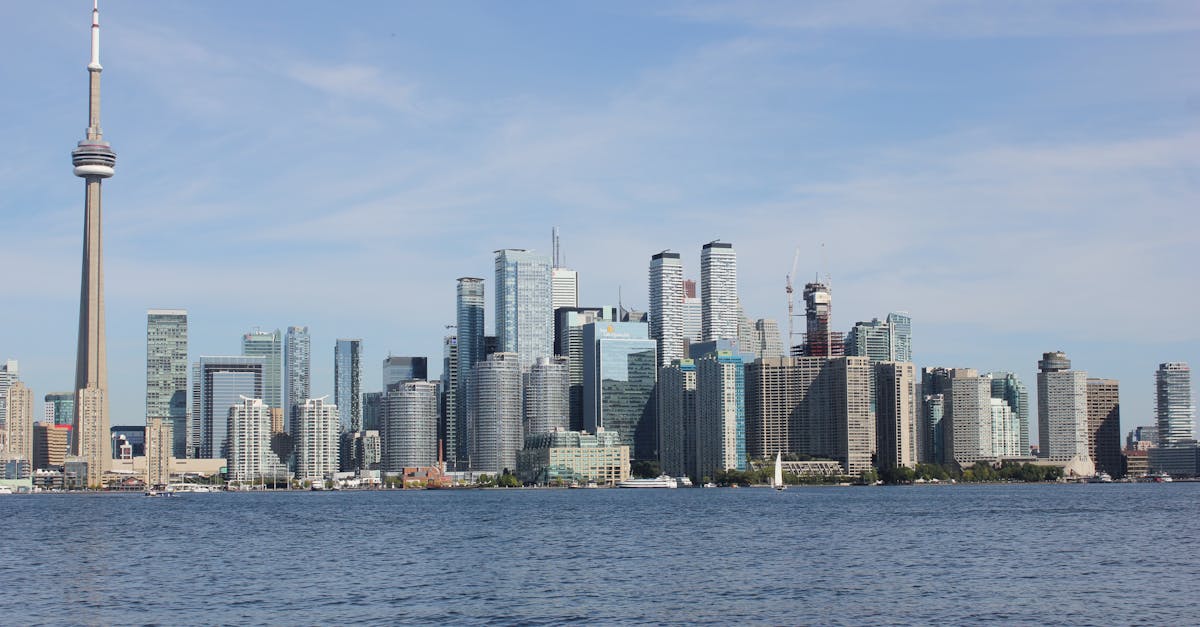
Toronto exceeds expectations even when expectations are high. What images cannot convey is the texture — the way air feels on your skin at dusk, the aroma that greets you in the central market, conversations flowing in rhythms that belong only to this place.
This itinerary balances the must-see landmarks with quieter neighborhoods where the city's true character emerges. Eat everything, walk everywhere, and talk to strangers. The city rewards curiosity with generosity.

CN Tower, Harbourfront & Distillery
Morning (8:00 AM) — CN Tower observation deck: The atmosphere builds gradually as you explore — from initial orientation to genuine immersion. Allow at least an hour, more if you read every plaque and peer around every corner. The surrounding streets offer good cafes for a post-visit debrief over coffee or a cold drink. Check opening hours in advance as seasonal schedules vary.
Mid-Morning (10:30 AM) — Harbourfront waterfront walk: This is one of Toronto's defining experiences — photographs cannot fully convey the combination of visual impact and cultural significance. Spend at least 45 minutes here, preferably in the morning when the light is best and crowds are manageable. The views from elevated sections reward the climb, offering a perspective that reframes the city's layout.
Afternoon (1:00 PM) — St. Lawrence Market food hall: Arrive early — by midday the tour groups arrive in force. The atmosphere is best appreciated at a slow pace, with stops to absorb details that reveal themselves only to those paying attention. A local guide can unlock layers of meaning invisible to the uninstructed eye. Budget at least an hour and resist the urge to rush.
Late Afternoon (3:30 PM) — Distillery District cobblestones: The combination of natural beauty and human history here creates an experience on multiple levels. First-time visitors often focus on the photogenic elements, but the deeper reward comes from understanding why this place exists and what it means to the people who live here. Take your time — the place is not going anywhere.
Museums, Kensington & Chinatown
Morning (8:00 AM) — Royal Ontario Museum galleries: The atmosphere builds gradually as you explore — from initial orientation to genuine immersion. Allow at least an hour, more if you read every plaque and peer around every corner. The surrounding streets offer good cafes for a post-visit debrief over coffee or a cold drink. Check opening hours in advance as seasonal schedules vary.
Mid-Morning (10:30 AM) — Art Gallery of Ontario: This is one of Toronto's defining experiences — photographs cannot fully convey the combination of visual impact and cultural significance. Spend at least 45 minutes here, preferably in the morning when the light is best and crowds are manageable. The views from elevated sections reward the climb, offering a perspective that reframes the city's layout.
Afternoon (1:00 PM) — Kensington Market vendors: Arrive early — by midday the tour groups arrive in force. The atmosphere is best appreciated at a slow pace, with stops to absorb details that reveal themselves only to those paying attention. A local guide can unlock layers of meaning invisible to the uninstructed eye. Budget at least an hour and resist the urge to rush.
Late Afternoon (3:30 PM) — Chinatown Spadina lunch: The combination of natural beauty and human history here creates an experience on multiple levels. First-time visitors often focus on the photogenic elements, but the deeper reward comes from understanding why this place exists and what it means to the people who live here. Take your time — the place is not going anywhere.
Evening (6:00 PM) — Queen Street West boutiques: What makes this stop essential is how it connects to Toronto's larger story — a narrative of decisions, ambitions, and compromises that explain why the city looks and feels the way it does. Experiencing it in person adds a dimension that reading about it cannot replicate.
Toronto Islands, Yorkville & Neighborhoods
Morning (8:00 AM) — Toronto Islands ferry ride: The atmosphere builds gradually as you explore — from initial orientation to genuine immersion. Allow at least an hour, more if you read every plaque and peer around every corner. The surrounding streets offer good cafes for a post-visit debrief over coffee or a cold drink. Check opening hours in advance as seasonal schedules vary.
Mid-Morning (10:30 AM) — Centre Island cycling: This is one of Toronto's defining experiences — photographs cannot fully convey the combination of visual impact and cultural significance. Spend at least 45 minutes here, preferably in the morning when the light is best and crowds are manageable. The views from elevated sections reward the climb, offering a perspective that reframes the city's layout.
Afternoon (1:00 PM) — Yorkville upscale walk: Arrive early — by midday the tour groups arrive in force. The atmosphere is best appreciated at a slow pace, with stops to absorb details that reveal themselves only to those paying attention. A local guide can unlock layers of meaning invisible to the uninstructed eye. Budget at least an hour and resist the urge to rush.
Late Afternoon (3:30 PM) — Little Italy cafes: The combination of natural beauty and human history here creates an experience on multiple levels. First-time visitors often focus on the photogenic elements, but the deeper reward comes from understanding why this place exists and what it means to the people who live here. Take your time — the place is not going anywhere.
Evening (6:00 PM) — Graffiti Alley photos: What makes this stop essential is how it connects to Toronto's larger story — a narrative of decisions, ambitions, and compromises that explain why the city looks and feels the way it does. Experiencing it in person adds a dimension that reading about it cannot replicate.

Budget Breakdown (Per Person, 3 Days)
| Category | Budget | Mid-Range | Luxury |
|---|---|---|---|
| Accommodation (3 nights) | CAD 270 | CAD 600 | CAD 1,500 |
| Food & Drinks | CAD 100 | CAD 240 | CAD 600 |
| Transport | CAD 25 | CAD 50 | CAD 120 |
| Activities | CAD 40 | CAD 100 | CAD 280 |
| Total | CAD 435 | CAD 990 | CAD 2,500 |
Practical Tips for Toronto
Getting Around
TTC subway and streetcar covers most of Toronto. Combine public transport for longer distances with walking for neighborhoods. Download offline maps before arriving. Multi-day transit passes almost always offer better value than single tickets.
When to Visit
Visit Toronto during June-September for comfortable walking weather and accessible outdoor attractions. Shoulder seasons bring fewer crowds and lower prices.
Neighbourhoods to Know
Toronto's neighbourhoods are the city's most compelling feature — a mosaic of distinct communities that each developed their own identity over decades of immigration, investment, and reinvention. Understanding which district suits your interests allows you to eat better, spend less, and see a version of Toronto that guidebook highlights miss entirely. The city's grid layout means most neighbourhoods are walkable within themselves and connected by the TTC subway and streetcar network (a single fare costs CAD 3.30 or CAD 13.50 for a day pass).
Kensington Market, just west of downtown, is the city's most eclectic neighbourhood — a compact area of Victorian rowhouses that has served as home to successive waves of immigrants since the 1900s. Today it houses vintage clothing shops, independent cheese mongers, South American empanada stalls, Jamaican patty joints, and Ethiopian restaurants in a chaotic but entirely walkable few blocks. Lunch here costs CAD 8-12 from any of the food stalls. Sunday pedestrianisation closes the streets to cars between May and October, filling them instead with buskers, cyclists, and neighbourhood regulars who have no interest in tourist itineraries.
The Junction, in the city's west end, is where creative Torontonians moved after Ossington gentrified. Dundas Street West between Keele and Runnymede holds independent furniture and ceramics studios alongside the city's best natural wine bar (Bar Raval's sister spot) and a growing cluster of chef-owned restaurants. A tasting menu dinner at one of the neighbourhood's serious restaurants runs CAD 70-100 per person — half the price of comparable restaurants in Yorkville. The neighbourhood lacks a subway stop (take the Dundas streetcar from Dundas West station) but rewards the extra effort.
Leslieville, east of downtown along Queen Street East, is Toronto's brunch capital and home to a dense concentration of independent coffee roasters, bookshops, and mid-century furniture dealers. The neighbourhood developed its character in the 2000s when artists priced out of West Queen West colonised the old industrial buildings. Today it is entirely residential in character — wide Victorian streets, front-porch culture, and a high density of excellent neighbourhood restaurants. BIBO restaurant on Queen East serves wood-fired pizza from a Neapolitan oven (CAD 18-24) in a room that is always full of locals who live within walking distance.
Exploring more of Canada? Read our Montreal 3-Day Itinerary for your next adventure.