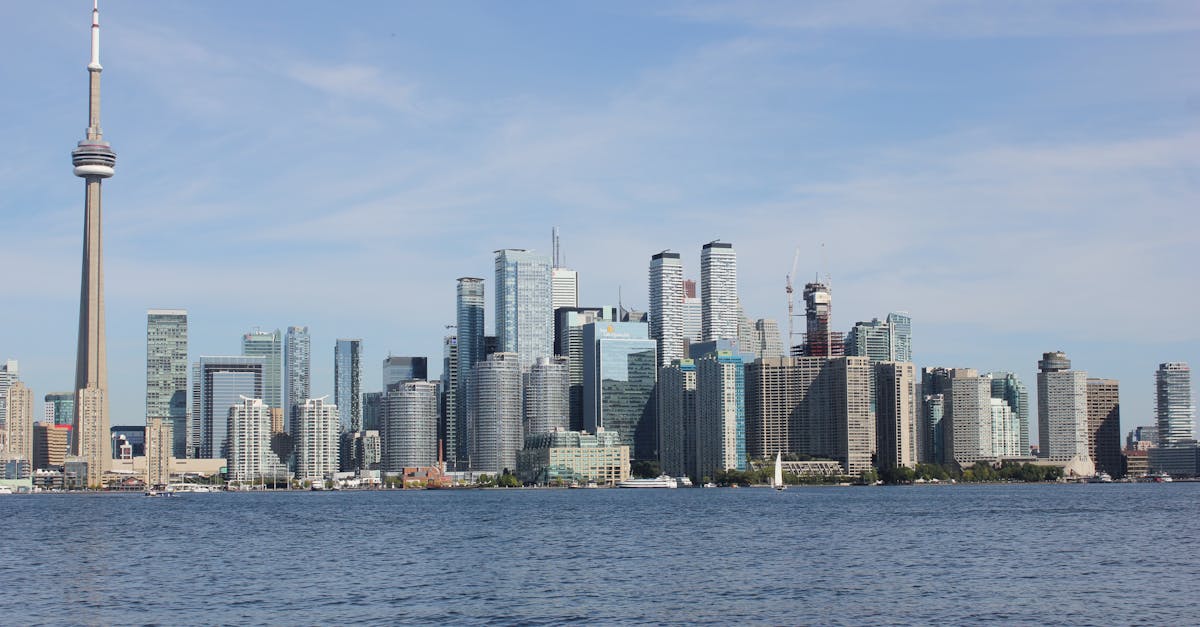
Toronto arrives without the cinematic pre-loading of Paris or New York — most first-timers land at Pearson Airport with a general sense that it is large, cold in winter, and somehow synonymous with hockey. What the city actually delivers, within the first day or two of genuine exploration, is a sustained surprise: the realisation that you are moving through one of the world's most authentically multicultural cities, where the food in Kensington Market genuinely comes from the cultures printed on the awnings, where the ravines running through the urban grid feel like wilderness, and where the winter — yes, it is cold — has generated an indoor city culture of warmth, creativity, and hospitality that rewards the visitor who arrives prepared. This guide is for that visitor.
Before You Arrive
Canada is a separate country from the United States, a fact that surprises nobody in theory but catches some travellers off guard in the paperwork. Entry requirements depend on your nationality and your method of travel — air versus land versus sea carry slightly different rules.

Citizens of the United States do not need a visa to enter Canada, but they do need a valid passport (or NEXUS card for eligible frequent crossers). A driver's licence alone is not accepted at Canadian international airports for entry, regardless of the REAL ID designation. Bring your passport.
Citizens of Visa Waiver countries travelling by air — including the UK, Australia, most EU nations, Japan, South Korea, and dozens of others — must obtain an Electronic Travel Authorization (eTA) before departure. The eTA application is available at canada.ca/en/immigration-refugees-citizenship and costs CAD 7 (approximately USD 5). Processing is typically instant, though occasional manual review can extend this to 72 hours. The eTA is valid for five years or until your passport expires, is linked electronically to your passport, and is almost universally approved for eligible nationalities. There is no physical document to print — your airline verifies it automatically at check-in.
Travellers from countries not on the eTA-eligible list require a Temporary Resident Visa (TRV), which involves a formal application, biometric submission, and processing times ranging from two weeks to several months depending on your home country and the Canadian visa office handling your application. Apply as early as possible.
Currency in Canada is the Canadian dollar (CAD). As of 2025, one CAD equals approximately USD 0.73 or EUR 0.67. Major credit cards are universally accepted in Toronto including at most market stalls and street food vendors that accept electronic payment. ATMs are widely available; look for bank-network machines (TD, RBC, Scotiabank, BMO) over standalone kiosks in tourist areas to avoid high withdrawal fees. Inform your bank of travel dates before departure.
For mobile connectivity, Canadian carriers Rogers, Bell, and Telus offer prepaid SIM cards available at airport kiosks and electronics stores (Best Buy, Canada Computers). A 30-day unlimited data plan typically runs CAD 40–55. eSIM providers like Airalo offer Canada plans starting around CAD 20 for 10GB, which suits short-stay visitors well. Most international roaming plans from US, UK, and Australian carriers include Canada at domestic or reduced rates — check your carrier before purchasing a separate SIM.
Getting from the Airport
Toronto Pearson International Airport (YYZ) is located in Mississauga, approximately 27 kilometres northwest of downtown Toronto. It is a large, well-signed facility with two main terminal buildings — Terminal 1 (Air Canada and Star Alliance) and Terminal 3 (most other carriers) — connected by a free intra-terminal transit system called the Link Train. Allow extra time if arriving at Terminal 3 and needing to reach Terminal 1 transportation hubs, particularly the UP Express platform.

The UP Express train is the definitive airport-to-downtown connection for any traveller without excessive luggage: 25 minutes to Union Station, departures every 15 minutes during peak hours, and a fare of CAD 12.35 with a PRESTO card (or CAD 12.35 by credit card at station kiosks — the UP Express no longer charges a premium for non-PRESTO payment). Union Station drops you at the heart of downtown Toronto, adjacent to the GO Transit and TTC subway system. No transfer is required to reach Waikiki-equivalent density — you step out of Union Station into the Financial District and have Chinatown, Kensington, and the waterfront within a 15–20 minute walk.
Taxis from Pearson operate on metered fares with a Mississauga surcharge structure that brings most downtown trips to CAD 60–75, plus tip. Uber and Lyft are both active at Pearson from designated pickup zones (follow signs for "rideshare" at ground level), with fares typically running CAD 40–65 depending on time of day and surge pricing. The UP Express remains the better choice for solo travellers and pairs; taxis and rideshares earn back their cost premium for groups of three or four splitting the fare.
The TTC bus alternatives to Pearson — primarily Route 52A to Lawrence West subway station — are functional but slow, taking 45–70 minutes in normal traffic and not accommodating large luggage on crowded vehicles. They exist, they cost CAD 3.35, and they are generally the option of last resort for first-time visitors.
Getting Around
Toronto's public transit system, the TTC (Toronto Transit Commission), consists of four subway lines, an extensive streetcar network concentrated in the downtown core, and bus routes reaching into the city's outer neighbourhoods. It is not a perfect system — the subway network is less comprehensive than cities of comparable size, and streetcars are subject to the same traffic delays as any surface vehicle — but it is sufficient for navigating between all major first-timer attractions.

A single TTC fare is CAD 3.35 and covers two hours of unlimited transfers between TTC vehicles, meaning a streetcar to a subway to a bus costs the same as a single-mode trip within that two-hour window. The PRESTO smart card, acquired at any subway station for CAD 6, is the recommended payment method: it eliminates the need for exact change on buses and streetcars, tracks your balance, and is reloadable at station vending machines. A day pass costs CAD 14.50 and makes sense on any day you expect four or more separate trips.
The Yonge-University subway line (Line 1) is the north-south spine running from Finch Avenue in the north to Union Station in the south, then curving west and back north through the trendy Bloor-Yorkville area. Line 2 runs east-west along Bloor Street, connecting Kipling in the west to Kennedy in the east. These two lines serve the majority of tourist-relevant destinations. Chinatown is a short walk from St. Patrick or Queen's Park stations; Kensington Market is accessible from Spadina station; the Distillery District is reachable from King station via streetcar; the AGO is near St. Patrick.
For cycling, Bike Share Toronto's network of 680+ docking stations covers the entire downtown and waterfront grid. A 72-hour pass costs CAD 15 and includes unlimited 30-minute trips — ideal for the hop-on-hop-off exploration style that suits first-timers. Toronto's waterfront trail system is flat, paved, and extends for kilometres in both directions, making lakefront cycling a genuinely excellent way to see the city at low cost.
Where to Base Yourself
Toronto's geography rewards choosing a base neighbourhood intentionally. The city's size means that choosing poorly — staying in, say, North York when your interests are in the Distillery District and waterfront — adds transit time to every outing. For first-timers, the following areas offer the best balance of access, character, and accommodation diversity.

The Downtown Core around King West, the Entertainment District, and Front Street puts you within walking distance of Union Station, the CN Tower, Ripley's Aquarium, and the Harbourfront. Accommodation skews toward mid-range hotels and some premium options; budget travellers may find this area expensive relative to alternatives, but the walking access to major landmarks has genuine value for a first trip. The King streetcar connects this area to the Distillery District in minutes.
Kensington Market and Chinatown (centred on Spadina Avenue and Dundas Street West) is the unambiguous first choice for budget-conscious first-timers who want to experience Toronto's multicultural character at street level. Hostel accommodation here (Canadiana Backpackers Inn is the neighbourhood's representative option) places you equidistant from the AGO, the University of Toronto campus, Bloor Street's shopping and restaurant strip, and the street food of Kensington and Chinatown itself. This is the most culinarily adventurous base in the city.
The Annex (Bloor Street West between Spadina and Bathurst) is a neighbourhood of Victorian houses, independent bookshops, casual restaurants, and a residential density that makes it feel like a real place rather than a visitor overlay. Good for travellers who want a quieter base with easy subway access — Spadina, Bathurst, and Bay stations are all within walking distance.
Leslieville and the Distillery District on the east side offer trendier, newer accommodation in a neighbourhood that has transformed significantly in the past decade. The Distillery District itself is a preserved Victorian industrial complex turned arts and restaurant quarter; staying in the surrounding Leslieville neighbourhood puts you among Toronto's creative class at prices slightly lower than the downtown core, with streetcar access to Union Station in 20 minutes.
Local Culture & Etiquette
The Canadian politeness cliché is, to a degree, real — but it is worth understanding what it actually means before interpreting it as universal friendliness or casual warmth. Canadians, and Torontonians in particular, have a strong cultural preference for social consideration: queuing is taken seriously, noise in public spaces is moderated, and a genuine "sorry" follows any accidental physical contact in a way that startles visitors expecting either urban indifference or effusive welcome. This is not performance; it reflects a genuine civic culture of mutual respect that extends across the city's 200+ nationalities with remarkable consistency.

Toronto is, alongside perhaps only London and New York, one of the world's most genuinely multicultural cities — and this is not merely a demographic statistic. The cultural practices, religious calendars, food traditions, and languages of the city's communities are genuinely embedded in neighbourhood life. Walking through Little Portugal on Dundas West, through Greektown on the Danforth, through the Tamil district around Gerard Street East, or through the South Asian commercial strip of Gerrard India Bazaar, you are in neighbourhoods shaped by their communities over decades. Engage with curiosity and respect, eat widely, and avoid the tourist impulse to treat cultural neighbourhood character as theme-park attraction.
Tipping culture in Toronto follows North American norms: 15% is the minimum tip at sit-down restaurants, 18% is standard, and 20% is common for good service. Many Toronto restaurant card machines default to pre-set suggested gratuities starting at 18%, which can surprise visitors from countries without tipping culture. It is acceptable to adjust the tip amount manually. Counter service coffee shops and quick-serve counters often present tip prompts at 15–20% on card machines — these are optional but have become increasingly standard since the pandemic.
Cannabis is legal in Ontario and can be consumed in most outdoor public spaces where tobacco smoking is also permitted — not indoors, not near playgrounds or school property, not in enclosed public spaces. Licensed cannabis retail stores (Ontario Cannabis Store and private licensees) are visible throughout the city. Respect that not all visitors are accustomed to public cannabis use; etiquette norms around it are still settling.
Winter preparedness deserves its own mention for first-timers visiting between November and March. Temperatures in Toronto routinely fall to -10°C to -20°C (-14°F to -4°F) with wind chill, and the city's underground PATH system — a 30-kilometre network of tunnels connecting Union Station to hotels, offices, and shopping in the financial district — exists precisely because outdoor winter navigation requires genuine protection. Layer seriously: a mid-layer fleece, a wind and waterproof outer shell, insulated gloves, a hat covering the ears, and waterproof boots with grip for icy sidewalks. Visitor frostbite incidents in Toronto are not rare; they are simply rarely mentioned in travel marketing.
Common Mistakes to Avoid
Underestimating the time needed to cross the city. Toronto is one of North America's largest cities by area, and the TTC is not fast. A trip from Kensington Market to the Distillery District via transit takes 30–45 minutes including wait times. Visitors who schedule five neighbourhood visits in a single day routinely end up rushing through all of them. Plan two or three areas per day maximum and build in transit time realistically.
Planning a Niagara Falls day trip without checking the GO Train schedule. GO Train service to Niagara Falls operates on a limited schedule — primarily on weekends and holidays — rather than the hourly service available on other GO corridors. Check the GO Transit website for current timetables before building a Niagara day trip into your itinerary. Midweek visits may require booking a tour operator or renting a car, as GO service may not be running.
Dismissing winter as a deterrent. Toronto's winter cultural calendar — including the Winterlicious restaurant festival in January, the Toronto Light Festival at the Distillery District in February, and the city's world-class indoor museum and restaurant scene — makes November through March a legitimate visit window for travellers who dress appropriately. The mistake is arriving underprepared, not arriving at all.
Paying full price for museum admission without checking Wednesday AGO access. The Art Gallery of Ontario's pay-what-you-can Wednesday evenings are the city's best-known cultural deal, but many first-timers miss this entirely by assuming every major attraction charges full price every day. The Royal Ontario Museum (ROM) similarly runs occasional discount events. Check both institutions' websites for current reduced-admission windows before visiting.
Staying in the CN Tower area and never leaving it. The CN Tower and Ripley's Aquarium are fine attractions but represent a narrow, expensive, and touristy slice of a city with dozens of more characterful and affordable experiences available. Visitors who spend most of their time in the entertainment district miss the neighbourhoods — Kensington, the Annex, Leslieville, Little Italy, Greektown — where Toronto's actual personality lives. Build in at least one full day entirely away from the downtown tourist corridor.
Assuming the subway covers the whole city. Toronto's subway network is relatively limited for a city of 3 million. Many key neighbourhoods — Kensington Market, Little Portugal, Little Italy on College Street, Greektown on the Danforth west of Pape station — require streetcar or bus connections from the nearest subway stop. Google Maps will give accurate door-to-door routing; do not assume that a neighbourhood "near a subway line" is a short walk from a station.
Converting prices mentally to US dollars and calling them cheap. At the current CAD-to-USD exchange rate (approximately 0.73), Toronto prices look more affordable when mentally converted. This can lead to looser spending decisions that add up quickly over a week. Budget in CAD from the start to maintain accurate tracking. A CAD 35 Aquarium ticket is not USD 35 — it is USD 25.50 — but eight such "deals" across a week still accumulate into real expenditure.