Tokyo has an undeserved reputation as one of the world's most expensive cities. This myth, largely a relic of the 1980s bubble economy, persists despite the reality on the ground being dramatically different.
The truth is that Tokyo offers extraordinary value for budget travelers — better value, arguably, than most Western European capitals. A bowl of rich, complex tonkotsu ramen costs ¥800. A night in a capsule hotel in Shinjuku runs ¥3,500.
A 72-hour metro pass covering the entire subway network is ¥1,500. You can ride bullet-train-speed escalators through neon-lit underground cities, visit some of the world's most beautiful shrines and temples for free, and eat food that would earn Michelin stars in other countries — all while spending less per day than you would in London, Paris, or New York.
I've tested the absolute floor of Tokyo budgeting across multiple trips, from backpacker-style survival to comfortable budget travel, and the numbers consistently surprised me. A disciplined backpacker can experience Tokyo on ¥5,000-7,000 per day.
A budget traveler who wants private space and a few treats can do it comfortably on ¥8,000-12,000. This guide breaks down exactly how to hit those numbers without missing anything that makes Tokyo one of the greatest cities on earth.

Budget Accommodation: Capsules, Hostels, and Cheap Hotels
Tokyo's accommodation scene is uniquely suited to budget travelers because the city essentially invented an entire category of affordable lodging: the capsule hotel. But beyond the capsules, there's a deep bench of hostels, guesthouses, and budget business hotels that keep nightly costs remarkably low — especially compared to what you'd pay for equivalent cleanliness and safety in other global capitals.
Capsule Hotels (¥3,000-5,000 per night)
Capsule hotels are more than a novelty — they're a genuinely practical budget option. Modern capsule hotels bear little resemblance to the cramped pods of the 1980s. Nine Hours Shinjuku offers sleek, minimalist pods with USB charging, personal lighting controls, and premium bedding for around ¥3,500.
The Millennials Shibuya provides larger-than-standard capsules with motorized reclining beds, a social lounge with free beer from 5-7 PM, and smart controls — all for ¥4,000-4,500. First Cabin (multiple locations) bridges capsule and business hotel with cabin-style rooms that have semi-private walls and proper desks for ¥4,500-5,000.
Every capsule hotel includes communal baths (often elaborate onsen-style setups with saunas), clean pajamas, and toiletries. The trade-off is obvious: zero privacy, no storage for large luggage, and most are gender-separated by floor.
But for solo travelers who just need a clean, safe place to sleep, capsules are unbeatable value.
Hostels (¥2,500-4,000 per night)
Tokyo's hostel scene has exploded in quality over the past decade. Nui. Hostel & Bar Lounge in Kuramae occupies a converted warehouse with a gorgeous ground-floor bar-lounge, clean 4-6 bed dorms from ¥2,800, and a location in one of Tokyo's coolest emerging neighborhoods.
Toco Tokyo Heritage Hostel is set in a beautifully restored 1920s Japanese house with tatami-mat common areas, a garden, and dorms from ¥3,000 — it feels like staying in a piece of living history. Unplan Kagurazaka offers modern dorms from ¥2,500 with thick curtains for privacy, individual power outlets, and reading lights in a quiet residential neighborhood with excellent local restaurants.
Wise Owl Hostels Shibuya provides clean, efficient pods with personal lockers from ¥3,200, steps from Shibuya Crossing. The hostel scene is especially strong in Asakusa, Kuramae, and along the Sumida River — neighborhoods that combine budget accommodation with authentic Tokyo atmosphere.
Budget Hotels — Shinjuku and Asakusa (¥5,000-8,000 per night)
Japan's business hotel chains are a budget traveler's best friend. The rooms are small — typically 12-15 square meters — but they're immaculately clean, include private bathrooms, free WiFi, and often a basic breakfast. Toyoko Inn (multiple locations, from ¥5,500) is the reliable workhorse: simple rooms, included breakfast of rice balls and miso soup, and locations near every major station.
APA Hotel Shinjuku-Kabukicho Tower (from ¥6,000) puts you in the heart of Shinjuku's entertainment district with a rooftop onsen bath. Hotel Mystays Asakusa (from ¥5,000) offers compact but well-designed rooms with kitchenettes at some properties, walking distance to Senso-ji.
Super Hotel (various locations, from ¥5,500) includes natural hot spring baths and an organic salad breakfast bar in the rate. For couples or friends traveling together, these business hotels become even better value when splitting the room cost — a twin room at Toyoko Inn for ¥6,500 is just ¥3,250 per person with a private bathroom and breakfast included.
Best Budget Neighborhoods
Asakusa is the top pick for budget travelers — it has the highest concentration of hostels and budget hotels, direct subway access, the atmospheric Senso-ji temple complex right outside your door, and some of Tokyo's cheapest restaurants. Shinjuku (specifically the east side near Kabukicho) offers more nightlife and dining variety with good budget hotel density, plus it's the single best-connected station in the city.
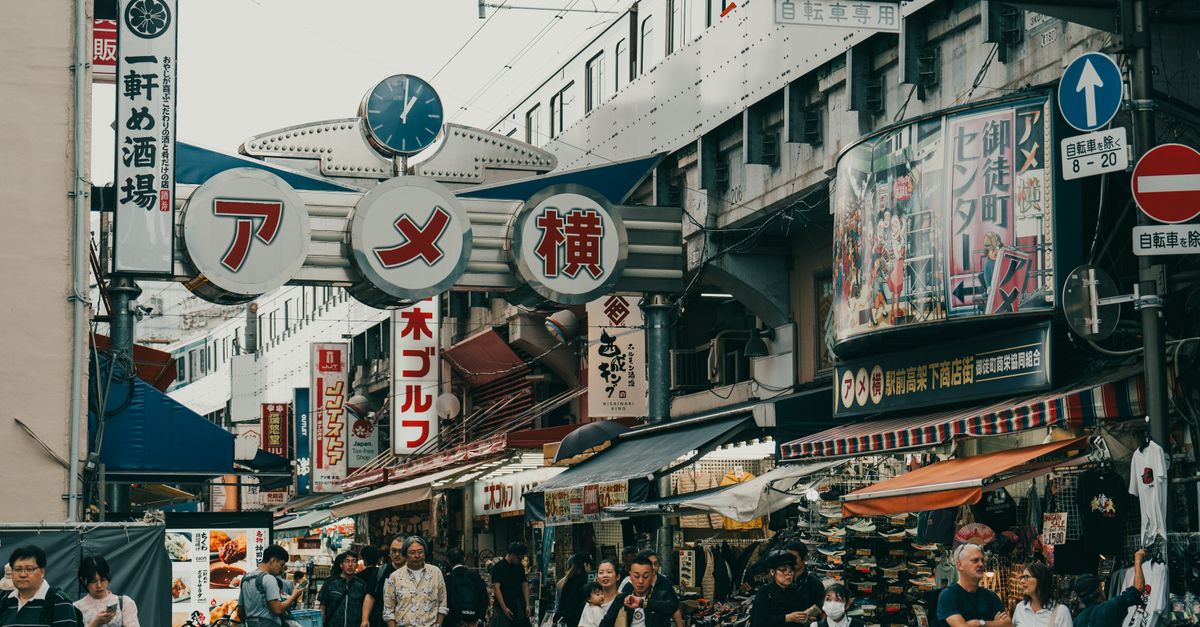
Ueno is underrated — budget hotels cluster around the station, you're near Ameyoko market for cheap street food, and multiple museums (some with free days) are in Ueno Park. Kuramae and Ryogoku along the Sumida River are emerging budget-friendly areas with excellent hostels and a more local, less touristy vibe.
Eating for ¥500-1,000 per Meal: The Budget Food Guide
Tokyo has more Michelin-starred restaurants than any city on earth, but its real culinary superpower is the quality of its cheapest food. The floor for food quality in Tokyo is absurdly high.
A ¥500 bowl of gyudon from a chain restaurant uses better rice and more carefully prepared ingredients than a ¥2,000 meal in most world cities. Convenience store onigiri are handcrafted daily and taste like actual food.
This baseline of quality means that budget eating in Tokyo isn't about settling for mediocre fuel — it's about accessing a food culture that treats even its most affordable offerings with serious respect.
Gyudon Chains: The ¥400-600 Savior (Yoshinoya, Matsuya, Sukiya)
The holy trinity of budget dining in Tokyo. Yoshinoya, Matsuya, and Sukiya are beef bowl chains found on virtually every major street in the city, open 24 hours, and serving complete meals for ¥400-600.
A regular gyudon (simmered beef and onion over rice) at Matsuya costs ¥430 and includes a free cup of miso soup. At Sukiya, the same bowl is ¥400, and you can add toppings like raw egg (¥70), kimchi (¥100), or extra beef (¥170).
Yoshinoya, the original since 1899, serves a slightly sweeter version for ¥468. All three chains also serve set meals (teishoku) with grilled fish, hamburger steak, or curry rice for ¥500-700 — these are complete balanced meals with rice, soup, and a side.
Matsuya stands out for its variety, offering excellent curry rice (¥500), katsu sets (¥650), and a surprisingly good breakfast teishoku with grilled salmon, rice, miso, and natto for ¥500, served until 10:30 AM.
Convenience Store Meals (¥200-600)
Japanese convenience stores — 7-Eleven, Lawson, and FamilyMart — are nothing like their Western counterparts. They stock freshly made onigiri (rice balls, ¥120-180), bento boxes (¥400-600), sandwiches on impossibly soft milk bread (¥200-350), and hot food cases with karaage (fried chicken, ¥200), nikuman (steamed buns, ¥150), and oden (stewed fish cakes and vegetables, ¥80-120 per item).
A lunch of two onigiri, a small salad, and green tea costs ¥500 and is genuinely satisfying. 7-Eleven's bento boxes are the best of the three chains — their hamburg steak bento (¥498) and salmon bento (¥530) are meals you'd happily pay double for at a sit-down restaurant. Lawson's "Uchi Cafe" dessert line produces convenience store sweets that rival patisseries.
FamilyMart's "Famichiki" fried chicken (¥180) is a cult item for good reason.
Standing Sushi and Conveyor Belt Sushi (¥800-1,500)
Standing sushi bars (tachigui-zushi) are where Tokyo office workers grab quick, high-quality sushi at prices that would be impossible at a seated restaurant. Uogashi Nihon-Ichi (multiple locations including Shibuya and Shinjuku) serves individual nigiri from ¥80-300 per piece at a standing counter — five or six pieces of excellent sushi for ¥800-1,000 is a realistic lunch.
Midori Sushi in Umegaoka runs a conveyor belt operation where plates range from ¥130-350 and the quality is dramatically above average for kaiten-zushi. Sushiro and Kura Sushi are the budget kaiten chains — most plates are ¥120-150, and a filling sushi meal costs ¥800-1,200.
The fish at these chains is fresh and properly handled; you're not sacrificing food safety for price.
Ramen (¥700-1,000)
Ramen is Tokyo's great equalizer. The city has thousands of ramen shops, and a bowl from a respected shop costs the same as a bowl from a mediocre one — roughly ¥800-1,000.
Many of the city's most celebrated ramen shops are small, unassuming storefronts where you order from a vending machine (券売機, kenbaiki), hand your ticket to the cook, and receive a bowl that represents years of obsessive recipe development. Fuunji near Shinjuku serves a legendary tsukemen (dipping ramen) for ¥850.
Rokurinsha in Tokyo Station's Ramen Street draws long lines for its thick, intense dipping broth at ¥900. Ichiran (multiple locations) offers individual booth seating and customizable tonkotsu ramen for ¥980 — tourist-friendly with an English order sheet, but the broth is genuinely excellent.
For the cheapest ramen, Hidakaya is a chain serving decent bowls from ¥400-600.

Other Budget Options
Tenya serves tempura rice bowls from ¥540 that are crispy, hot, and satisfying. CoCo Ichibanya offers customizable Japanese curry from ¥500 with dozens of toppings. Ootoya serves home-style teishoku sets — grilled mackerel, chicken nanban, or tofu dishes with rice, miso, and pickles — from ¥700-900.
For breakfast, most bakery chains sell fresh-baked bread, pastries, and coffee sets for ¥300-500. Nakau serves oyakodon (chicken and egg rice bowl) for ¥440. If you want to cook, supermarkets mark down sushi, bento, and prepared foods by 20-50% after 7 PM, with yellow discount stickers appearing around 8 PM — a ¥700 sushi platter becomes ¥350.
Free Things to Do in Tokyo
Tokyo might have the best free activities of any major city in the world. The combination of magnificent Shinto shrines, Buddhist temples, imperial gardens, vibrant neighborhoods, and unique cultural experiences that cost absolutely nothing is staggering.
You could spend a full week doing only free activities and still not cover everything.
Meiji Shrine (Meiji Jingu)
Walking through the towering torii gate into the forested approach to Meiji Shrine is one of the most atmospheric experiences in Tokyo — and it's completely free. The shrine, dedicated to Emperor Meiji and Empress Shoken, sits in 170 acres of dense forest that was planted in 1920 and has since grown into what feels like primeval woodland in the middle of the city.
The gravel path through the forest takes about 10 minutes and the transition from Harajuku's chaos to this serene green space is genuinely startling. Visit early morning (before 9 AM) to see traditional Shinto ceremonies and avoid crowds.
The inner garden (Meiji Jingu Gyoen) requires a ¥500 entry fee, but the main shrine complex and forest are entirely free.
Senso-ji Temple and Asakusa
Tokyo's oldest temple, dating to 645 AD, is free to enter and endlessly photogenic. The approach through Kaminarimon (Thunder Gate) and along Nakamise-dori shopping street is a sensory overload of traditional snacks, souvenirs, and incense.
The main hall is impressive, but the real magic is exploring the surrounding streets — Denpoin-dori for traditional Edo-era atmosphere, the back streets for tiny izakayas and craft shops, and the Sumida River waterfront for views of Tokyo Skytree. Visit before 7 AM to experience the temple grounds in near-solitude, or come at night when the buildings are illuminated and the crowds have gone.
Imperial Palace East Gardens
The former inner grounds of Edo Castle are now a meticulously maintained public garden — free to enter, open Tuesday through Sunday. The gardens feature the massive stone walls and moats of the original castle, seasonal flowers (cherry blossoms in spring, irises in June, autumn leaves in November), and peaceful lawns where you can sit and watch the koi in the ponds.
The Ninomaru Garden is particularly beautiful, designed in a traditional Japanese style with carefully placed rocks, pruned trees, and a small waterfall. Allow 1-2 hours for a full circuit.

Yoyogi Park and Harajuku
Adjacent to Meiji Shrine, Yoyogi Park is Tokyo's Central Park — a vast green space where on weekends you'll find rockabilly dancers near the entrance, amateur musicians, yoga groups, and picnicking families. The park is free and wonderful for people-watching.
From there, walk to Harajuku's Takeshita Street for the most concentrated display of Japanese youth fashion, kawaii culture, and creative energy you'll find anywhere. Continue to the backstreet area of Ura-Harajuku (now called Cat Street) for vintage shops, independent designers, and excellent people-watching.
Not a single yen required for the full experience.
Yanaka — Old Tokyo Atmosphere
Yanaka is one of the few Tokyo neighborhoods that survived both the 1923 earthquake and World War II bombing, preserving a streetscape of wooden houses, small temples, and narrow lanes that evoke the Edo period. Yanaka Ginza shopping street is a charming, unhurried collection of small food shops, craft stores, and cafes where elderly locals shop alongside curious visitors.
The adjacent Yanaka Cemetery is unexpectedly beautiful — a quiet park-like space lined with cherry trees that's one of Tokyo's best (and least crowded) hanami spots in spring. Free to wander, and it takes at least 2-3 hours to appreciate properly.
Shimokitazawa — Bohemian Tokyo
This compact neighborhood is Tokyo's equivalent of Brooklyn or Shoreditch — a tangle of narrow streets packed with vintage clothing shops, tiny live music venues, independent theaters, secondhand bookstores, and quirky cafes. The entire experience is about walking and browsing, and it costs nothing unless you buy something.
Shimokitazawa's charm is its small scale and fierce independence from corporate Tokyo — the buildings are small, the shops are personal, and the atmosphere is laid-back in a way that few Tokyo neighborhoods manage.
Tokyo Metropolitan Government Building Observation Decks
Both the North and South observation decks of the Shinjuku-based Tokyo Metropolitan Government Building offer panoramic views from the 45th floor — completely free. On clear days, you can see Mount Fuji to the west and Tokyo Skytree to the east. The South deck is open until 5:30 PM, while the North deck stays open until 11:00 PM, making it the best free spot in Tokyo for night views.
The observation decks offer the same basic experience as the ¥2,000 Tokyo Skytree or ¥1,800 Tokyo Tower observation decks, but without the cost or the queues.
Transport: Getting Around Tokyo on a Budget
Tokyo's public transport system is the most efficient in the world, and it's surprisingly affordable once you understand the ticketing options. The key is choosing the right pass for your travel style and understanding which lines are covered by which system.
The 72-Hour Tokyo Metro Pass (¥1,500)
This is the single best transport deal in Tokyo. For ¥1,500, you get unlimited rides on all nine Tokyo Metro lines and all four Toei Subway lines for 72 consecutive hours. A single subway ride typically costs ¥170-320, so you only need 5-6 rides per day to break even, and most visitors easily exceed that.
The pass covers the vast majority of tourist destinations: Asakusa, Ueno, Ginza, Shibuya, Shinjuku, Roppongi, Ikebukuro, and Tsukiji are all on Tokyo Metro or Toei lines. There are also 24-hour (¥800) and 48-hour (¥1,200) versions.
Purchase at any major metro station, Haneda Airport, or Narita Airport. The clock starts from your first tap, not from midnight, so activating at 2 PM gives you until 2 PM three days later.
IC Cards (Suica/Pasmo)
A rechargeable IC card (Suica from JR East, Pasmo from Tokyo Metro — they work identically) is essential even if you have a metro pass, because it covers JR lines and buses that the metro pass doesn't. Load money at any station kiosk and tap in/out at gates.
IC cards also work at convenience stores, vending machines, coin lockers, and many restaurants — they're effectively a cashless payment tool. The card itself costs a ¥500 refundable deposit. Note that since 2023, physical Suica cards have been intermittently unavailable for purchase — add a mobile Suica to your iPhone or Android via Apple Wallet or Google Pay instead, which has no deposit requirement.
JR Pass Discussion
The Japan Rail Pass is a separate consideration from Tokyo transport. If you're only visiting Tokyo, a JR Pass is not worth it — the pass is designed for intercity bullet train travel.
Within Tokyo, the JR Yamanote Line (the circular line connecting major stations) costs ¥140-200 per ride, and a few rides per day on JR lines don't justify the ¥50,000 cost of a 7-day national JR Pass. However, if you're combining Tokyo with Kyoto, Osaka, or Hiroshima, the math changes dramatically — a single Tokyo-Kyoto bullet train round trip costs ¥27,000, making the ¥50,000 pass worthwhile if you're taking even one additional JR trip.
Calculate your specific itinerary before purchasing.
Walking: The Underrated Option
Tokyo is far more walkable than its size suggests. Many of the best neighborhoods — Shibuya to Harajuku (15 minutes), Ueno to Yanaka (10 minutes), Asakusa to Kuramae (12 minutes), Shinjuku to Kabukicho (5 minutes) — are connected by pleasant, safe walks.
Google Maps walking directions are accurate in Tokyo, and the sidewalks are immaculate. Walking between adjacent neighborhoods instead of taking the metro saves ¥170-320 per trip and often reveals hidden streets, tiny shrines, and local shops that you'd miss underground.
10 Money-Saving Hacks for Tokyo
1. Depachika Evening Discounts
As covered above, department store basement food halls slash prices 30-50% from 7-8:30 PM. This is the single most impactful budget hack in Tokyo — premium food at convenience store prices.
2. Lunch Sets Over Dinner
Restaurants across Tokyo offer lunch sets (ランチ, ranchi) that are 40-60% cheaper than their dinner menus for essentially the same food. A sushi restaurant charging ¥4,000-6,000 for dinner often serves a lunch set of 10-12 pieces with miso soup for ¥1,000-1,500.
An izakaya with ¥3,000 dinner courses runs ¥800-1,000 lunch teishoku. Always eat your big meal at lunch.

3. 100-Yen Shops for Everything
Daiso, Seria, and Can Do sell household items, travel supplies, stationery, snacks, kitchen tools, and even basic clothing for ¥100 (plus tax). Need a phone charger? ¥100. Rain poncho? ¥100.
Chopsticks, bento box, travel-sized toiletries? All ¥100. The Daiso in Harajuku's Takeshita Street is four floors of ¥100 items.
Stock up here instead of paying convenience store or pharmacy prices for basics.
4. Free Observation Decks
Beyond the Tokyo Metropolitan Government Building, several skyscrapers offer free observation areas. The Bunkyo Civic Center near Tokyo Dome has a 25th-floor observation deck with excellent Skytree views. Caretta Shiodome has a 46th-floor sky restaurant floor where you can enjoy the view from the lobby area without dining.
KITTE Marunouchi has a rooftop garden overlooking Tokyo Station's beautiful red-brick facade. Save the ¥2,000-3,000 that commercial observation decks charge.
5. Water Fountains and Free Water
Tokyo tap water is excellent quality and safe to drink. Refillable water bottle and the city's abundant public water fountains (in parks, stations, and public buildings) mean you never need to buy bottled water.
Restaurants universally serve free cold water or hot tea. This alone saves ¥300-500 per day over buying drinks.
6. Free WiFi Strategy
Rather than buying a pocket WiFi (¥500-1,000/day), use the free Japan Connected-free Wi-Fi app, which aggregates hundreds of thousands of free hotspots across Tokyo including all convenience stores, metro stations, Starbucks, and shopping centers. Coverage is dense enough in central Tokyo that you can check maps and messages every few blocks.
If you need constant connectivity, an eSIM data plan from providers like Ubigi or Airalo costs ¥1,000-2,000 for 7 days — far cheaper than pocket WiFi rental.
7. Temple and Shrine Festival Days
Many temples and shrines hold monthly or annual festivals (matsuri) with free entertainment, food stalls, and cultural performances. Senso-ji's Sanja Matsuri (May) is one of Tokyo's largest festivals. Meiji Shrine hosts free events on national holidays.
Check local listings — you might stumble into a neighborhood festival with drumming, dancing, and yakitori stalls on any given weekend.
8. Coin Laundry Instead of Hotel Laundry
Pack light and use coin laundries (コインランドリー), found in virtually every Tokyo neighborhood. A wash-and-dry cycle costs ¥400-600 total, compared to ¥200-500 per item at hotel laundry services. Most coin laundries have detergent vending machines built in.
9. Ameyoko Market for Cheap Street Food
The Ameyoko market street near Ueno Station is one of Tokyo's last open-air market streets, selling fresh seafood, dried goods, cosmetics, clothing, and — critically — cheap street food. Fresh fruit skewers ¥200, grilled seafood ¥300-500, Turkish kebabs ¥500, and chocolate-covered strawberries ¥300.
The market also sells discounted cosmetics, sneakers, and military surplus gear. Prices here are lower than anywhere else in central Tokyo, and vendors will often discount further near closing time.
10. Don Quijote (Donki) for Late-Night Snacks and Supplies
Don Quijote is a chain of chaotic, floor-to-ceiling discount stores open 24 hours. They sell everything from food and alcohol to electronics and luggage at prices consistently 10-30% below convenience stores and pharmacies.
The snack and instant noodle aisles are particularly good for stocking up on cheap fuel. The Shinjuku Kabukicho location is the flagship and an experience in itself — six floors of organized chaos that's become a tourist attraction in its own right.
Daily Budget Breakdown
| Category | Backpacker (¥/day) | Budget Traveler (¥/day) |
|---|---|---|
| Accommodation | ¥2,500-3,500 (hostel dorm) | ¥5,000-7,000 (capsule/budget hotel) |
| Breakfast | ¥200-400 (conbini onigiri/bread) | ¥400-600 (bakery set/hotel included) |
| Lunch | ¥500-700 (gyudon chain/conbini bento) | ¥800-1,200 (lunch set at restaurant) |
| Dinner | ¥500-800 (ramen/discounted bento) | ¥1,000-1,500 (izakaya/sushi) |
| Snacks & Drinks | ¥200-300 | ¥300-500 |
| Transport | ¥500-700 (metro pass equivalent) | ¥700-1,000 (metro + occasional JR) |
| Activities | ¥0-300 (mostly free) | ¥500-1,500 (one paid attraction) |
| Daily Total | ¥4,400-6,700 | ¥8,700-13,300 |
At current exchange rates (approximately ¥150 to $1 USD), the backpacker daily total translates to roughly $29-45 USD, and the budget traveler total to $58-89 USD. For a city consistently ranked among the world's greatest, those numbers are extraordinary.
Tokyo proves that the best travel experiences aren't bought — they're discovered in the spaces between the tourist attractions, in the ¥800 ramen bowl made by a chef who's been perfecting the same recipe for 30 years, in the free forest surrounding a Shinto shrine in the middle of one of the world's largest cities, and in the quiet efficiency of a culture that believes even the cheapest meal deserves to be made with care.
The travelers who spend the most in Tokyo aren't necessarily having a better time — they're just less informed. Armed with the strategies in this guide, you can experience everything that makes Tokyo extraordinary while keeping your daily spending below what most people budget for a day in far less exciting cities.
The only expensive thing about Tokyo is the flight to get there. Everything after that is up to you.
Read our Complete Tokyo Street Food Guide See our 5-Day Tokyo Itinerary