Tokyo is a city built on contradictions, and that is precisely what makes it one of the most compelling destinations on earth. Here, 1,400-year-old Buddhist temples sit in the shadow of neon-drenched skyscrapers.
Michelin-starred restaurants operate out of basement stalls with six seats and no sign, while convenience stores sell meals that would embarrass mid-range restaurants in most other capitals. You can spend a morning in perfect silence at a Shinto shrine surrounded by ancient cedar forest, then walk fifteen minutes into the sensory overload of Shibuya Crossing, where up to 3,000 people surge across the intersection every two minutes.
The trains run with a punctuality measured in seconds — the average delay across the entire network is under one minute per year — and yet the city's backstreets are a beautiful tangle of tiny bars, ramen shops, and izakayas that defy all logic and urban planning.
This 3-day itinerary is built for first-time visitors who want to experience Tokyo's essential contrasts without wasting time or money on tourist traps. Every recommendation has been tested, every price verified, and the routes are optimized so you spend less time on trains and more time exploring.
Tokyo rewards the curious — the best tonkatsu shop might be behind an unmarked door, the most stunning shrine might be down a residential alley. This guide will get you to those places, and leave enough flexibility for the spontaneous discoveries that make Tokyo unforgettable.

Asakusa, Ueno & Traditional Tokyo
Morning (8:00 AM): Begin your Tokyo journey at Senso-ji Temple in Asakusa — Tokyo's oldest and most visited Buddhist temple, founded in 645 AD. Arrive early, before 9 AM, when the temple grounds are still relatively quiet and the morning light hits the five-story pagoda beautifully.
Enter through the iconic Kaminarimon Gate (Thunder Gate), with its massive red lantern weighing 700 kilograms, and walk the length of Nakamise-dori — a 250-meter shopping street that has served temple visitors for centuries. This is where your Tokyo food education begins.
Pick up ningyo-yaki (small cakes filled with sweet red bean paste, ¥500 for a bag of 10), age-manju (deep-fried sweet buns, ¥100 each), and kibi-dango (millet dumplings coated in soybean flour, ¥350 for five). At the temple itself, toss a ¥5 coin into the offering box — the coin with the hole in it is considered lucky because the Japanese word for five yen, "go-en," is a homophone for good fortune.
Draw an omikuji fortune slip for ¥100 and, if you get a bad one, tie it to the metal rack to leave the bad luck behind. The incense burner in front of the main hall is free — locals waft the smoke over their bodies, believing it heals ailments wherever it touches.
Late Morning (10:00 AM): Walk fifteen minutes west to Kappabashi Kitchen Street — also known as Kitchen Town — a 800-meter stretch of over 170 shops selling everything a restaurant could need. This is where Tokyo's chefs buy their tools, and it is a fascinating window into Japanese culinary obsession.
The star attraction for visitors is the plastic food samples (called shokuhin sampuru) displayed in shop windows like Ganso Shokuhin Sample-ya, where you can buy astonishingly realistic fake sushi, ramen, and tempura as souvenirs (¥1,500-4,000 per piece). Knife enthusiasts should visit Kama-asa, a cookware shop that has been operating since 1908, where hand-forged Japanese kitchen knives start at around ¥5,000 for a petty knife and run to ¥50,000+ for professional-grade gyuto blades.
The staff will help you choose based on your cooking style and can engrave your name in Japanese. Even if you are not buying, the craftsmanship on display is extraordinary.
Lunch (12:00 PM): You have two outstanding options within the neighborhood. Fuunji, a tiny shop near Shinjuku station (a short metro ride), serves what many consider Tokyo's best tsukemen — thick noodles served cold alongside a rich, concentrated dipping broth made from pork and fish stock.
A regular portion costs ¥900 and a large is ¥1,050. The queue typically runs 20-30 minutes, but it moves fast because most people finish in under ten minutes. Alternatively, stay in Asakusa and eat at Sometaro, a charming old wooden house where you cook your own okonomiyaki (savory cabbage pancake) on a hot griddle built into your table.
The pork and shrimp mix is ¥1,000, and the monjayaki (a runnier Tokyo-style variation) is ¥950. The staff will teach you the technique if it is your first time — flip confidently, they will tell you, and don't press it flat.
Afternoon (2:00 PM): Take the metro to Ueno and spend the afternoon in Ueno Park — Tokyo's largest public park and home to an extraordinary concentration of museums. Your first stop should be the Tokyo National Museum (¥1,000 admission), Japan's oldest and largest museum with a collection of over 120,000 objects spanning Japanese art, samurai armor, ancient ceramics, and Buddhist sculpture.
The Honkan (Japanese Gallery) alone could occupy an entire afternoon, but focus on the samurai sword collection on the second floor and the stunning kimono displays. If time allows, the Gallery of Horyuji Treasures — a minimalist building designed by Yoshio Taniguchi — houses 7th and 8th century Buddhist artifacts in one of the most beautifully designed museum spaces in the world.
Wander through the park afterward, past the lotus-covered Shinobazu Pond and the Toshogu Shrine (¥500), a rare Edo-period shrine decorated in ornate gold leaf that feels transported from Nikko.
Evening (5:30 PM): Start your evening at Ameyoko Market, a chaotic open-air market running along the train tracks south of Ueno Station. This post-war black market turned shopping street is one of Tokyo's best food crawling grounds.
Grab fresh sea urchin served in the shell (¥500-1,000 depending on size and season), grilled scallops on a stick (¥500), and chocolate-covered strawberries (¥400). The fishmongers here are theatrical — they will shout prices and wave whole tuna at passersby.
After Ameyoko, take the Yamanote Line to Shinjuku and find Omoide Yokocho (Memory Lane), a narrow alley of tiny yakitori bars crammed under the train tracks. The smoke, the lanterns, the salaryman crowd — this is quintessential old Tokyo.
Sit at a counter and order yakitori sticks (¥150-200 each) — try the tsukune (chicken meatball), negima (chicken and scallion), and if you are feeling brave, the kawa (chicken skin, grilled until impossibly crispy). Pair it with a glass of hoppy — a low-alcohol beer substitute that is the unofficial drink of these alleys — for ¥400.

Shibuya, Harajuku & Shinjuku
Morning (8:30 AM): Start at Meiji Shrine (Meiji Jingu), set within a 170-acre forest of 120,000 trees planted when the shrine was built in 1920 to honor Emperor Meiji and Empress Shoken. The transition from central Tokyo into this dense forest is startling — within minutes of passing through the massive torii gate (the largest wooden torii in Japan, standing 12 meters tall and made from a 1,500-year-old cypress), the city noise vanishes completely.
The gravel path to the main shrine takes about ten minutes to walk and passes a wall of ornamental sake barrels donated by breweries across Japan, followed by a wall of Burgundy wine barrels donated by French winemakers — a wonderful symbol of cross-cultural exchange. The shrine itself is elegant in its simplicity.
Write a wish on an ema wooden plaque (¥500) and hang it alongside thousands of others. You may witness a traditional Shinto wedding procession if you are lucky — the bride in white kimono, the procession led by a priest and shrine maidens.
The inner garden (¥500 admission) is worth the detour, especially in June when the iris garden explodes with over 150 varieties in full bloom.
Late Morning (10:30 AM): Exit the shrine's southern gate and walk directly into Harajuku, beginning with Takeshita Street — a narrow pedestrian lane that is ground zero for Japanese youth culture. The street is a sensory overload of rainbow cotton candy (¥600 for an enormous cloud), crepe stands selling Nutella-banana-strawberry crepes (¥500-700), and shops selling everything from Gothic Lolita dresses to anime merchandise.
It gets extremely crowded after 11 AM on weekends, so move through quickly if the crowds overwhelm you. Turn onto Cat Street for a more sophisticated experience — this tree-lined backstreet is lined with independent boutiques, vintage shops, and specialty coffee roasters like The Roastery by Nozy Coffee.
Continue to Omotesando, often called Tokyo's Champs-Elysees — a wide, zelkova-tree-lined boulevard where the world's top architects have designed flagship stores. The Prada building (by Herzog & de Meuron), the Dior building (by SANAA), and the Tod's building (by Toyo Ito) are worth admiring for their architecture alone.
Duck into Omotesando Hills — a Tadao Ando-designed shopping complex built around a spiraling ramp — for high-end browsing.
Lunch (1:00 PM): Walk to Afuri in Harajuku for their signature yuzu shio ramen — a lighter, citrus-infused ramen that is a refreshing alternative to the heavy tonkotsu style. The regular bowl costs ¥1,100 and the chashu upgrade is ¥1,450.
Order from the vending machine by the door (standard in Tokyo ramen shops), take your ticket to the counter, and wait. The broth is clear, fragrant, and deeply savory without being heavy.
If you prefer something heartier, Gyukatsu Motomura in Shibuya serves gyukatsu — a breaded, deep-fried beef cutlet served rare with a hot stone so you can sear each slice to your preferred doneness. A set with rice, cabbage, and miso soup costs ¥1,600, and it is one of the most satisfying meals in Tokyo.
The queue can run 30-45 minutes during peak lunch hours, but it moves steadily.
Afternoon (3:00 PM): Walk to Shibuya Crossing — the intersection you have seen in every Tokyo photograph and film scene. Stand on the curb at the Hachiko Exit side and wait for the light to change.
When it does, up to 3,000 people step off the curbs from every direction simultaneously and somehow navigate through each other without collision. Cross it yourself several times — the novelty does not wear off.
For the best overhead view, head to Shibuya Sky (¥2,000), the observation deck on the rooftop of Shibuya Scramble Square. The open-air rooftop at 230 meters offers a 360-degree panorama of the city, and on clear days you can see Mount Fuji.
The sunset slot is spectacular — book online in advance as walk-ups often sell out. Before leaving the area, pay your respects to the Hachiko statue outside the station — the famous Akita dog who waited at the station every day for nine years after his owner's death.
It is both a meeting point and a monument to loyalty.
Evening (6:00 PM): Take the Yamanote Line one stop to Shinjuku and head to Kabukicho — Tokyo's largest entertainment district, a neon-drenched labyrinth of bars, restaurants, arcades, and karaoke parlors. Despite its reputation, the area is safe for tourists and absolutely worth exploring for the atmosphere alone.
The Robot Restaurant (now rebranded as the Robot Show) is extremely touristy but undeniably wild (¥8,000). For a more authentic evening, find Golden Gai — a warren of roughly 200 tiny bars crammed into six narrow alleys, each seating only 5-10 people.
Many bars charge a cover of ¥500-1,000, but drinks are reasonable at ¥600-800 for beer or highball. Look for bars with English signs or menus in the window — some are regulars-only, but most welcome visitors warmly.
Each bar has its own personality: there are jazz bars, punk bars, film bars, and bars dedicated entirely to one obscure spirit. End the evening with a bowl of ramen at Nagi in Golden Gai, famous for their niboshi ramen (sardine-based broth, ¥1,000) — intensely fishy and polarizing, but if you love umami, you will be in heaven.
Tsukiji, Akihabara & TeamLab
Morning (7:30 AM): Start early at Tsukiji Outer Market — while the famous inner wholesale market moved to Toyosu in 2018, the outer market remains a thriving maze of over 400 food stalls and small restaurants. This is the best breakfast you will eat in Tokyo, possibly in your life.
The food crawl essentials: tamagoyaki (sweet Japanese omelet on a stick) at Tsukiji Yamacho (¥150 for a thick, custardy slab); fresh oysters grilled in the shell (¥500 for two) from the vendors near the Namiyoke Shrine entrance; a maguro don (tuna rice bowl) at Sushi Dai or Daiwa Sushi — though both have brutal queues of 1-2 hours, the smaller stalls nearby like Tsukiji Sushiko serve excellent chirashi bowls for ¥2,000 without the wait. Pick up a menchi katsu (deep-fried minced meat cutlet, ¥300) from any of the stands along the main lane, and finish with a melon pan stuffed with ice cream (¥500) from one of the dessert vendors.
If you love uni (sea urchin), the market vendors sell trays of fresh Hokkaido uni for ¥1,000-2,000 that would cost triple in any restaurant. Wander into the small kitchen supply shops too — you can find quality ceramic bowls and chopsticks for ¥300-800 that make excellent souvenirs.
Late Morning (10:30 AM): Walk fifteen minutes south along the waterfront to Hama-rikyu Gardens — a stunning Edo-period landscape garden that once served as a duck hunting ground for the Tokugawa shoguns. Admission is ¥300, and the gardens are a masterclass in Japanese landscape design: tidal ponds that change with the sea, 300-year-old pine trees carefully shaped over generations, and flowering plum and peony gardens that shift with the seasons.
The highlight is the Nakajima Tea House, set on an island in the central pond. For ¥510, you receive a bowl of freshly whisked matcha and a traditional wagashi sweet while sitting on tatami mats overlooking the water, with the skyscrapers of Shiodome rising behind the garden like a surreal backdrop.
It is one of those moments where Tokyo's contradictions become poetry — 17th-century tranquility framed by 21st-century glass towers. The experience lasts about 20 minutes and is genuinely meditative.
Afternoon (1:00 PM): Take the Hibiya Line north to Akihabara — Tokyo's electric town, the global capital of anime, manga, video games, and all things otaku culture. Even if you have zero interest in anime, Akihabara's density and energy are worth experiencing.
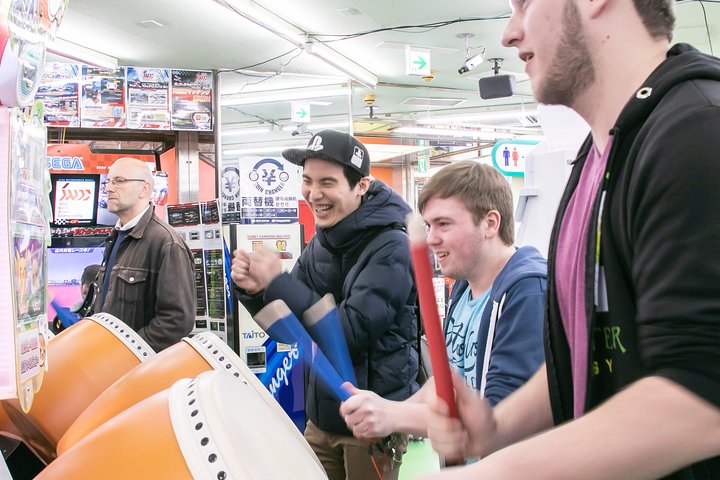
Start at Super Potato, a retro gaming store spread across several floors, crammed with vintage consoles, cartridges, and playable arcade machines from the 1980s and 90s — play classic Street Fighter II and Pac-Man cabinets for ¥100 per game. Browse the massive multi-story electronics stores like Yodobashi Camera (eight floors of every gadget imaginable) and the manga shops where entire floors are organized by incredibly specific sub-genres.
For the culturally curious, visit a maid cafe — a uniquely Japanese phenomenon where waitresses in French maid costumes serve you with elaborate cuteness rituals, drawing ketchup hearts on your omurice (omelet rice) and performing dance routines. @Home Cafe is the most famous, with a cover charge of ¥770 for one hour plus food orders (omurice sets around ¥1,300).
It is bizarre, wholesome, and strangely entertaining. Akihabara is also excellent for tax-free electronics shopping — look for the "Tax Free" signs and bring your passport.
Evening (5:00 PM): End your Tokyo adventure at TeamLab Borderless, now relocated to Azabudai Hills in Minato. This immersive digital art museum is unlike anything else in the world — a 10,000-square-meter space with no map and no defined path, where digital artworks flow out of rooms, merge with other works, and respond to your presence.
Flowers bloom beneath your feet and scatter as you walk. Waterfalls of light cascade down walls and across your body. Entire rooms transform as you stand in them, with projections that shift with the seasons and time of day.
Tickets cost ¥3,800 and must be booked online in advance (they sell out days ahead — book as early as possible). Allow at least 2-2.5 hours. The EN Tea House inside the exhibit serves tea in bowls where digital flowers bloom from the liquid as you drink (included in the admission).
Wear white or light-colored clothing for the best visual effect — the projections show up beautifully on lighter fabrics. This experience is genuinely transcendent and is the perfect way to close three days in a city that constantly blurs the line between reality and imagination.
Budget Breakdown (Per Person, 3 Days)
| Category | Budget | Mid-Range | Luxury |
|---|---|---|---|
| Accommodation (3 nights) | $90 | $300 | $900 |
| Food & Drinks | $75 | $180 | $450 |
| Transport (trains + metro) | $20 | $40 | $80 |
| Activities & Entry Fees | $45 | $100 | $250 |
| Total 3 Days | $230 | $620 | $1,680 |
Essential Tips for Tokyo
Train Passes & Getting Around
If you are staying only in Tokyo, a Tokyo Subway 72-Hour Ticket (¥1,500) covers unlimited rides on all Tokyo Metro and Toei Subway lines — excellent value when a single ride costs ¥170-320. However, it does not cover JR lines including the essential Yamanote loop line.
If you plan day trips to Kamakura, Nikko, or Hakone, consider the Japan Rail Pass, though at ¥50,000 for a 7-day pass, it only pays off with multiple long-distance trips. For Tokyo alone, a Suica card with pay-as-you-go credit is the simplest option.
Google Maps works flawlessly for Tokyo transit — trust it for routes, transfers, and timing.
Cash Is Still King
Japan is still heavily cash-based despite recent pushes toward cashless payments. Many ramen shops, izakayas, market stalls, and smaller restaurants are cash-only. ATMs at 7-Eleven and Japan Post accept international Visa and Mastercard reliably.
Carry ¥10,000-15,000 per day as a comfortable buffer. Coins accumulate fast — the ¥500 coin is worth about $3.30 and is useful for temple donations, vending machines, and coin lockers at train stations (¥300-700 depending on size).
Wear Comfortable Shoes
You will walk 15,000-25,000 steps per day in Tokyo. The city is enormous and even with the excellent train system, you will cover significant distances on foot between stations, through parks, and around neighborhoods.
Bring shoes that are easy to slip on and off — you will remove them frequently when entering temples, traditional restaurants, fitting rooms, and some izakayas. Slip-on sneakers are ideal.
Quiet Trains & Etiquette
Talking on the phone on trains is strictly taboo — you will notice locals setting their phones to silent (called "manner mode" in Japan) before boarding. Conversations between passengers should be kept to a low voice.
Priority seats near the doors are for elderly, pregnant, and disabled passengers — do not sit in them during rush hour even if they appear empty. Stand on the left side of escalators in Tokyo (the opposite of Osaka) to let people pass on the right.
Rush hour (7:30-9:30 AM) on the major lines is genuinely intense — avoid it with luggage if possible.
Trash & Recycling
Public trash cans are extremely rare in Tokyo — a legacy of the 1995 sarin gas attacks on the subway. You are expected to carry your trash until you find a bin, usually at convenience stores or train stations.
When you do find bins, they are meticulously sorted: burnable, non-burnable, PET bottles, cans, glass. Convenience stores always have bins outside or near the entrance — this is often your best option.
Carry a small bag for trash; locals do it instinctively.
Ready to book? Compare hotel prices in Tokyo and find flights to Tokyo on JustCheckin.