Tokyo is the most visited city in Asia and one of the most visited on Earth, yet it remains remarkably easy to escape the tourist trail entirely. This is a city of 14 million people spread across dozens of distinct neighborhoods, each with its own identity, history, and culture, and the vast majority of visitors see only a tiny fraction of it.
They hit Shibuya Crossing, queue at Senso-ji, eat ramen in Shinjuku, ride the bullet train to Kyoto, and leave convinced they've seen Tokyo. They haven't. The real Tokyo lives in the neighborhoods that don't make the top-ten lists — the ones where the streets are too narrow for tour buses, where the shop signs are only in Japanese, where the kissaten coffee shops haven't changed their interiors since 1973, and where the izakayas seat six people and the chef knows everyone by name.
These are not obscure places. They're well-known to Tokyoites, who will often express genuine surprise that tourists don't visit them. But the sheer density and complexity of Tokyo's train map, combined with the language barrier and the gravitational pull of famous landmarks, means that most visitors never venture beyond the same five or six neighborhoods.
This guide covers ten places that will show you a completely different side of the city, all accessible by the same JR and metro lines you're already using, and none of them more than 30 minutes from Shinjuku Station.

1. Shimokitazawa — Vintage Shopping and Counterculture
Shimokitazawa is Tokyo's answer to Brooklyn's Williamsburg or London's Shoreditch, except it got there first and it did it without trying. This compact neighborhood, just two stops from Shibuya on the Keio Inokashira Line, is the epicenter of Tokyo's secondhand and vintage clothing culture.
The streets are lined with thrift shops — not curated vintage boutiques with inflated prices, but genuine secondhand stores where you can find a perfectly broken-in denim jacket for ¥1,500 or a vintage band tee for ¥800. New York Joe Exchange is the most famous, but the joy of Shimokitazawa is wandering and discovering your own favorites among the dozens of small shops packed into the narrow streets.
Beyond clothing, the neighborhood has independent record stores selling Japanese city pop vinyl, tiny live music venues where you can see local bands for ¥1,500-2,000 including a drink, used bookstores with surprisingly deep English-language sections, and more independent cafes per square meter than anywhere else in Tokyo. The food is excellent and cheap: Shirube does a legendary pork curry for ¥850, and the cafe culture here rivals anything in Melbourne or Copenhagen.
Shimokitazawa is also the home of Honda Gekijo, one of Tokyo's most respected small theaters, and the neighborhood has a strong performing arts tradition that includes improvisational comedy and experimental dance. Come on a Saturday afternoon when all the shops are open and the streets are full of Tokyo's creative class.
The recent redevelopment around the station added some modern buildings, but the backstreets remain gloriously unchanged. Best time to visit is early afternoon through evening, when the vintage shops, cafes, and bars are all in full swing.
2. Yanaka — Edo-Era Atmosphere in Modern Tokyo
Yanaka is one of the few neighborhoods in central Tokyo that survived both the 1923 Great Kanto Earthquake and the World War II firebombing largely intact, and walking its streets feels like stepping back into a version of the city that has otherwise been completely erased. The architecture is low-rise and wooden, the temples are numerous and quiet, the cemetery — Yanaka Cemetery, one of Tokyo's oldest — is a cherry blossom destination in spring and a peaceful walk year-round.
The main commercial street, Yanaka Ginza, is a short shopping lane of old-fashioned stores selling handmade crackers, cat-themed souvenirs (Yanaka is famous for its stray cats), traditional sweets, and yakitori that you eat standing on the street. At the western end of Yanaka Ginza, a flight of steps known as Yuyake Dandan (Sunset Steps) offers a view down the shopping street toward the horizon that, on clear evenings, frames a spectacular sunset between the buildings.
The neighborhood is best explored on foot with no particular destination in mind: wander the temple grounds, peer into the workshops of traditional craftspeople, stop at SCAI The Bathhouse (a contemporary art gallery inside a 200-year-old public bathhouse), and eat your way down Yanaka Ginza. The area is a 5-minute walk from Nippori Station on the JR Yamanote Line.
Weekday mornings are the quietest time, and the contrast between Yanaka's Edo-era pace and the frenzy of Shibuya, just 25 minutes away by train, is almost disorienting.
3. Koenji — Punk Rock, Indie Culture, and Cheap Eats
Koenji is where Tokyo's counterculture has been living since the 1960s, and it refuses to be gentrified. Located on the JR Chuo Line about 10 minutes west of Shinjuku, this neighborhood is the spiritual home of Japanese punk, indie music, and alternative culture.
The streets are lined with secondhand clothing shops, independent record stores specializing in obscure Japanese punk and noise music, tiny live houses where unsigned bands play to audiences of 30 people, and izakayas where a beer costs ¥300 and the bartender has a mohawk. The Koenji Awa Odori Festival, held every August, transforms the neighborhood into one of Tokyo's wildest street parties — over 10,000 dancers in traditional costumes parade through streets packed with a million spectators.
Even outside festival season, Koenji has an energy that's different from anywhere else in Tokyo: scruffier, louder, more anarchic. The south side of the station is where most of the vintage shops and record stores cluster, while the north side has the higher concentration of bars and live music venues.
For food, Koenji is one of the cheapest neighborhoods in central Tokyo to eat well: ramen shops and curry houses routinely serve meals for ¥600-800, and the standing bars along the main drag sell drinks for ¥200-300. Don't miss the cluster of tiny bars in the backstreets south of the station, some seating only four or five people, each with its own character and regular clientele.
Visit on a weekend evening when the bars and music venues are in full swing, or come during the August festival for an experience you'll never forget.
4. Odaiba — Retro Arcades, Giant Gundam, and Bay Views
Odaiba is Tokyo's waterfront entertainment island, built on reclaimed land in Tokyo Bay, and while it's not exactly unknown, most tourists either skip it entirely or visit only for the teamLab exhibitions. That's a mistake, because Odaiba has some of the most uniquely Tokyo experiences in the city.
Start with the life-size Unicorn Gundam statue outside DiverCity Tokyo Plaza — standing nearly 20 meters tall, it transforms between Unicorn Mode and Destroy Mode at scheduled times throughout the day, with a sound and light show after dark that draws crowds of devoted fans. Inside DiverCity, the Gundam Base Tokyo shop is a pilgrimage site for model kit enthusiasts.
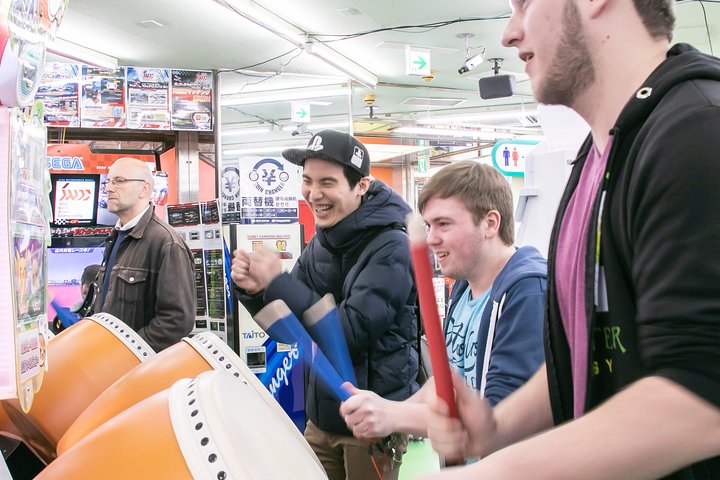
Nearby, Joypolis is Sega's massive indoor amusement park with VR rides and retro arcade floors that feel like a time capsule from 1990s gaming culture. For a completely different vibe, Oedo Onsen Monogatari recreates an Edo-period hot spring town inside a modern building — you change into a yukata at the entrance, then soak in multiple indoor and outdoor baths, eat street food from themed stalls, and relax in a foot bath filled with small fish that nibble dead skin off your feet (¥2,768 weekday entry).
The Rainbow Bridge walk offers a free pedestrian crossing with views of the Tokyo skyline, and the artificial beach at Odaiba Seaside Park is one of the few places in central Tokyo where you can sit on sand and look at the water. Take the Yurikamome automated train from Shimbashi Station — the driverless monorail crosses the Rainbow Bridge and the front seats offer cinematic views.
Visit on a clear day for the best bay panoramas, and stay into the evening for the illuminated skyline views.
5. Todoroki Valley — An Urban Ravine Walk
There is a forested ravine in the middle of one of Tokyo's most expensive residential neighborhoods, and almost no tourists know it exists. Todoroki Valley is a one-kilometer walking trail that follows the Yazawa River through a narrow gorge lined with trees, bamboo groves, and moss-covered rock walls.
The trail runs below street level, and once you descend the stone steps from the road above, the sounds of the city disappear entirely — replaced by running water, birdsong, and the rustle of wind through bamboo. It feels impossible that this place exists within the 23 wards of Tokyo, but here it is, a genuine ravine walk in the urban core.
The trail passes a small Shinto shrine (Todoroki Fudo), a waterfall (modest but atmospheric), and several traditional Japanese garden areas. At the far end, the path emerges at Todoroki Park, where you can sit on a bench by a pond and process the fact that you just walked through a forest in Tokyo.
The entire walk takes about 30 minutes at a gentle pace. Todoroki Station on the Tokyu Oimachi Line is a 2-minute walk from the valley entrance — the station is about 20 minutes from Shibuya with one transfer.
The valley is at its most atmospheric in early morning, when mist sometimes lingers in the ravine, or in autumn when the foliage turns gold and red. It's completely free and open year-round.
Wear shoes with grip — the stone steps can be slippery after rain, and the trail itself has some uneven sections.
6. Kagurazaka — Tokyo's Little Paris
Kagurazaka is one of Tokyo's most charming neighborhoods, a hilly district near Iidabashi Station that somehow combines traditional geisha culture with a thriving French community, resulting in a place where you can eat a perfect croissant in the morning, have kaiseki for lunch, browse a French-language bookshop in the afternoon, and drink sake at a traditional izakaya in the evening. The French connection dates back to the Institut Français, which has been located here since 1952, drawing a community of French residents, students, and businesses.
Today, the main street is lined with French patisseries, bistros, and wine bars alongside traditional Japanese restaurants and shops. The real magic is in the yokocho — the narrow stone-paved alleyways that branch off the main street, some barely wide enough for two people to pass.
These lanes, lit by paper lanterns in the evening, contain hidden restaurants, ryotei (traditional Japanese dining establishments), and small bars that feel like they've been here for centuries. Kagurazaka was historically a geisha district, and while the geisha community has dwindled, you can still occasionally spot a geisha in full dress heading to an appointment in the backstreets.
Every July, the Kagurazaka Awa Odori dance festival fills the streets with performers and food stalls. The neighborhood is a 5-minute walk from Iidabashi Station on the JR Chuo/Sobu Line or the Metro Tozai, Yurakucho, and Namboku lines.
Visit in the evening when the lanterns are lit and the restaurants are open, and be prepared to get deliberately lost in the yokocho — that's the entire point.

7. Harmonica Yokocho in Kichijoji — Tiny Bars, Big Atmosphere
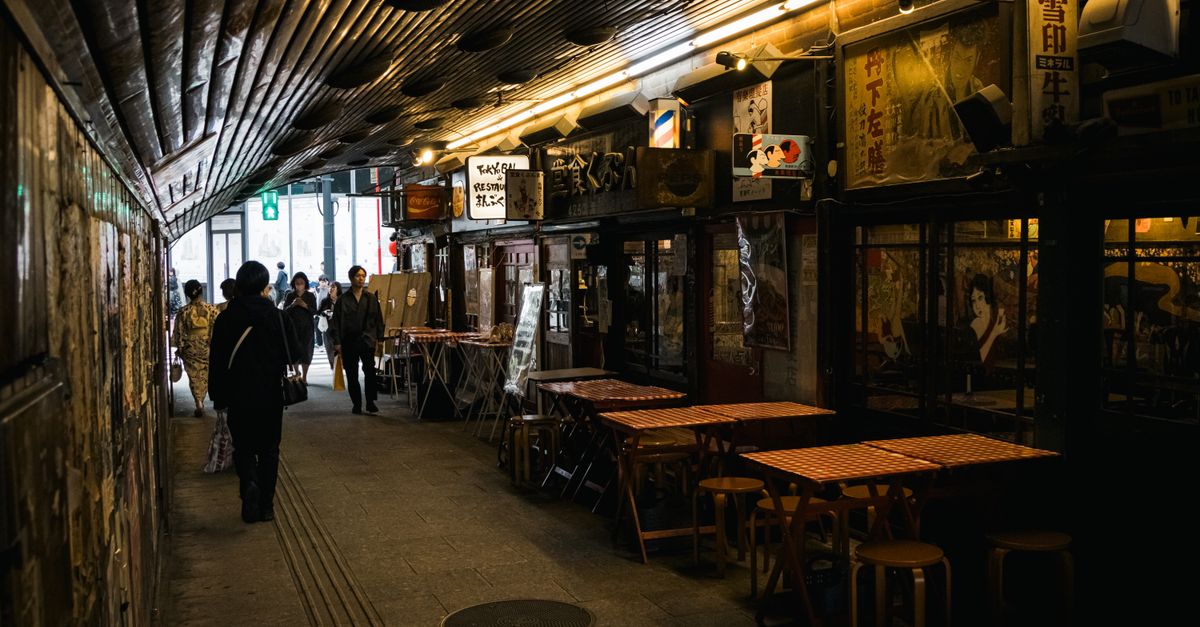
Kichijoji is consistently voted the neighborhood where Tokyoites most want to live, and Harmonica Yokocho is the reason many of them give. This tiny maze of narrow alleyways just north of Kichijoji Station is packed with miniature bars, restaurants, and shops, some no bigger than a garden shed, each with four to eight seats and a single chef or bartender.
The name comes from the layout — the parallel rows of tiny shops resemble the reeds of a harmonica. The atmosphere is intimate, chaotic, and deeply convivial. You'll sit elbow to elbow with strangers who become drinking partners within minutes.
Some bars specialize in natural wine, others in craft beer, others in obscure Japanese whisky. The food ranges from yakitori grilled over charcoal to handmade gyoza to elaborate French-Japanese fusion from a chef who trained at a Michelin-starred restaurant and decided he'd rather cook for six people at a time.
Prices are generally very reasonable — ¥500-800 for most small plates, ¥400-600 for drinks. The best strategy is to walk the alleys, peer through doorways, and go wherever looks appealing. Most places have no English menus, but pointing and smiling works perfectly well.
After exploring Harmonica Yokocho, walk five minutes south to Inokashira Park (see below) to clear your head in the fresh air. Kichijoji is about 15 minutes from Shinjuku on the JR Chuo Line.
Visit in the evening — the bars start filling up around 6 PM, and by 8 PM the alleys are full of people drifting between establishments.
8. Inokashira Park — Swan Boats and Ghibli Magic
Inokashira Park is one of Tokyo's most beloved green spaces, a large wooded park centered around a lake where you can rent swan-shaped pedal boats (¥700 for 30 minutes) and paddle beneath cherry trees that, in late March and early April, drop blossoms onto the water in such quantities that the surface turns pink. The park is popular with couples — Tokyo urban legend holds that couples who ride the swan boats together will break up, supposedly cursed by the jealous goddess of the lake's Benzaiten Shrine, which doesn't stop anyone from trying.
Beyond the lake, the park has forested walking paths, a small zoo (free), street performers on weekends, and a permanent population of buskers, artists, and crafts vendors who set up along the paths on Saturdays and Sundays. The major draw for many visitors is the Ghibli Museum, located at the western edge of the park.
This museum, dedicated to the work of Studio Ghibli and director Hayao Miyazaki, is one of the most charming museum experiences in the world — but tickets must be purchased in advance and sell out quickly. Entry is ¥1,000 for adults, and tickets are released on the 10th of each month for the following month through the Lawson ticket system.
You cannot buy tickets at the door. The museum is deliberately small and intimate, with original animation cels, a working animation studio, a rooftop garden with a life-size Robot Soldier from Laputa, and a small theater showing exclusive short films.
Plan to spend two to three hours. Inokashira Park itself is a 5-minute walk from Kichijoji Station or Inokashira-Koen Station. Visit the park on a weekday morning for the most peaceful experience, or on a weekend for the full atmosphere of buskers, food vendors, and families enjoying the space.


9. Nippori Fabric Town — A Textile Lover's Paradise
If you have even a passing interest in textiles, sewing, or fashion design, Nippori Fabric Town will overwhelm you in the best possible way. This one-kilometer stretch of Nippori's main street, between Nippori Station and the Arakawa streetcar line, contains over 80 fabric shops selling every material imaginable at wholesale prices.
Japanese cotton in hundreds of traditional patterns, silk by the meter, linen, denim, wool, imported European fabrics, African wax prints, Indonesian batik, kimono fabric, leather, lace, and specialty materials used in cosplay and theatrical costume. The prices are dramatically lower than retail fabric shops elsewhere in Tokyo — typically 30-50% less — and the range is staggering.
Even if you don't sew, the shops are visually spectacular: bolts of fabric stacked floor to ceiling in narrow stores, creating walls of color and pattern that are worth visiting just to see. Several shops specialize in vintage and deadstock kimono fabrics, offering one-of-a-kind materials that can't be found anywhere else.
Others focus on the cotton tenugui (traditional hand towels) that make excellent souvenirs — lightweight, beautiful, and starting at ¥300. Nippori Station is on the JR Yamanote Line, just one stop from Yanaka, making it easy to combine both neighborhoods in a single half-day walk.
Most shops are open from 10 AM to 6 PM, Monday through Saturday, and many are closed on Sundays. Come on a weekday for a quieter browsing experience, and bring a tote bag — you will buy things you didn't plan on buying.
10. Suginami Animation Museum — Free Anime History
Suginami Ward has been the heartland of Japanese animation since the industry's earliest days — over 70 anime studios are located in the ward, more than any other area in Japan — and the Suginami Animation Museum tells the complete story of anime from its origins to the present day. Entry is completely free, and while the museum is not large, it's thoughtfully curated and packed with interactive exhibits that appeal to both hardcore anime fans and complete newcomers.
The permanent exhibition traces the history of Japanese animation from the earliest pre-war experiments through the golden age of television anime to contemporary digital production techniques. You can try your hand at dubbing dialogue over an anime scene, flip through thousands of original animation cels from classic series, and watch a continuously rotating selection of anime in a small theater.
The interactive workshop area lets you create simple animations using physical and digital tools. The museum also hosts temporary exhibitions focusing on specific studios, directors, or series, and these are often excellent.
Suginami Animation Museum is a 5-minute walk from Ogikubo Station on the JR Chuo Line (about 15 minutes from Shinjuku), located inside the Suginami Kaikan building. Open Tuesday through Sunday, 10 AM to 6 PM, closed Mondays.
The museum is small enough to see in about 90 minutes, making it easy to combine with a visit to Koenji (one stop east on the Chuo Line) or Kichijoji (two stops west). For serious anime fans, this museum provides context and depth that the more commercial anime attractions in Akihabara simply don't offer — this is about the art and history of animation, not merchandise.