
Tel Aviv is the Middle East's most hedonistic city — a Mediterranean beach town with world-class nightlife, Bauhaus architecture, and a food scene that fuses Levantine traditions with modern innovation — and the food scene reflects this diversity.

Must-Try Dishes
1. Hummus — ILS 30-45
Tel Aviv takes hummus seriously — entire restaurants are dedicated to nothing else. Abu Hassan in Jaffa (ILS 30-45 for a full plate with warm pita) is legendary. The hummus is impossibly smooth, served warm with whole chickpeas, tahini, and olive oil.
2. Shakshuka — ILS 45-60
Eggs poached in a spiced tomato-pepper sauce — Israel's favorite breakfast. Dr. Shakshuka in Jaffa (ILS 45-60) serves versions with merguez sausage, cheese, and eggplant. The iron skillet arrives bubbling.
3. Sabich — ILS 25-35
A pita stuffed with fried eggplant, hard-boiled egg, hummus, tahini, amba (mango pickle), and Israeli salad — Iraqi-Jewish origin now a Tel Aviv street food essential. Sabich Tchernichovsky (ILS 25-35) is the benchmark. Better than falafel (controversial but true).
4. Falafel — ILS 20-30
Crispy chickpea balls in pita with salad, pickles, and tahini — the ultimate Israeli street food. Hakosem near King George St (ILS 20-30) serves some of the best. The self-serve salad bar is unlimited.
5. Malabi — ILS 10-15
Rose-water milk pudding topped with coconut, pistachios, and raspberry syrup — Israel's most refreshing dessert. Available at kiosks in Carmel Market for ILS 10-15.
6. Israeli Breakfast — ILS 50-80
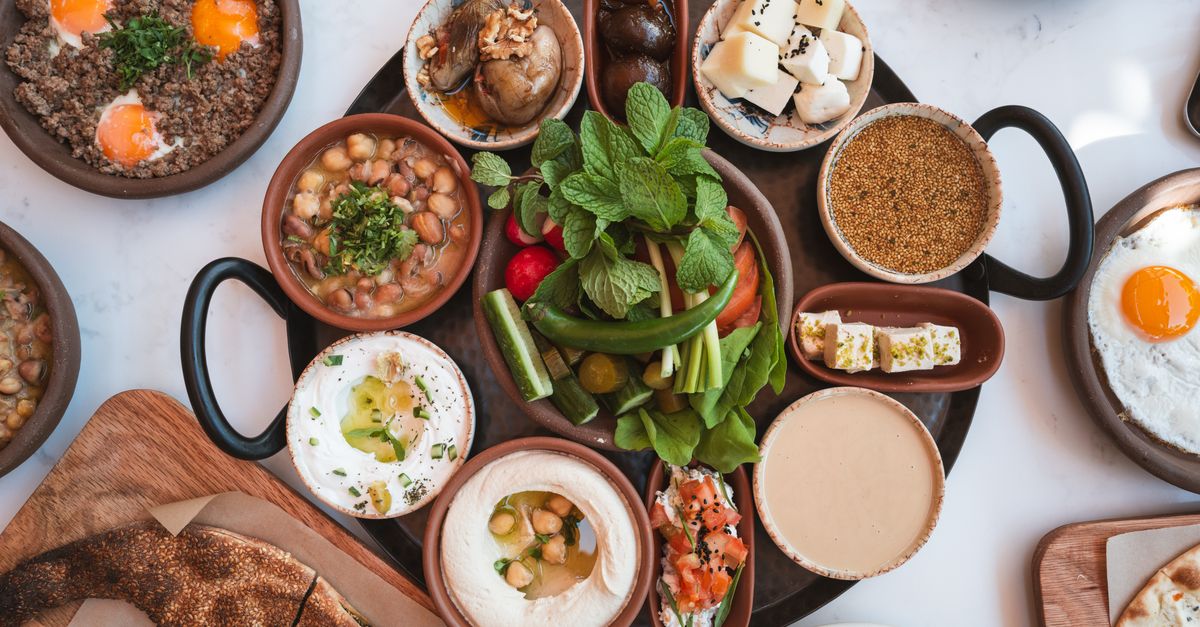
Hotels and cafes serve massive breakfast spreads — salads, cheeses, eggs, fresh bread, labneh, olives, and juice. Benedict and Cafe Landwer serve excellent versions (ILS 50-80). The scale is astonishing.
Where to Eat
City Center — Tourist-Friendly
The main tourist area has the most accessible restaurants with English menus and familiar service styles. Prices are 20-30% higher than local neighborhoods but convenience is worth it for first-time visitors.
Local Neighborhoods — Authentic & Budget
Venture 10-15 minutes from the tourist center to find where locals eat. Prices drop significantly and authenticity rises. Language barriers exist but pointing at dishes and smiling works universally.
Markets & Street Food — Best Value
The city's markets and street food areas offer the cheapest and often the best eating experiences. Follow the queues, eat what locals eat, and budget for multiple small dishes rather than one large meal.
Dining Tips for Tel Aviv
The best food in any city comes from specialists — restaurants and stalls that have perfected a single dish over years or decades. The cramped stall with the longest queue of locals invariably serves better food than the spacious restaurant with the bilingual menu and zero customers. Follow the crowds, eat what locals eat, and budget for multiple small meals rather than one large dinner.
Street food is safe when the vendor is busy — high customer turnover means food is cooked fresh and doesn't sit at dangerous temperatures. Avoid pre-cooked items that have been sitting under heat lamps for hours. Steaming, sizzling, and smoking are signs of freshly prepared food. Morning markets and evening food stalls typically offer the freshest options.
Local markets are the most affordable and authentic eating experience in any Asian city. Visit the main market early in the morning when vendors set up — the energy, the colors, and the breakfast food reveal the city's character more effectively than any museum or monument. Budget 60-90 minutes for a market visit including breakfast.
Dietary restrictions and allergies can be communicated with a few prepared phrases in the local language. Download Google Translate's offline language pack before your trip. Most Asian food cultures are accommodating of preferences when communicated clearly. Vegetarian options are available nearly everywhere, though the definition varies — fish sauce and shrimp paste appear in many 'vegetarian' Southeast Asian dishes.
Drinks & Nightlife
Tel Aviv's bar and nightlife scene is one of the most distinctive in the Middle East — and one of the most underrated in the Mediterranean. The city's relatively liberal social culture, dense concentration of young professionals, and long warm evenings produce a drinking culture that starts late, runs well past midnight, and centres around rooftop terraces, craft beer bars, and natural wine lists rather than the cocktail-chain formulas found in most tourist cities.
The craft beer revolution hit Tel Aviv hard. Dancing Camel in the northern end of the city (ILS 30-45 per pint) was the first Israeli craft brewery and still produces some of the country's finest ales. Jajo Wine Bar on Frishman Street (ILS 40-70 per glass) has championed Israeli natural wine since before it was fashionable; the list focuses on boutique Galilee and Golan Heights producers whose wines rarely appear outside Israel. The Carmel Market's evening extension, the HaTachana compound, sees wine-by-the-glass bars stay open until midnight during summer.
The Florentin neighbourhood is Tel Aviv's most energetic drinking district after dark. Bar Saloona on Vital Street (ILS 25-40 for local beer) draws mixed crowds of students and creatives until 3 AM most nights. The cluster of bars on Florentin Street itself — including the unpretentious Kangaroo Stop and the deliberately scruffy Radio EP — capture the neighbourhood's bohemian character better than anywhere else. Expect noise, outdoor tables sprawling onto the pavement, and no dress code whatsoever.
For cocktails with a view, the hotel rooftop bars of the White City deserve attention. The rooftop at the Norman Hotel on Nachmani Street (ILS 70-120 per cocktail) serves beautifully crafted drinks with a Bauhaus skyline panorama. More affordable is the outdoor terrace at Hotel de la Mer in Jaffa (ILS 50-80), where the Mediterranean disappears into the horizon at sunset. The Arab-Israeli city of Jaffa adds a distinctly different atmosphere — the old port area at night feels ancient and modern simultaneously, with hookah cafes alongside wine bars and art galleries.
Arak, the anise-flavoured spirit common throughout the Levant, is the local hard alcohol of choice — order it with water and ice (it turns milky white) alongside mezze for a classic Tel Aviv evening ritual. Most bars stock Israeli arak brands like Arak Ramallah and Elite, typically ILS 25-35 per glass. The drinking age is 18, alcohol is widely available at convenience stores and supermarkets, and open-container laws are rarely enforced on the beach promenade on summer evenings.
Planning Your Food Exploration
The most rewarding food experiences come from planning meals around the local eating schedule rather than forcing your own rhythm onto a foreign city. Most Asian cities eat early — breakfast stalls open at dawn and close by 9 AM, lunch service peaks at noon and ends by 2 PM, and dinner starts at 5-6 PM. Night markets and street food stalls offer the best evening options, typically running from 6 PM until 10 PM or later.
Budget allocation matters. Spend 30-40% of your food budget on one memorable meal — a signature local restaurant, a cooking class, or a fresh seafood dinner. Allocate the rest to street food, markets, and casual local restaurants where the authentic flavors live. This strategy ensures you taste both the refined and the everyday versions of the local cuisine without breaking the bank.
Photography etiquette at food stalls and small restaurants varies by culture. In most of Asia, photographing your food is completely normal and even expected. Photographing the cook or the stall itself — ask first with a smile and gesture. Most vendors are flattered; a few prefer not to be photographed. In sit-down restaurants, photograph freely but be discreet about photographing other diners.
Food allergies and dietary restrictions require preparation. Write your restrictions in the local language (Google Translate helps) and show the note at each restaurant. Common allergens like peanuts, shellfish, and gluten appear in unexpected places — soy sauce contains wheat, fish sauce is in many Thai and Vietnamese dishes, and peanuts appear in Indonesian, Malaysian, and Chinese cooking. Communicate clearly and ask about ingredients rather than assuming from the menu description.
The single best food investment in any Asian city is a cooking class. For 5-50, you'll visit a local market, learn 4-6 dishes hands-on, and gain techniques that let you recreate the flavors at home. The market tour alone — learning to identify local herbs, spices, and produce — transforms your understanding of the cuisine for every subsequent meal during your trip.


