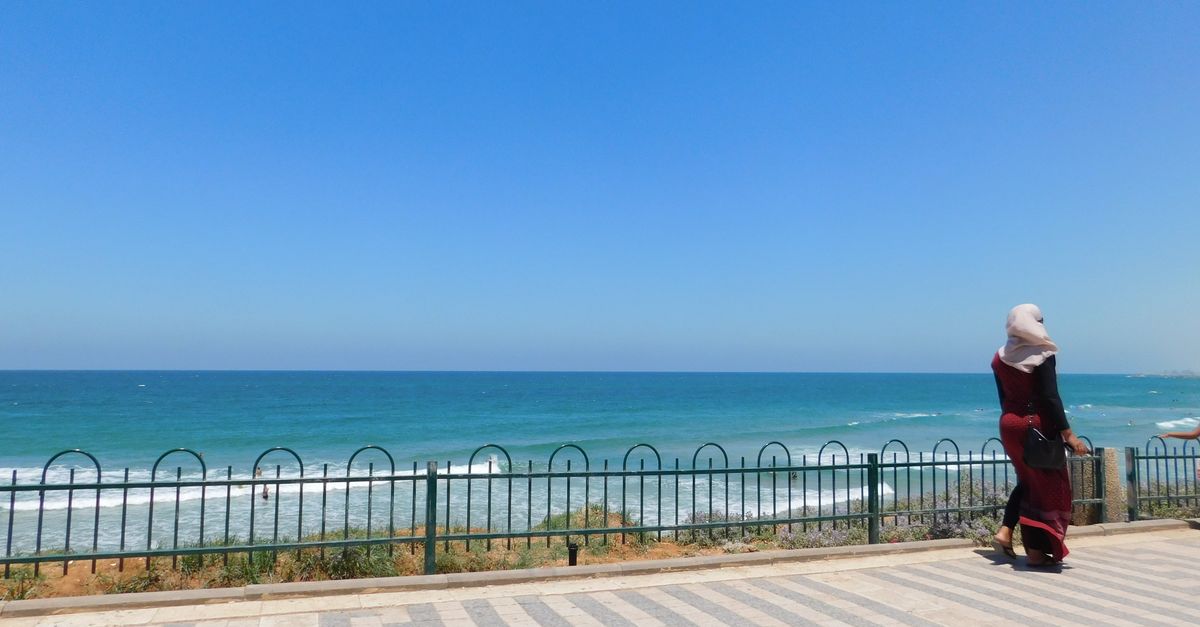
Tel Aviv is genuinely cosmopolitan in a way that most Middle Eastern cities are not — a 24-hour city with a world-class food culture, a design scene of disproportionate quality for a city of 450,000, and a beach that actually functions as the city's central public space. The tourist version of Tel Aviv is pretty accurate: Carmel Market, Jaffa's ancient port, the Bauhaus White City architecture, the nightlife on Allenby Street. But the tourist version is also only the surface of a city whose depth lies in its neighborhoods, in the waves of immigration that have continuously reshaped it, and in the specific Israeli way of treating informal public space as genuinely democratic territory.
What visitors consistently miss is the Yemenite Quarter behind Carmel Market, where a community that arrived in 1910 has maintained its specific Yemenite culinary and cultural traditions for six generations on the same streets. They miss the Florentin neighborhood in the south, where street art has transformed an industrial area into the most interesting visual environment in Tel Aviv without any official curation. They miss Jaffa's Arab community, which coexists with the gentrification and maintains its own distinct social and culinary life in the old city's back streets. Tel Aviv has enormous hidden layers, and they're all within walking distance of each other.
These ten hidden gems of Tel Aviv reward the visitor who moves on foot and follows curiosity rather than itinerary. Many require being awake early or late. All require leaving the beachfront promenade zone at least temporarily.
1. HaTachana (Old Train Station) at Night
HaTachana is the restored Ottoman-era train station in the Neve Tzedek neighborhood, converted from Jaffa's original Jaffa-Jerusalem railway terminal (opened 1892, closed 1948) into a design and food complex. Most visitors see it during the day, when it's a nice outdoor shopping-and-café space. The night version is different: the original station building and the platforms are lit with warm indirect light, the restaurant terraces are full of Tel Avivians in the specific mode of late-night dinner-into-drinks, and a series of cultural events (live music, outdoor film screenings in summer, art installations) make the old station platforms an active social space from 8 PM to midnight.
The architecture of HaTachana is intrinsically interesting: the station building is in the late Ottoman period's hybrid style — European industrial functionalism adapted with Levantine detailing, thick stone walls for insulation, high ceilings for ventilation. The platform canopy structure is original wrought iron. The original locomotive shed houses one of Tel Aviv's better cocktail bars (using the industrial aesthetic rather than decorating around it). The 19th-century Jaffa to Jerusalem rail line is a fascinating infrastructure history — the technology that connected coastal and inland Palestine, and whose closure in 1948 became a permanent rupture.
HaTachana is at the southern end of HaAliya Street in the Neve Tzedek neighborhood, a 15-minute walk from the seafront. No entry fee. Open daily, busiest after 7 PM on weekdays and from 10 AM onward on Saturdays (the main Israeli day off). The Shabbat food market in the station complex (Saturday morning, 9 AM to 2 PM) is one of the better markets in Tel Aviv — artisan bread, seasonal produce from the Sharon Plain, cheese, and the specific Israeli version of sourdough that is distinct from European styles.
Neve Tzedek surrounding HaTachana is the neighborhood worth walking before or after the station. This was Tel Aviv's first Jewish neighborhood (founded 1887, before Tel Aviv itself) and the houses on Shabazi Street and Rokach Street are the oldest in the city: two-story Ottoman-period stone buildings with arched windows and the characteristic ochre-yellow plaster. The Suzanne Dellal Center (contemporary dance) is in a restored Neve Tzedek school building and runs performances most weeknights of the season (October-June). Check the schedule at suzannedellal.org.il — tickets from 60 NIS.
2. Levinsky Market's Spice District
The Levinsky Market area in south Tel Aviv is technically well-known among food travelers. The specific Yemenite spice and herb shops on Levinsky Street and its side streets are not. This is the supply chain for Tel Aviv's restaurants: the za'atar merchants who sell by the kilo to restaurant kitchens, the importers of specific Persian dried limes (loomi) and Iraqi date syrup (dibis), and the shops that stock ingredients from the diaspora communities that make up Israeli culinary culture — Ethiopian berbere spice, Moroccan chermoula paste, Georgian walnut pastes, Yemenite hilbe (fenugreek paste). The range of global spice culture on a 200-metre street is extraordinary.
The Israeli za'atar blend deserves special attention. It is fundamentally different from the Lebanese blend that most of the world knows: the Israeli version includes more sumac, less thyme, and uses the specific Origanum syriacum (Syrian oregano) that grows in the Galilee Hills and is legally protected in its wild form. The Levinsky spice shops source from licensed cultivators and the quality of the dried herb is incomparably higher than the supermarket version. A 100g bag of good Levinsky za'atar costs 8-15 NIS and will make the best labneh-and-za'atar breakfast of your life when mixed with quality olive oil and spread on bread.
Levinsky Street is in south Tel Aviv, accessible by bus from most central Tel Aviv points (lines 40, 239, 51 from the central bus station). The market is most active Monday to Friday, 8 AM to 2 PM. Most shops close by 3 PM and are closed Saturday. The pickle shop on Levinsky (Manda's Pickles, operating since the 1960s) sells house-fermented vegetables — turnips pickled with beets, green olives brined with lemon, cauliflower with turmeric — that are specific to the Levantine tradition and taste nothing like supermarket pickles. 15-25 NIS per 500g.
The Yemenite Quarter (Kerem HaTemanim) is immediately adjacent to the Levinsky Market area — two blocks north, accessible by walking through the Carmel Market's southern end. The Yemenite Quarter is where the Yemenite Jewish community has lived since 1910, and the neighborhood food culture (malawach, jachnun, and kubaneh — all Yemenite bread varieties cooked overnight) is available from small family restaurants open from 7 AM. The jachnun — overnight slow-baked Yemenite rolled pastry served with grated tomato and zhug sauce — is the most interesting single breakfast item in Tel Aviv.
3. Florentin's Street Art Circuit
Florentin is Tel Aviv's most interesting neighborhood for visual culture: a former industrial area of small factories and workshops in south Tel Aviv that underwent exactly the artist-colonization gentrification pattern of Shoreditch in London or Williamsburg in Brooklyn, but on an Israeli schedule (beginning in the 1990s, now somewhat advanced but not yet finished). The street art in Florentin is the densest concentration in Israel — every available wall has been painted, re-painted, and repainted again. The result is an outdoor gallery that changes seasonally and spans the full range from Tags to commissioned large-format murals.
The most interesting street art in Florentin is not the tourist-documented large murals on Florentin Street itself (though they're excellent) but the deeper back-lane graffiti that records the neighborhood's political history in visual form. Israeli street art is explicitly political — the occupation, the religious/secular conflict, the Ethiopian and Mizrahi community experiences — in ways that the Tel Aviv tourist experience carefully packages away. In Florentin's side streets, the packaging comes off. The work is in Hebrew and requires translation to fully understand, but the emotional register is clear even without language.
Florentin is between Jaffa Road and the Shapira neighborhood, west of the Levinsky Market. The main pedestrian street is Florentin Street; the side streets worth walking are Vital, Abarbanel, and Haaliyah HaShniya (look for the lane with the tiled wall art). No map is necessary or desirable — the walking is the point. Start at the Florentin falafel (the stand on the corner of Florentin and Herzl, open noon to midnight) and walk west, turning into any side street that catches your eye. Allow 2 hours.
The nightlife in Florentin is the area's other identity: the bar and club concentration between Florentin Street and Vital Street is where Tel Aviv's queer community, artists, and music subculture intersect. The bars here don't typically open until 10 PM and the best nights are Wednesday and Thursday. The specific character — genuinely alternative rather than mainstream-alternative — is difficult to find in the Friday night beach bar scene that most tourists encounter. Florentin at midnight on a Wednesday is the city's most honest social version of itself.
4. Jaffa's Arab Quarter
The tourism infrastructure of Jaffa presents it primarily as a gentrified gallery-and-restaurant district in which the ancient Arab city is archaeological backdrop. The actual Arab community of Jaffa — approximately 17,000 people in the Ajami neighborhood — is living history, not archaeology. The families in the old stone houses of Ajami have lived there for generations; the mosque on the central square is a working congregation, not a monument; the Arab restaurants (hummus, fish) on Yefet Street and the clock tower area serve the local community at local prices.
Ajami's food culture is the most specific thing about Jaffa's Arab Quarter: the hummus at Abu Hassan (Ali Karavan) on HaDolphin Street is consistently considered the finest in Israel, and the restaurant is a cash-only institution open only for lunch (8 AM to 2:30 PM, sometimes closing when it sells out). The masabacha (whole chickpeas in warm tahini sauce) and the ful (fava beans) are prepared fresh each morning and the quality is a function of this freshness — there is no dinner service because there is nothing left by afternoon.
Walking from the Jaffa Clock Tower (the Ottoman-era landmark at the center of old Jaffa) south into the Ajami neighborhood requires simply turning away from the gallery district and walking toward the sea on any of the residential streets south of Yefet. The housing is predominantly 19th-century Palestinian Arab urban architecture: thick stone walls, arched ground floors, flat roofs with communal gathering space. Many houses have been divided into apartments; the density and the community visible on the street corners and in the doorways is the social reality of a community maintaining urban continuity.
The Hassan Bek Mosque on the northern edge of Jaffa, at the boundary with Tel Aviv's seafront, is a 1916 Ottoman mosque that has been a symbol of Arab presence in the contested space between Jaffa and Tel Aviv for a century. It's an active mosque and can be visited outside prayer hours. The minaret view (occasionally accessible to visitors through the mosque management) shows the Jaffa-Tel Aviv coastline in a configuration that maps the geography of the 1948 urban transformation more clearly than any history book.
5. The White City's Bauhaus at Dawn
The Tel Aviv White City UNESCO World Heritage Site encompasses 4,000 Bauhaus-influenced buildings from the 1930s. Most visitors take the Friday-morning White City walking tour that covers perhaps 20 buildings. The full experience requires walking specific streets — Rothschild Boulevard, Bialik Street, Dizengoff Street, Ibn Gvirol Street — at dawn on a weekday when the buildings' shadows are long, the cats are out, and no one is blocking the facades. The specific Bauhaus aesthetic of the Tel Aviv buildings (an adaptation of the European movement to the Mediterranean climate — rounded corners instead of sharp ones to minimize sand accumulation, deep balconies for shade, roof gardens for the dry climate) is only fully apparent when you're walking at architecture pace.
The most architecturally significant single block in the White City is the Bialik Street section between Dizengoff and Ben Ami — this street is essentially an outdoor museum of the International Style's variations: flat-roofed models, rounded balcony models, the specific Tel Aviv innovation of the "thermometer building" (a round-cornered tower rising from a horizontal base). The houses were built by refugee Jewish architects who trained at the Bauhaus in Germany and fled to Palestine in the 1930s — the biographical connection between European modernism and Jewish displacement is written into every building.
The Bauhaus Center at 99 Dizengoff Street offers guided tours on Fridays at 10 AM (in English, ₪80 per person). Self-guided walking maps are available for ₪25 from the center. The Tel Aviv Museum of Art has a permanent exhibition on the White City architects, including biographical photographs of the German and Polish architects who designed these buildings from refugee camps and temporary addresses while the buildings were under construction in Palestine. This biographical layer transforms the White City from architectural tourism to architectural history.
The best single Bauhaus building accessible to non-residents is the Rubinsky House on 71 Bialik Street — the only private Bauhaus house in the White City open as a museum. Entry ₪25. Open Tuesday to Saturday, 10 AM to 4 PM. The interior shows the original 1930s kitchen fittings, the signature corner windows that maximize cross-ventilation, and the rooftop garden with views over the White City district. The building's owner, who lives in the adjacent apartment, is occasionally available for informal conversation about the building's history and his family's connection to it.
6. Tel Aviv Port (HaNamal) at 5 AM
Tel Aviv Port (HaNamal) is a gentrified warehouse district on the northern seafront, well-known for its farmers' market and restaurant cluster. At 5 AM on a Friday morning — the day before Shabbat when the weekend preparation is most intense — the port is the site of the city's most active wholesale food market: the restaurant supply buyers arrive before dawn to pick up the week's fish, dairy, and specialty produce. The predawn energy at the port loading docks is completely different from the brunch crowd of 11 AM and represents a completely different social world within the same geography.
The port's Friday market (official opening 8 AM but the wholesale phase is 5-7 AM) is where the artisanal food producers of the Tel Aviv region sell direct: the small-batch cheese makers from the Galilee, the organic heirloom tomato growers from the Jezreel Valley, the fermentation producers who make Israeli miso and koji products in the experimental food traditions that have developed in Tel Aviv's food scene over the past decade. At the wholesale hour, these producers are selling to restaurant kitchens; at 8 AM onwards, the same producers sell retail to the general public at the same prices.
HaNamal is on the seafront north of the Gordon Beach promenade. The Friday market is at the northern end of the port complex. Bus line 9 from central Tel Aviv reaches it. No entry fee. Budget ₪100-200 for a full Friday morning market exploration including breakfast at the port market bakery stalls. The coffee here (from the Good Food market area) is reliably better than the tourist-facing seafront cafes — the market buyers are the Tel Aviv food professionals and they've chosen the coffee accordingly.
After the market, walk south from HaNamal along the sea wall path to Gordon Beach and then to Frishman Beach — the city's sequence of public beaches that are genuinely free, genuinely accessible to everyone, and genuinely central to Tel Aviv's social life in a way that few cities' beaches manage. The Friday morning beach in autumn or spring, with Israeli families spreading towels at 9 AM and the market crowd moving down from the port, is the most democratic space in the Middle East. That is not a small thing to say and it is not said lightly.
7. The Carmel Market's Inner Lanes
Shuk HaCarmel (Carmel Market) is Tel Aviv's main fresh food market and the most visited tourist attraction after the beach. The tourist experience is the main covered lane with its photogenic fruit stalls and street food. The inner lanes — the covered sections between the main lane and King George Street to the east — are where the actual market operates for the actual population: the butchers, the fishmongers, the olive and pickle importers, the bread bakers who start at 4 AM and are finished by noon, the textile and clothing merchants who set prices by looking at you rather than posting them. This is the market that serves a neighborhood, not the one that services a tourist experience.
The spice section in the inner lanes deserves its own detour. The variety of spice blends reflects Israel's immigration history in compressed form: Persian advieh, Yemenite hawayej (spice blend for coffee and for meat), Moroccan ras el hanout, Georgian khmeli suneli, and the specifically Israeli development of Yemenite and North African spice traditions that has produced blends found nowhere else. The blend sellers know their products; buying requires conversation and tasting, which the tourist lane's selling style does not support but the inner lane merchants happily provide.
The Carmel Market's inner lanes are accessible from multiple entry points on HaCarmel Street and from the side streets between HaCarmel and Allenby. Operate in them like a local: hold a basket or bag (shops sell them at the entrance for ₪8), move decisively, and buy what looks right rather than planning a shopping list in advance. The market produces its best encounter with fresh ingredients between 7 and 10 AM, when the produce was picked that morning and the sellers are in selling mode rather than closing-down mode.
The specific item to look for in the Carmel inner lanes is the fresh Levantine bread: the sesame-covered ka'ak rings sold by the bakery on the eastern inner lane, the specific Israeli whole wheat pita from the falafel bread maker who sells direct from his van on Thursday mornings, and the Druze flatbread (pita bread made with the Druze spice blend involving olive oil and za'atar) sold by the two Druze families from the Galilee who have a permanent stall in the southeastern inner section. Each of these items costs ₪2-8 and is the kind of food that changes how you think about bread in general.
8. Neve Tzedek's Architecture on Foot
Neve Tzedek is the neighborhood that founded Tel Aviv — this was the first Jewish neighborhood outside Jaffa, established in 1887 by families who wanted to escape the overcrowding of the Jaffa Arab city. The houses on Shabazi Street, Pines Street, and the surrounding lanes are the oldest in the city: two-story Ottoman-period stone buildings with wooden shutters, arched windows, and the specific yellow-brown local limestone that ages in ways modern building materials never do. The Nachum Gutman Museum in a restored Neve Tzedek house preserves the nostalgic naive art that depicts this neighborhood in the early 20th century — the paintings show the same streets recognizably unchanged.
The neighborhood's social transformation is one of the most interesting in Israel: from the original working-class Jewish community of 1887, through the poverty and decay of the 1950s-1980s, to the current gentrification that has made it one of Tel Aviv's most expensive residential addresses. This transformation is legible in the buildings themselves: the original stone houses stand next to 1950s concrete additions stand next to recent boutique renovations. The architectural layers of a century of Tel Aviv social history are visible on a single street.
Walk Neve Tzedek on a Saturday morning when the residential neighborhood is at full weekend life — families in the small parks, the coffee shops open for the extended Israeli Shabbat breakfast, the independent bookshop open for the cultural-secular community that defines the neighborhood. The Suzanne Dellal Center courtyard on Yechieli Street is a free open space with the scale and trees of a genuinely good urban public square, used by neighborhood residents and dance students with equal comfort.
The Siman Tov Gallery on Shabazi Street is the best commercial gallery in Neve Tzedek for Israeli contemporary art — affordable works by mid-career Israeli painters and photographers, with a program that prioritizes the Jewish-Arab artistic dialogue that is the genuinely interesting frontier in Israeli visual culture. Open Sunday to Thursday, 11 AM to 7 PM; Saturday 11 AM to 5 PM. Entry free. The gallery director speaks English and can provide context for the artists and their work.

9. The Yarkon River Park System
The Yarkon River runs through northern Tel Aviv from east to west before emptying into the Mediterranean near Reading Power Station. The municipal park system along the Yarkon (Park HaYarkon) is the largest urban park in Israel at 3.8 square kilometres. Most Israelis know it for the outdoor concerts and the sports facilities. What is less visited is the stretch between the Qassam bridge and the Yarkon mouth — approximately 2 km of restored riparian habitat where reed beds, willows, and the river channel support one of the most impressive urban bird communities in the Middle East.
The Yarkon's bird community includes kingfishers (easily seen from the river bank between October and April), little egret, grey heron, and the rare marbled duck — one of Israel's rarest waterfowl — which occasionally visits the brackish stretch near the river mouth. The Society for the Protection of Nature in Israel (SPNI) runs a ringing station in the Yarkon Park and their volunteer ringers operate on early mornings during migration periods (March-May, September-November), providing public access to the ringing process on request.
Park HaYarkon is accessible from multiple entrances along Rokach Boulevard in north Tel Aviv. The river path is a 5-minute cycle or 15-minute walk from the Gordon Beach area via the beachfront north. Bike rental from Tel-O-Fun stations (the public bike share system) costs ₪20 for a 30-minute ride — the Yarkon loop is 8 km at a comfortable pace. The park is free to enter. The best hour for birds is 6-8 AM on any morning from October to April.
The Yarkon Archaeological Site, about 1 km from the river mouth, contains the remains of a Bronze Age and Iron Age Tel (settlement mound) that has been partially excavated and is publicly accessible. The Tel Aviv city that thinks of itself as a 1909 creation actually sits on 10,000 years of continuous settlement along the Yarkon River mouth — the Yarkon provided fresh water to ancient Jaffa and the Yarkon mouth was the port for maritime trade through most of the second millennium BCE. Walking from the Bronze Age tel to the Bauhaus apartments to the modernist Marina is 3,000 years of human settlement on a single coastal geography.
10. Rothschild Boulevard at Night
Rothschild Boulevard is Tel Aviv's version of the Champs-Élysées — a tree-lined central promenade with the Independence Hall (where Israel's Declaration of Independence was signed in 1948) at one end and the Habima National Theatre at the other. During the day it's a tourist route. At night it's a social space owned by the city's residents: the benches and the grass between the boulevard's two traffic lanes fill with students doing coursework, young professionals having post-work drinks from convenience store wine, families walking with strollers, and the informal assembly of Tel Aviv's social life that doesn't require a restaurant booking or an entrance fee.
The nighttime Rothschild experience is specific to the Israeli urban cultural tradition of using public space with a casualness and security that is unusual in the region. People bring their own food and drink, spread out on the grass, plug in portable speakers, and occupy the boulevard from roughly 9 PM to midnight on weeknights — later on weekends. The diversity of the social groups on the boulevard on any given night (Ashkenazi, Mizrahi, Ethiopian, Russian, American) is the most accurate possible cross-section of contemporary Israeli Jewish society that tourism normally packages into separate experiences.
Walk Rothschild Boulevard from south (near the Habima Theatre) to north (near Allenby) and back — about 2 km total. The central park strip is the social space; the adjacent building facades (Bauhaus, Ottoman-period, 1930s eclectic) are the architectural backdrop. Independence Hall at number 16 is open for museum visits Tuesday to Saturday, 9 AM to 5 PM (entry ₪20). The chamber where Ben Gurion read the Declaration of Independence in 1948 is preserved exactly as it was that day.
The best single building on Rothschild is at number 89 — the Rubinsky House, mentioned in the White City section, is visible from the boulevard and its rooftop garden is illuminated at night. At number 72, the Lilenblum Street corner has one of Tel Aviv's oldest working bars (Frank Bar), operating from the ground floor of a 1935 Bauhaus building and serving the financial district workers who occupy the floors above — the bar has an interior that time has not significantly touched since 1980 and a wine list that references French and local Israeli producers with equal respect. Good wine, correct prices, no pretension. ₪38-55 per glass.