Tbilisi on a Budget: GEL 80-150 Per Day
Tbilisi is one of the cheapest capital cities in Europe — if you even consider Georgia European, which is a debate Georgians enjoy having. A full day of sightseeing, three excellent meals, wine, and accommodation costs less than a single restaurant dinner in Paris or London. Budget travellers live like royalty here. Mid-range travellers live like aristocracy.
A realistic backpacker budget sits at GEL 80-120 per day. Mid-range comfort runs GEL 130-200. Both eat superbly, drink well, and see everything.

Accommodation
Hostels: GEL 15-40 Per Night
Tbilisi has excellent hostels. Fabrika (GEL 20-35 per dorm bed) is both a hostel and a creative hub — the courtyard alone is worth staying for. Envoy Hostel on Shardeni Street (GEL 18-30) sits in the heart of the Old Town. Nest Hostel (GEL 15-25) on Barnovi Street is quieter and well-maintained. All include Wi-Fi and most include basic breakfast.
Guesthouses & Budget Hotels: GEL 50-120 Per Night
Tbilisi has hundreds of family-run guesthouses offering private rooms with breakfast for GEL 50-80 per night. These are often in residential apartments with a host family — you get home-cooked breakfast, local recommendations, and genuine Georgian hospitality. Search Booking.com for "guesthouse" and filter by the Old Town or Vera district for the best locations.
Budget hotels like Rooms Hotel Tbilisi offer design-forward spaces at GEL 100-180 — extraordinary value for the quality. Stamba Hotel, if you catch a deal, delivers luxury at GEL 200-300 that would cost four times more in Western Europe.
Transport
Metro
Tbilisi's metro has two lines and covers the city's main corridors. A ride costs GEL 1 using a reloadable metro card (GEL 2 for the card, load credit at stations). The metro runs from 6 AM to midnight. Useful stops: Liberty Square (city centre), Rustaveli (avenue), Marjanishvili (Fabrika area), and Didube (for marshrutka departure to Mtskheta and beyond).
Bolt App
Bolt (similar to Uber) is the primary ride-hailing app. Rides within the city cost GEL 3-8 — absurdly cheap by any standard. A ride from the airport to the Old Town costs GEL 15-25. Bolt is safer and more reliable than hailing taxis on the street, where meters are rare and price negotiation is required. Download the app before arrival.
Walking
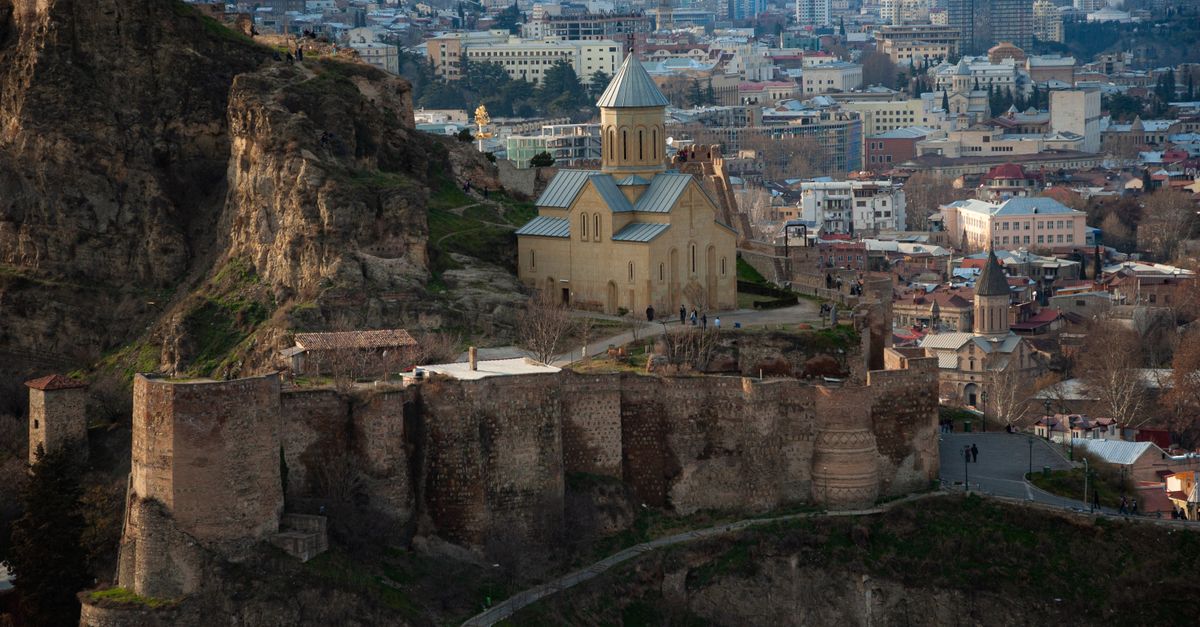
The Old Town, Rustaveli Avenue, and Marjanishvili are all walkable — the core tourist area spans about 3 kilometres. Tbilisi is hilly — comfortable shoes are essential. The climb from the river to Narikala Fortress is steep but the cable car (GEL 2.50, uses metro card) solves this. Walking is the best way to discover Tbilisi's hidden courtyards and balconied streets.
Free & Cheap Activities
Free
Walking the Old Town costs nothing and is the city's best activity. The Sioni Cathedral, Anchiskhati Basilica, and Metekhi Church are all free to enter. The Bridge of Peace and Rike Park are free. Walking the Abanotubani bath district — admiring the domed roofs and the cliff above — is free (the baths themselves cost GEL 5-150 depending on public vs. private). The Dry Bridge Flea Market (daily, best weekends) is free to browse.
Under GEL 15
The Narikala cable car (GEL 2.50 each way) and the botanical garden (GEL 4) are the cheapest attractions. The National Museum (GEL 15) is worth every lari for the gold Treasury alone. Open-air wine bars throughout the Old Town serve glasses from GEL 8 — effectively cheaper than a bus ride in most European cities.

Eating on a Budget
Under GEL 10 Per Meal
Tone bakeries sell shotis puri (long bread, GEL 1-2), lobiani (bean bread, GEL 2-3), and Imeruli khachapuri (GEL 3-5). These are complete meals for under GEL 5. Khinkali from Pasanauri chain restaurants cost GEL 0.80-1.20 each — ten dumplings make a feast for GEL 8-12. Street food vendors sell fresh fruit, churchkhela, and grilled corn for GEL 1-3 per item.
GEL 10-25 Per Meal
Machakhela and Samikitno restaurants serve full Georgian meals — khinkali, salad, grilled meat, bread, and a beer — for GEL 15-25 per person. These are chain restaurants but quality is reliable and prices are local. Independent restaurants on side streets off Leselidze serve similar food at similar prices with more atmosphere.
Wine Budget
A bottle of excellent Georgian wine from a supermarket costs GEL 8-20. Restaurant wine by the glass starts at GEL 6-10. A litre of house wine at a casual restaurant costs GEL 10-15 — yes, an entire litre. Georgian wine is not a luxury item; it is a daily staple, priced accordingly.
Day Trips on a Budget
Mtskheta: GEL 5-20
Marshrutka from Didube station costs GEL 1 each way. Churches are free to enter. A Bolt taxi each way costs GEL 15-20. Lunch in Mtskheta at a local restaurant costs GEL 10-20. Total budget day trip: GEL 15-45.
Kakheti Wine Region: GEL 60-150
Organised day tours (GEL 60-120 per person, including transport, 3-4 wineries, and lunch) are the easiest option. Self-organised via marshrutka is possible but complicated with multiple transfers. A shared Bolt to Sighnaghi (GEL 40-60 each way, split among passengers) is an alternative — the town is beautiful and has free wine tastings at multiple cellars.
| Category | Budget (GEL/day) | Mid-Range (GEL/day) |
|---|---|---|
| Accommodation | GEL 15-40 | GEL 60-120 |
| Food | GEL 15-30 | GEL 40-70 |
| Transport | GEL 3-8 | GEL 10-20 |
| Activities | GEL 5-15 | GEL 15-40 |
| Wine | GEL 8-15 | GEL 15-30 |
| Daily Total | GEL 46-108 | GEL 140-280 |

Tbilisi destroys the myth that European travel must be expensive. A city with 1,500 years of history, world-class food, ancient wine culture, and genuine warmth — all for less than GEL 100 per day. The only thing you cannot do cheaply in Tbilisi is leave without planning your return.
Money-Saving Tips for Tbilisi
Tbilisi is already cheap by any European or North American measure, but knowing where the money actually goes — and where it does not need to go — is the difference between GEL 80 days and GEL 50 days. The savings are real and require nothing more than a little local knowledge.
Time your meals like a local. Georgian families eat their main meal at midday, not in the evening. Restaurants respond accordingly — lunch portions are larger and set menus (business lunches) cost GEL 12–18 for soup, main, salad, and sometimes a drink. The same dish ordered at dinner costs GEL 20–30. Restaurants on and around Erekle II Street in the Old Town are particularly good value for midday sets. Eat a heavy lunch and a street-food dinner to cut your daily food bill by 30 percent without eating worse.
Supermarkets are your friends for breakfast and snacks. Carrefour on Rustaveli Avenue and the Spar chains across the city stock local yoghurt (matsoni, GEL 3–4), shotis puri bread (GEL 1–2), fresh fruit, and churchkhela (walnut-and-grape candy, GEL 2–5). A supermarket breakfast runs GEL 5–8 compared with GEL 15–25 at a cafe. Georgian mineral water — Borjomi, Likani, or Nabeghlavi — costs GEL 1.50–2 in a supermarket versus GEL 6–10 at a restaurant table.
Free wine is genuinely available in Tbilisi. Several wine bars and natural wine cellars in the Old Town offer complimentary pours during opening hours to attract buyers. Vino Underground on Galaktion Tabidze Street and Spirits of the Wolf near Marjanishvili both welcome browsers. Even if you buy a single glass (GEL 8–12), you will have tasted five or six wines by the time you decide. Wine festivals in spring and autumn (check the Tbilisi Tourism website for dates) offer unlimited tasting for an entry fee of GEL 15–25.
Use the metro card for everything it covers. The GEL 2 card fee is a one-time cost, and reloading before metro or cable car trips eliminates the need to buy tickets. Some bus routes (maршрутка minibuses, GEL 1) accept the card; others require exact cash. Bolt rides are so cheap that the marginal cost between walking 20 minutes and taking a Bolt (GEL 3–4) barely registers — but walking through the Old Town's hidden courtyards and carved wooden balconies is the experience itself, not the transportation to it.
Avoid the tourist-facing currency exchange booths near the Old Town entrance and on Rustaveli Avenue — their rates trail TBC Bank and Bank of Georgia ATMs by 3–5 percent. That difference costs GEL 15–25 on a GEL 500 withdrawal, enough for a good dinner. Withdraw larger amounts (GEL 200–300) less frequently to minimize per-transaction ATM fees.